
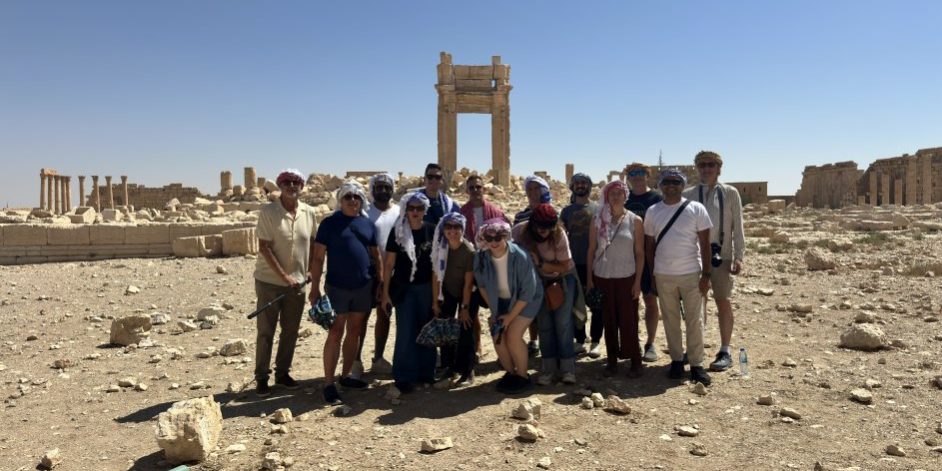
Palmyra’s Monumental Arch: A Landmark Lost and Remembered
For generations, Palmyra’s great arch framed the desert city’s avenue. In 2015 it was destroyed—and since then its absence has become part of the story.
The Monumental Arch of Palmyra, often called the Triumphal Arch, was once among the most photographed sights in the ancient city. It stood along the great colonnaded street, turning an important change in direction into an impressive architectural moment.
Today visitors must be careful about the images they see online. Many photographs show the arch before its destruction, and replicas or digital reconstructions should not be confused with the original monument.
Understanding the arch means looking at three layers: how the Roman-period city used it, what happened in 2015 and why the remaining fragments are still important to archaeology.
At a Glance
An Arch Built for a Great Avenue
Palmyra became wealthy as a trading centre linking the eastern Mediterranean with routes extending across the desert. Its long, colonnaded streets gave the city a monumental setting for daily life and public movement.
The arch was associated with the Roman-period construction of the city’s great avenue, generally dated to the time of Emperor Septimius Severus and the third century CE.
Its design was more than a decorative entrance. The arch helped disguise the bend in the avenue, allowing the street to appear visually coherent as it changed direction.
This is an architectural detail worth noticing in old photographs and plans. A carefully designed monument could shape how people understood an entire city.
The arch’s stone ornament was also evidence of Palmyra’s distinctive architectural identity, shaped by local customs as well as Mediterranean influences.

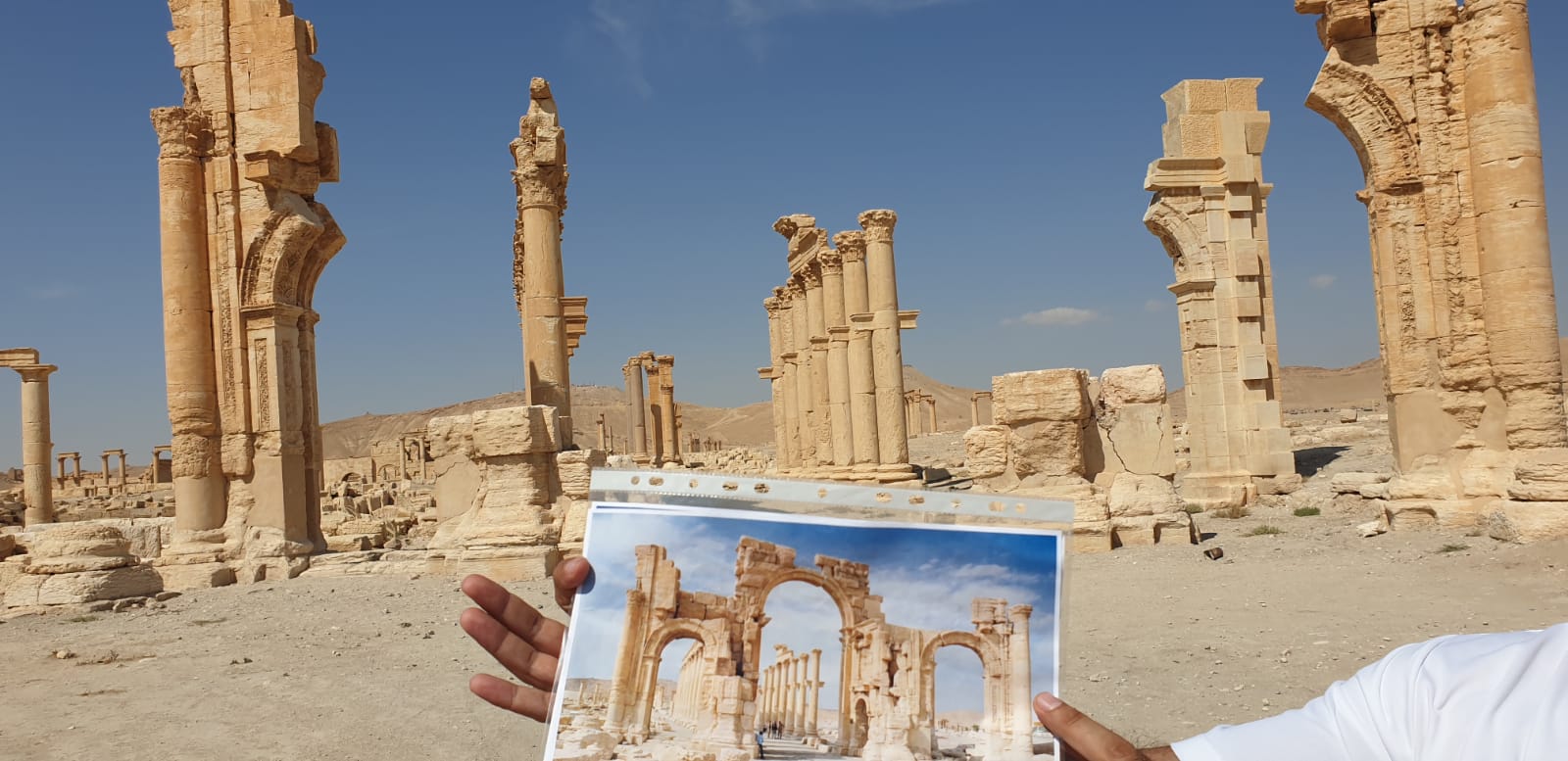
Old photographs help us understand the former shape of the structure, but an image made before 2015 is not a reliable guide to what you will find standing today.
Look at the arches, sculpted surfaces and the way the monument once connected two stretches of colonnaded street.
When comparing images, check the date. The history of conservation in Palmyra makes the difference between a surviving original, a fragment and a replica especially important.
What Happened to the Arch in 2015
In October 2015, members of the Islamic State destroyed the Monumental Arch while the ancient city was under their control. Other historic structures had already been severely damaged.
The deliberate destruction removed a prominent landmark, but fragments, documentation and earlier photographs preserved important information about its design and construction.
Because the monument had been widely photographed, researchers have a rich visual record. Yet images alone cannot replace the archaeological information held in original stones and their exact positions.
Some reconstructions of Palmyra’s arch have appeared abroad as symbolic replicas. Such installations can raise awareness, but they are not the same as rebuilding the original arch on its historic site.
Should the Arch Be Rebuilt?
Archaeologists and conservation specialists have studied ways to document the fragments and evaluate possible restoration. This includes the use of digital models, stone-by-stone recording and assessments of stability.
UNESCO welcomed the careful documentation of the proposed reconstruction, while later World Heritage Committee decisions noted that work on the Triumphal Arch had halted and called for protection of surviving material.
The central question is not simply whether a new arch can be made to look convincing. It is how to protect original evidence, respect the history of destruction and avoid introducing unsupported modern guesses.
Any future reconstruction should be explained transparently, distinguishing original stone from replacement material. That helps visitors understand what they are actually seeing.
Palmyra remains a UNESCO World Heritage property under conservation pressure. Local access and restoration conditions can change, so current information matters more than an old postcard view.
The missing arch is an important part of the site today. Compare a dated historic photograph with the surviving archaeological landscape and ask what conservation can—and cannot—recover.
How to Visit
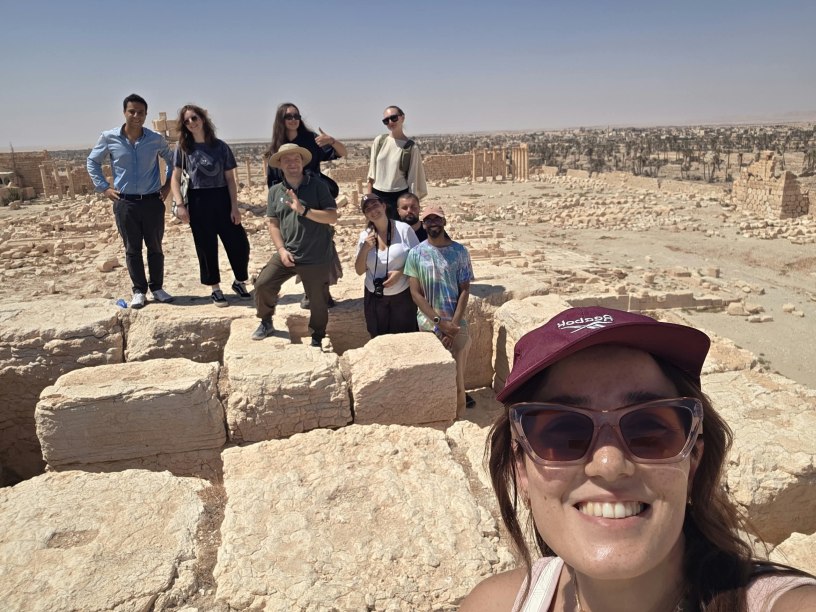
The Monumental Arch belongs to the central archaeological area of Palmyra, close to the great colonnaded street. A visit should be planned as part of a larger, carefully organised archaeological excursion.
- Check current travel access, permitted routes and conservation restrictions with a knowledgeable local operator.
- Do not expect to see the original intact arch from historic photographs: it was destroyed in 2015.
- Stay on recognised routes and avoid unstable stones, excavation areas and unmarked ground.
- Carry water, food and sun protection; conditions around the desert site can be harsh.
- Ask your guide to identify the former position of the arch relative to the colonnaded street.
- Use archival images to understand the architecture, while clearly distinguishing them from current photographs.
- Combine the story with nearby monuments, but respect the restoration needs and protected status of the wider site.
Explore Syria beyond the guidebooks with our local guides.
Join our tours →One Last Thought
The Monumental Arch matters partly because it is missing. Its story teaches us that heritage is not only the buildings that survive, but the evidence, memory and care that remain after loss.
Latest Syria news


You might also enjoy
 PalmyraTemple of BelAnother story of loss and conservationRead the story →
 Southern SyriaBosra Roman TheatreRoman monument preserved in a fortressRead the story →
 Syrian coastUgarit’s Ancient CityAn earlier Syrian civilisationRead the story →
 LandmarksExplore Syria’s LandmarksMore places and their storiesRead the story →