
The stories behind Syria’s landmarks
Temple of Bel in Palmyra: What Still Remains
Some landmarks impress because of what you can still see. Others matter equally because of what has been lost.
On the eastern side of Palmyra, a once-magnificent sanctuary testified to the city’s wealth and the complicated identity of its people. The Temple of Bel combined architectural ideas from the Mediterranean with local religious traditions.
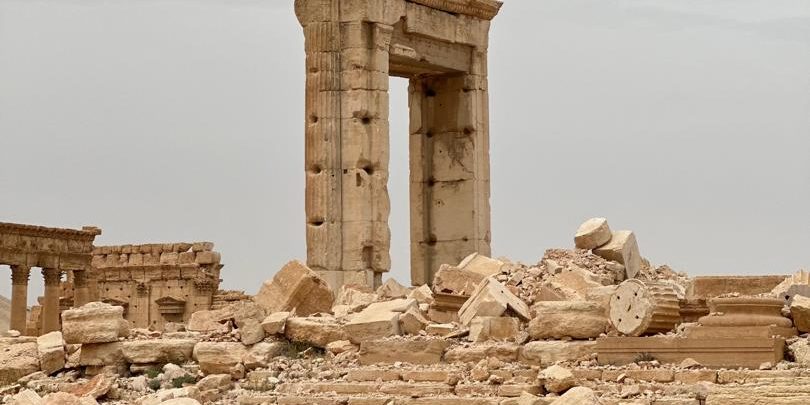
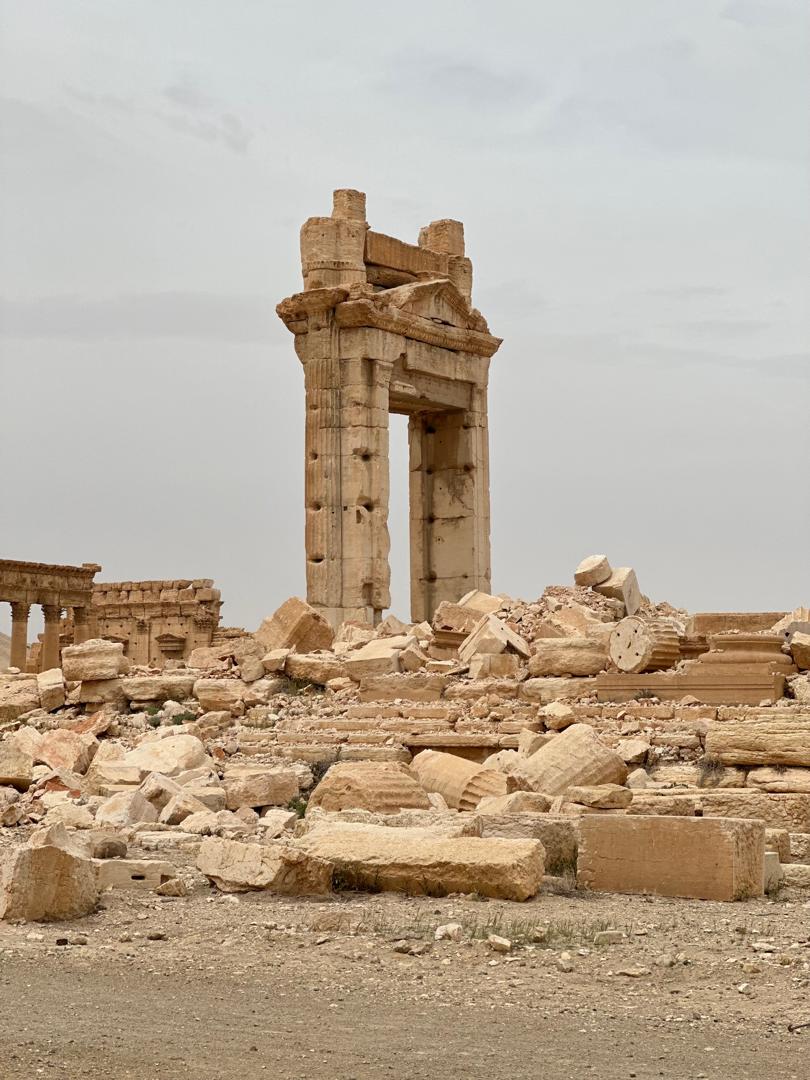
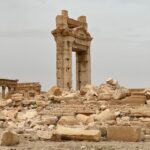
Today, you do not see the temple as earlier travellers saw it. The main sanctuary was deliberately destroyed in August 2015, and the surviving gateways and scattered architectural pieces are reminders of both its former scale and the damage inflicted on Syria’s heritage.
This is a difficult place to write about without confusing visitors. The extraordinary photographs of the temple before 2015 do not show what can be seen now. A responsible guide needs to tell both stories: the beauty of what stood and the reality of what remains.
← Explore all Syria landmarksThe Temple of Bel at a Glance
At the Heart of Ancient Palmyra
The sanctuary of Bel was one of the key religious centres of ancient Palmyra. Construction of the major temple began around 19 CE, and it was consecrated on 6 April 32 CE.
Work continued around the sanctuary for generations. The large square courtyard, surrounded by porticoes, measured roughly 200 metres on each side, giving the sacred complex a scale that matched Palmyra’s growing importance.
Palmyra prospered through trade across the desert. Merchants and civic benefactors helped fund monuments, and the sanctuary reflected a city connected to the Roman world while maintaining distinct local traditions.
The cella—the central temple building—did not follow every convention of contemporary Mediterranean temples. Its entrance was on the long western side, and two sacred niches faced one another inside.
Details such as high windows, a decorated roofline and ritual spaces reveal a local approach to sacred architecture. The overall building could look Greco-Roman from a distance and yet feel deeply Palmyrene when examined closely.
When you look at surviving stones or archival images, remember that this was a place of worship and public ceremony, not simply an architectural experiment.
The contrast between regional traditions and imported forms is what made the Temple of Bel so distinctive.
Roman Shape, Palmyrene Traditions
French archaeological research describes the complex as a great sanctuary incorporating a peristyle courtyard, monumental entrance and rooms for ritual activity. The altar and banquet spaces in the courtyard were part of the temple’s wider religious life.
The temple later passed through different phases as the city and its faiths changed. Much later, portions of the complex were adapted for different uses, and surviving historical traces bear witness to those layers.
Over the centuries, travellers admired the monumental temple, and artists recorded its architecture in drawings and early photographs. Those records became especially valuable after the destruction.
On 30 August 2015, armed extremists detonated explosives within the complex, devastating the central sanctuary and much of the surrounding structure.
The loss was not only of an ancient building. It was the destruction of a rare record of how several cultural traditions had met in Palmyra.
Archaeologists identify 6 April 32 CE as the date of the sanctuary’s consecration. For nearly two millennia afterwards, its form helped tell the story of the oasis city.
What Remains After 2015
The Getty Research Institute documents the majestic western gateway as one of the most important surviving elements of the sanctuary, while UNESCO has highlighted the vulnerability of remaining structures and the need for emergency stabilisation.
The surviving masonry, foundations and architectural fragments can still help researchers understand what once existed. But repairing a site is not the same as making an accurate new copy of an ancient temple.
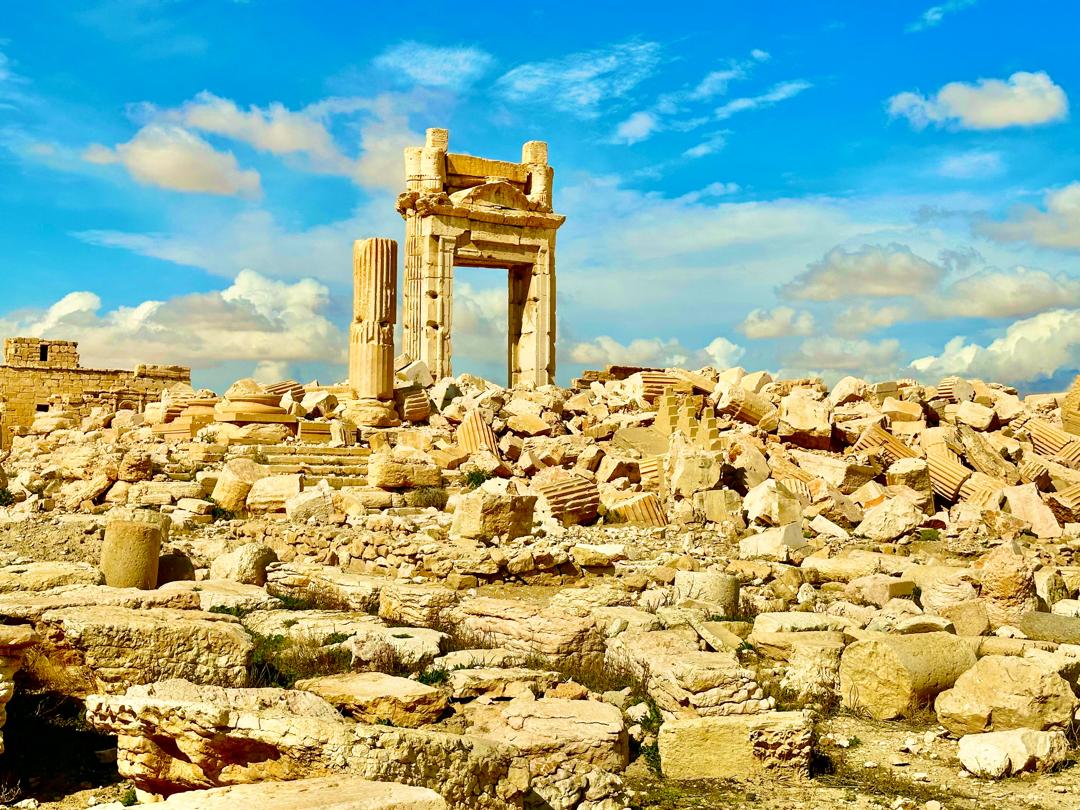
Heritage professionals must weigh conservation, documentation, structural safety and the long-term meaning of reconstruction. Original stones are historical evidence; moving them or inventing missing details can change what the monument tells us.
Palmyra’s wider archaeological area is on UNESCO’s World Heritage List, and parts of the city remain affected by damage and conservation work.
When you explore the area with a guide, look for the surviving gateway and the footprint of the former sanctuary, and keep the earlier photographs in mind without assuming the monument is intact.
How to Visit the Temple of Bel Site
The temple area lies within the wider archaeological city of Palmyra. Access and conditions can change, and visitors should treat this as a sensitive heritage site rather than an ordinary attraction.
- Confirm current permission and safe access with a reliable local guide before travelling to Palmyra.
- Do not assume every part of the Temple of Bel area is open; conservation or safety restrictions may apply.
- Stay on established pathways and do not enter unstable ruins or areas marked as restricted.
- Carry ample water, sun protection and practical supplies: much of Palmyra is exposed desert terrain.
- Allow extra time to understand the wider archaeological city, not only the temple area.
- Use older photographs as historical references, but be aware that they depict structures since lost.
- Never remove fragments, climb on delicate masonry or interfere with archaeological stones.
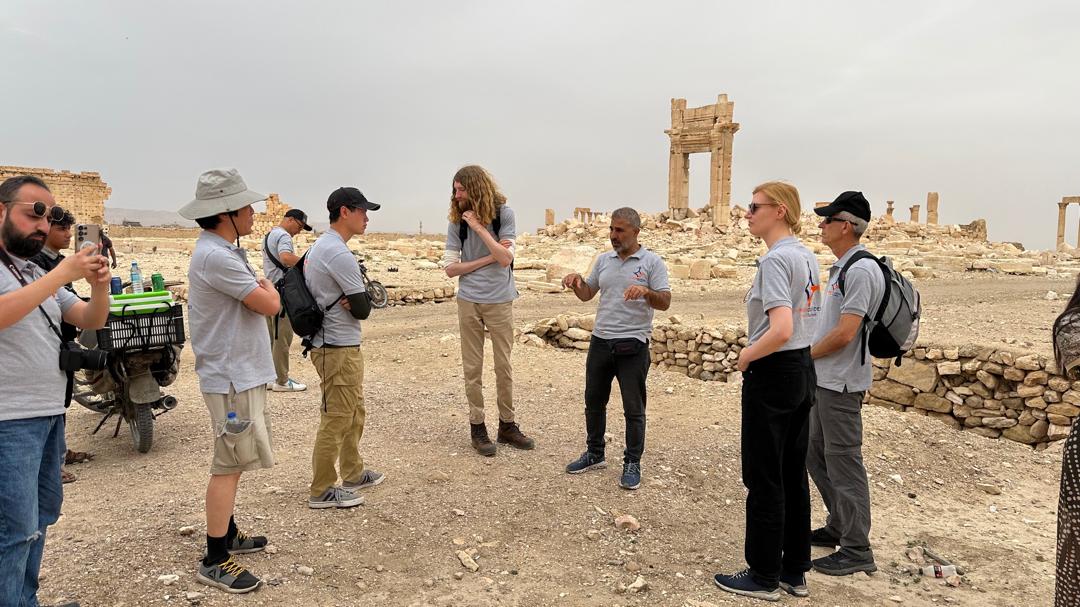
Understand Palmyra with a local guide who can explain its surviving monuments and important conservation history.
Explore our Syria tours →One Last Thought
The Temple of Bel is no longer the grand building travellers once photographed. But its surviving stones, drawings and memory continue to teach us about Palmyra—and why that heritage deserves careful protection.
Sources: French Ministry of Culture: Temple of Bel · Getty Research Institute · UNESCO emergency safeguarding.
Keep exploring
You might also enjoy
 PalmyraPalmyra’s Desert HistoryLearn about the caravan city and Queen Zenobia.Read the story →
 Ancient SyriaUgarit’s Ancient KingdomA very different Syrian city from the Bronze Age.Read the story →
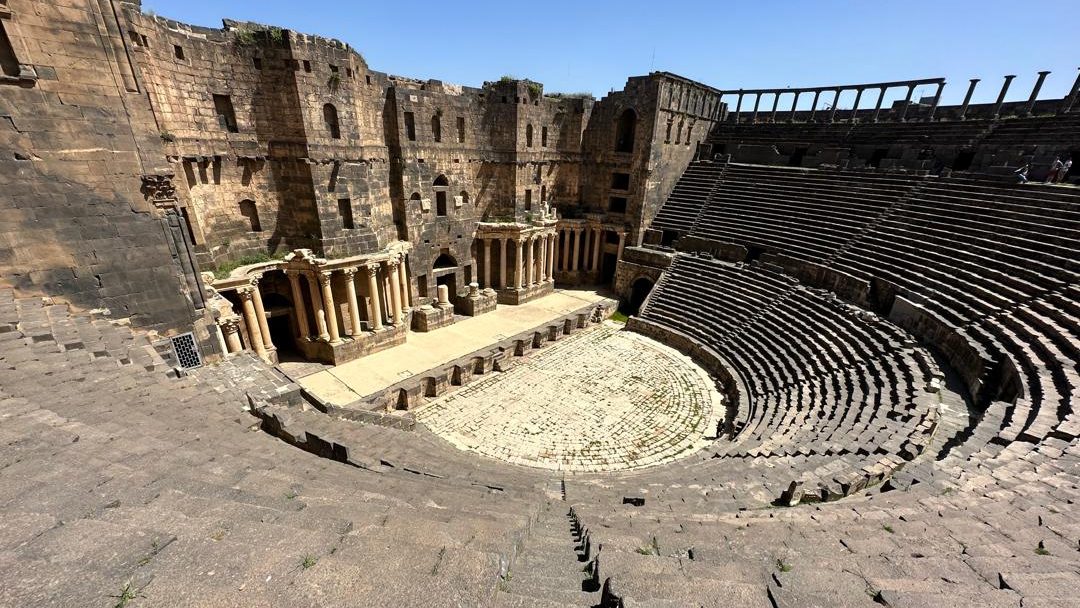 Roman heritageBosra’s Roman TheatreAnother outstanding monument of Syrian antiquity.Read the story →
 Explore furtherSyria Landmarks DirectoryFind more ancient sites and monuments across the country.Read the story →