Bosra Roman Theatre: The Stage Hidden Inside a Fortress
The first surprise at Bosra is that the world’s great Roman theatres can hide behind the walls of a medieval fortress.
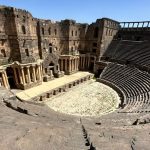
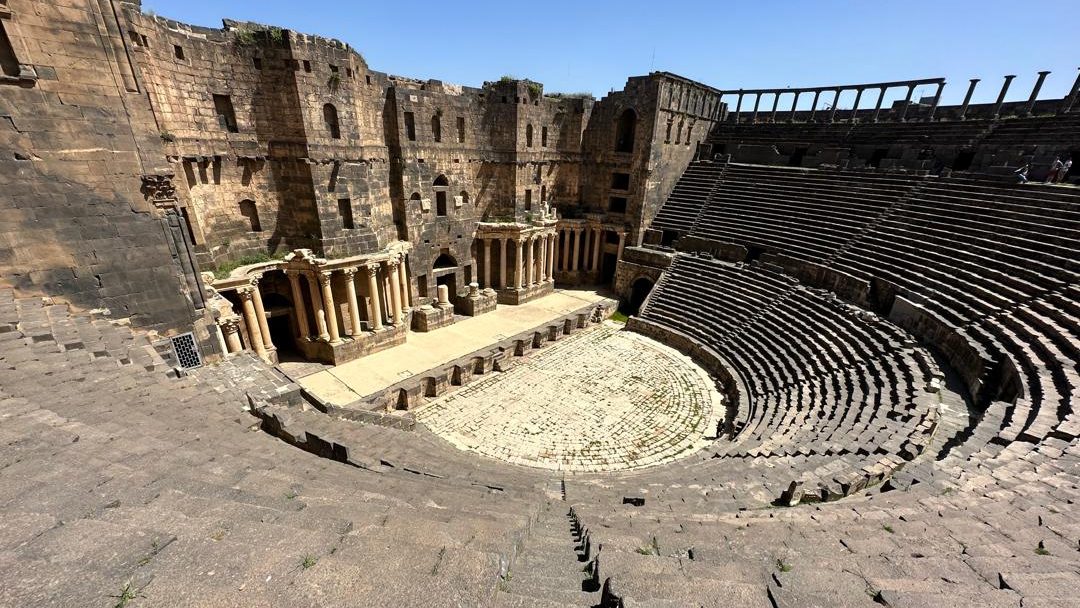
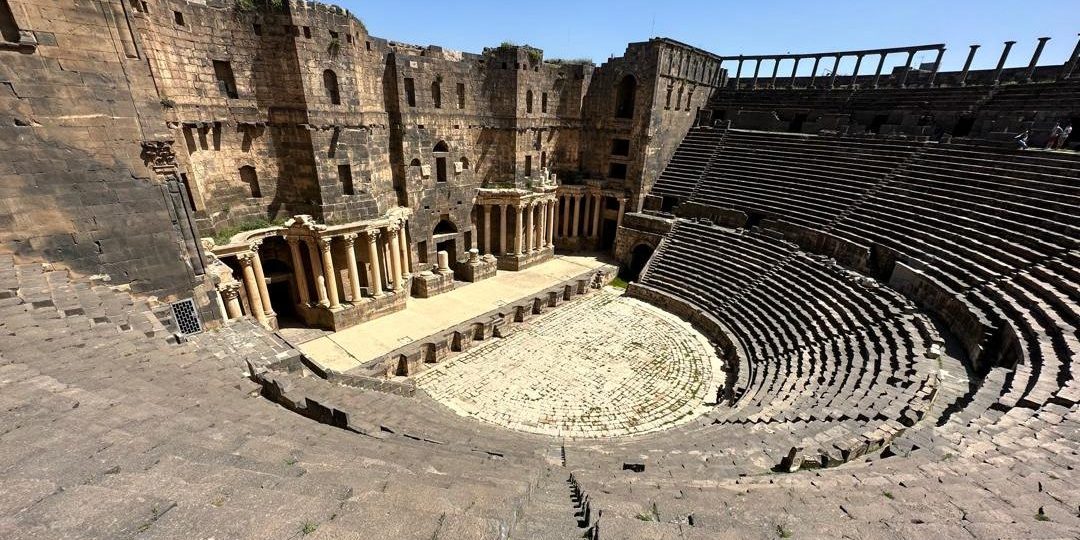
At first, the dark stone walls in southern Syria seem to belong entirely to a castle. Then you pass into the interior and find an immense semicircle of seats facing a monumental stage.
Welcome to the Roman Theatre of Bosra, the best-known landmark of an ancient city that was once an important provincial capital. The theatre is remarkable not only for its scale, but for its survival inside later defensive walls.
Bosra was built largely from the black basalt of the Hauran region. The stone gives its architecture a very different feeling from the pale limestone ruins that travellers might expect from Roman Syria.
At a Glance
Why an Imperial City Needed a Theatre
In 106 CE, Rome annexed the Nabataean kingdom and Bosra became the capital of the new province of Arabia. The city flourished as a crossroads for commerce, politics and movement through the region.
A large theatre was a way of expressing civic pride and Roman urban culture. The performances were not simply entertainment; public spaces like this helped give a provincial capital its identity.
UNESCO dates the remarkable theatre to the second century, probably under the emperor Trajan. Its combination of a large auditorium and an elaborate stage structure made it one of the great monuments of Roman Bosra.
From the seats, people once watched events against a backdrop of columns, doorways and carved architectural details. Imagine a filled auditorium, voices rising toward the stage and the practical work of managing such a gathering.
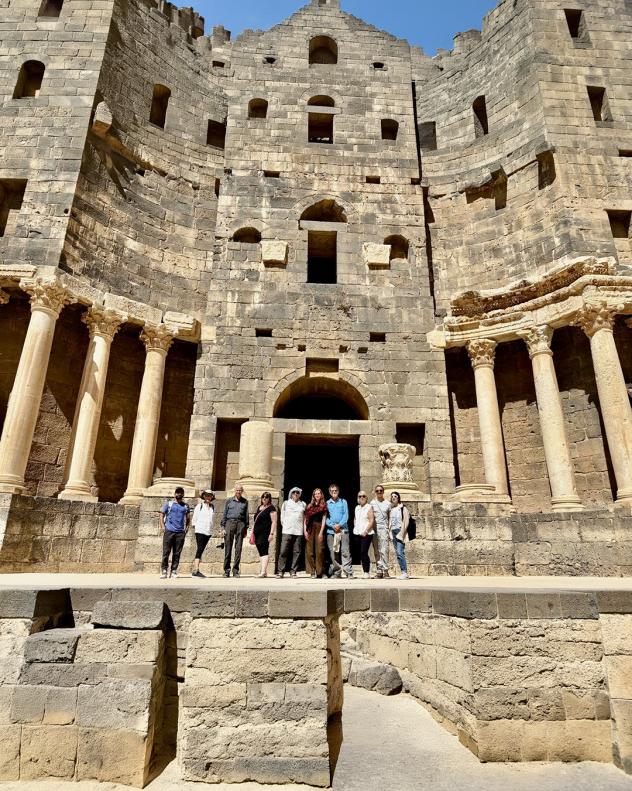
The size of the theatre becomes clear only when you compare the people standing on the stage with the rows of seating above them.
Walk your eyes along the arc of seats: every row follows the curve while aiming attention toward the performers below.
A visit to the theatre is also an introduction to Roman engineering, with entrances, passageways and staircases directing people into different seating areas.
The Black Stone That Made Bosra Different
Much of the theatre is built from black basalt, a volcanic stone common in the surrounding Hauran region. It gave the city a recognisable architectural character.
Stone’s hardness helped many structures survive, but the theatre’s exceptional state of preservation also owes much to what happened after the Roman era.
The massive stage wall, the curved auditorium and the surrounding circulation spaces demonstrate the skill needed to make a Roman theatre function on such a scale.
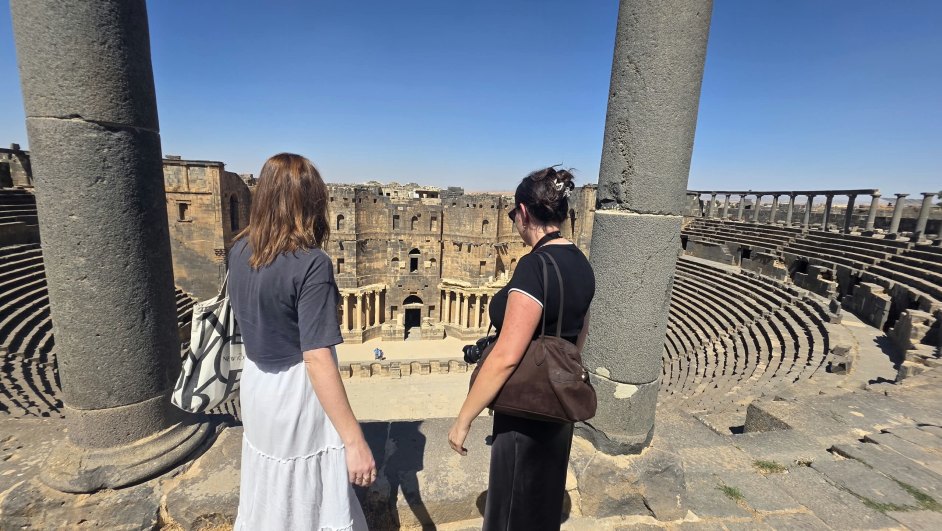
At the top of the seating, turn around and look out toward the town. It becomes easier to understand that the theatre belonged to a larger city whose Nabataean, Roman, Byzantine and Islamic histories are woven together.
How a Theatre Became a Fortress
The story of Bosra’s theatre would be far less unusual if it had remained only a theatre. During the Byzantine and Islamic periods, sections around it were progressively fortified.
Between the fifth and thirteenth centuries, new walls and military structures developed around the Roman monument. By the Ayyubid period, the theatre had become part of an impressive citadel guarding strategic routes.
The fortress walls helped protect the theatre’s interior from later alterations and destruction. In a remarkable historical reversal, the defensive structures that hid it also helped preserve it.
The site is part of the Ancient City of Bosra, a UNESCO World Heritage property whose importance extends to churches, mosques, streets and other historic buildings.
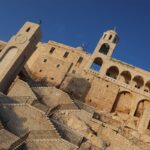
Do not assume that every tower outside belongs to the Roman period. The contrast between the theatre and its later fortifications is one of the most interesting things to read in the stone.
Stand near the central stage and look back toward the upper seats, then climb to an approved viewpoint. You are seeing two eras at once: a Roman theatre inside medieval defences.
How to Visit
Bosra is in the Daraa region of southern Syria, often visited as a day excursion from Damascus. Transport and current site access should be checked before the journey.
- Allow about 60–90 minutes for the theatre, more to explore the wider ancient city.
- Wear comfortable shoes; basalt steps and passages can be uneven or slippery.
- Visit with a guide if possible, so you can identify Roman and medieval additions.
- Stay within open routes and respect any barriers around fragile or restricted areas.
- Morning and afternoon light create very different contrasts on the dark stone.
- Check current opening arrangements and regional travel conditions before setting out.
- Remember that Bosra is a living town as well as an archaeological site.
Explore Syria beyond the guidebooks with our local guides.
Join our tours →One Last Thought
Bosra’s theatre is a rare survivor partly because people kept finding new uses for it. Its story moves from the Roman stage to a medieval stronghold—and back to visitors imagining the voices that once filled it.