
Amrit near Tartus: Syria’s Phoenician Sanctuary by the Sea
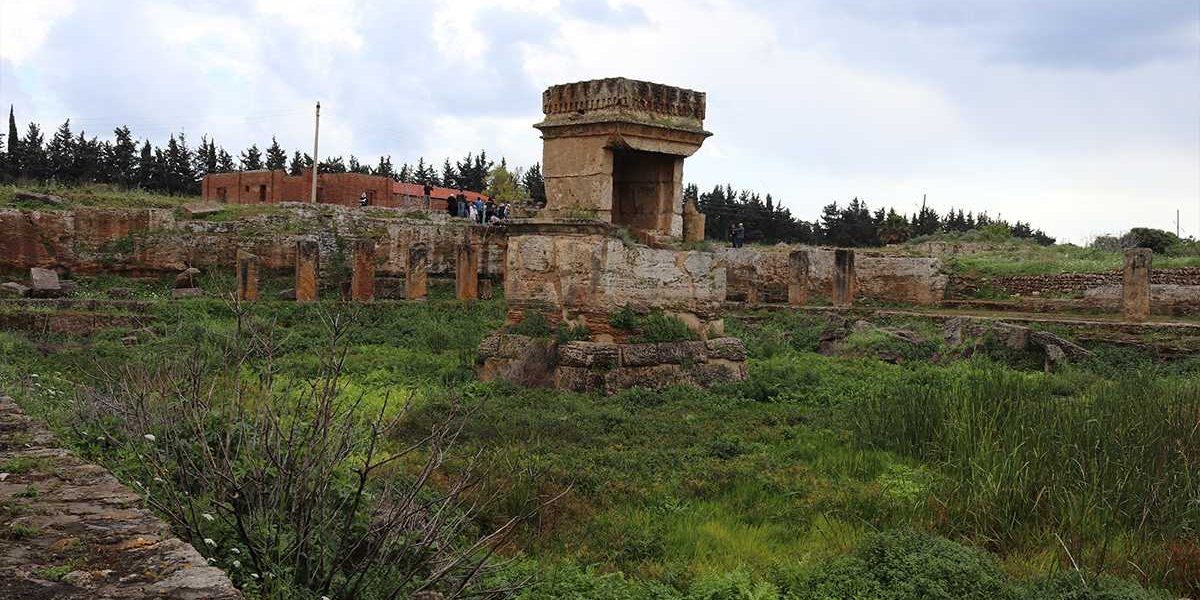
South of Tartus, a quiet archaeological landscape preserves a temple unlike most other sanctuaries in Syria: a sacred building rising from the middle of a stone basin.
Visitors who travel along Syria’s Mediterranean coast often focus on Ugarit, castles or the island of Arwad. Yet just south of Tartus lies Amrit, also known to ancient sources as Marathos, where the remains of a Phoenician settlement can still be explored.
The site belongs to a different world from the Roman colonnades of Palmyra or the medieval stonework of Aleppo. Its most memorable feature is an unusual sanctuary formed around a rock-cut water basin.
Amrit is a place where the details matter: a small shrine within the sacred space, monumental funerary markers and the remains of a stadium cut into the landscape.
Because the surviving buildings are low and the site is spread out, good context helps more than a dramatic view.
At a Glance
The Phoenician Coast Beyond the Famous Cities
Amrit was part of a coastal world of maritime trade and cultural exchange. The region’s communities were connected to the Mediterranean, the inland valleys and other ports of the eastern coast.
Researchers have found material associated especially with the Persian-Achaemenid and Hellenistic periods, though use of the landscape reaches much further back.
Unlike a modern city centre, the archaeological site is not dominated by high walls or large restored streets. Its story must be pieced together from foundations, carved stones and the relationship between scattered monuments.
The island of Arwad and the city of Tartus provide helpful regional context, but they are separate places. Visitors should not confuse their histories or assume every coastal monument belongs to the same settlement.
Looking toward nearby Arwad helps explain why the Mediterranean mattered so much to the region. Sea routes and coastal settlements were connected long before modern national borders.
The archaeology of Amrit tells its own story on the mainland, while Arwad offers another chapter in the history of the coastal communities.
If you visit both places in one journey, you can compare the quiet inland archaeological landscape with a still-inhabited island shaped by centuries of seafaring.
A Temple Rising Out of a Sacred Basin
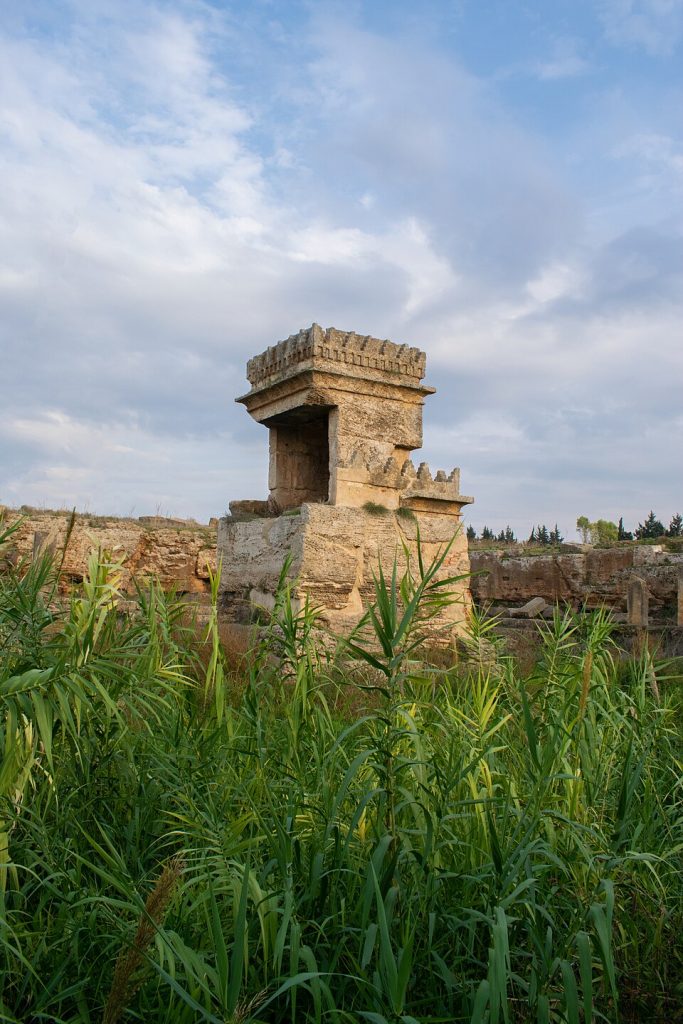
The sanctuary at Amrit, often called the ma’abed, is the site’s most distinctive monument. Archaeological research describes a water basin carved into the rock, with a small central shrine or naos and traces of a portico around three sides.
The relationship between water and sanctuary sets it apart from many familiar Mediterranean temple designs. Religious ceremonies may have involved the basin, although specific ritual details are difficult to reconstruct with certainty.
Amrit is frequently associated with the cult of the Phoenician god Melqart, but broad labels should not replace careful interpretation of the evidence left at the site.
Stand back from the surviving masonry and try to imagine a finished architectural space: columns, walls and water all working together to define an area set apart for worship.
The modest height of the present ruins should not be mistaken for lack of historical importance. Many of archaeology’s most revealing sites require more imagination than spectacle.

Monumental Tombs and an Unusual Stadium
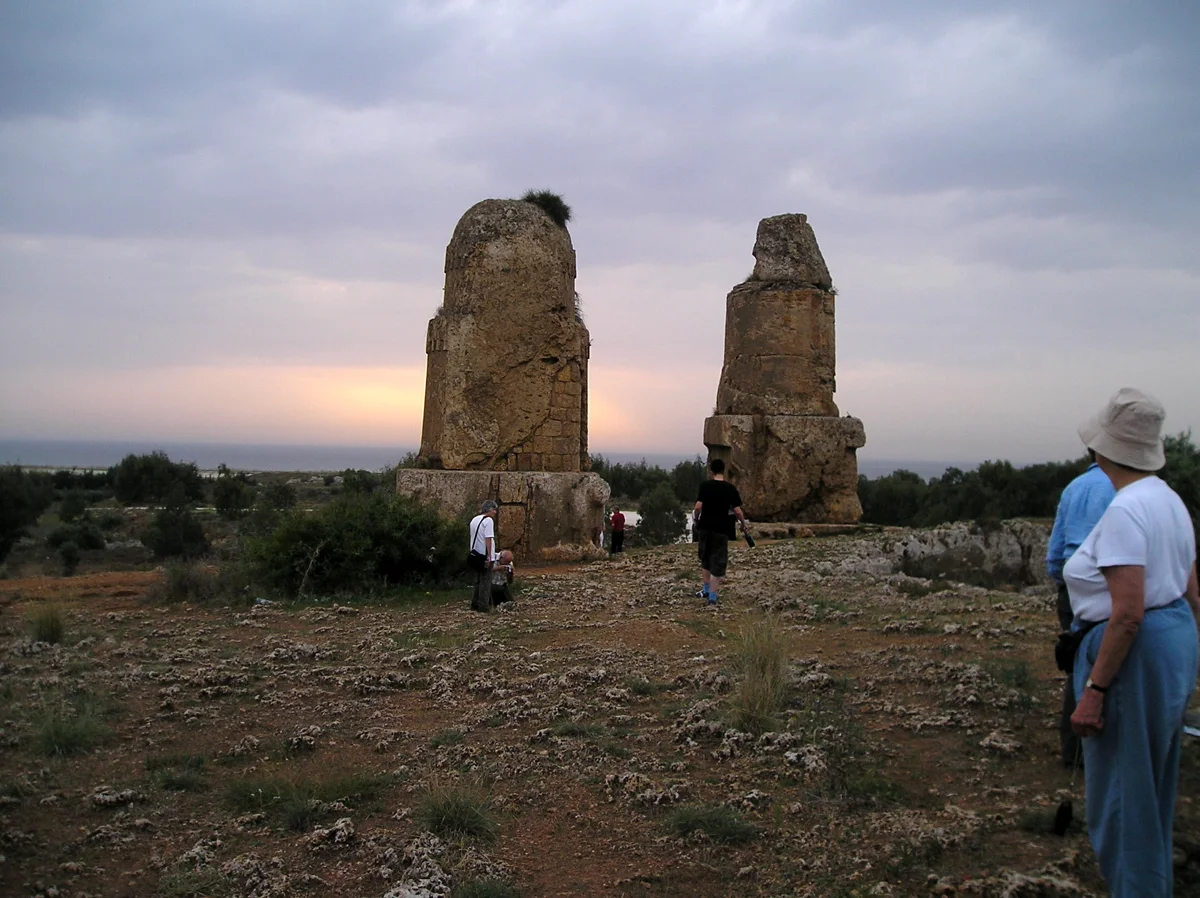
The wider Amrit area also contains monumental funerary structures often known as the meghazil, whose tall stone forms stand apart from the low sanctuary remains.
Archaeologists have documented a rock-cut stadium, another striking feature of the site. It points to forms of public gathering that went beyond the sacred activities of the sanctuary itself.
Research by Italian and Syrian institutions has focused on documenting these surviving structures and identifying practical ways to protect a fragile, expansive archaeological landscape.
This work matters because stone can survive for centuries while historical information disappears through disturbance, erosion or careless excavation.
Amrit is best understood as a landscape of related monuments, not a single isolated temple surrounded by empty ground.
Think of Amrit in layers: sacred architecture, burial monuments, public activity and the wider Mediterranean coast. Each reveals a different part of the community’s life.
How to Visit
Amrit lies a short drive south of Tartus. Because the archaeological area is spread over open ground, check with local guides about which parts can be accessed and how best to organise a visit.
- Allow about 60–90 minutes for the main archaeological landscape, with more time if a knowledgeable guide can cover several monuments.
- Use footwear suitable for uneven stone and open ground, and carry drinking water and sun protection.
- Keep away from unstable edges, shafts or excavations and follow any barriers or local instructions.
- Ask about permitted access to the sanctuary, rock-cut stadium and tomb areas before travelling.
- Do not remove stones, pottery or other archaeological fragments.
- Combine Amrit with Tartus or Arwad for a wider coastal itinerary, but allow separate time for the island.
- Treat any signs of ongoing conservation as a reason to keep your distance rather than an invitation to enter restricted areas.
Explore Syria beyond the guidebooks with our local guides.
Join our tours →One Last Thought
Amrit is a reminder that not all of Syria’s great heritage sites are monumental in the same way. Here, a quiet stone basin and a few standing markers can open up an entire Phoenician world.
Latest Syria news




You might also enjoy
 Syrian coastUgarit’s Ancient KingdomAnother ancient coastal cityRead the story →
 LatakiaSaladin CastleMedieval fortress in the mountainsRead the story →
 Landmark directoryExplore Syria’s LandmarksFind more sites across SyriaRead the story →
 Travel ideasSyrian Coast AdventuresBeyond archaeologyRead the story →