
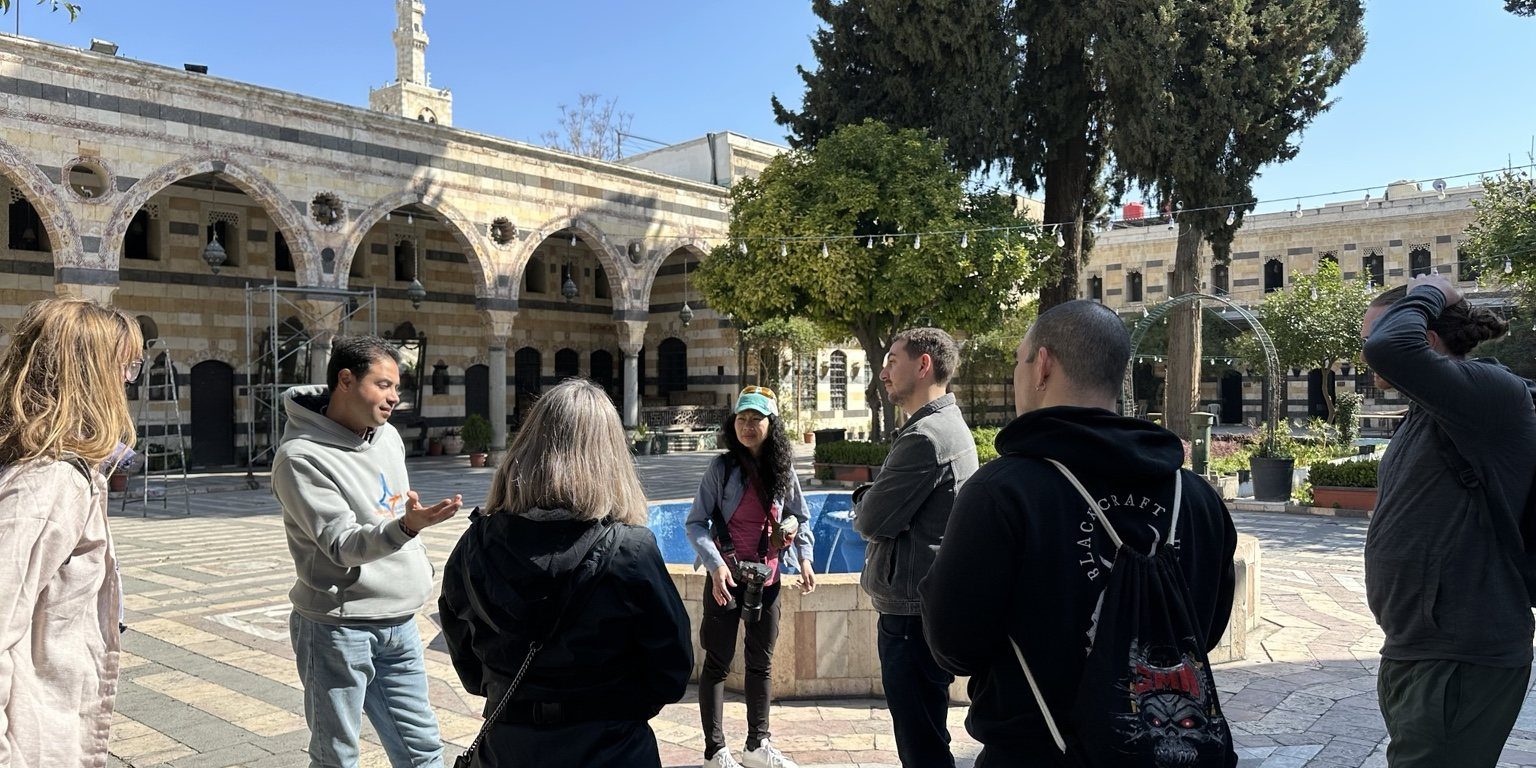
What is it really like to travel to Syria today?
Our first-hand guide to life on established tourist routes, visitor experiences, government warnings, women travellers, entry paperwork and what makes a rewarding, realistic journey.
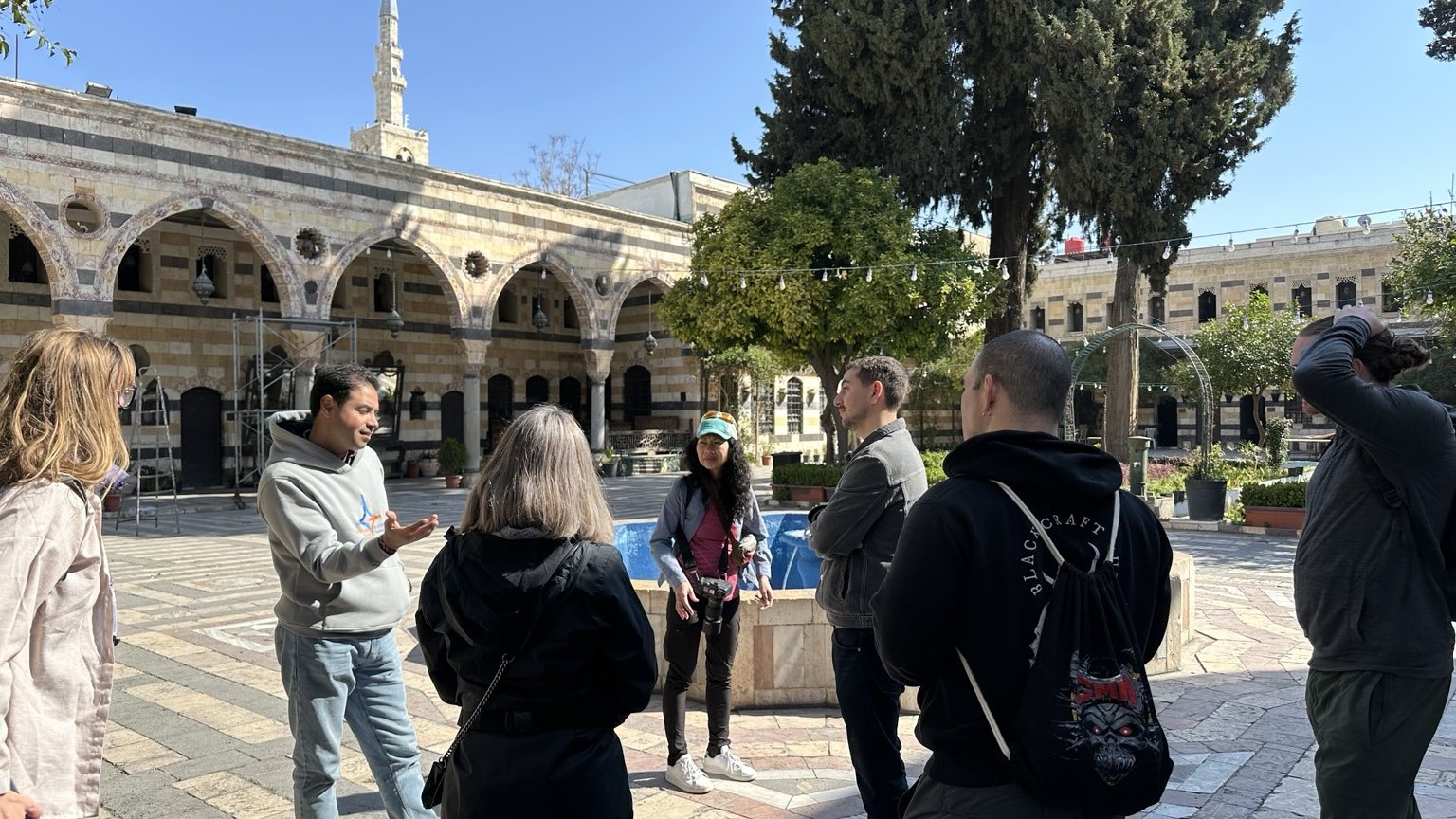
Yes, people are travelling to Syria today. We guide guests through Damascus, Aleppo, Bosra, Palmyra, Homs and Hama. They discover lively cities, warm hospitality and remarkable heritage that often surprise them. But visiting requires realistic preparation, informed judgement and respect for the risks and official travel warnings.
The UK, US and several other governments advise against travel
We address those warnings openly in this guide. They relate to serious threats and can affect travel insurance and consular assistance. Our own experience provides useful context about actual visitor journeys; it is not a reason to ignore the warnings. Read the current UK advice.
Last reviewed: 8 November 2026 / First-hand tour experience + traveller video diaries + independent sources
Syria travel: the essentials
*Based on Syrian Guides’ own experience, not independent national statistics or a safety guarantee.
Is Syria safe to visit? What we actually see on the ground
We work in Syria, we live here, and we travel with our guests. That gives us a different perspective from someone seeing the country only through breaking-news reports. Syria is a functioning country where everyday life continues: families go to restaurants, shops open, markets are lively, historic sites receive visitors and people welcome guests into their homes and workshops.
Our team began guiding international visitors in 2019, and Syrian Guides has operated as a tour company since 2023. Across our own organised tours, we have not experienced a serious guest safety incident or accident, according to our internal experience to date. That record matters to us, and we work hard to maintain it. It is our company’s record, not a national crime statistic, and it cannot guarantee the outcome of a future journey.
As of this November 2026 review, our organised departures are operating, visiting the established destinations in our programmes and allowing travellers to discover Syria beyond the familiar news images. Day-to-day travel is often far more ordinary than first-time visitors expect: walking through old souqs, taking photographs at archaeological sites, eating a leisurely Syrian lunch and meeting people curious about their visitors.
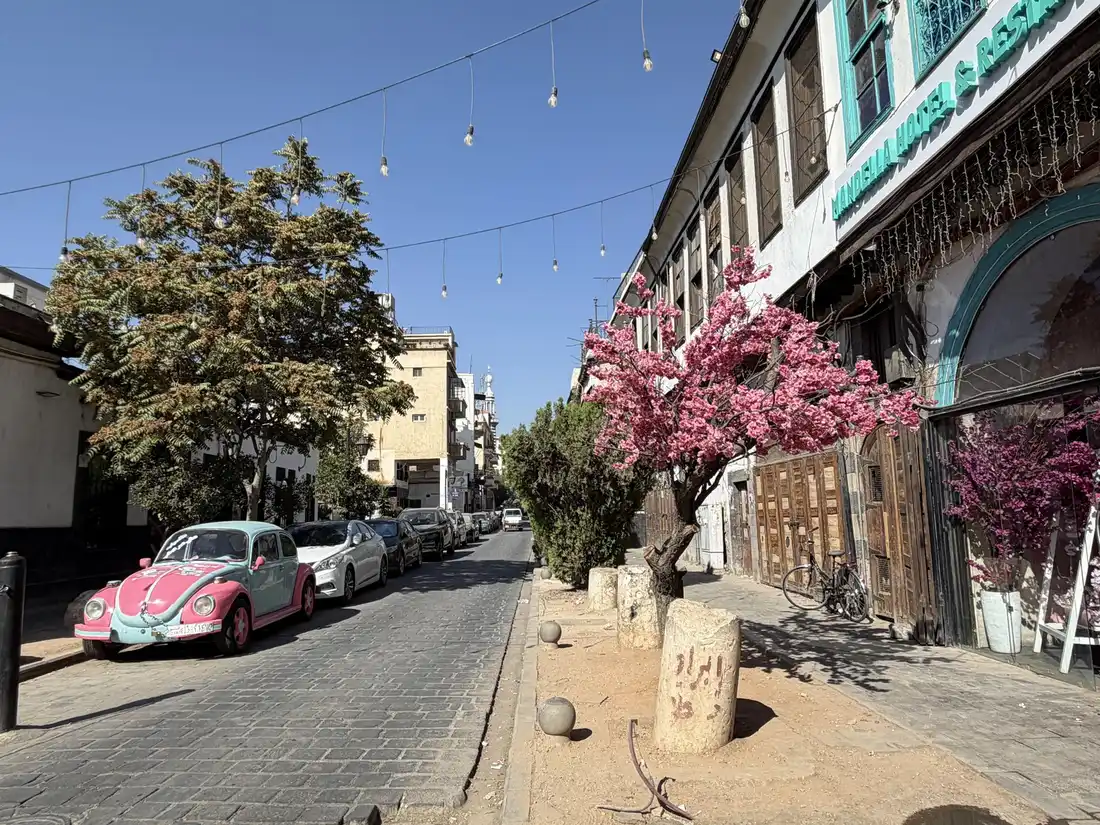
For travellers on our routes, the experience is usually much more ordinary and comfortable than they expected: sightseeing, long lunches, busy souqs, historic sites, family-run hotels and time with local people. The occasional challenges we manage are more often logistical—changing flight or entry rules, an unexpected wait, a site closure, a slower transfer or a communications issue. As with any destination in transition, conditions can change, which is why we keep monitoring each route and adjust arrangements when needed.
The cities we actually visit
Our established itineraries include Damascus, Aleppo, Homs, Hama, Bosra and Palmyra, together with destinations such as Maaloula, Krak des Chevaliers and many smaller cultural stops. We are also already including eastern Syria in our published 2027 Nowruz & Easter programme, with an eastern loop built into the itinerary. As with every departure, we review access and local arrangements before the trip and make practical adjustments if conditions require them.
 Aleppo Historic quarters, markets and heritage
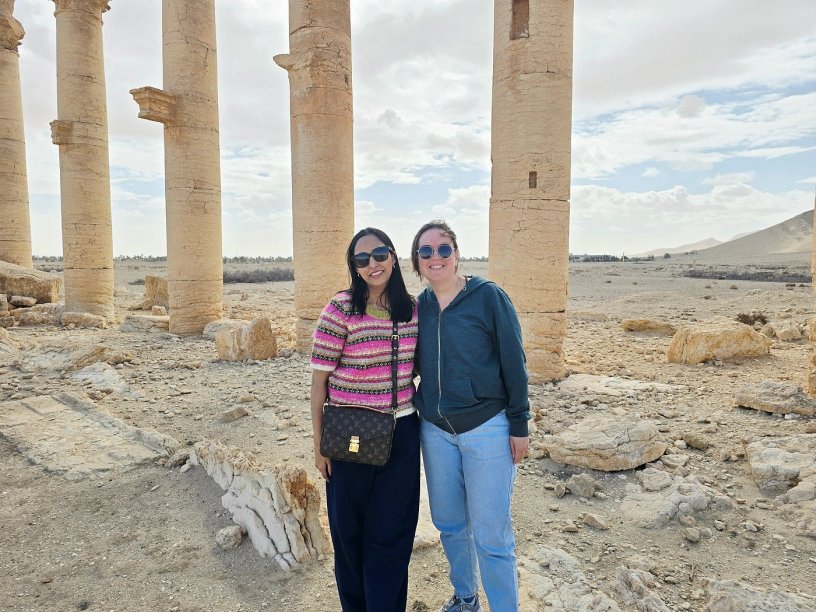 Palmyra Archaeology on an arranged itinerary
 Hama Daily life and historic sites
Such first-hand knowledge is precisely what a local travel company should share. It is useful to challenge an incomplete image of Syria—but not to substitute personal reassurance for independent assessment of the remaining risks.
Why do the UK, US and other governments advise against travel?
We do not hide these warnings. As of 8 November 2026, the UK Foreign, Commonwealth & Development Office advises against all travel to Syria, and the United States maintains its Level 4 ‘Do Not Travel’ advisory. Australia and other governments publish similarly strong warnings. They cite terrorism, armed conflict, kidnapping, unrest, crime, unexploded ordnance and unpredictable disruptions, and they stress that consular assistance can be very limited or unavailable.
These assessments are real and should be read in full. The UK advice, for example, records serious attacks in Damascus in 2026, including attacks affecting crowded civilian locations. The US advisory also warns about unexploded ordnance, demonstrations, kidnapping and the limits of emergency assistance. A busy souq, a functioning hotel or a pleasant day of sightseeing does not make those risks impossible.
The government perspective
National advisories are designed for millions of citizens with different itineraries, nationalities and risk tolerances. They focus strongly on low-frequency but high-consequence events and on what happens if a traveller needs state assistance.
The traveller perspective
People who have actually travelled on established routes often describe something much more ordinary: cafés, traffic, families, markets, hotel stays, friendly encounters and long days of sightseeing. Their experience is valuable evidence about what a trip can feel like, but it cannot prove that the wider risks have disappeared.
You do not have to choose between official warnings and travellers who say they felt comfortable on their journeys. Both can be true at the same time. One describes possible national-level risks and consequences; the other describes a particular person, route and moment. Read the latest UK advice and the US advisory, then judge the actual itinerary, timing, insurance and your own circumstances.
Who will enjoy Syria—and who should wait?
We are not trying to attract people seeking danger, dramatic photographs of destruction or a story about how they ‘survived’ a difficult destination. The best reason to come is an interest in Syrian culture, people, archaeology, religion, food, architecture and daily life.
Syria can be deeply rewarding for an experienced, curious traveller. It also demands a little patience. If you have travelled beyond highly standardised holiday destinations, enjoy meeting local people and accept that plans sometimes change, you may feel very comfortable with the practical style of the trip.
Syria may be a good personal fit if…
- You are well travelled and comfortable with a different pace of organisation.
- You want serious cultural encounters rather than sensationalism or ‘dark tourism’.
- You appreciate a guide who can explain history and contemporary life, not merely drive from one landmark to another.
- You can accept occasional delays, paperwork, changing arrangements or less predictable infrastructure.
- You have considered the official warnings and the possible consequences for insurance or emergency assistance.
You may prefer to postpone if…
- This is your first trip abroad and you expect completely fixed procedures and independent travel without uncertainty.
- You cannot tolerate a delayed flight, a change in hotel or a missed connection.
- You need guaranteed connectivity, medical facilities or access to specialist treatment.
- Your employer, insurer or personal circumstances make travel against official advice unsuitable.
- You are looking mainly for war-related thrills rather than responsible cultural travel.
One traveller might find a temporary change of plans frustrating; another might take it in stride. Flexibility is part of the preparation, not a test of bravery. We will always respect a decision to delay a trip.
Damascus, Aleppo, Bosra, Palmyra, Homs, Hama—and beyond
There is no permanent nationwide list of safe and unsafe places. But there is a useful distinction between places where visitors are currently being hosted on established routes, places where local help is especially important, and places a responsible operator should not casually recommend. These categories describe access and practical planning, not safety certification.
Visitors on our tours spend time in Old Damascus, central Aleppo, historic souqs, restaurants, hotels, museums and cultural venues. In familiar districts, some experienced travellers may choose to take an independent daylight walk after getting local advice. That choice is different from travelling independently between cities.
We arrange visits to Damascus, Aleppo, Bosra, Palmyra, Homs and Hama, subject to access and conditions for each departure. A guide and professional driver help with long journeys, complex crossings, language, site visits, permits where applicable and changing instructions.
We are exploring opportunities for itineraries towards eastern Syria. It would be wrong to infer that every eastern destination is open or appropriate for independent tourists. Specific access, local controls, permissions and security conditions need to be checked before any programme can be offered.
Former front lines, mined or unexploded-ordnance areas, abandoned and damaged buildings, sensitive military or border zones, and closed sites should not be explored casually. Some regional areas—particularly parts of the south and northeast—can have additional restrictions or armed activity. Official warnings apply throughout the country.
Independent research reinforces the difference between movement and security. The EU Agency for Asylum’s July 2026 assessment describes improved freedom of movement and generally usable major daytime routes while also recording geographic restrictions, insecurity and the importance of avoiding riskier travel at night.
What have women travelling alone or independently experienced?
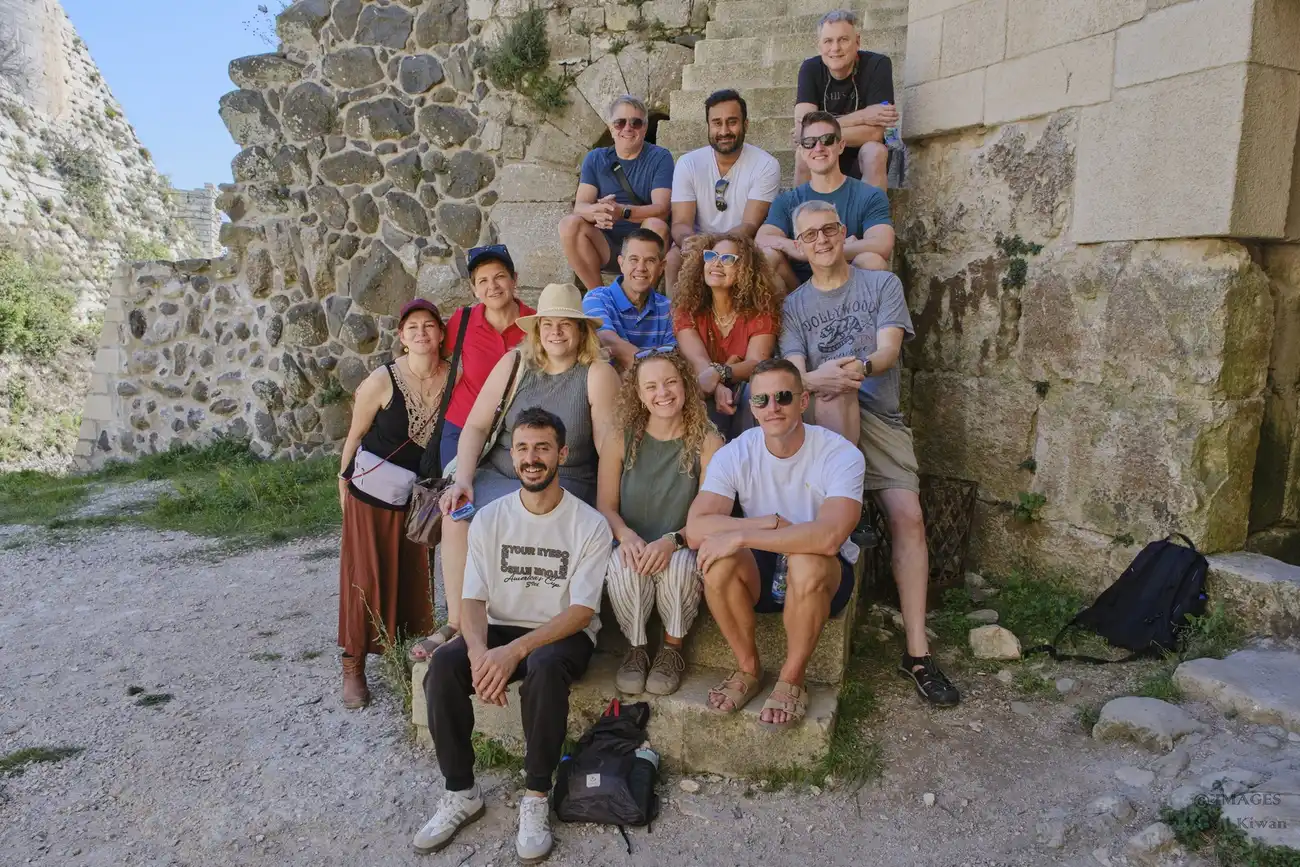
This is one of the most important subjects on which we can offer more than speculation. Women have travelled with Syrian Guides as solo bookings, joined our groups and sometimes explored familiar city streets independently during their stays. Many describe welcoming encounters, helpful local people and feeling more comfortable than they expected. Those are genuine personal accounts, not a promise that every woman will have the same experience or that harassment and wider security risks do not exist.
We can arrange female guides where available, explain dress conventions and local etiquette, choose appropriate accommodation and discuss personal preferences, arrival arrangements and which activities can be done independently with local advice. For a first visit, a guide can make the experience less stressful even for an experienced solo traveller.

Plamena travelled without a companion, but with Mary and the Syrian Guides team, and describes the personal connections that shaped her journey.
Read Plamena’s story →
Albena recounts her independent decision to travel, the practical obstacles, the guide’s role and warm encounters with Syrians.
Read Albena’s diary →
Sarah describes having room to take photographs and explore selected Damascus streets independently while joining an organised trip.
Read Sarah’s experience →We have also brought together accounts from Nicole, Alex, Agnes and other women in our article about women travellers in Syria. Different people travelled in different years, on different routes and with different expectations. These stories are worth reading as personal perspectives, not nationwide safety statistics.
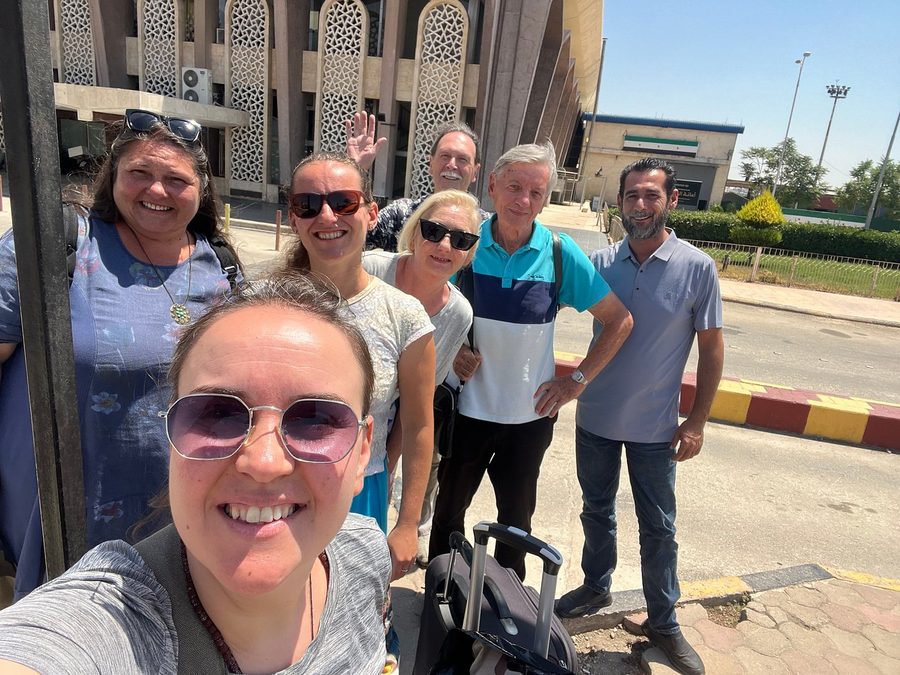
For a woman considering a trip, we recommend discussing comfort with solo sightseeing, personal space, accommodation, dress and local transport before booking. A good operator should answer these questions without dismissing them. The risk of harassment and crime cannot be excluded, even when individual travellers have felt welcomed.
Crime, theft, robbery and kidnapping: an honest distinction
One of the most frequent things our guests tell us is that they were surprised by how relaxed they felt in local markets and how helpful people were. In our own guest experience, everyday encounters with shopkeepers, families and guides are far more common than anything resembling the scenes often imagined from foreign news coverage.
However, we cannot demonstrate that Syria has one of the world’s lowest crime rates, and we would not tell guests that robbery, kidnapping or violent crime cannot happen. Government advisories document these risks, and the consequences of a serious incident can be severe. Our direct experience is limited to the people and routes we work with; it is not a scientific survey of all regions or visitors.
Keep valuables secure, avoid flashing cash, pay attention in crowded streets and choose reliable taxis or transfers.
Ask local hosts about unfamiliar districts and avoid unnecessary independent travel to remote places or after dark.
Do not enter restricted buildings, old battlefields or isolated roads for dramatic photographs.
Kidnapping, politically motivated violence and other threats cannot be eliminated by a guided itinerary. Follow official advice and current local instructions.
The most credible way to describe safety is specific: what happened on our guided tours, in which places, and what precautions we take—rather than claiming the entire country is risk-free.
What are road conditions really like?
On established routes between major cities, organised road travel is possible, and the EU Agency for Asylum has described improvements in daytime movement and the number of checkpoints compared with earlier periods. At the same time, UK and Canadian guidance warn about poor road maintenance, unsafe driving standards, dangerous night driving, sudden road closures and security checkpoints. Both findings matter: a road can be commonly used and still present serious hazards.
What to expect in practice
- Journey times may be longer than Google Maps suggests, even between familiar cities.
- Some surfaces are damaged, lighting is inconsistent and traffic behaviour differs from Europe.
- Checkpoints or temporary security restrictions may require waiting or a route change.
- Airport and border roads may be affected by wider regional events.
- Night driving outside cities is best avoided where it is not essential.
- A private vehicle with an experienced local driver is easier to adapt than several tightly connected public transfers.
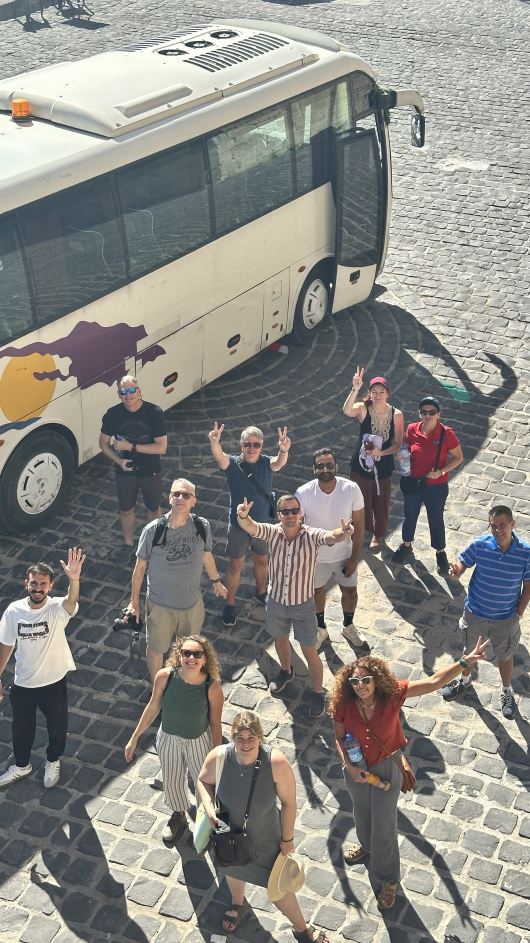
At Syrian Guides, we arrange suitable transportation according to group size, check the intended route, plan practical rest stops and respond to route changes when we become aware of them. An advertised itinerary remains provisional where local authorities or conditions require changes.
Visa approval, flight changes, airports and imperfect regulations
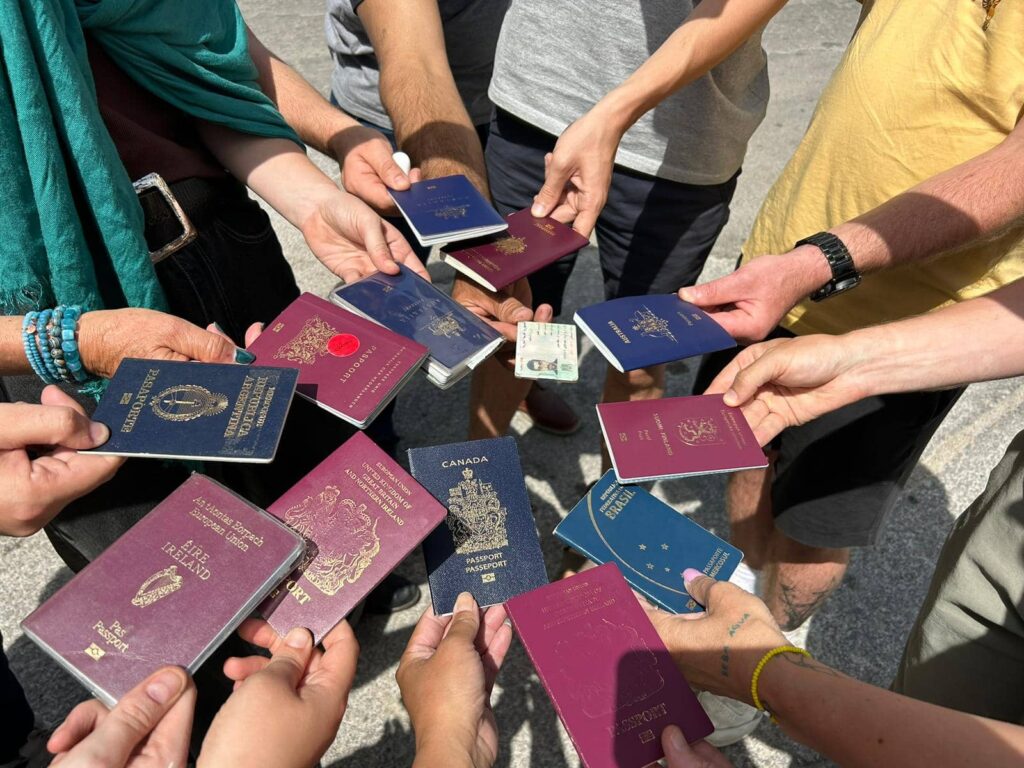
This is one of the biggest differences between Syria and an established package-holiday destination. Sometimes the challenge is not a dramatic safety incident but a simple administrative uncertainty: a traveller is unsure what documentation an airline expects, an approval takes longer than anticipated, or a border officer requests additional confirmation.
From our operating experience, some people have been unable to board flights because the airline did not accept or could not confirm an approval document. Border procedures can vary by nationality, entry point and changing decisions by the relevant authorities. Even when we have prepared a client’s paperwork, the final decision belongs to the airline and immigration officials.
Perception: the country is more than the headlines, but the warnings still influence insurance, bookings and personal decisions. Regulations: entry procedures and document requirements are not always as clear or predictable as tourists expect. Infrastructure: hotels and transfer services exist, but systems can be uneven. Contingency: a reliable trip needs backup options instead of relying on every service working perfectly.
These themes also arise in our conversations with guests and travel partners; they explain why local coordination matters.
- Tell us your exact passport nationality and entry route. A visa-on-arrival process through Lebanon may be different from what is required to board a flight to Damascus.
- Check advance approval requirements well before departure. Some nationalities or passenger profiles need additional time, paperwork or confirmation.
- Confirm conditions with the airline. We assist with documents and explanations but cannot guarantee that an airline will accept them at check-in.
- Use flexible tickets when practical. Consider changeable or refundable fares and avoid extremely tight connections.
- Allow a buffer. You may need to wait at an airport or border, change a transfer or spend an extra night in a transit city. Keep some additional funds available.
- Prepare for an itinerary adjustment. Local events, airport changes or a site closure can force a sensible change of plans.
The purpose of arranging a tour with Syrian Guides is not that we can control the government or guarantee a flight; it is that we know which questions to ask, how to prepare the paperwork we are authorised to handle, which hotels and transfers to arrange and whom to contact when a complication occurs. See our updated Syria visa guide before making reservations.
Internet coverage, electricity, mobile phones and cash
You can often connect in the major cities, especially in hotels and areas where local mobile networks serve the population. But service consistency varies. The UK and Canadian advisories document intermittent electricity, internet and telecommunications, and interruptions may occur with little warning. A good hotel may have backup power and functioning Wi-Fi without this meaning every destination will.
Internet and mobile coverage
Do not assume that your home mobile plan includes Syria, or that an international eSIM works on your specific device and route. Ask about a local SIM where eligible, check registration requirements and verify whether a chosen hotel provides functioning Wi-Fi.
Download important reservations, contact details and offline maps in advance. Mobile location services may sometimes be inaccurate; never follow an app blindly into an unfamiliar road or border area. See our practical internet guide.
Power and payments
Bring a power bank, charging cable and some flexibility around outages. Many modern visitor-oriented hotels provide electricity backup, but availability and consistency differ. Syria is still largely cash-based for foreign tourists; do not assume your foreign bank card or an ATM will work.
Carry an appropriate amount of clean, accepted cash in suitable denominations, confirm current payment rules and keep essential funds in a secure place rather than displaying them in public.
These limitations do not mean you cannot enjoy the country. They mean you should avoid expecting the seamless digital payments, transport apps and always-on connectivity common in London or Paris.
Food, drinking water, healthcare and emergency response
Local food, shared meals and hospitality are among the joys travellers remember. Nevertheless, no restaurant, pharmacy or bottled-water habit can remove every health risk. Where drinking-water quality is uncertain, choose reliably treated or sealed bottled water, follow ordinary food-hygiene precautions and disclose allergies.
Medical care and emergency response are significant considerations. The UK government and US Department of State describe shortages, damaged facilities and limited access to specialist services in parts of Syria. A serious emergency may require evacuation, and such an evacuation may be difficult or unavailable. Anyone with a substantial medical condition, mobility needs or time-critical medication should discuss the situation with a health professional and insurer before deciding whether to travel.
Arrange a travel-health appointment where possible, carry enough permitted medication, and do not assume emergency treatment will be free or equivalent to care at home. Check current recommended vaccinations and disease precautions with a qualified professional.
Travel insurance: what Syrian Guides includes, and what it covers
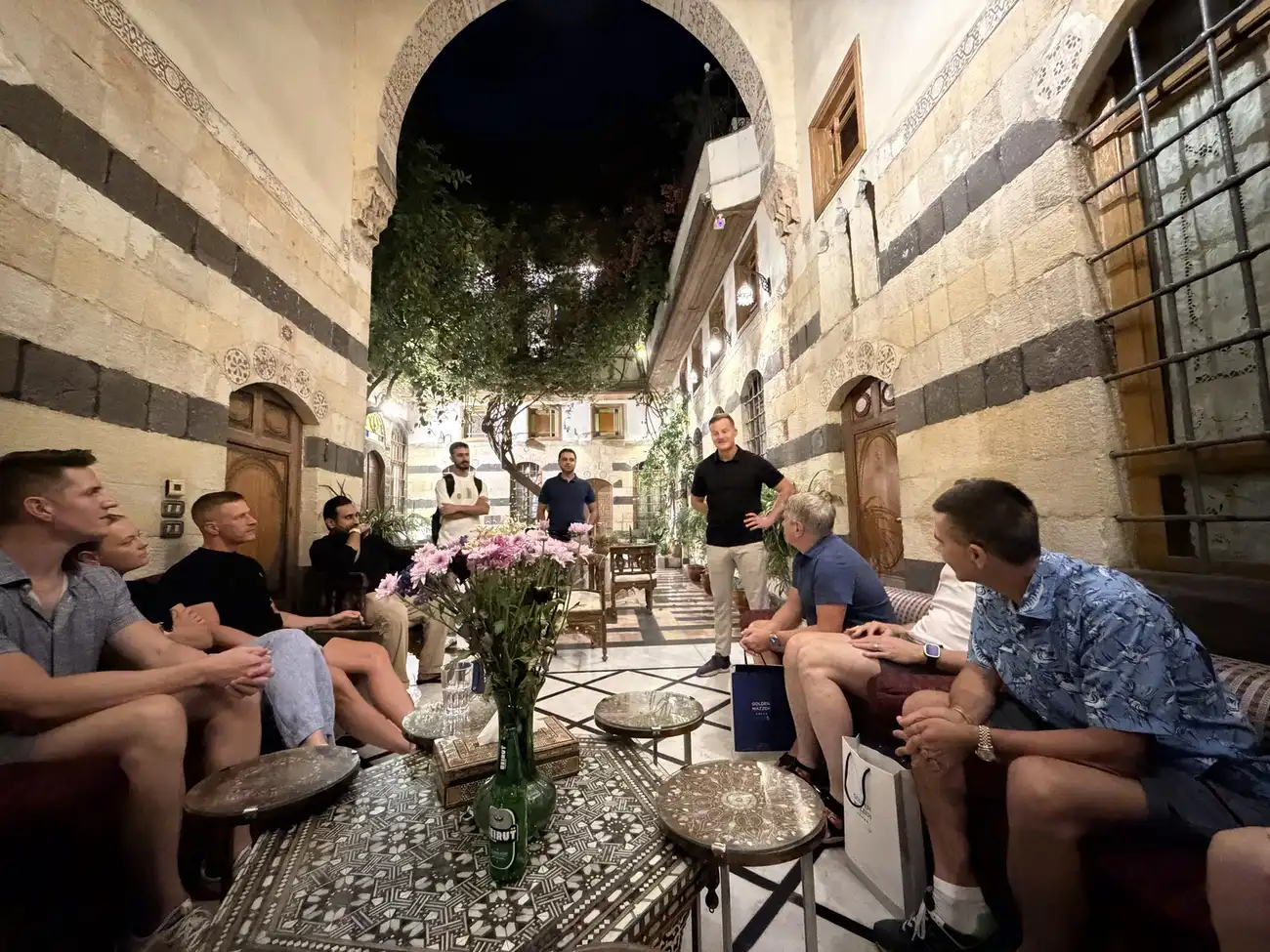
Travel insurance is an important difference between a fully organised Syrian Guides package and trying to arrange every service independently. Travel insurance is included in our group-tour packages at no extra charge. For a private tour, travellers can request coverage as part of the quotation and should confirm that it is included in writing.
Our published insurance page describes the Traveler Gold plan issued by the Syrian Kuwaiti Insurance Company, with assistance arranged through its designated service partners. The posted schedule lists benefits including medical emergencies, hospitalisation, assistance and repatriation, subject to conditions and the actual certificate issued to the insured traveller.
The limitations are just as important as the benefits. The published exclusions include expenses arising from war, revolution, terrorism and riots, as well as certain pre-existing medical conditions and other situations. We do not describe this insurance as comprehensive protection against every security or travel risk. Some benefits may have different exclusions or conditions; the full wording and certificate govern each claim.
Government advisories can also affect other policies you may hold. Ask your insurer directly whether cover applies to Syria despite your government’s advice, and request the certificate for your own trip. For detailed policy benefits and exclusions, read Syrian Guides’ Traveler Gold insurance information. Our role is to arrange the stated policy, provide documents and explain the practical process—not to make coverage decisions on the insurer’s behalf.
How to behave, photograph and interact respectfully
It is possible to have warm, spontaneous encounters in Syrian homes, cafes and workshops. A little patience and respect make those experiences more meaningful. But culture, local laws and security restrictions should not be treated as the same thing.
- Ask permission before photographing people, especially children, and respect anyone who declines.
- Do not photograph military or security infrastructure, checkpoints, personnel, sensitive government buildings or conflict damage where doing so is prohibited or could create risk.
- Respect dress and visitor rules in mosques, churches, monasteries and local communities; requirements differ.
- Never enter restricted buildings or private property merely because they look interesting or abandoned.
- Carry identification as required by local authorities and avoid involvement in political demonstrations.
- Journalists, commercial filming crews and drone users may require separate permissions; casual tourism arrangements should not be assumed sufficient.
Guides help explain etiquette and can seek the relevant information before a visit, but local laws and official instructions ultimately apply to every visitor.
Why an experienced local tour company makes a real difference
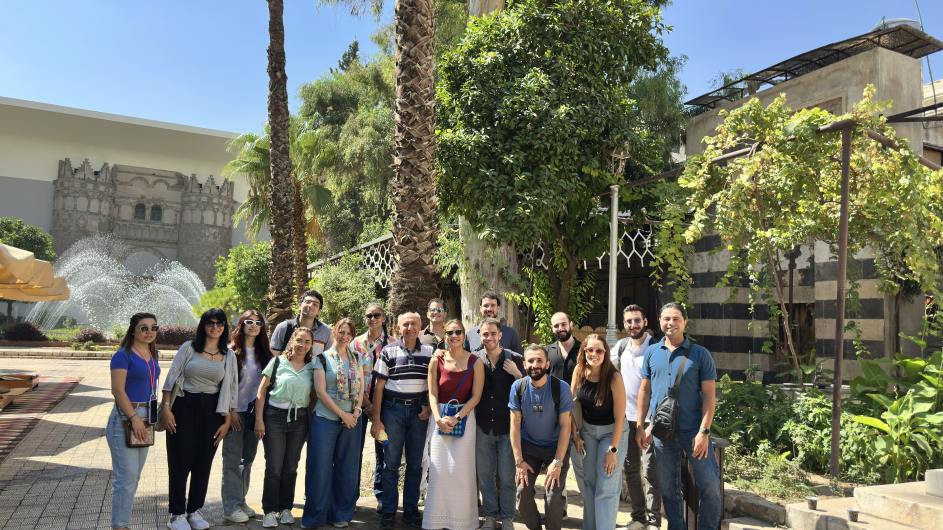
When a traveller contacts us, we do more than give them a list of landmarks. We ask about their nationality, entry point, travel experience, interests and practical needs. We arrange the hotels, transport and guides that suit the trip, help with the entry paperwork we are allowed to organise and discuss which routes are appropriate for the particular dates.
Guiding international visitors since 2019 has taught our team that a successful trip is not only about beautiful places. It also means a driver who knows the route, a hotel that really has backup electricity, a clear airport pickup arrangement, someone who can explain a misunderstanding at a checkpoint and a plan for what happens if a site is unexpectedly closed.
What we arrange and explain
- Nationality-specific visa assistance and entry-document preparation where applicable.
- Pre-arranged airport, Beirut and Jordan transfers, subject to current availability.
- Accommodation that we know, with realistic expectations of services.
- Experienced drivers and guides with local knowledge and cultural expertise.
- Advice on photography, etiquette, areas not to visit and current access to sites.
- Changes to the itinerary when circumstances require an alternative.
- A current insurance certificate and explanation of included coverage for eligible tours.
What still cannot be promised
- Guaranteed entry or airline boarding.
- Zero security risk in an entire country or a particular city.
- Every road, hotel, historic site or flight remaining open as booked.
- Unlimited medical care, evacuations or consular assistance.
- Insurance payment for excluded or non-eligible events.
We encourage travellers to read about our local team, compare group tours and private tours, and ask detailed questions before paying. Our goal is to create meaningful, responsible cultural journeys—not to sell an image of guaranteed safety.
What if something goes wrong during the journey?
A flexible traveller should still have a plan. It is helpful to distinguish manageable travel complications—such as a delayed transfer, change of hotel or missed connection—from a medical or security emergency, which may be beyond the ability of any tour provider to resolve.
Confirm status with the airline; contact your operator about feasible alternatives, and be prepared for extra accommodation and costs. No route is guaranteed to stay open.
Keep documentation available and deal directly with the carrier or authorities. A local operator can help clarify requirements or rebook services, but cannot compel admission.
Pause, follow local instructions and review a different route or itinerary. Do not attempt to bypass a closure or checkpoint.
Contact local emergency services when available, your insurer and appropriate authorities. Assistance and evacuation capacity can be severely limited; an operator cannot replace them.
Before departure, share your itinerary and emergency contacts with someone at home, carry offline copies of bookings and documents, and keep a financial buffer. If your trip depends on every element operating perfectly, reconsider whether now is the right time.
So, should you travel to Syria now?
There is no single answer for every person. It depends on your passport, personal circumstances, route, experience, insurance, comfort with uncertainty and the official advice from your country.
To learn about Syrian culture and people, not to seek danger or make sensational content.
Hotels and museums operate, but flights, borders, mobile coverage and opening arrangements can change.
I have considered the security warnings, consular limits and insurance implications myself.
My nationality, flight or land entry route, permits and carrier documentation have been reviewed.
I can accommodate extra waiting, a route adjustment, a delayed connection or an unexpected overnight stay.
I have the actual certificate, read the policy exclusions and know how to contact the assistance provider.
For many culturally curious, experienced travellers, the visit they experience with a trusted local team is calmer, warmer and more ordinary than the image they expected. That is the side of Syria we want people to discover. The possibility of serious events nevertheless remains, and postponing may be the right choice for some people.
“You do not need to be fearless to appreciate Syria. You need curiosity, patience, respect for local people and an informed understanding of the journey.”
Syrian Guides editorial perspective
What recent travellers actually experienced in Syria
Official warnings describe the risks of travelling to Syria. Traveller accounts answer a different question: what did it actually feel like on the ground for people who came anyway? We reviewed recent videos and travel diaries from visitors who crossed by land, walked through Damascus, travelled north to Aleppo and Maaloula, and moved through the main tourism routes with local support. Their experiences are personal, not guarantees—but together they add context that a government advisory cannot provide.
Several travellers began their trips visibly nervous because the Syria they knew came mainly from years of conflict reporting. Once inside the country, many described ordinary street life, welcoming interactions and a much greater sense of comfort than they expected. At the same time, the strongest accounts also recognise that conditions are not identical in every part of the country, which is why travelling with current local knowledge makes the experience smoother and more reassuring.
One recent female traveller arrived openly nervous, saying that the image of Syria she had carried for years was difficult to ignore. Her border crossing was delayed for several hours because the system temporarily stopped working, but when she eventually crossed she described the process as surprisingly easy and the people at the border as friendly.
The next day she walked around Damascus on her own before meeting Syrian Guides. Her description was unusually direct: she said she felt “incredibly comfortable” and “incredibly safe”, noted how many women were out on the streets, and said the city felt far more relaxed and ordinary than she had expected. Later in the same trip she also stressed that the country was not fully settled and that the realities differ by region.
Another pair of recent visitors ended their Syria journey by answering the safety question directly. Their conclusion was that the places most tourists were visiting—including Damascus, Aleppo, Homs and the coastal areas—felt safe to them during their trip. They immediately qualified that statement: some southern and northeastern areas were less stable or inaccessible, and they advised travellers to use a knowledgeable local guide because a foreign visitor may not know which villages or roads have changed status.
This is one of the most useful distinctions in all the firsthand material: tourist-route experience cannot be extrapolated to the whole map of Syria.
Carrie Patsalis travelled overland from Lebanon shortly after the political transition. At the border she described officials as relaxed and friendly and said the entry process was very easy. In Damascus she filmed hotels, markets, family gatherings, Christmas lights and everyday neighbourhood life.
Her account also preserves the nuance we think matters. On New Year’s Eve she was uncomfortable hearing celebratory gunfire and stayed indoors rather than treating it casually. Her trip shows that a traveller can feel welcomed and comfortable overall while still encountering situations that deserve caution.
Syifa Adriana said clearly that she did not think she would have had the courage to come to Damascus by herself without a trusted local contact. Once there, however, her account became much less about fear and much more about people: craftsmen, cafés, children, galleries, neighbourhoods, food, churches, monasteries and ordinary encounters.
That change in focus is important. She did not claim that Syria had become risk-free; rather, her own anxiety stopped being the main story once she began experiencing the country at street level.
American traveller Doug Barnard described Damascus as celebratory and repeatedly commented on how friendly people were toward him. His videos show markets, cafés, the Umayyad Mosque, nightlife and conversations with Syrians rather than a visitor moving through an isolated security bubble.
He also discussed armed security personnel openly with his local guides. His own impression was that the people he encountered were welcoming, but this remains a personal observation from his route and moment in time—not a security assessment for every traveller or every region.
Across the uploaded accounts, visitors repeatedly describe being offered bread, coffee, tea, sweets, small gifts and help from strangers. One traveller exploring Damascus said that the interactions themselves—children saying hello, artisans opening workshops, people inviting her to sit and drink tea—became the defining part of the trip.
This does not cancel the political and security risks. It does explain why travellers often return with a picture of Syria that is dramatically more human and ordinary than the one they had before arrival.
“I can just speak from my personal experience.”
That is the right way to read every traveller story on this page. A positive trip is evidence of what one person experienced—not a promise about what another traveller will experience later.
So what should you take from these stories?
The clearest conclusion from these accounts is that the day-to-day travel experience on established routes is often far calmer, more welcoming and more normal than first-time visitors imagine. Two things can be true at the same time: official advisories may remain cautious, while travellers on the ground can experience functioning cities, open attractions, warm hospitality and a high level of day-to-day comfort.
That is why we encourage travellers to look at the exact route they plan to take, read recent firsthand experiences and speak with a local operator who is working on the ground now, rather than judging the entire country only through older or very broad impressions.
Our own guests add another layer. Start with Plamena’s journey, Albena’s personal diary and Sarah’s Christmas experience. We also maintain a collection of women travellers’ accounts and a Syria vlog library so readers can watch longer journeys and decide for themselves.
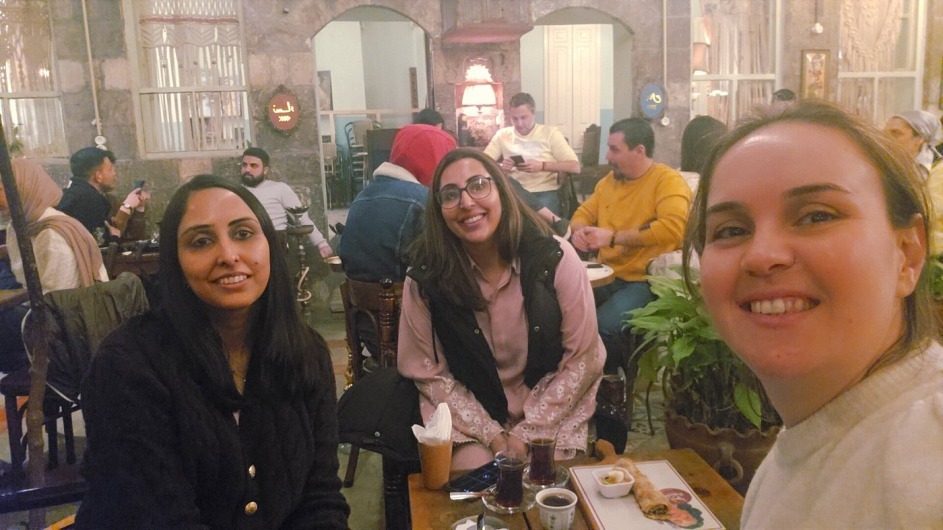
Our conclusion from these accounts is not “ignore the warnings.” It is that anyone researching Syria deserves both halves of the picture: the serious risks described by governments and the lived experience of people who have recently travelled the routes tourists actually use.
Frequently asked questions about travel to Syria
Is Syria safe to visit in 2026?
On our established itineraries, guests continue to visit the main cultural destinations, and our own tours have not had serious guest safety incidents to date, based on our internal experience. That is encouraging first-hand information but not proof that the whole country is safe. UK, US and other official warnings remain in force.
What is everyday travel actually like?
Guests visit souqs, heritage sites, restaurants, monasteries, galleries and family-run hotels, and meet local people. Much of the day is ordinary sightseeing and cultural exchange, with possible administrative or infrastructure interruptions.
Where do Syrian Guides tours go?
Established routes include Damascus, Aleppo, Bosra, Palmyra, Homs and Hama, subject to conditions for each departure. We are exploring possible eastern extensions but do not guarantee access to every region.
Can women travel alone to Syria?
Women have joined our tours as solo bookings and written positive accounts. Read the experiences of Plamena, Albena and Sarah on our website. A solo booking with an organised guide is not the same as completely unsupported independent travel; risks and individual comfort vary.
Why travel with a local company?
A company can help with visa documentation, transfers, hotel selection, local etiquette and itinerary changes. It cannot remove security risks, guarantee boarding or replace emergency services.
What if I cannot board my flight?
Carriers may require advance approval or additional documents. We help clarify expected paperwork, but only airlines and border authorities can make the final decision. Flexible travel bookings are advisable where possible.
Does Syrian Guides include travel insurance?
Yes, group tours include our specified policy. Private-tour coverage can be arranged on request. The published Traveler Gold schedule lists medical and evacuation benefits, but its exclusions include war and terrorism; ask for the actual certificate and read the terms.
What about crime and kidnapping?
Many guests report friendly interactions and feeling comfortable during their own tours. Serious crime and kidnapping risks nevertheless exist, and reliable comparative crime statistics do not support claiming the whole country is one of the world’s safest.
Who is the trip best suited to?
Curious, experienced, flexible cultural travellers rather than thrillseekers or people expecting a fully standardised holiday experience.
How we balance first-hand experience with independent reporting
We have deliberately used two kinds of information in this guide. First are Syrian Guides’ direct observations from guiding visitors since 2019, organising tours, arranging visas and transfers, visiting cultural attractions and hearing guest feedback. Second are independent sources that describe risks, policy requirements and wider regional conditions. Neither kind of evidence should pretend to answer every question.
Operator-reported claims—including our departure operations and lack of serious safety incidents involving our guests—come from our company’s own experience. They have not been independently audited and should not be treated as nationwide accident or crime statistics. Individual guest articles reflect visits in their stated years, not necessarily the conditions of November 2026.
External and practical references
- UK FCDO travel advice for Syria — latest warning and consular implications
- US Department of State’s Syria advisory — security and entry information
- EU Agency for Asylum: July 2026 movement assessment — changes in travel between major cities and regional limits
- Syrian Guides: visa requirements — our practical guidance, to be reconfirmed before travel
- Syrian Guides: insurance policy and exclusions — stated benefit levels and contract conditions
- Syrian Guides: female travellers’ experiences — first-hand traveller stories and links
Editorial review: 8 November 2026. The situation, airline requirements, access permissions and insurance offerings may change. Before booking, check official sources and ask for current written arrangements. This article is a perspective from a local travel operator, not a government safety notice or an independent risk certification.
Would Syria be the right trip for you?
Explore what we actually offer, then ask us about practical details before making a decision.
More guidance and guest perspectives
Practical planningVisa Requirements for SyriaFind the entry paperwork and approval considerations for your passport.Read more →Real-world travelWhat It’s Like to Travel to Syria in 2026An overview of logistics, hotels, money, local life and the travel experience.Read more →A guest’s perspectiveAlbena’s Journey in SyriaA traveller’s personal observations and memorable encounters.Read more →