
The stories behind Syria’s landmarks
Khan Asaad Pasha in Damascus: A Palace for Merchants
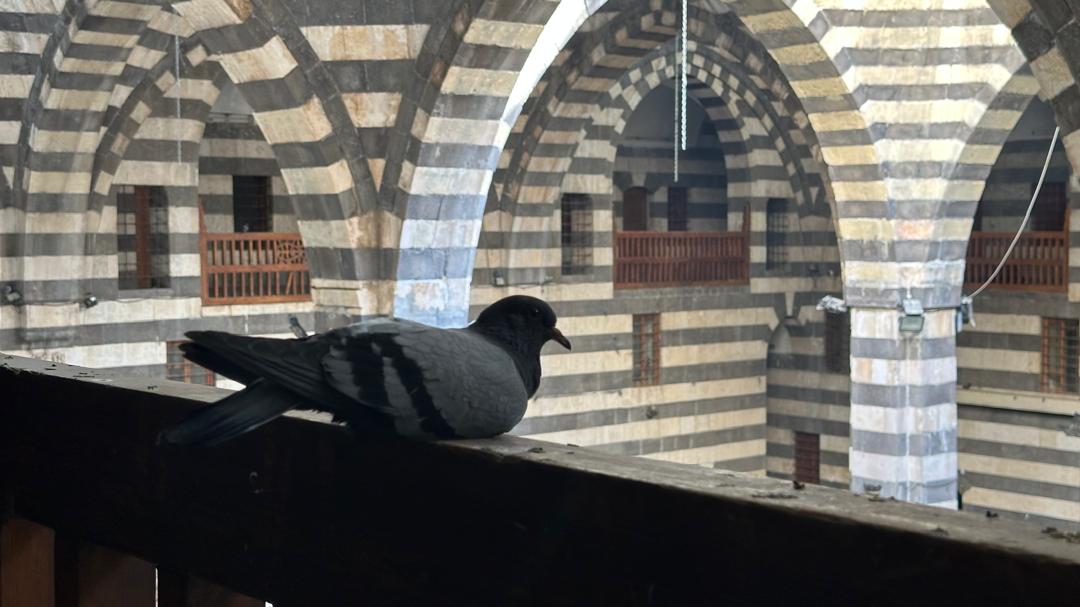
Just when you think you’ve seen everything in Damascus’s spice market, the city opens another door.
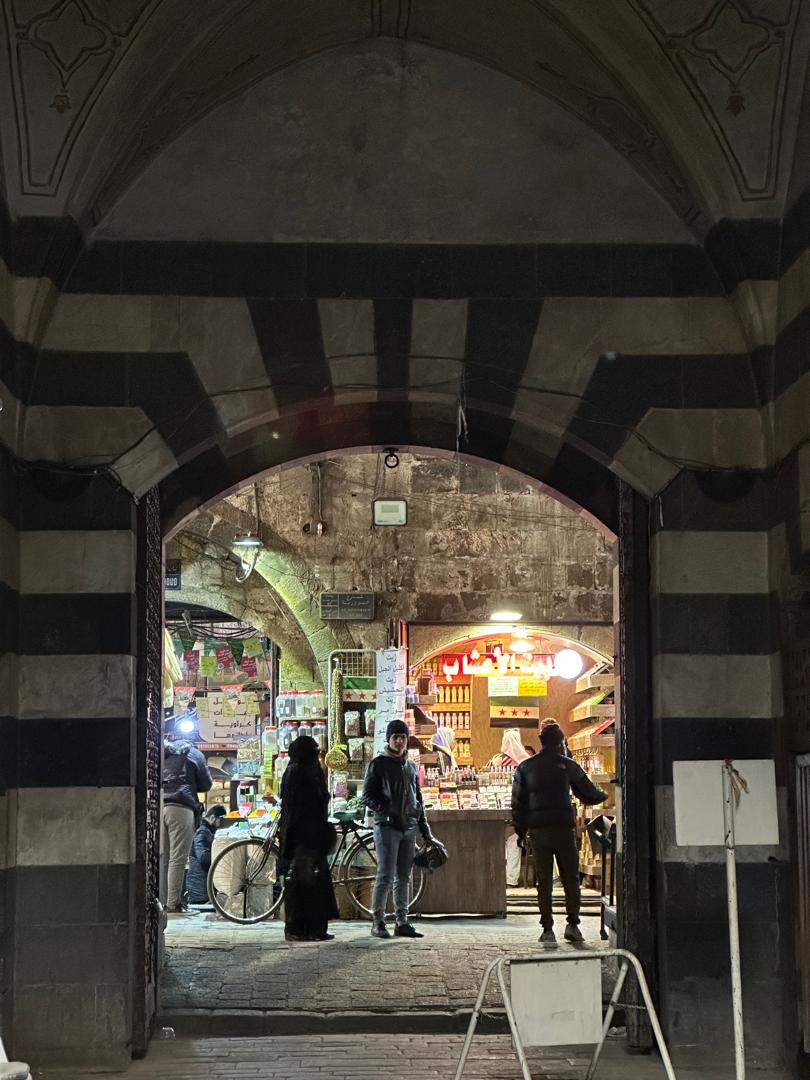
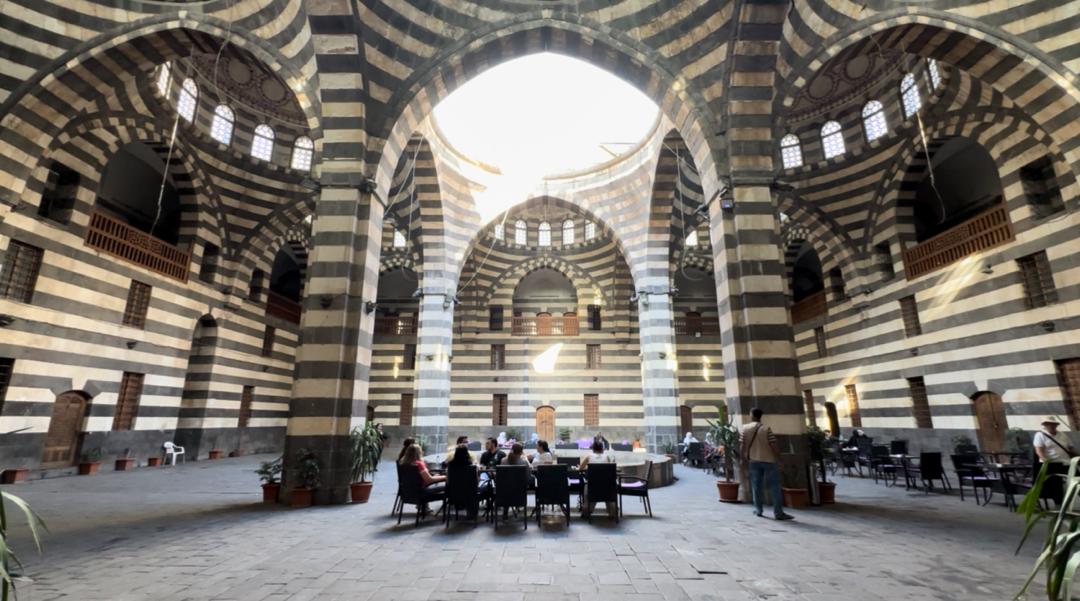
Outside, Al-Buzuriyah Souq is full of movement: stalls of spices and sweets, voices, shoppers and the familiar bustle of an old trading street. Step inside Khan Asaad Pasha and the scene changes. Towering striped arches frame a remarkable hall, light pours down from above, and a fountain occupies the centre.
It looks almost like a palace. Yet this extraordinary place was built not for a royal family, but for merchants who arrived in Damascus to trade, rest and begin another day of business.
Khan Asaad Pasha at a Glance
Where Merchants Made Damascus Their Home for a Night
Imagine arriving in 18th-century Damascus after days on the road. Your goods need storing, your accounts need checking, and tomorrow’s negotiations are already on your mind. A good khan made all of this easier.
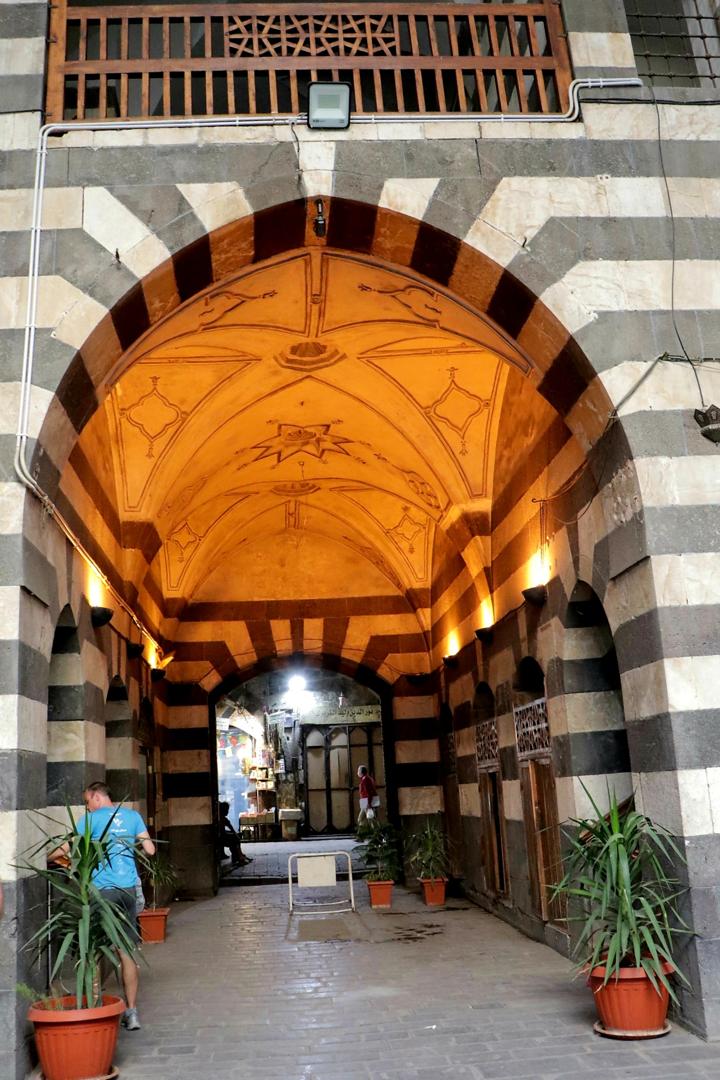
Built between 1751 and 1752 under the governor As’ad Pasha al-Azm, the khan gave travelling merchants a place to work and stay. The ground floor served trade and storage; rooms around the upper level accommodated guests.
Unlike a rural roadside caravan stop, this was a building in the middle of a crowded city market. Its design placed shops and merchants at the heart of commercial Damascus.
As’ad Pasha was also responsible for the nearby Azm Palace. One building welcomed a governor’s household and guests; the other welcomed people whose journeys kept the city’s economy moving.
That contrast is part of what makes this corner of Damascus so fascinating. In only a few minutes of walking, you can discover both the private world of a powerful family and the public world of international trade.
Look Up: This Is Where the Magic Happens
Most visitors first notice the bold stripes of dark basalt and pale limestone. The technique is known as ablaq, and here it wraps around enormous arches and piers in a repeating geometric pattern.
Then your eyes follow the arches upward. A series of domes and a skylit central space give the hall its extraordinary sense of height. The building is grand without feeling overwhelming, because light and shadow soften its strong stone surfaces.
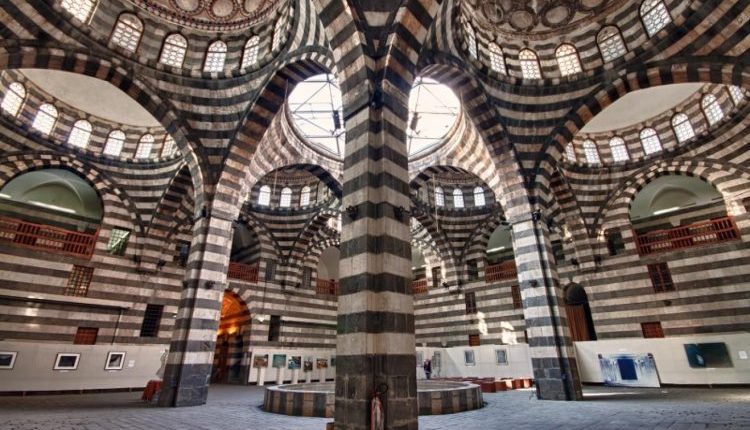
Stand near the centre and look straight up. Then walk toward a corner and look back. The same building feels entirely different from each position, as the arches overlap and the light falls across the stone.
Don’t overlook the upper galleries and the smaller openings around the hall. They help explain how this building once functioned as both a place of business and a temporary home.
Two Centuries of Trade, Then a New Life
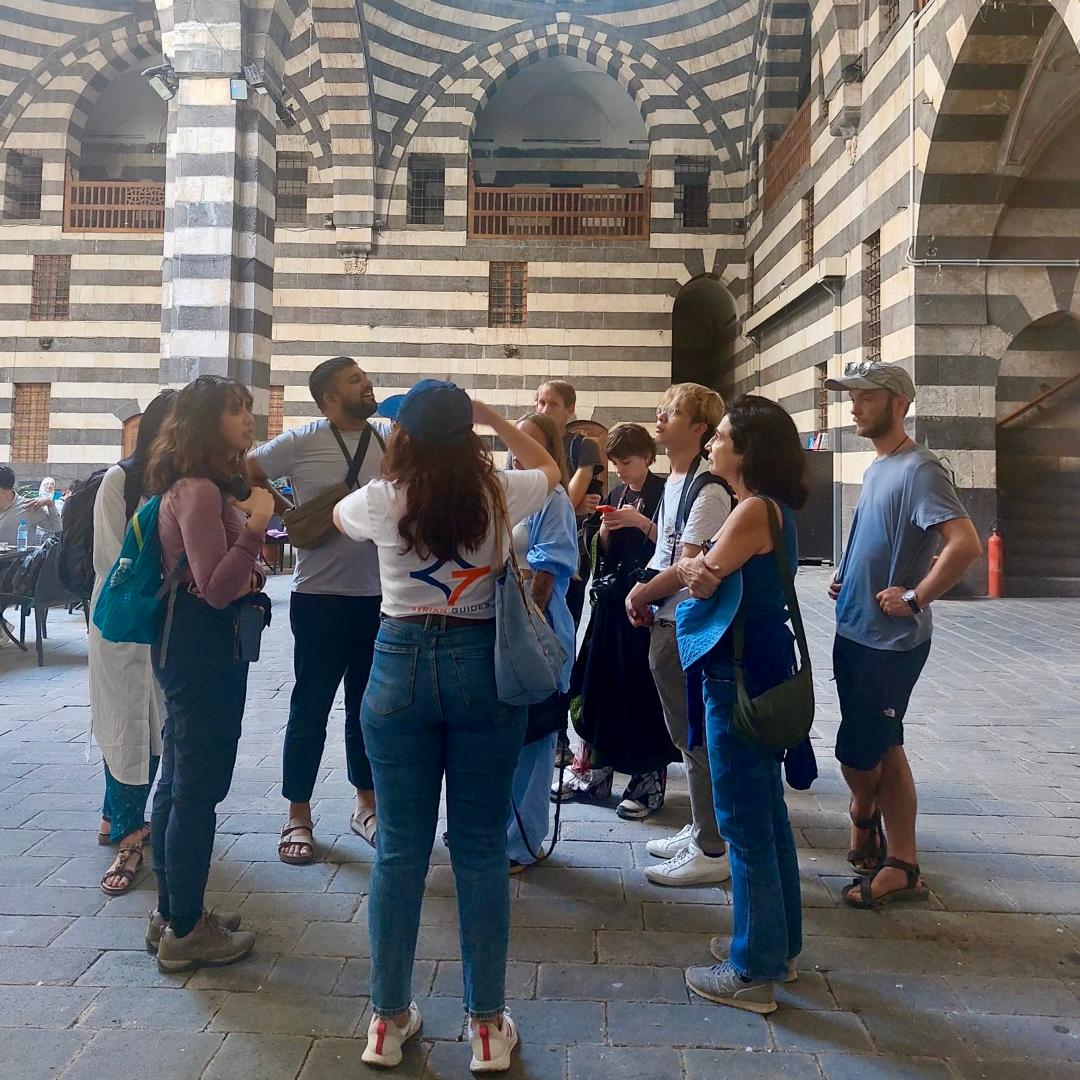
Trade patterns changed, and the khan eventually lost its original role as an inn for travelling merchants. In the 20th century, parts of the building were used for storage.
Its architecture also needed attention. Conservation work begun in the 1980s addressed damage to domes and supporting structures and helped preserve its intricate decoration.
Now the khan offers something different: an opportunity to understand the commercial life that once connected Damascus to a much wider world. It has also served as a setting for exhibitions and cultural activities.
How to Visit Khan Asaad Pasha
Find Khan Asaad Pasha on Al-Buzuriyah Souq in the heart of Old Damascus. It is an easy stop to combine with Azm Palace, the Umayyad Mosque and the nearby markets.
Allow roughly half an hour to wander, photograph the arches and take in the details without rushing.
- Look up: The vaults, domes and upper galleries are the highlight.
- Look around: Notice how the entrances and lower rooms connect with the market.
- Take your time: The best details reveal themselves as the light changes.
- Check access: Opening times, ticket prices and event arrangements may vary.
If an exhibition or special event is taking place, sections of the building may be arranged differently. Confirm visiting details locally rather than relying on fixed hours or fees.
Want to discover the khan’s story alongside the markets, Azm Palace and the historic lanes around them?
Explore our Damascus day tour →For the flavours of the surrounding market, read our local guide to Al-Buzuriyah Souq.
One Last Thought
Khan Asaad Pasha reminds us that Damascus was built not just by rulers and monuments, but also by the people who came to trade, travel and exchange ideas.
You might also enjoy
 Around the cornerShop Like a Local in Buzuriyeh SouqA market full of flavours, sweets and small surprises.Read the story →
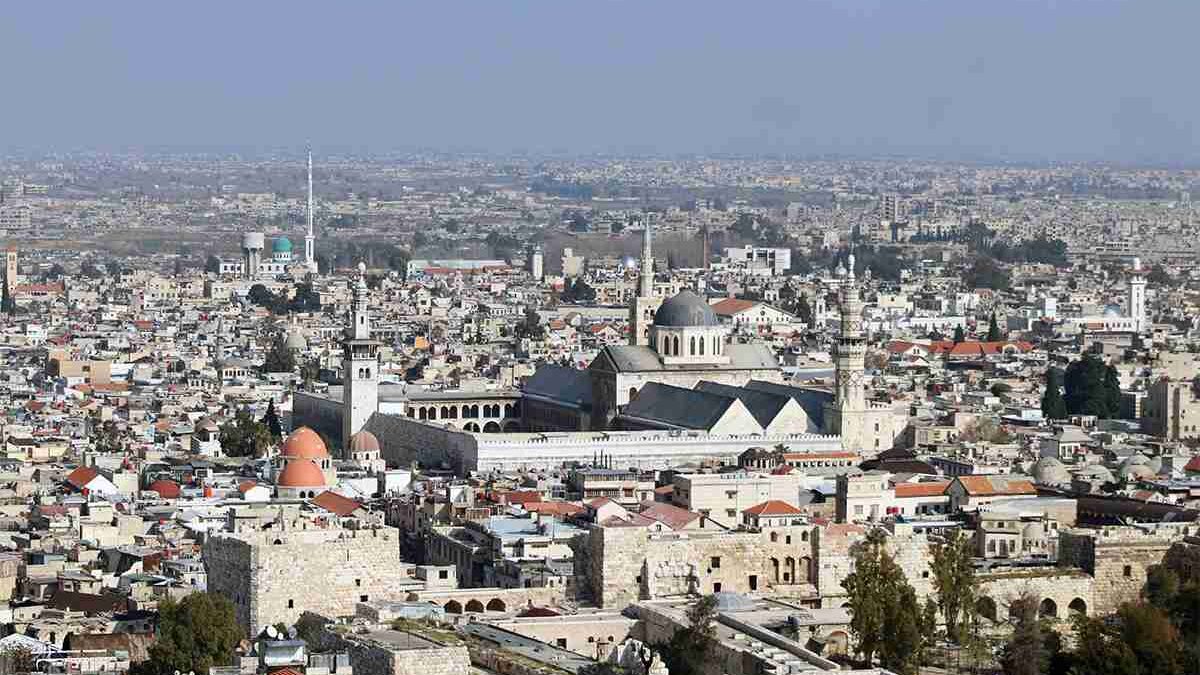 Walking itineraryOne Perfect Day in DamascusTurn the neighbouring landmarks into an unforgettable walk.Read the story →
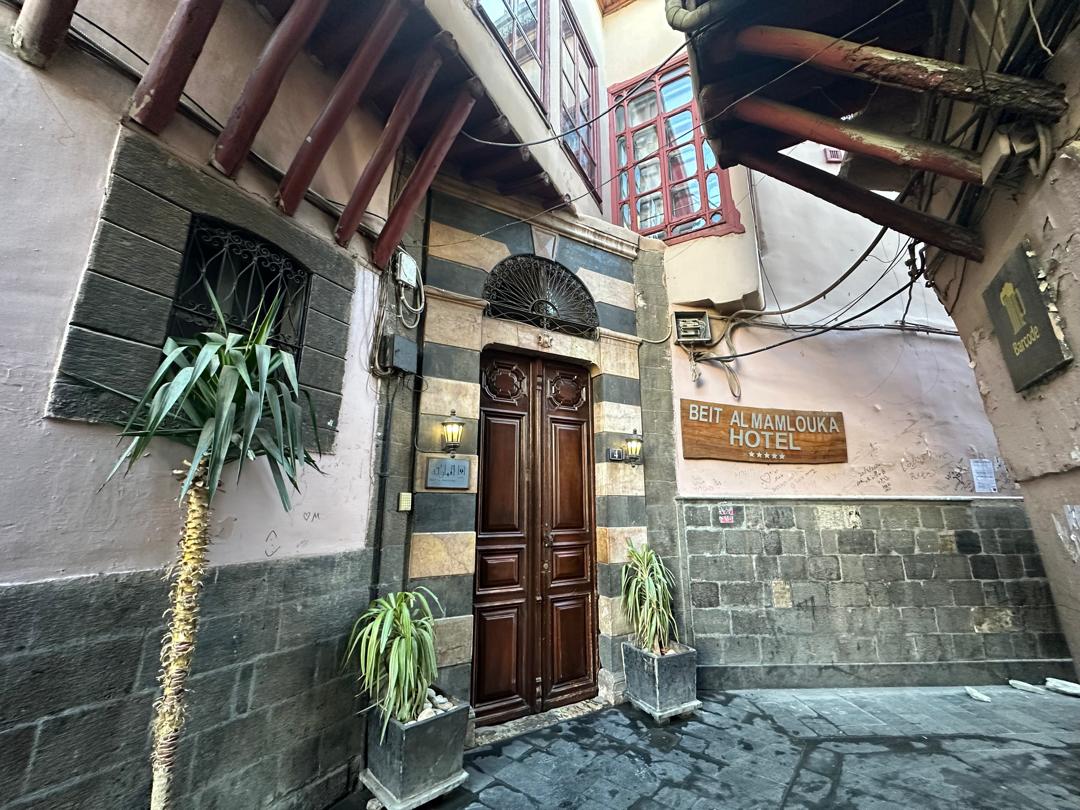 Hidden architectureWhy Damascus Hides Its Most Beautiful HomesDiscover the private courtyards behind the city’s doors.Read the story →
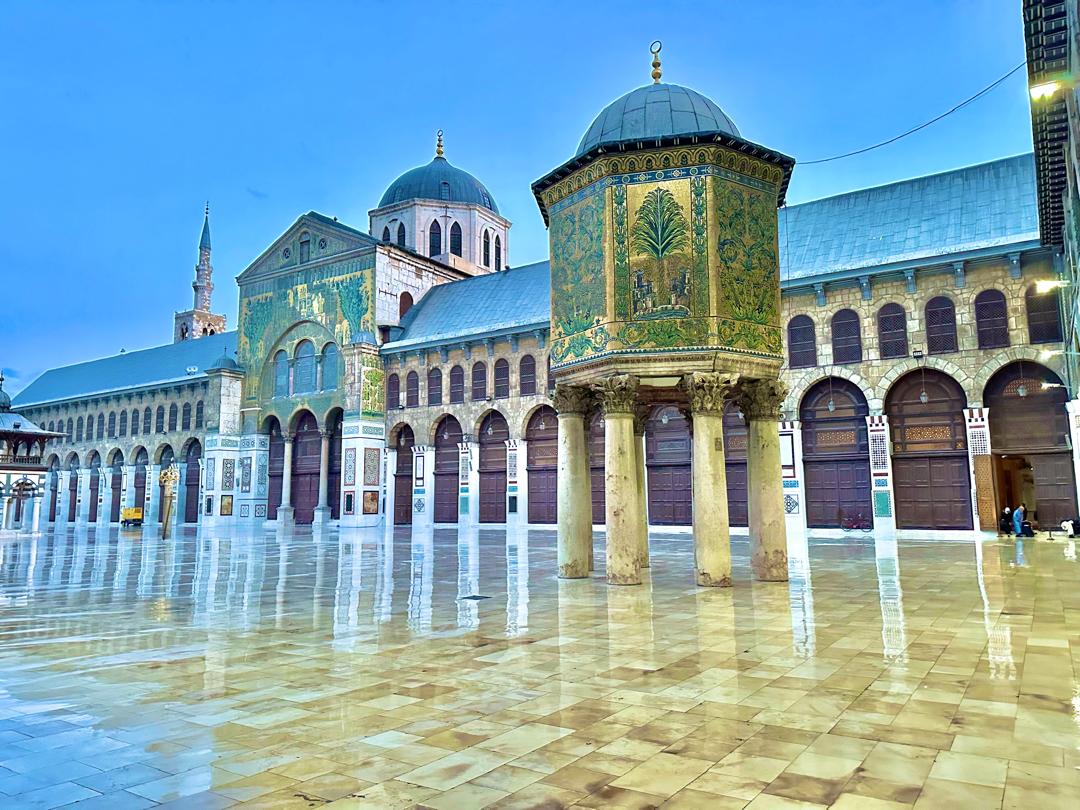 Nearby landmarkThe Umayyad Mosque Before You VisitAnother extraordinary chapter in the history of the Old City.Read the story →