
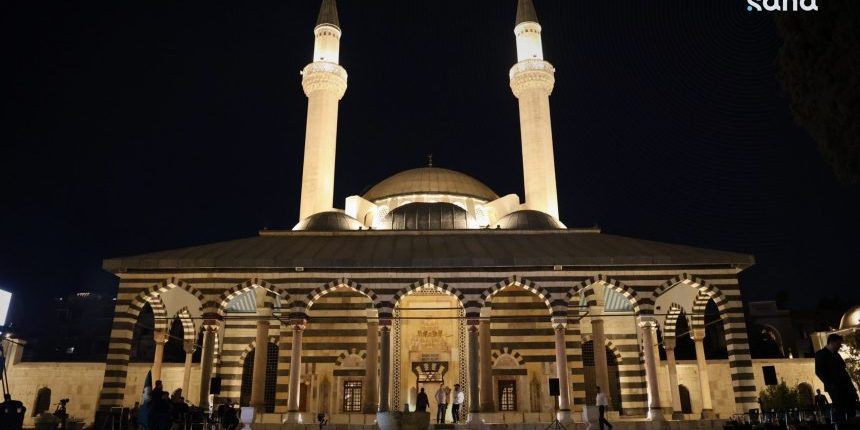
Sulaymaniyya Takiyya: Damascus’ Ottoman Sanctuary for Travellers
Long before tourism, Damascus welcomed travellers who arrived for a much longer journey: the pilgrimage to Mecca. An Ottoman complex on the Barada was designed to feed and shelter them.
West of Old Damascus, near the National Museum and the Barada River, stands the Sulaymaniyya Takiyya, a landmark of Ottoman architecture unlike the medieval mosques and courtyard houses most visitors know.
It was commissioned by Sultan Suleiman the Magnificent in the sixteenth century and planned under the direction of the great Ottoman architect Mimar Sinan. The complex was not created only for prayer. It combined worship, accommodation, food and education in a setting made for the movement of people.
After a long closure for restoration, the mosque section reopened on 31 October 2026. For visitors, this makes the complex especially timely—but it is important to distinguish the reopening of the mosque from the condition or accessibility of every building in the wider group.
At a Glance
A Mosque, Kitchen and Lodging in One Complex
Damascus was historically a major gathering point for pilgrims travelling south toward Mecca. Groups needed food, supplies, lodging and organised departure points before beginning their journey.
The Takiyya was designed to serve some of these practical and spiritual needs. Historical records describe a mosque, charitable kitchen, accommodation for visitors and facilities connected with learning.
The complex stood in a spacious area near the Barada, west of the medieval walled city. That location gave travellers room to gather while keeping them close to a major urban centre.
This combination of worship and hospitality matters. It shows that Ottoman public architecture could function as an organised social institution rather than simply a decorated prayer hall.
The modern term takiyya is often associated with a Sufi lodge or charitable religious institution. Here its meaning is linked particularly with hosting and helping pilgrims.
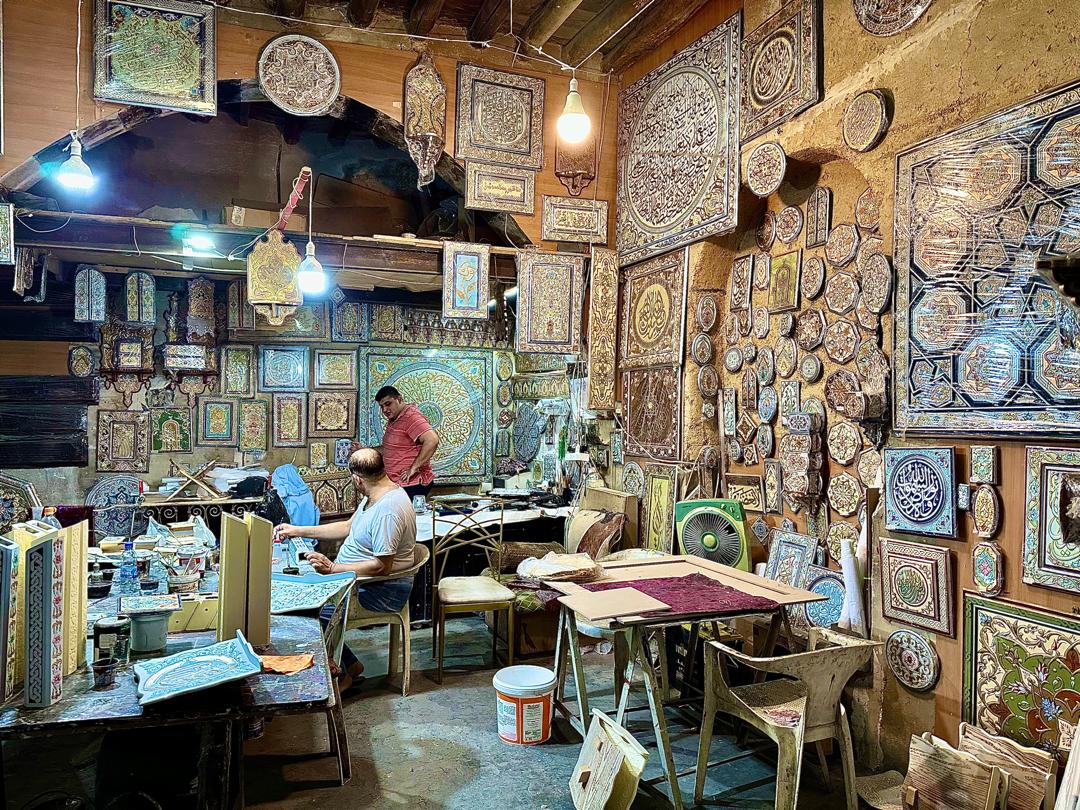
Traditional crafts remain a rich part of Damascus’s wider cultural landscape. This photograph shows an Ajami painting workshop elsewhere in the city, not a room identified as part of the Takiyya.
The historic complex has also been associated with craft and commercial spaces, but individual workshops and visitor access change over time.
Ask what is currently open rather than assuming that every shop shown in an old brochure is still operating today.
Sinan’s Plan Meets the Stonework of Damascus
The Sultan’s complex was constructed in stages in the mid-sixteenth century, with the principal mosque and later madrasa parts completed across the 1550s and 1560s.
The design is associated with Mimar Sinan, whose work shaped Ottoman architecture over decades. Local and imperial builders helped implement the plan, making it a project of many skilled hands.
Visitors recognise the mosque by its dome and slender, pencil-like minarets. These forms feel different from the heavy square minarets commonly seen elsewhere in Damascus.
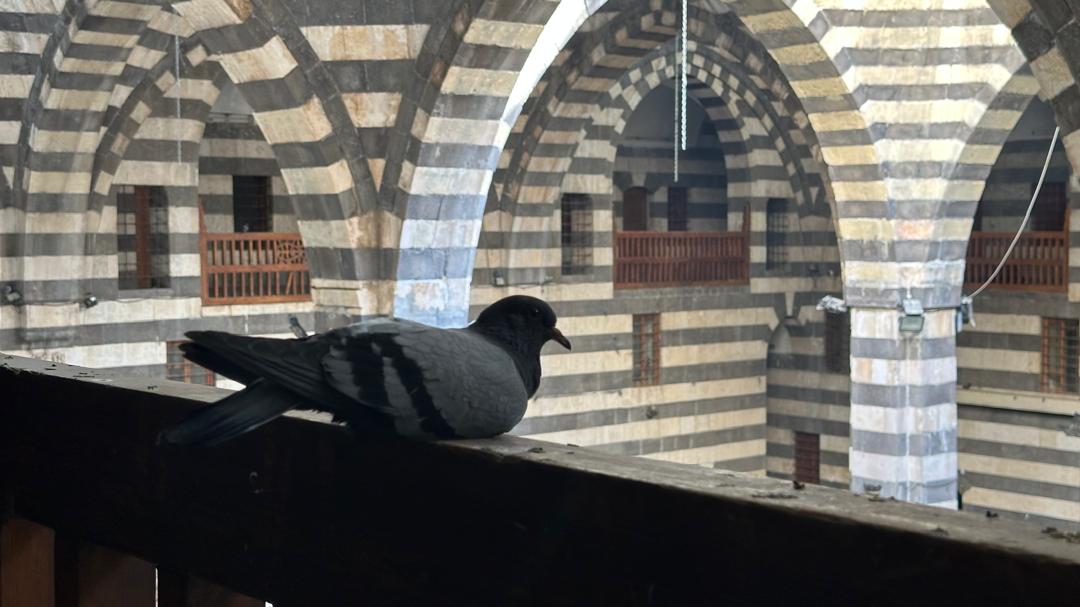
Traditional black-and-white masonry gives the architecture a local character alongside the Ottoman plan. The arcades and ordered courtyard help create a sense of calm.
Compared with a palace or a fortress, the Takiyya expresses a different kind of power: imperial patronage directed at hospitality, religious duty and the public face of a major city.
What the October 2026 Reopening Means
News reports in late October 2026 confirmed the reopening of the Sulaymaniyya Takiyya Mosque after approximately fifteen years of closure. The restoration was presented as part of efforts to return important Damascus monuments to use.
That is a significant step for worshippers and for visitors interested in Ottoman Syria. However, restoration projects can continue in neighbouring buildings, and access to the madrasa or craft areas may differ from mosque entry.
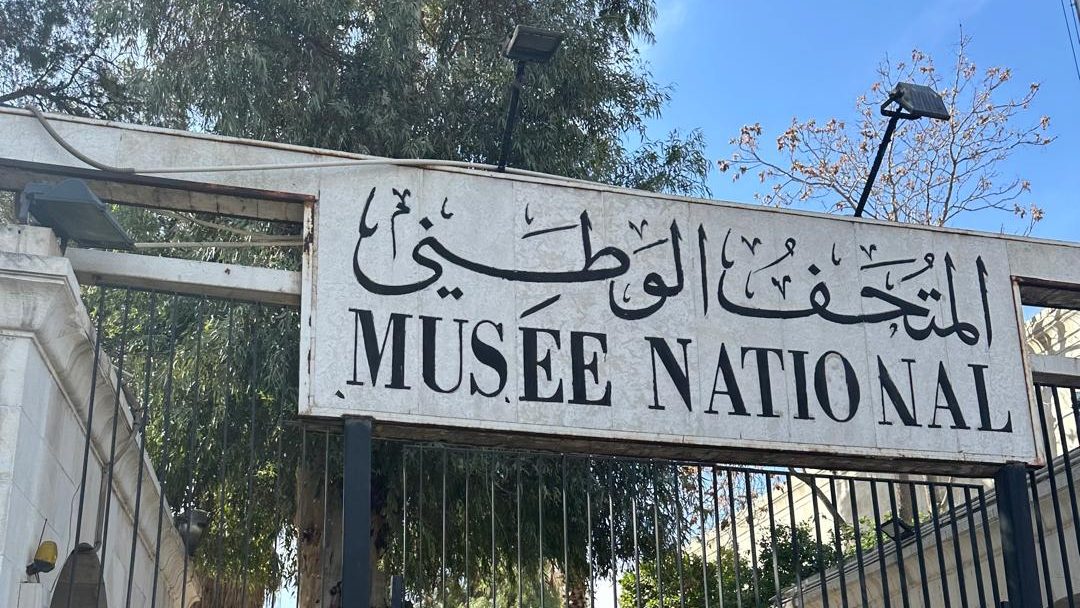
The National Museum is nearby and makes a logical companion visit. It tells other parts of Syria’s history, while the Takiyya helps explain the Ottoman period and the journeys of pilgrims through Damascus.
Some visitors focus only on the twin minarets, but the courtyard and surrounding rooms are what reveal the complex’s original purpose.
Remember that a functioning mosque is not simply a museum. Respectful conduct is essential, especially during prayer.
Ask your guide to explain where pilgrims would have eaten, slept and gathered—not just where they prayed. The social history of the complex is as important as the mosque itself.
How to Visit
The complex stands near the National Museum on the western side of central Damascus. It can be included in a walking or short driving itinerary around the museum and the Barada.
- Allow 30–60 minutes depending on the areas currently accessible, or longer if visiting the nearby museum.
- Confirm which parts of the complex are open: the mosque, courtyard, former lodging, madrasa and craft areas may have different arrangements.
- Choose modest clothing and respect prayer times and any entry rules.
- Ask before photographing worshippers or private religious spaces.
- Look at the relationship between the central dome, twin minarets, arcades and courtyard.
- If visiting with a guide, discuss the historic role of Damascus on the pilgrimage route to Mecca.
- Combine the visit with the National Museum, but do not assume museum opening hours match those of the mosque.
Discover Syria with guides who can explain the people and places behind the monuments.
Explore our Syria tours →One Last Thought
The Sulaymaniyya Takiyya tells an Ottoman story of movement and care: a place designed not merely to impress travellers, but to help them continue their journey.
Latest Syria news
You might also enjoy
DamascusNational Museum of DamascusA neighbouring place to visitRead the story →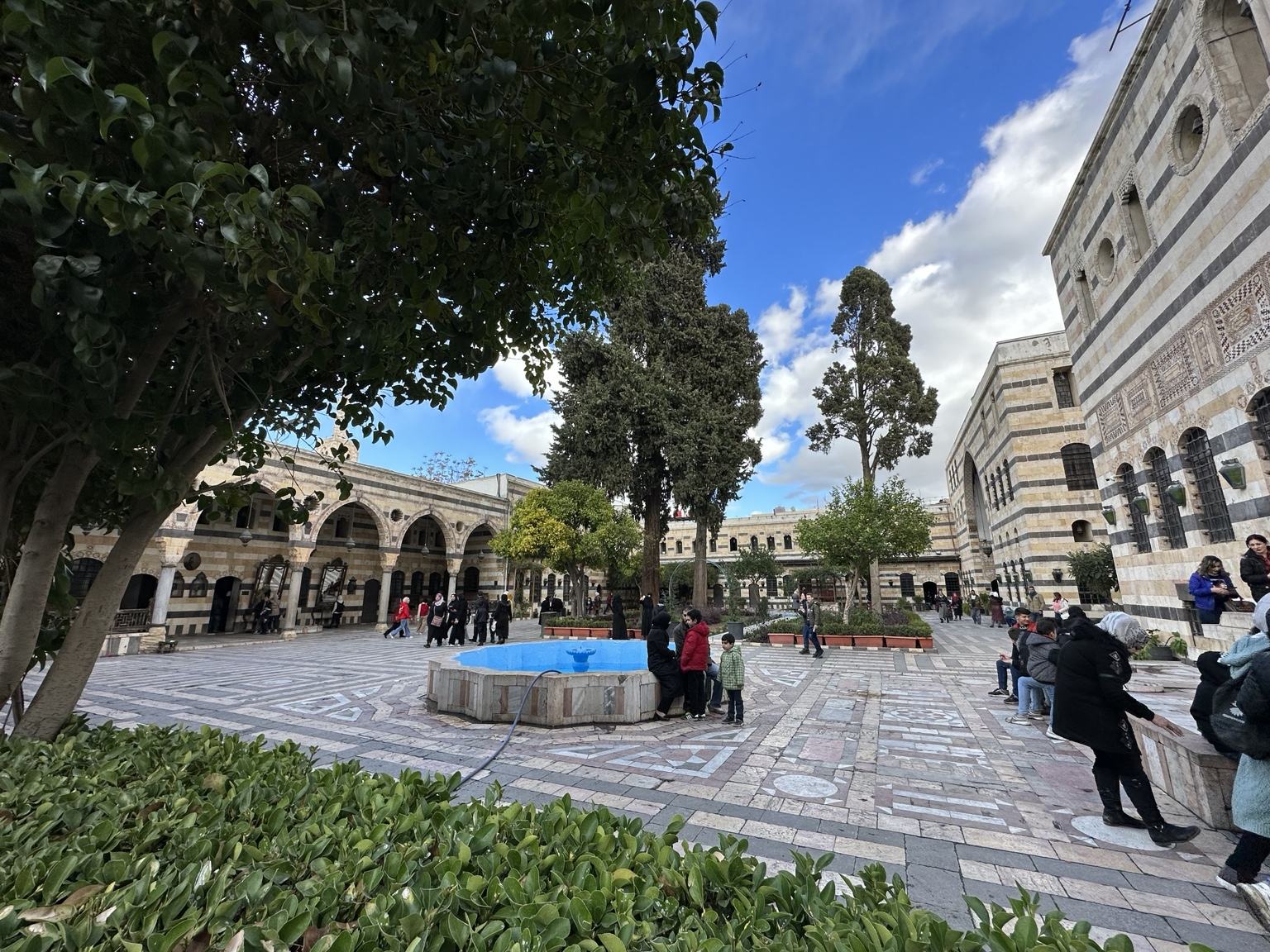 Old DamascusAzm PalaceOttoman domestic architectureRead the story →
 DamascusKhan Asaad PashaHospitality and trade in another buildingRead the story →
 Travel adviceDamascus Travel GuideVisitor information and preparationRead the story →