
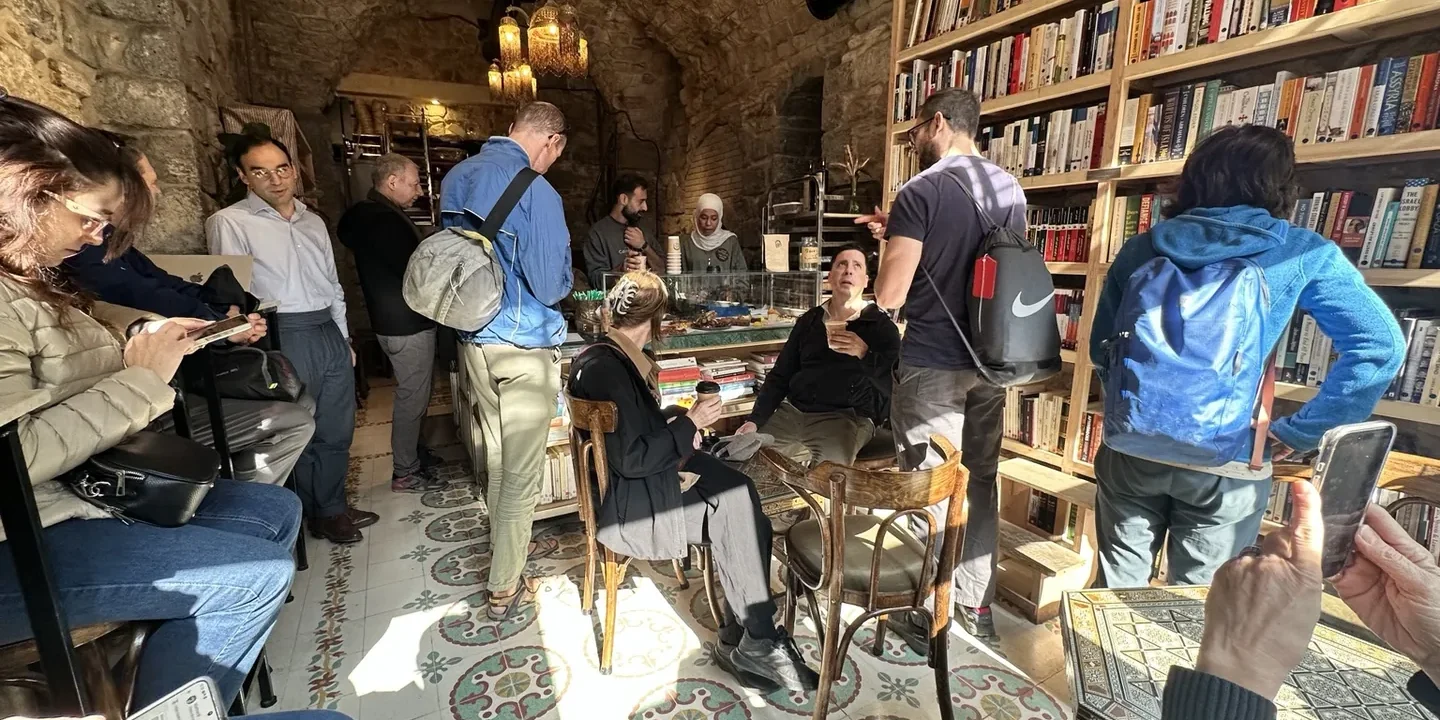
Al-Manhal: Where Damascus Is Rebuilding Its Future Through Bread and Books
On one of the world’s most storied streets, an old bakery has found a new purpose: bringing Syrian grain, difficult-to-find books and people from very different walks of life under the same vaulted roof.
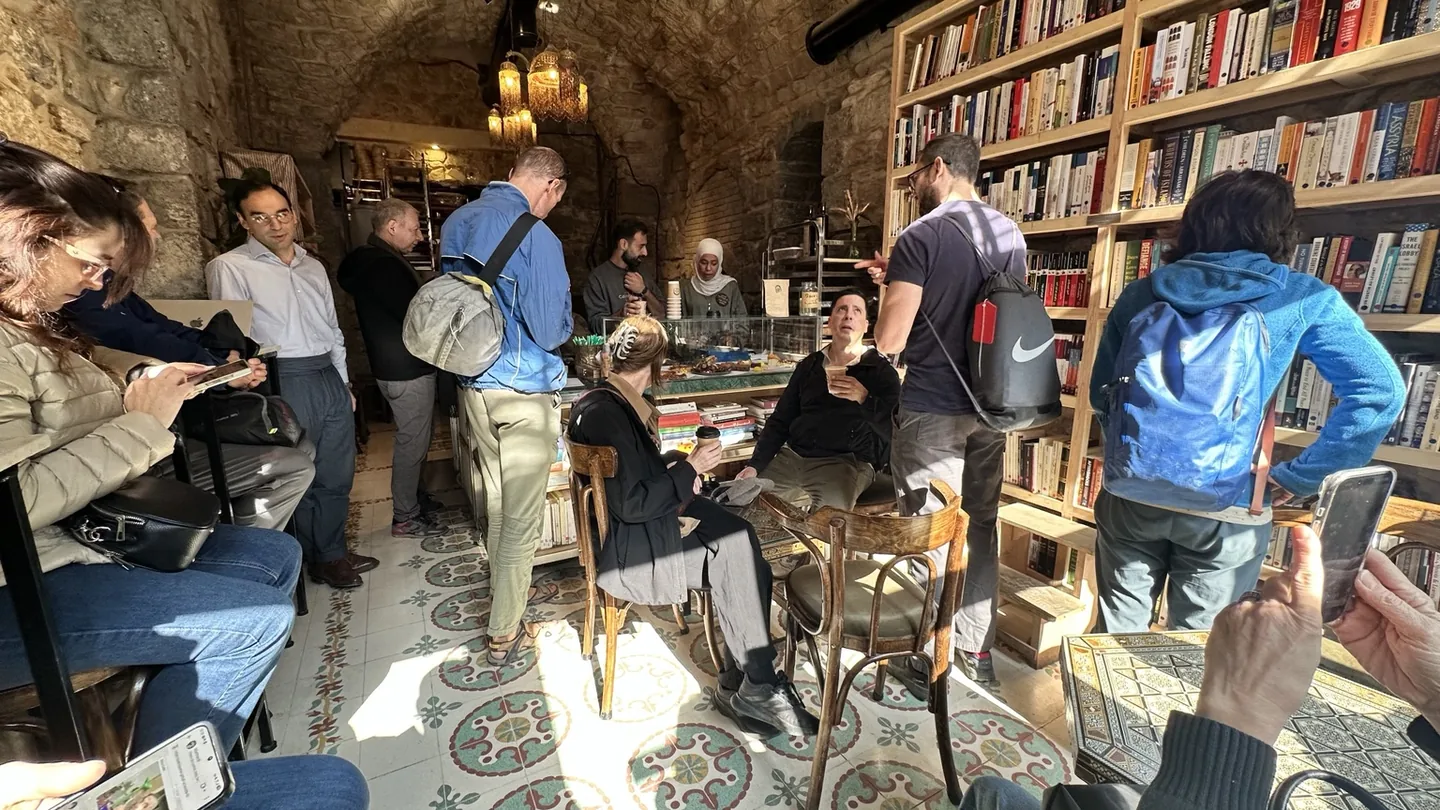
A bookshelf rises against an ancient stone wall. Coffee is passed across the counter. Someone has stopped for a pastry; someone else is studying the spines of books in Arabic and English. In a room small enough that conversations easily overlap, the two activities become one.
This is Al-Manhal Bakery and Books—مخبز ومكتبة المنهل—on Straight Street in the Old City of Damascus. It is a bakery, certainly. It is a bookshop and lending library, too. But those labels only begin to describe an initiative whose real ingredients are access, dignity, curiosity and community.
Al-Manhal was founded in 2026 by French-Syrian writer and journalist Asser Khattab and American baker and social entrepreneur Brant Stewart. Their idea grew from two passions that might seem unrelated: making excellent bread from Syrian ingredients, and making meaningful books accessible to people who have long struggled to find or afford them.
Two ideas, one doorway
After years away from Syria, Khattab returned following the fall of the Assad government in December 2024. He had experienced how difficult it could be to access books about his own country’s history and the wider region. He imagined a place where younger Syrians could read, question and discuss without the formal atmosphere—or the cost—that can keep people away from cultural spaces.
Stewart brought a complementary vision. Having worked with Syrian communities in Lebanon and established Mavia Bakery in Beirut, he wanted to work with local wheat, traditional milling and baking practices, and the agricultural knowledge embedded in Syrian food culture.
Rather than open two separate establishments, they brought the ideas together. Bread would welcome people in; books would give them a reason to stay. The result is a social enterprise, founded with help from supporters in Syria and abroad, that puts the social purpose of the space alongside the products it sells.
A historic bakery, given another chapter
Al-Manhal occupies a renovated premises on Straight Street, the ancient east–west thoroughfare of Damascus, associated with the city’s Roman urban plan and mentioned in the New Testament. The street remains a living part of the Old City rather than an open-air museum: doors open onto shops, workshops, houses and places of worship.
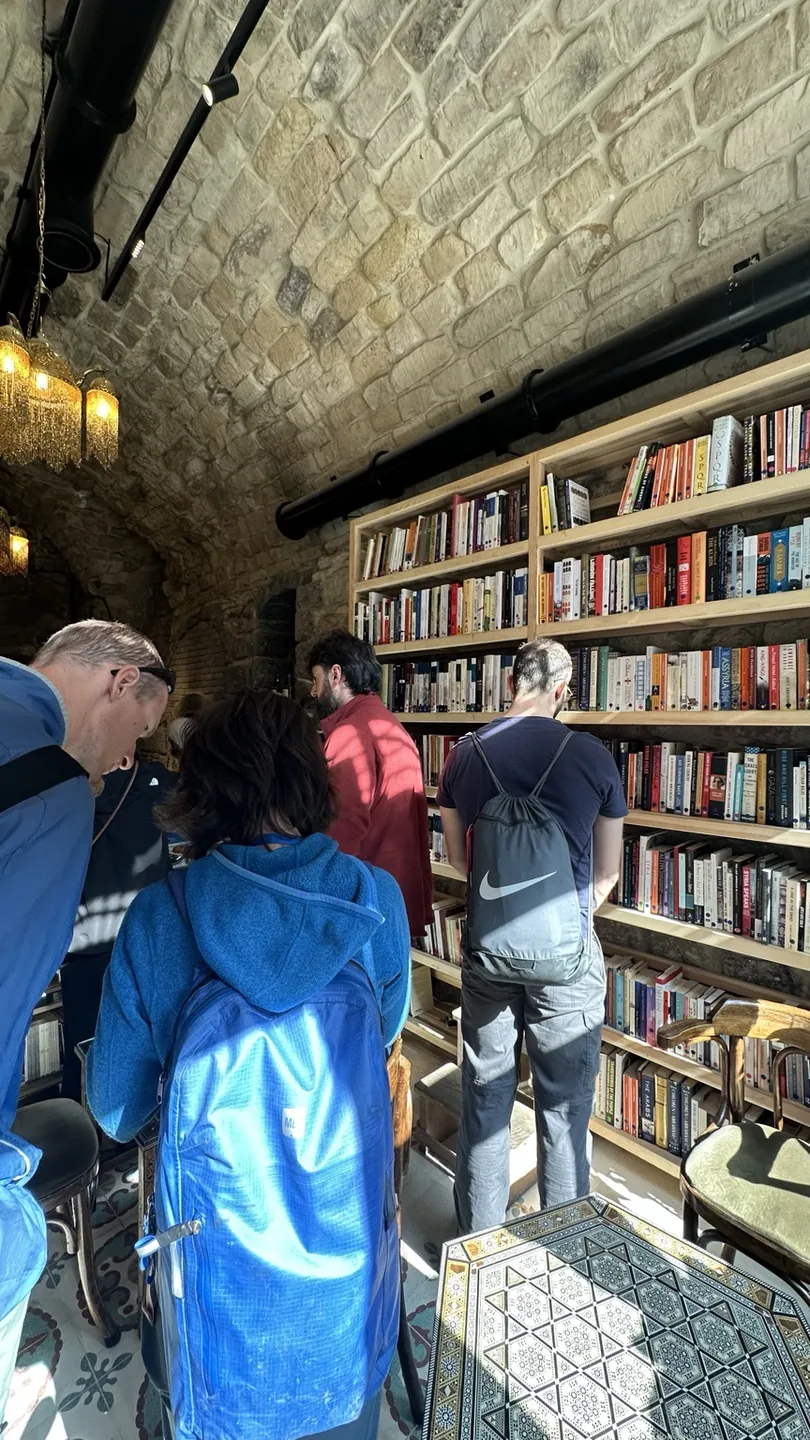
Inside Al-Manhal, heavy stone vaults and a richly patterned floor set the tone. Warm hanging lights illuminate bookshelves and a glass bakery counter. The restoration retained the character of the place while adapting it for a new use.
One of its most remarkable features is an old wood-fired oven, described by the founders as roughly a century old and unused for decades. The oven is central to the project’s long-term baking vision. Al-Manhal has continued fundraising for the restoration and completion of its facilities, including work on the oven, so visitors should not assume every historical feature is fully operational at all times.
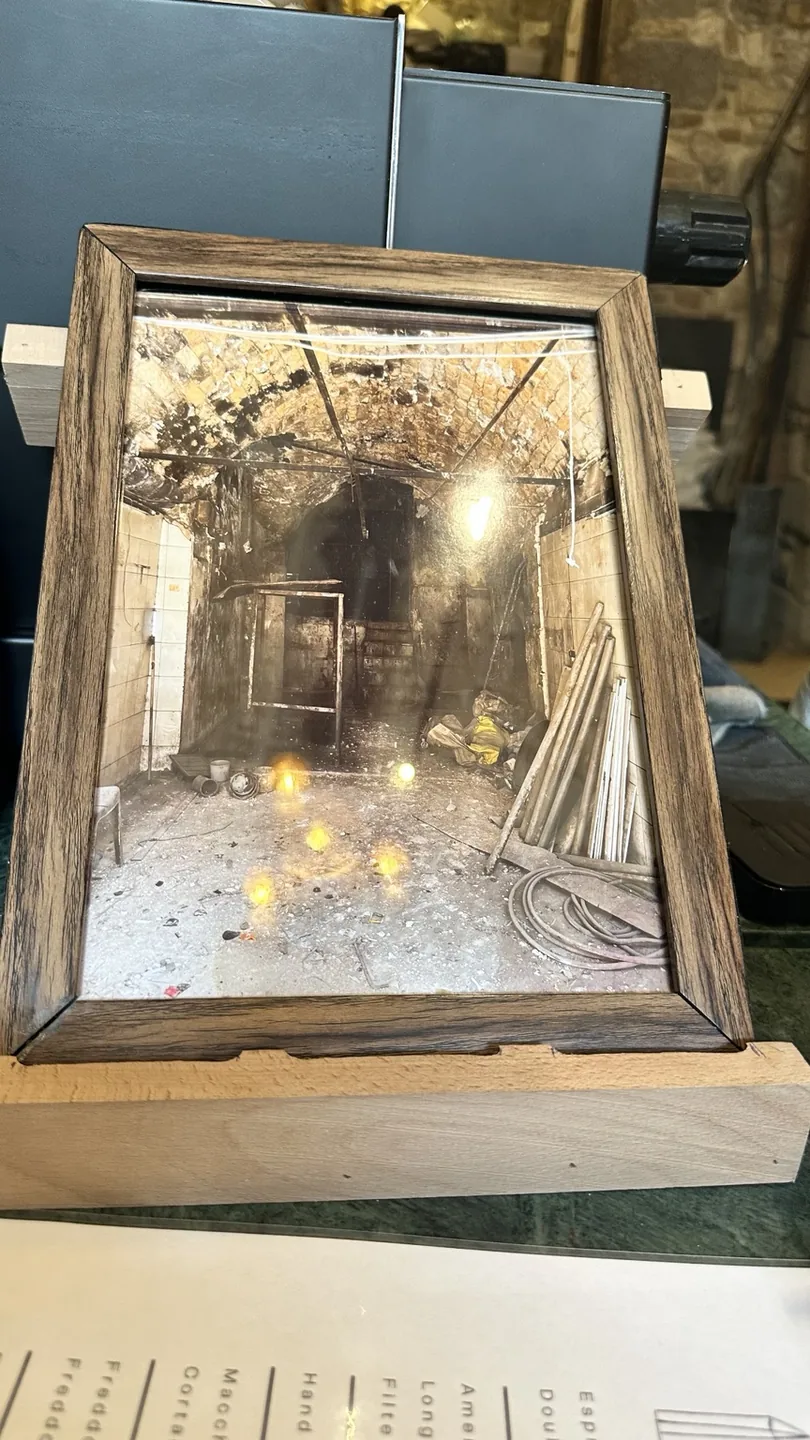
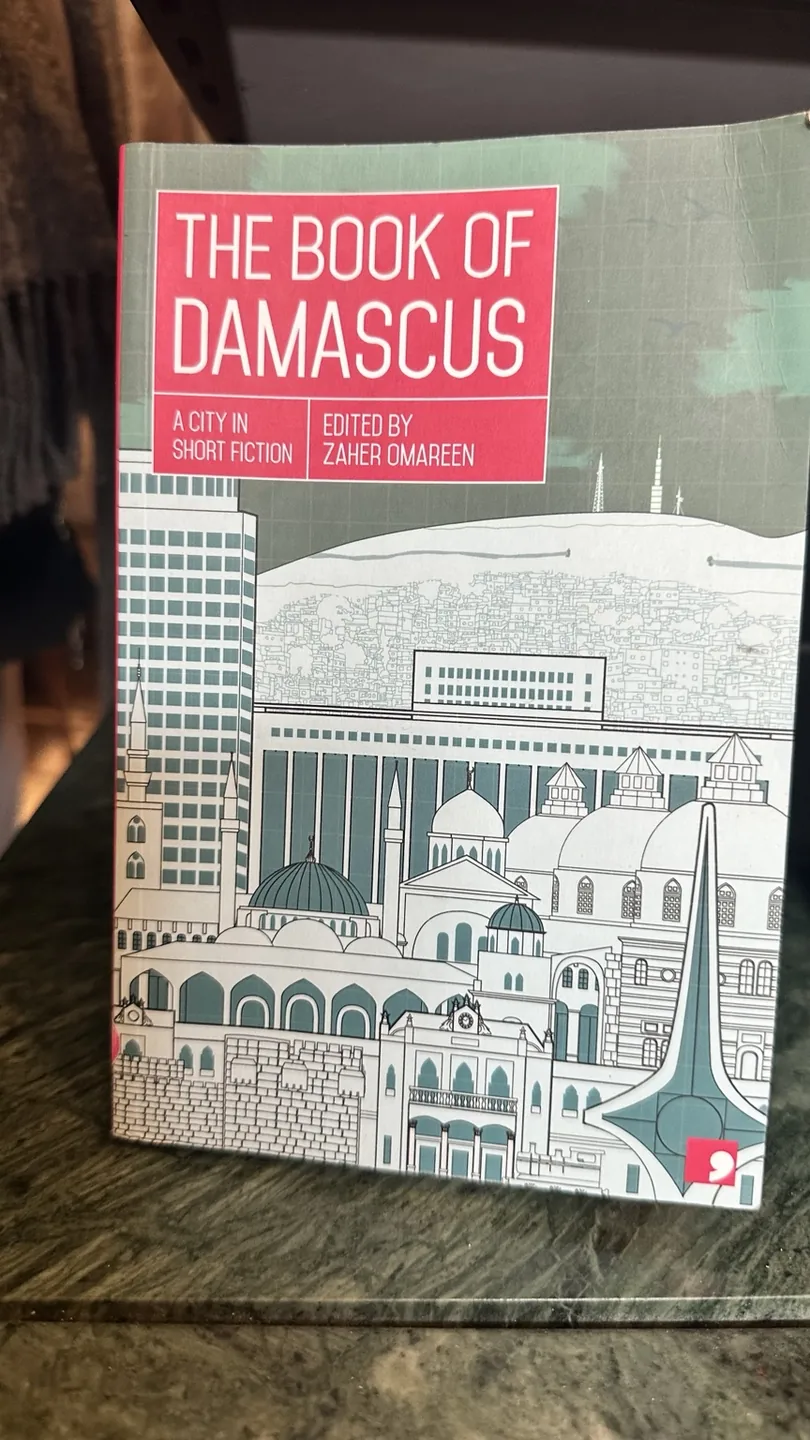
There is something fitting about that restoration. A space that once made bread is once again feeding people, but now it also makes room for the exchange of ideas.
Why the wheat matters as much as the bread
Al-Manhal’s food philosophy begins before the dough reaches the counter. The team emphasizes Syrian-grown wheat, local farmers and millers, and an understanding of where ingredients come from. In a market where imported staples can be easier to obtain, that choice is both culinary and economic.
Syria’s food traditions are far from uniform. Different landscapes, grains, methods and communities have produced an extraordinary variety of breads and baked goods. Al-Manhal aims to learn from those traditions without treating them as untouchable recipes: its approach combines familiar techniques with experimentation.
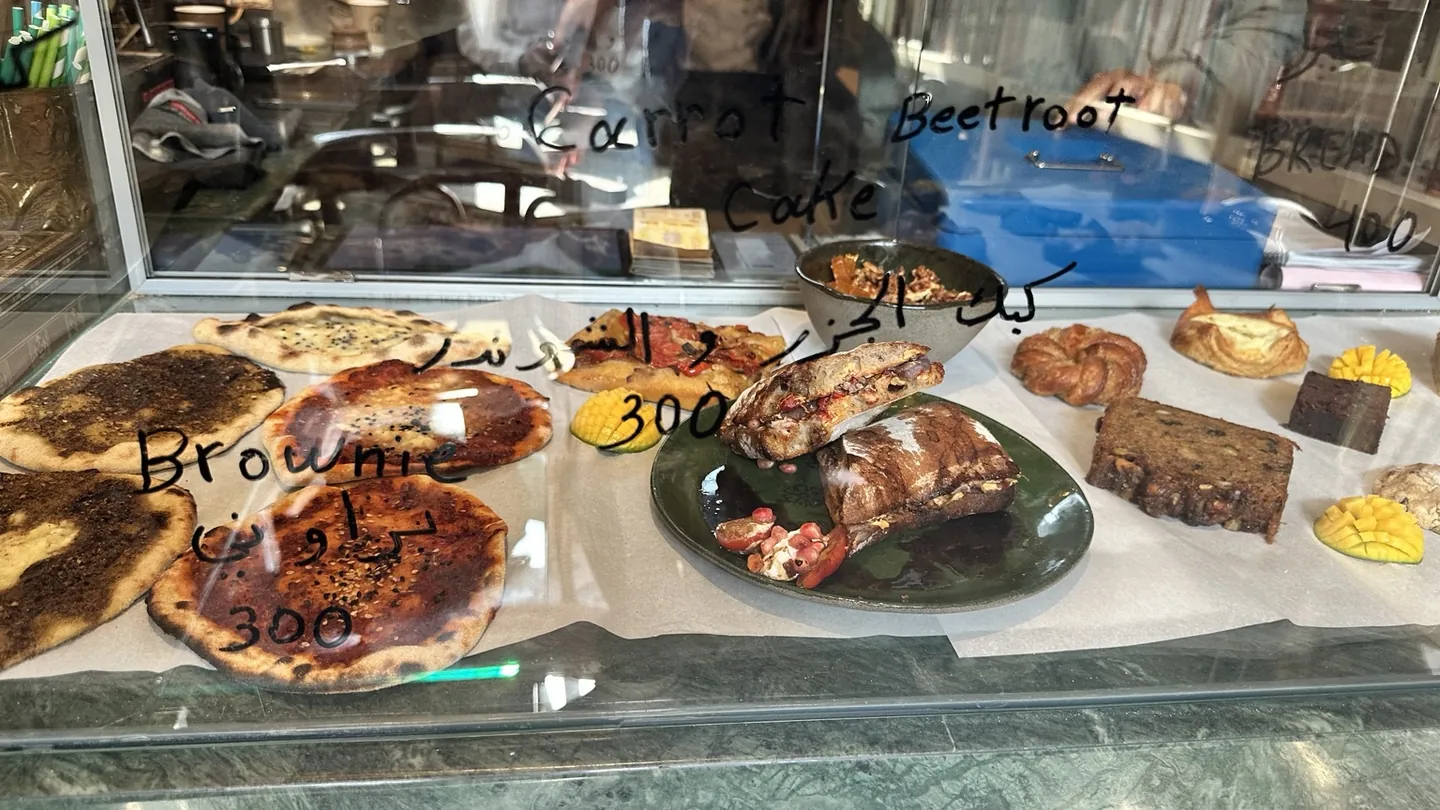
Depending on the day’s selection, visitors may find sourdough breads, flatbreads, savoury pastries, sweets and specialty coffee. The offering changes; it is better to arrive curious than to expect a fixed menu.
The larger ambition is to help revive knowledge of local grain, traditional milling and food production. A loaf of bread can tell a story about the land that produced it—and about the people who cultivate, mill and bake it.
A library built to be used, not merely admired
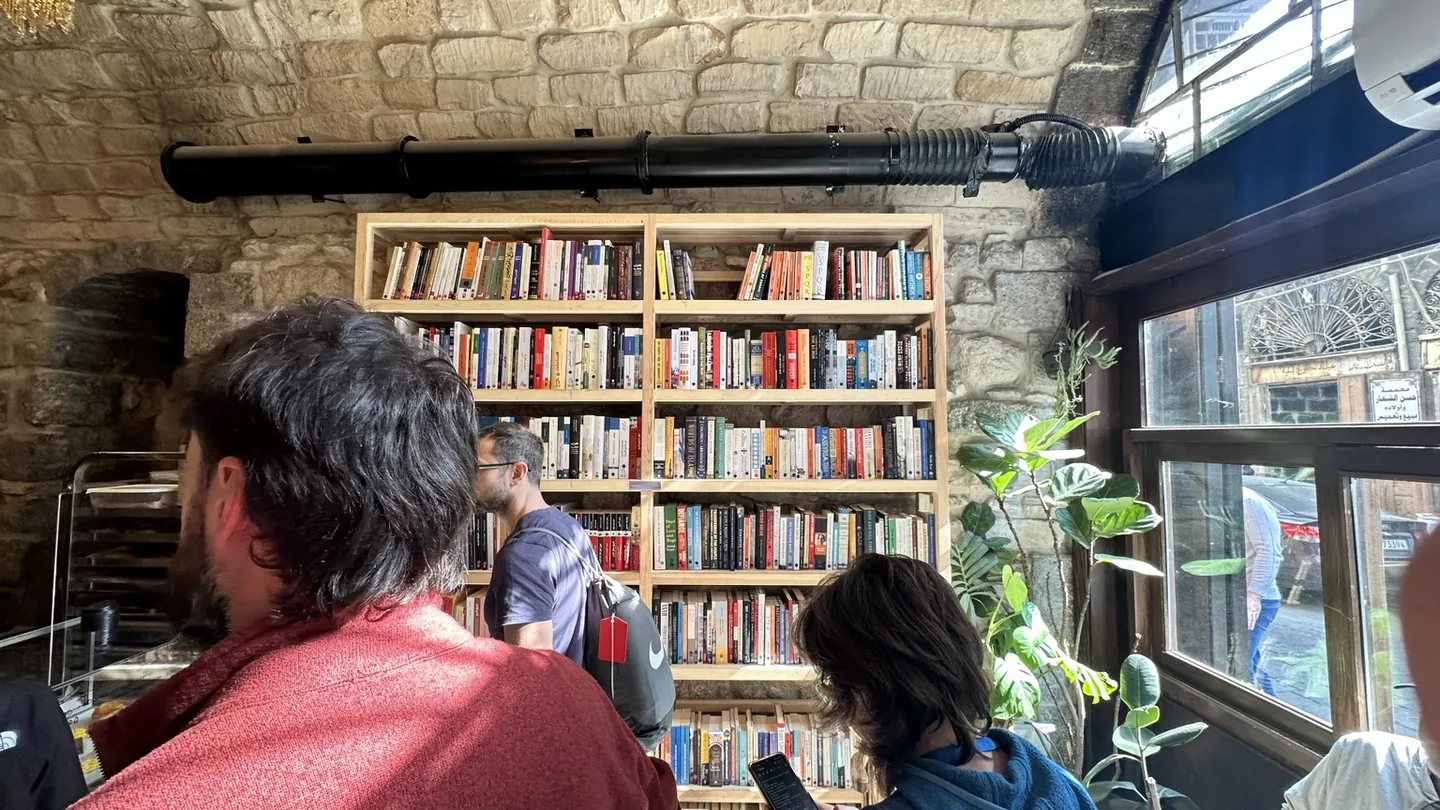
The books are not decoration. Al-Manhal’s collection has grown to more than 500 titles, principally in Arabic and English, spanning literature, Syrian and Middle Eastern history, politics, philosophy, religion, art and culture. Some titles are difficult to obtain in Syria because of cost or distribution barriers.
Visitors can browse and read on site. The lending library allows people to borrow books free of charge for three weeks, with a refundable deposit. The photographed policy explains that borrowers provide their full name and a working phone number, and that extensions may be arranged with management in exceptional circumstances. Deposits are returned when books come back on time and in good condition; damage or late returns can affect the refund.
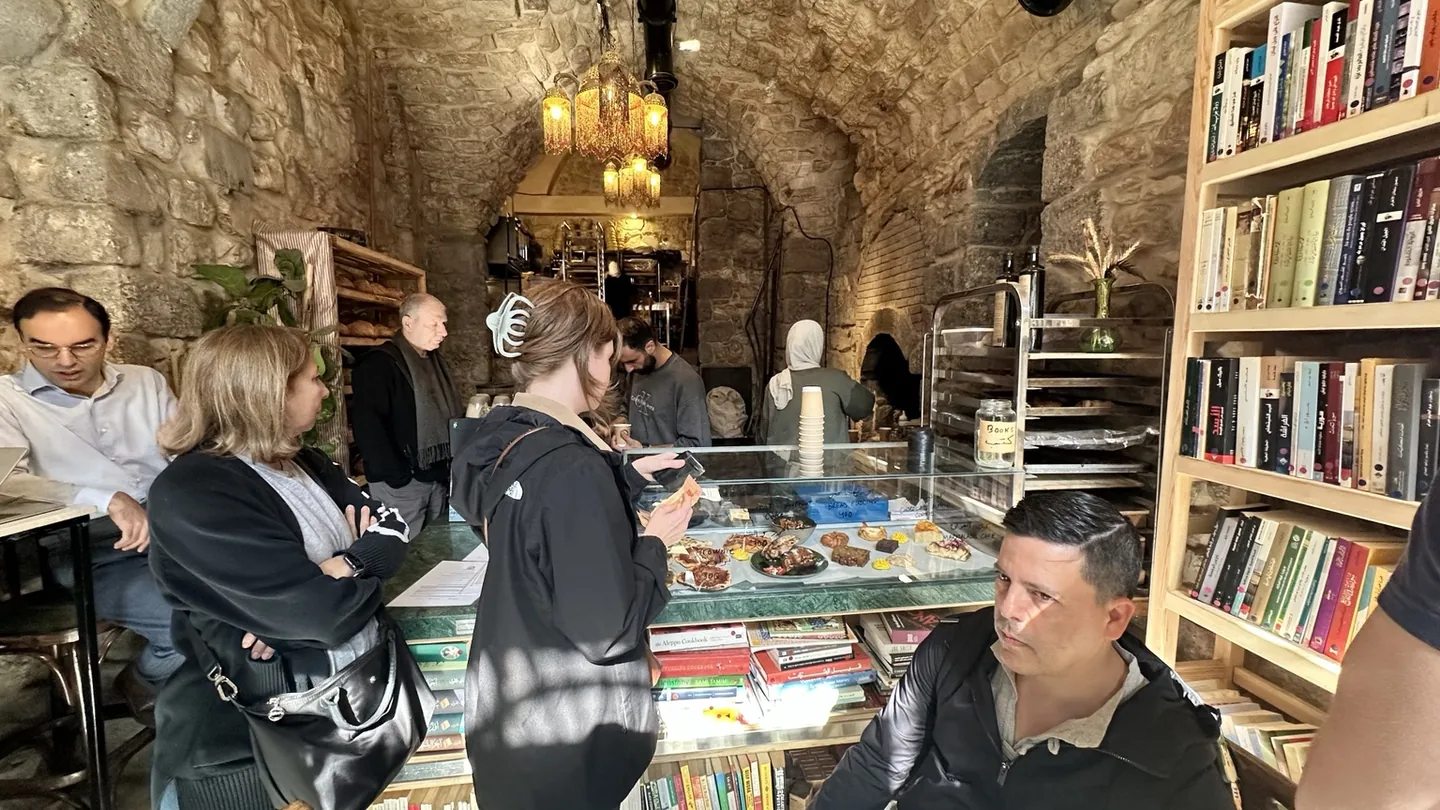
The principle is important: reading should not be limited to people who can afford to buy new imported books. Some books are also offered for sale at modest prices, and the project welcomes suitable book donations after reviewing proposed titles.
Khattab has spoken about wanting to reach younger Syrians in particular, helping them explore the country’s complex history and many identities. The shelves reflect a wider ambition to make room for stories that cross linguistic, cultural and religious boundaries.
Work, dignity and the chance to begin again
Perhaps the most significant part of Al-Manhal is not visible in any photograph of its bread or books. It is the people who work there.
The enterprise deliberately brings together team members with different experiences, including former detainees, people with disabilities, returning refugees and others who have encountered obstacles to employment. The founders describe inclusion as a matter of responsibility, participation, work and skills—not charity.
Reporting by the Associated Press in July 2026 documented how former Saydnaya detainees working at Al-Manhal were rebuilding relationships and routines after imprisonment. One worker described the stigma he faced when people learned he had been detained. In this setting, employment was more than a pay cheque: it was also a way to reconnect with everyday life.
A place where the ordinary act of working together becomes part of rebuilding trust.
That purpose should not be romanticized. Recovery from years of violence, detention and displacement is complicated, and a single bakery cannot solve Syria’s economic or social challenges. Yet small, practical institutions matter. A job, a welcoming room and a conversation between strangers can be meaningful beginnings.
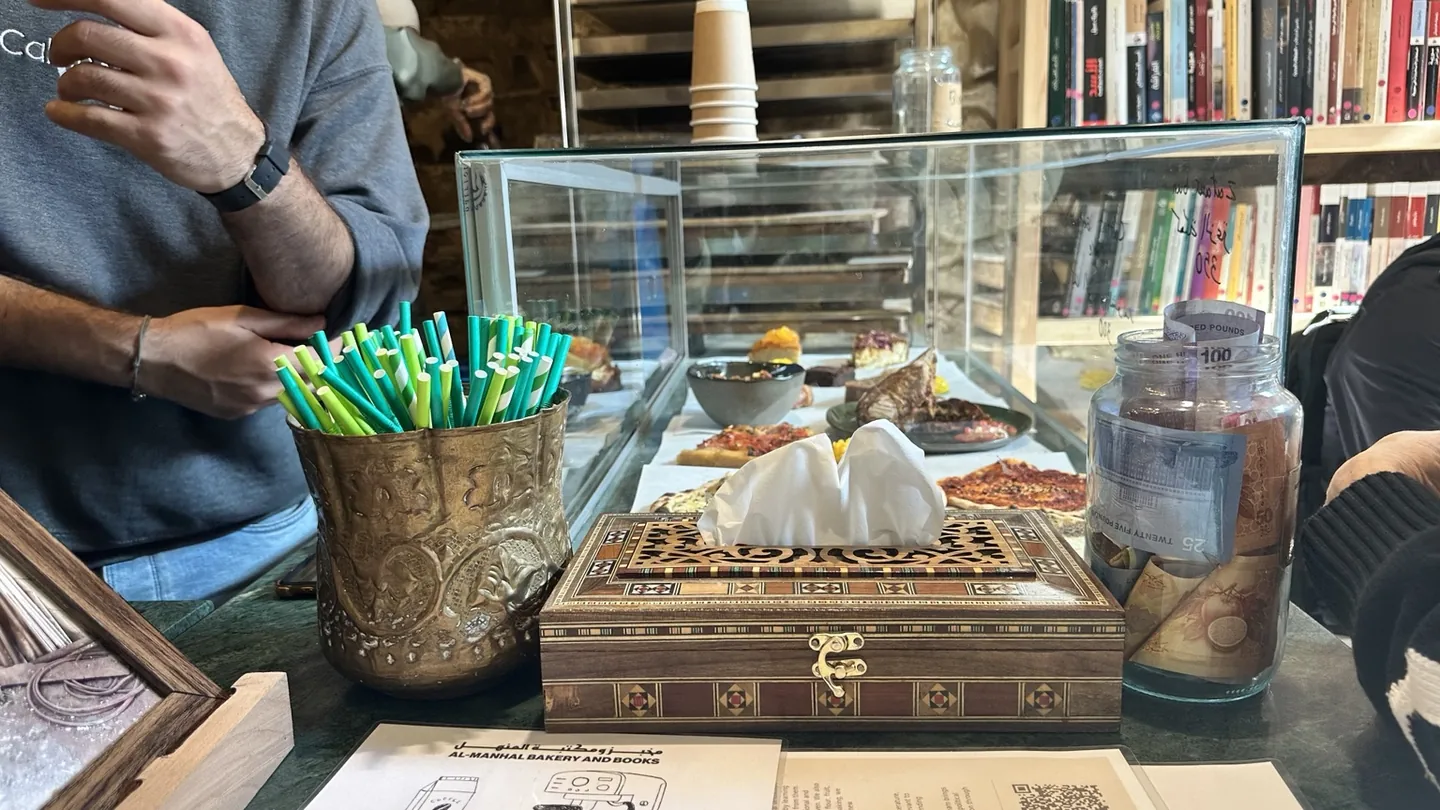
A small room for big conversations
Al-Manhal wants to be a venue for author talks, book signings, reading groups, cultural discussions, and baking or creative workshops. These activities are part of the initiative’s vision; visitors should check its current channels for confirmed events rather than assume a fixed programme.
Its size may be an advantage. There is no grand auditorium here. People share a compact space, passing between the shelves and the counter. A traveller looking for coffee may find themselves standing beside a local reader searching for a book. The resulting conversations cannot be scheduled or guaranteed—and that is precisely the charm.
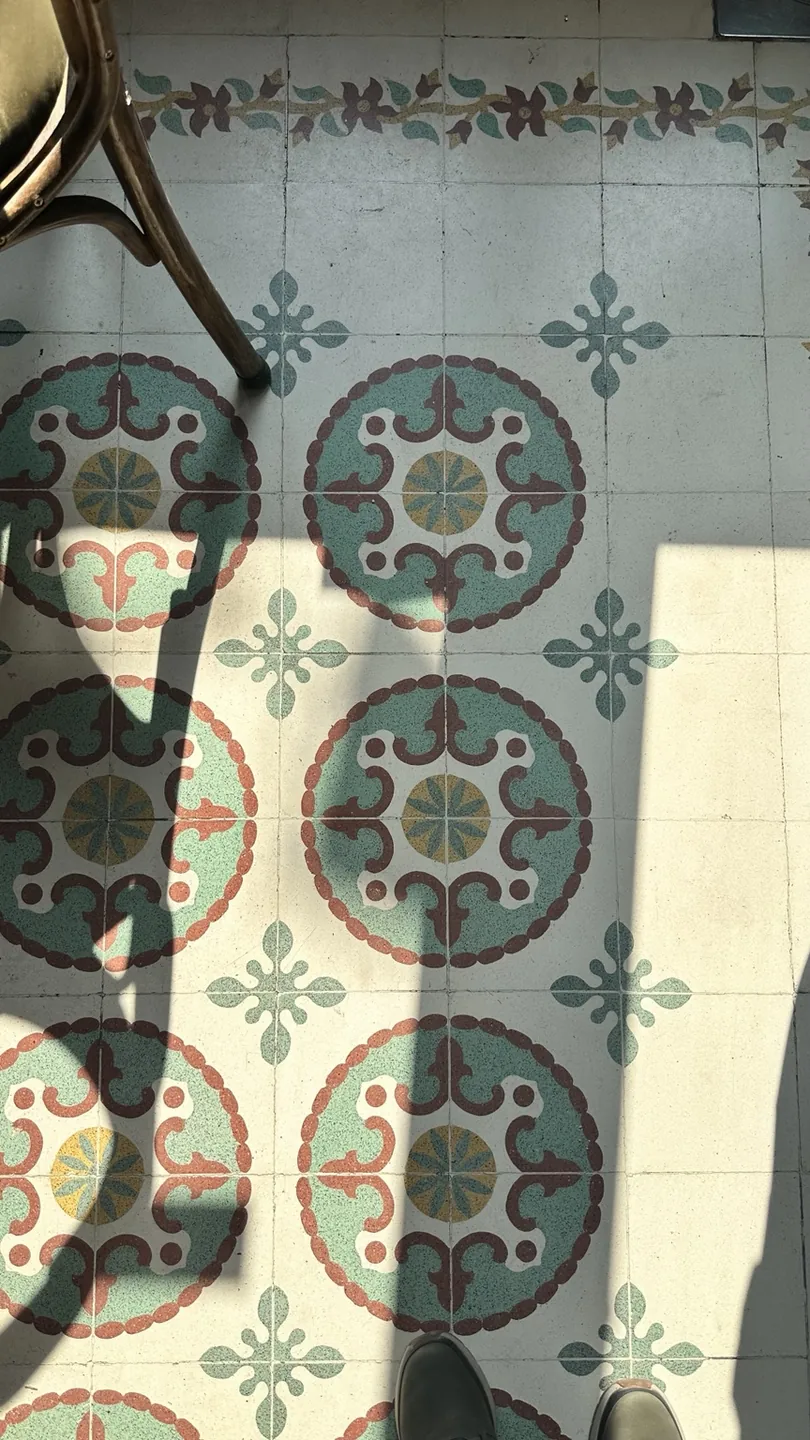
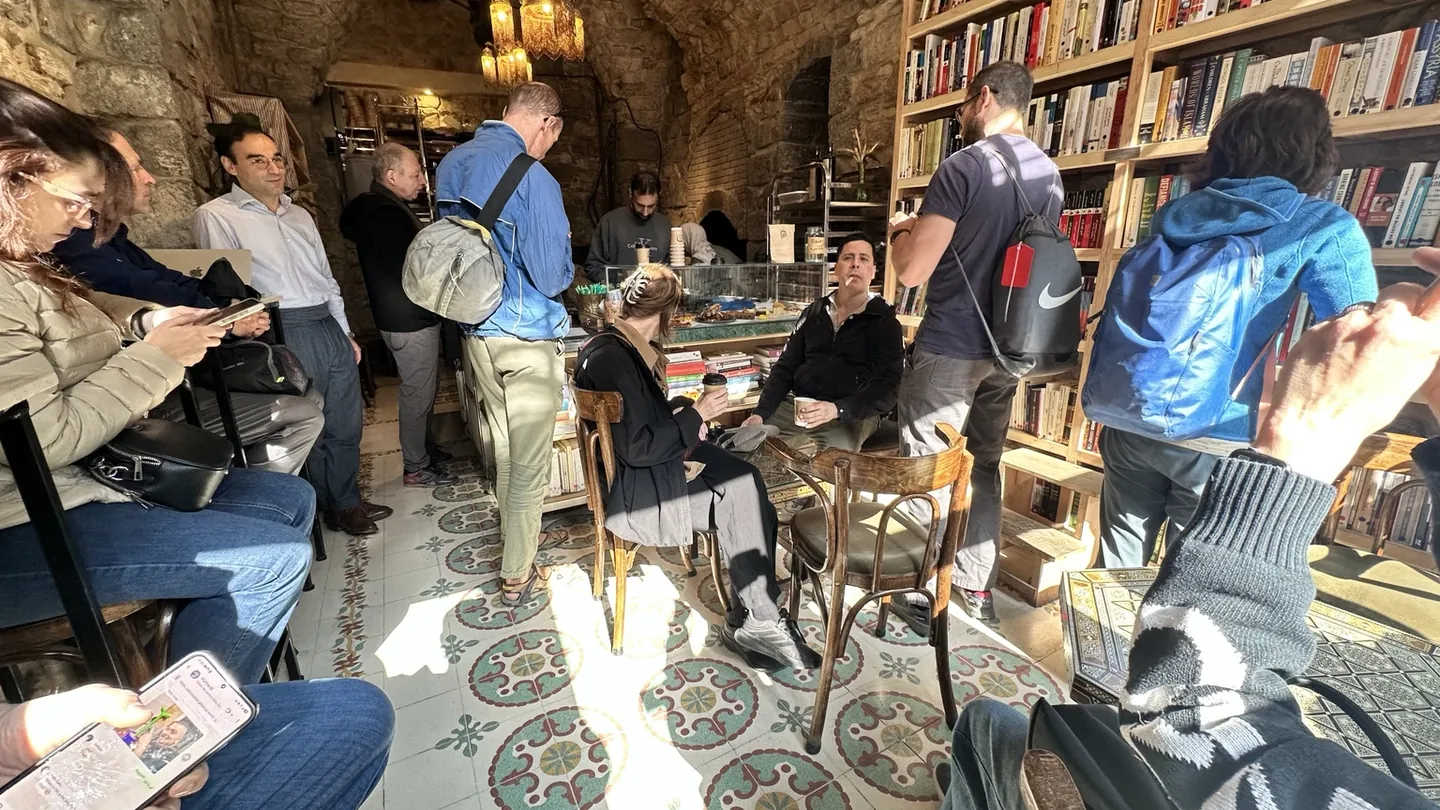
For visitors to Damascus, this is an opportunity to encounter the city’s contemporary cultural life, not just its monuments. Al-Manhal is a reminder that the Old City is still creating new stories.
How to experience Al-Manhal respectfully
Allow time to look at the shelves, appreciate the historic interior, and ask about the day’s baking. If you are visiting as a group, be mindful that the room is small and that local customers use it as a regular community space. For a separate guided introduction to the city, see our Saturday Damascus group walk.
If you would like to help, Al-Manhal invites financial support and carefully coordinated book donations. Contact the team before bringing books: its wish lists and selection process are designed to keep the collection useful.
Official information: Al-Manhal Bakery and Books · Instagram @almanhaldamascus · Support the initiative.
At Syrian Guides, we believe the most memorable visits leave room for the people shaping Syria’s present. Explore our Damascus experiences and meet the city through its streets, stories and communities.
Explore the private two-day Damascus tourMore than a stop for coffee
Al-Manhal is a reminder that cultural heritage is not only what survives from the past. It is also what people choose to make possible today.
On Straight Street, an old bakery has become a place where Syrian wheat meets new recipes, books pass from one reader to another, and people with very different histories share the same room. The building has a past. The project is still writing its future.
And perhaps that is the best reason to visit.