
The stories behind Syria’s landmarks
Azm Palace in Damascus: The World Behind a Plain Door
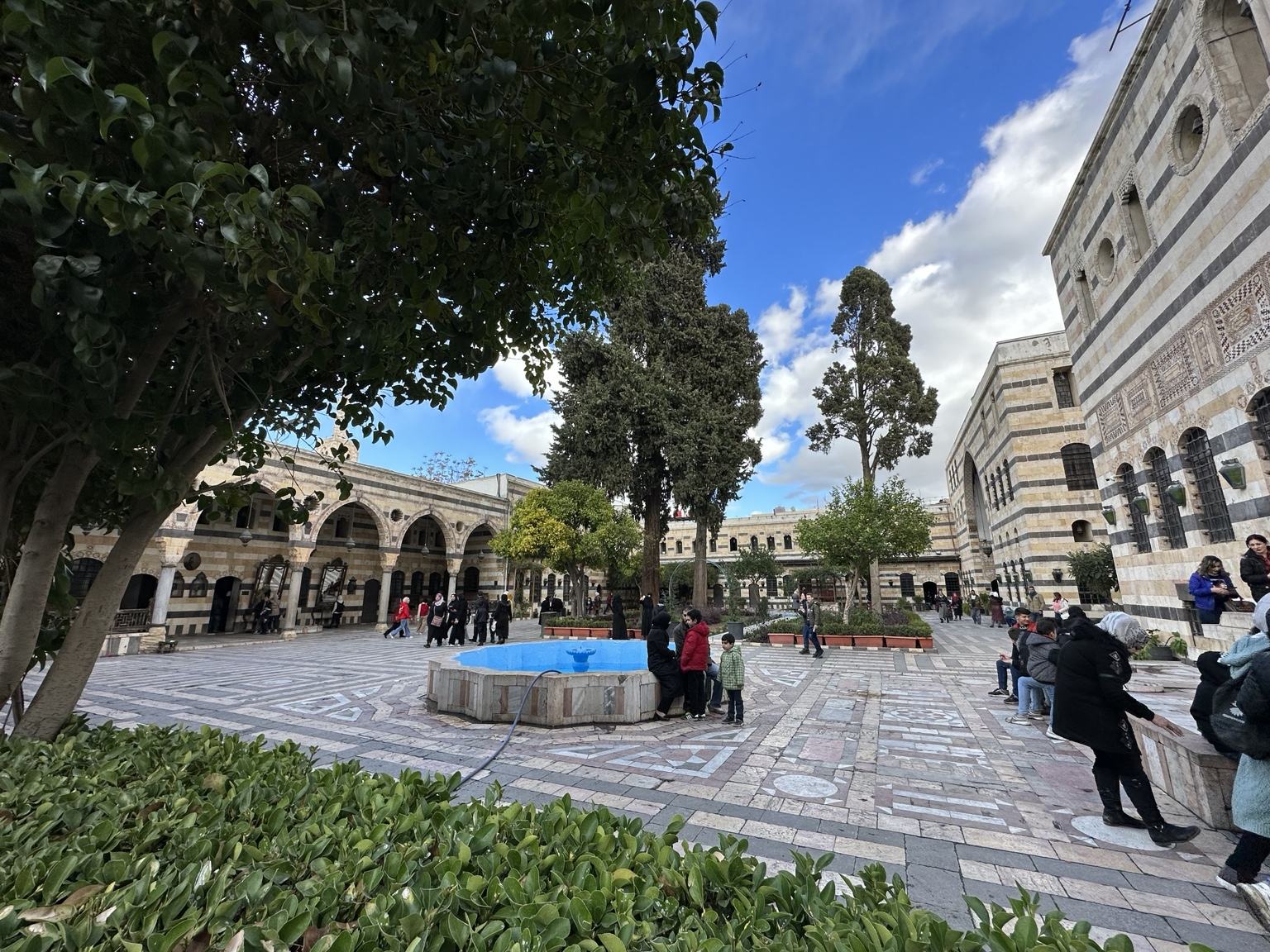
You could walk past Azm Palace in Damascus without giving it a second glance.
From the busy lanes of the Old City, there is little to suggest what lies behind its walls. The entrance is modest compared with the extraordinary world waiting inside.
Then you cross the threshold.
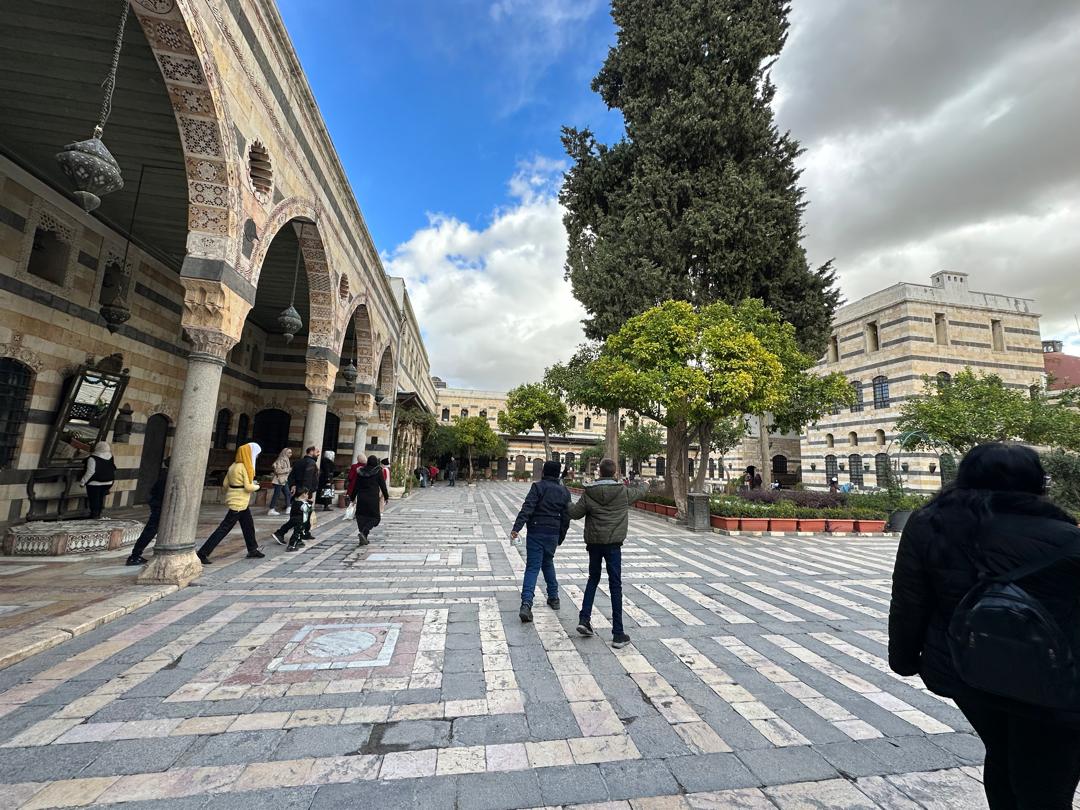
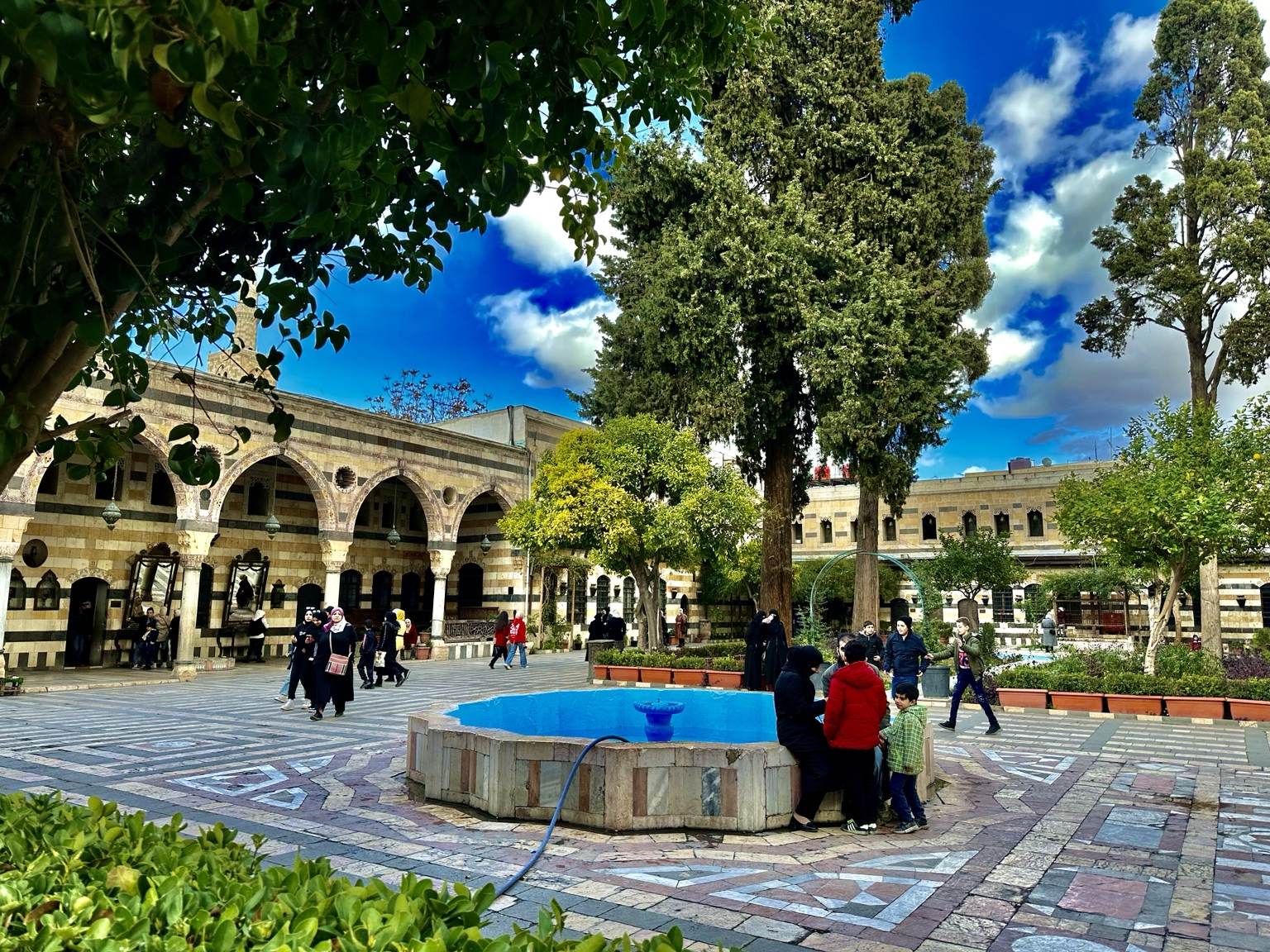
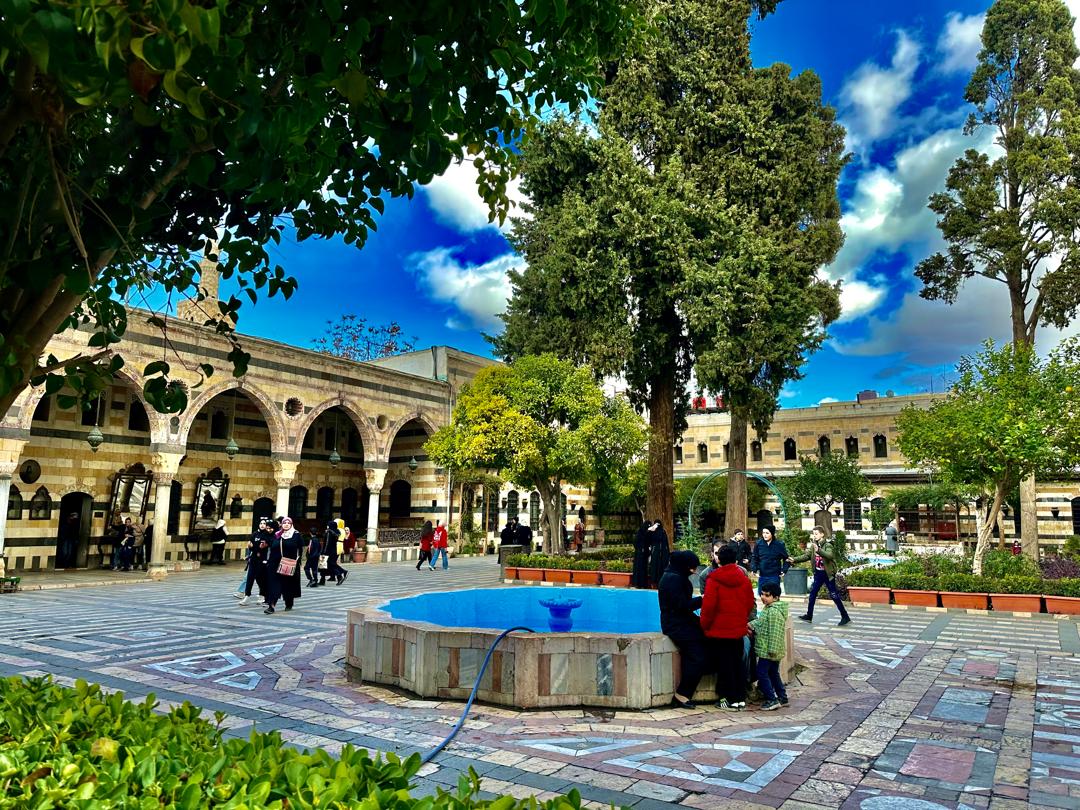
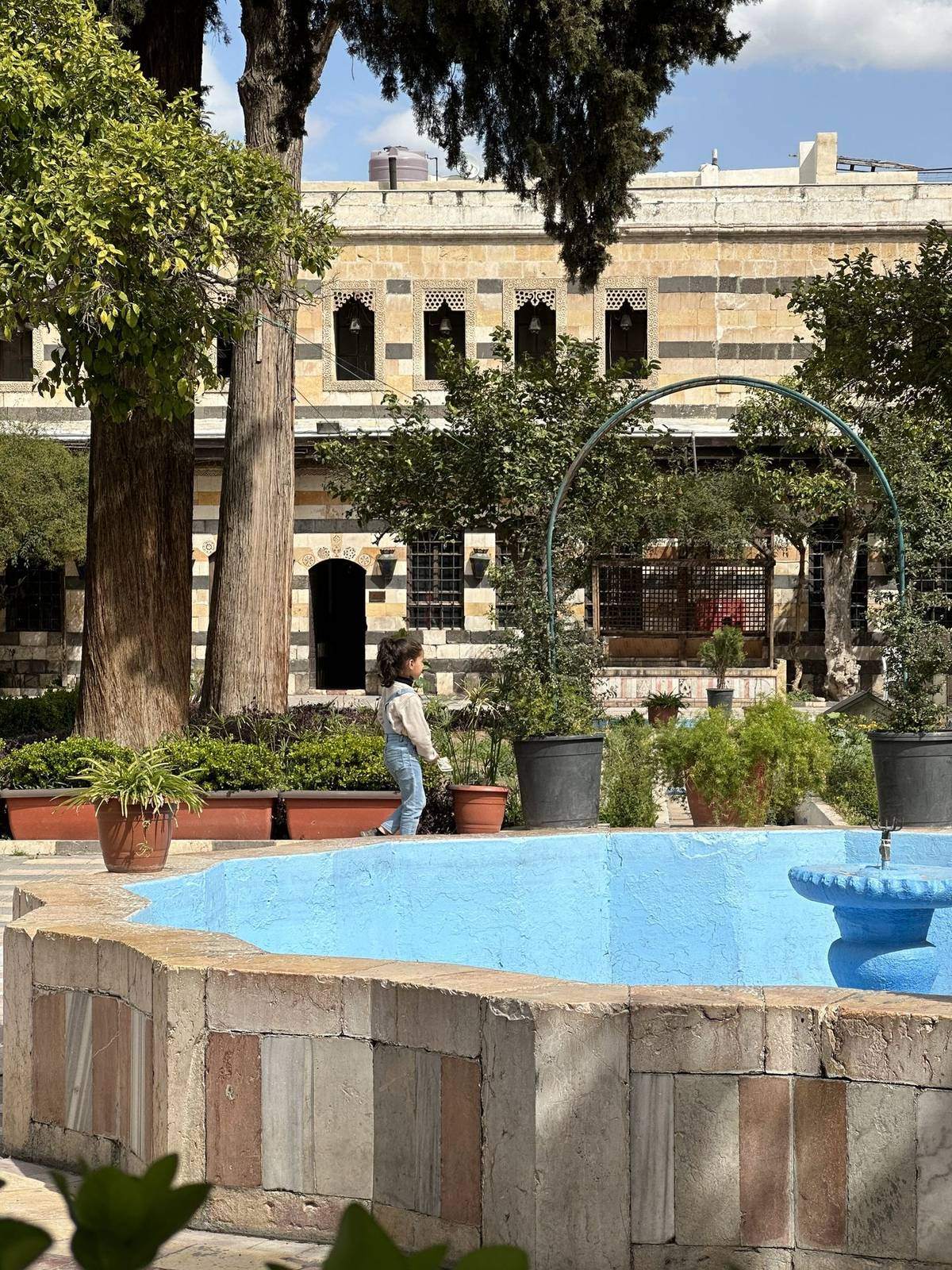
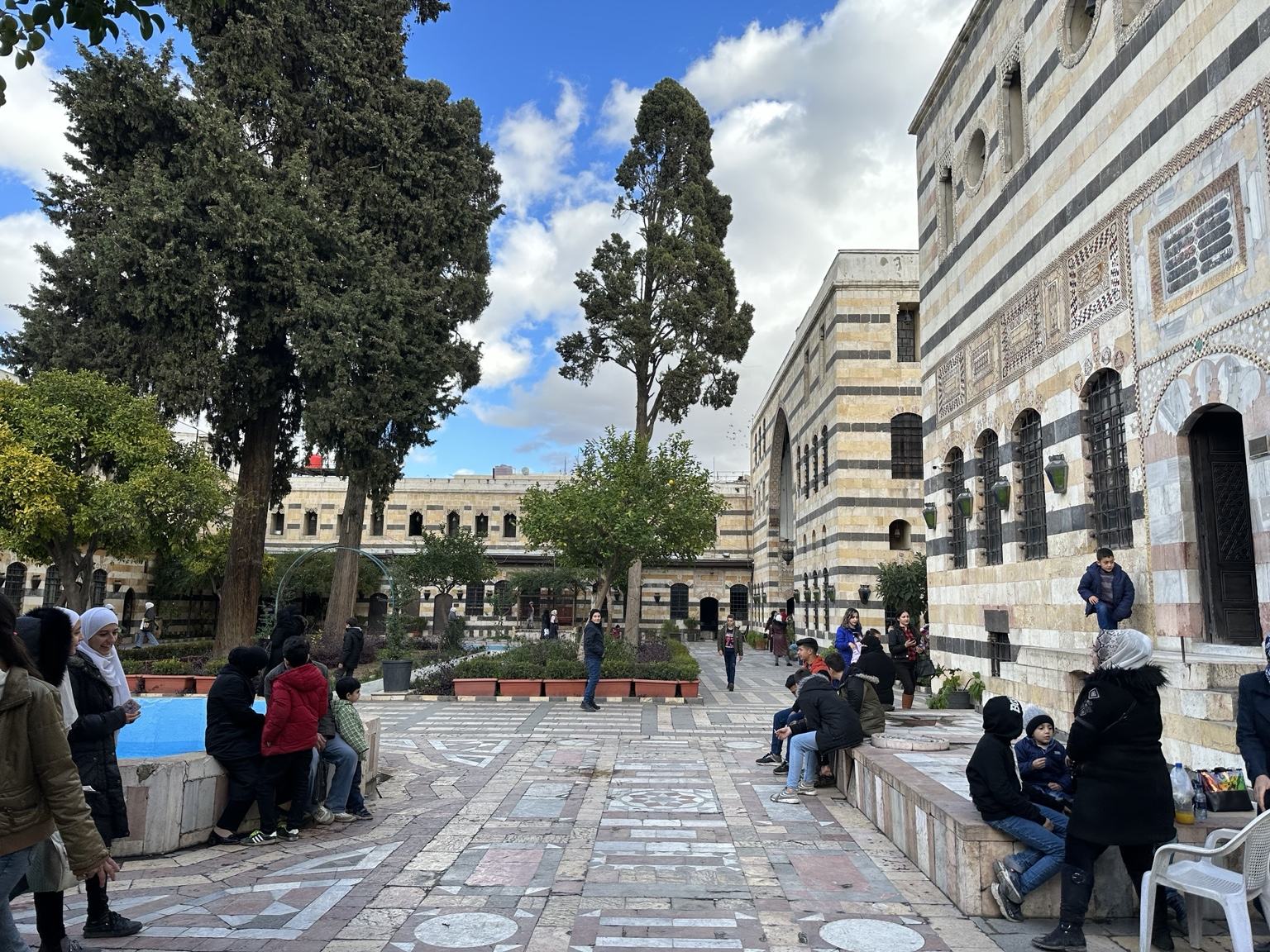
The noise of the souq begins to fade. A beautiful courtyard opens beneath the sky. A fountain sits between patterned stone floors, while graceful arches, decorated rooms and gardens create a peaceful atmosphere.
This is one of Damascus’s most beautiful surprises.
And it tells us something important about the city: sometimes, the most extraordinary places are the ones that reveal almost nothing from the outside.
Azm Palace at a Glance
Built for: As’ad Pasha al-Azm, Governor of Damascus • Original purpose: Governor’s residence and reception palace • Later use: Museum of Arts and Popular Traditions • Location: Old Damascus, near Al-Buzuriyah Souq and the Umayyad Mosque.
The Governor Who Built a Palace Behind Ordinary Walls
In 1749, As’ad Pasha al-Azm, the Ottoman governor of Damascus, began constructing what would become one of the finest residences in Syria.
Damascus was a prosperous trading centre, connected with merchants, caravans and pilgrimage routes. The governor belonged to a powerful Syrian family that had played an important role in the region’s administration.
His palace was intended to reflect that status.
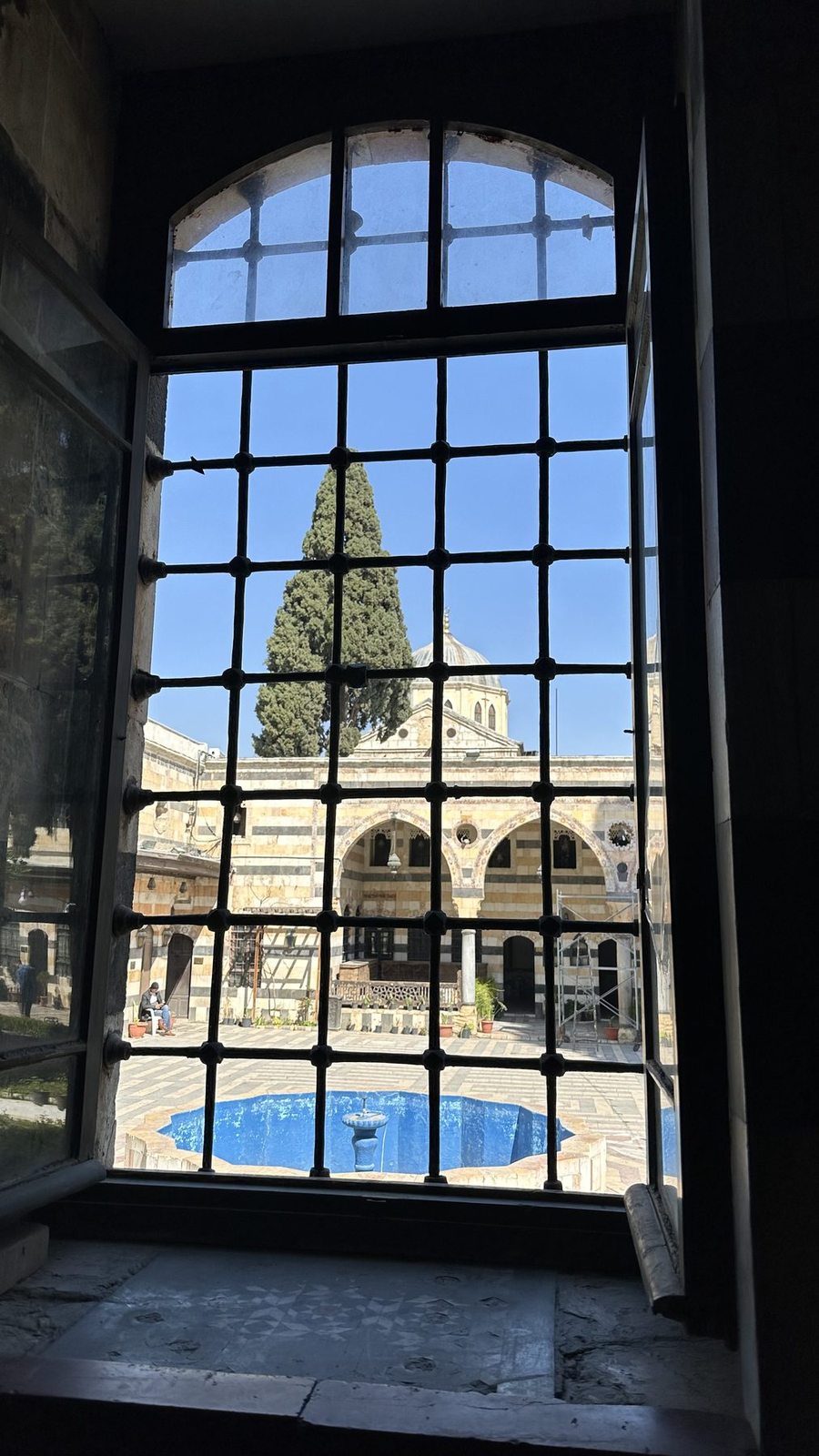
But instead of concentrating its beauty on a grand exterior, its architects followed a long-established Damascene tradition: directing the home’s most impressive features inward.
The result was a building that combined privacy, comfort and remarkable craftsmanship.
A Different Kind of Luxury
What makes Azm Palace so interesting is not simply its size or decoration. It is the way the entire residence was organised.
The palace contained two principal sections.
Salamlik
The Salamlik was the reception area, where the governor welcomed visitors, conducted business and entertained guests.
Haramlik
The Haramlik was the more private part of the residence, used by the family. It included living spaces, service rooms and a traditional bath.
These areas were arranged around courtyards that brought daylight and fresh air into the building.
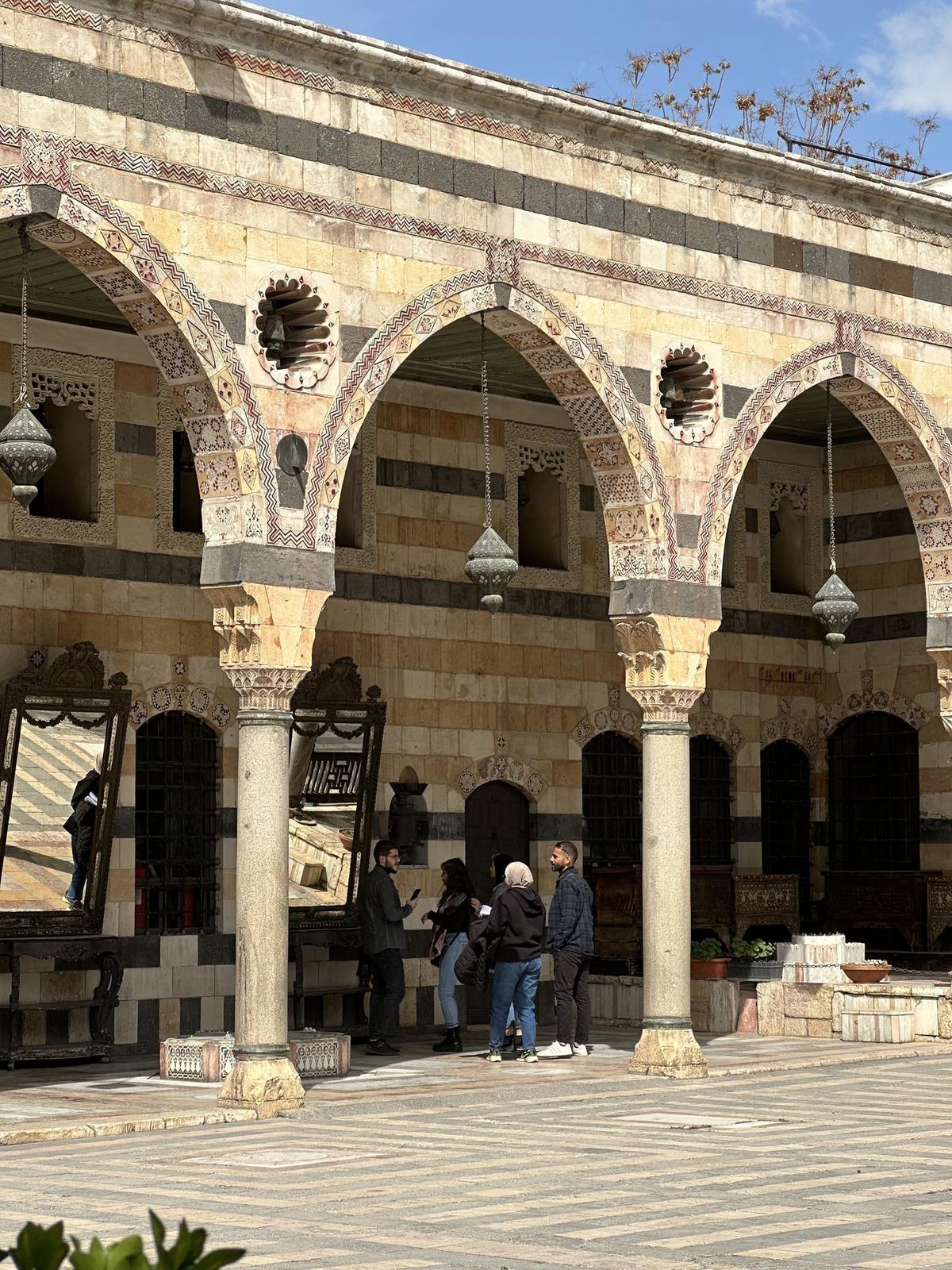
One of the most striking architectural details is the use of alternating bands of dark basalt and pale limestone, a technique known as ablaq. You will notice it around arches, doorways and walls.
Look more closely and you will discover carved wooden ceilings, decorated reception halls, marble surfaces and delicate details made by Damascene craftsmen.
It is easy to admire the palace without understanding the thought behind its design.
But once you realise how every courtyard, doorway and room was arranged to balance hospitality and family privacy, the building becomes even more fascinating.
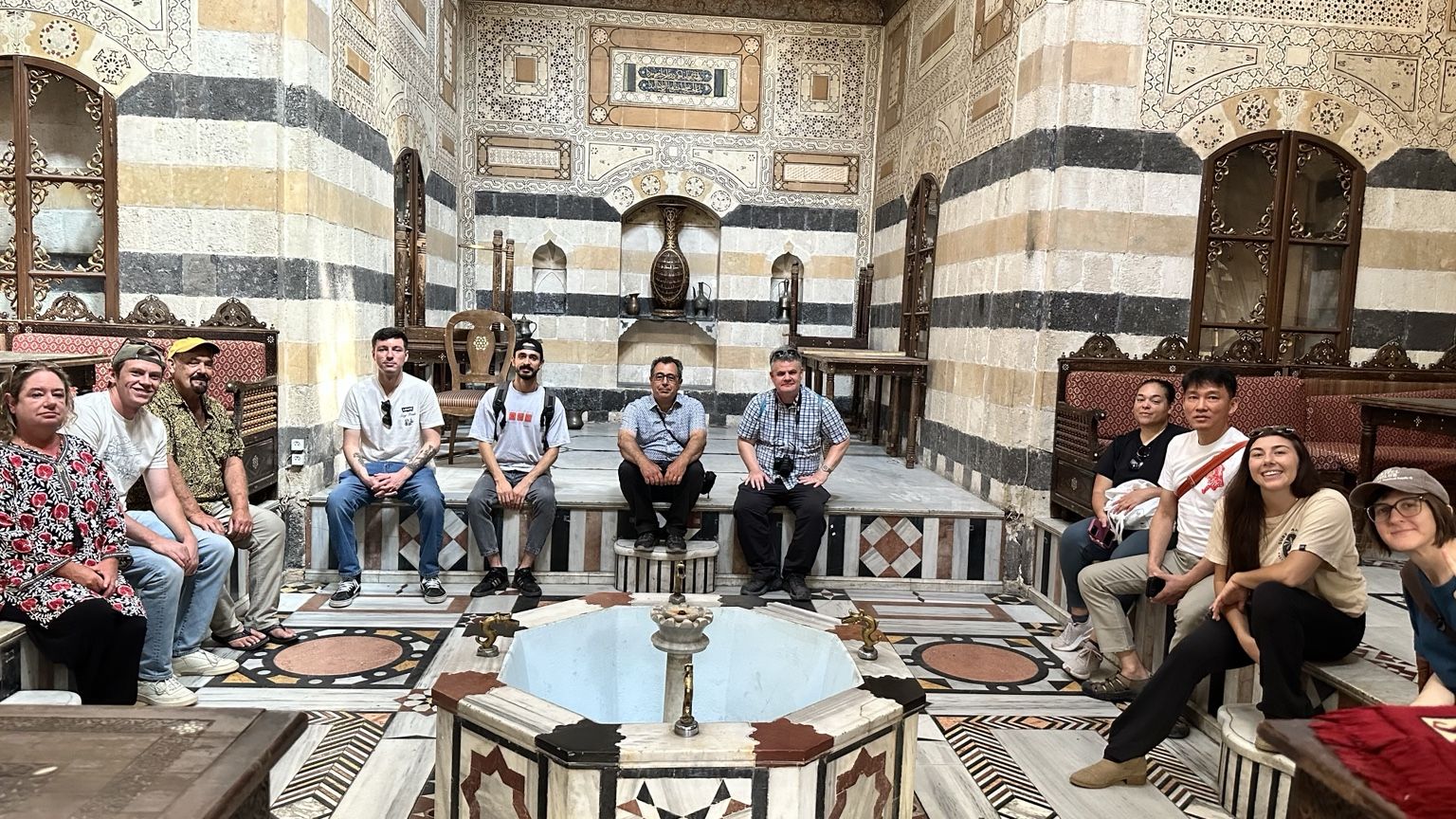
From a Governor’s Residence to a Museum
Azm Palace has not had an easy history.
During the French bombardment of Damascus in 1925, large parts of the palace suffered extensive damage.
Restoring it required more than rebuilding walls. Conservators had to study the original architecture and recover traditional construction techniques, decorative patterns and craftsmanship.
In 1954, the palace became a museum dedicated to popular traditions.
Its restoration later received international recognition through the Aga Khan Award for Architecture in the 1981–1983 cycle.
Today, the palace helps visitors understand how people lived in historic Damascus. Its museum spaces have displayed traditional clothing, household interiors, crafts and scenes from everyday Syrian life.
What Should You Look for Inside?
When visiting Azm Palace, don’t rush from one room to another.
Spend some time in the courtyards. Notice how the architecture creates a sense of calm despite the busy markets just outside.
Look up at the decorated ceilings, especially in the reception rooms.
Study the different colours of stone and the details around the doorways.
And imagine the palace during the 18th century: officials arriving to meet the governor, guests being welcomed into reception halls, craftsmen maintaining the building, and family life continuing quietly in the private quarters.
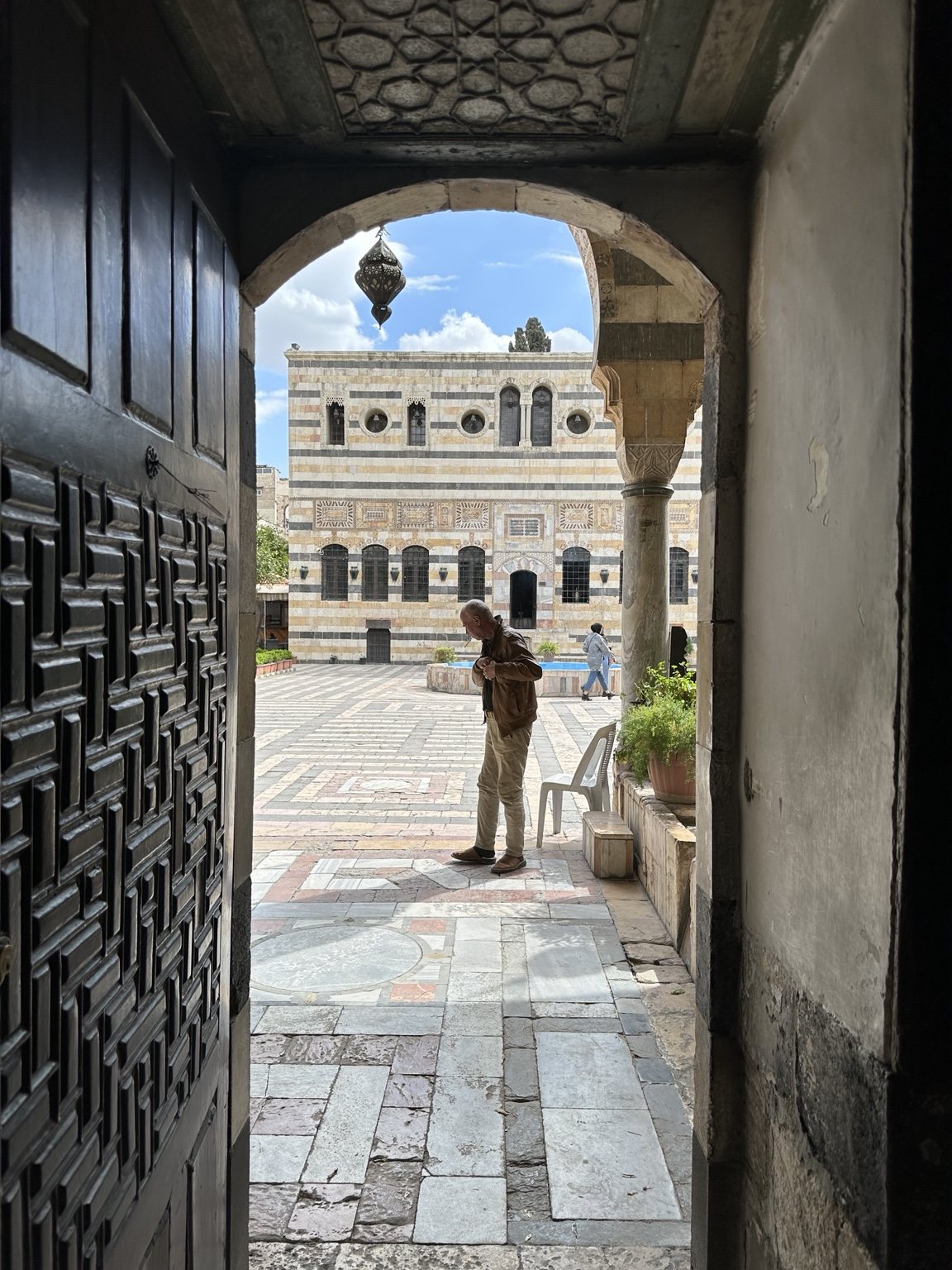
This is what makes the palace special.
It doesn’t simply show you beautiful architecture. It gives you a glimpse into an entire way of life.
How to Visit Azm Palace in Damascus
The palace stands in the heart of Old Damascus, a short walk from the Umayyad Mosque and the spice-filled lanes of Al-Buzuriyah Souq.
You can easily combine a visit with Khan Asaad Pasha, the magnificent caravanserai built under the same governor.
Allow around an hour to explore the courtyards and museum rooms without rushing. Visiting times, admission fees and access to individual rooms can change, so check the latest arrangements before your visit.
For a more meaningful experience, consider exploring the area with a local guide who can explain the stories behind the architecture.
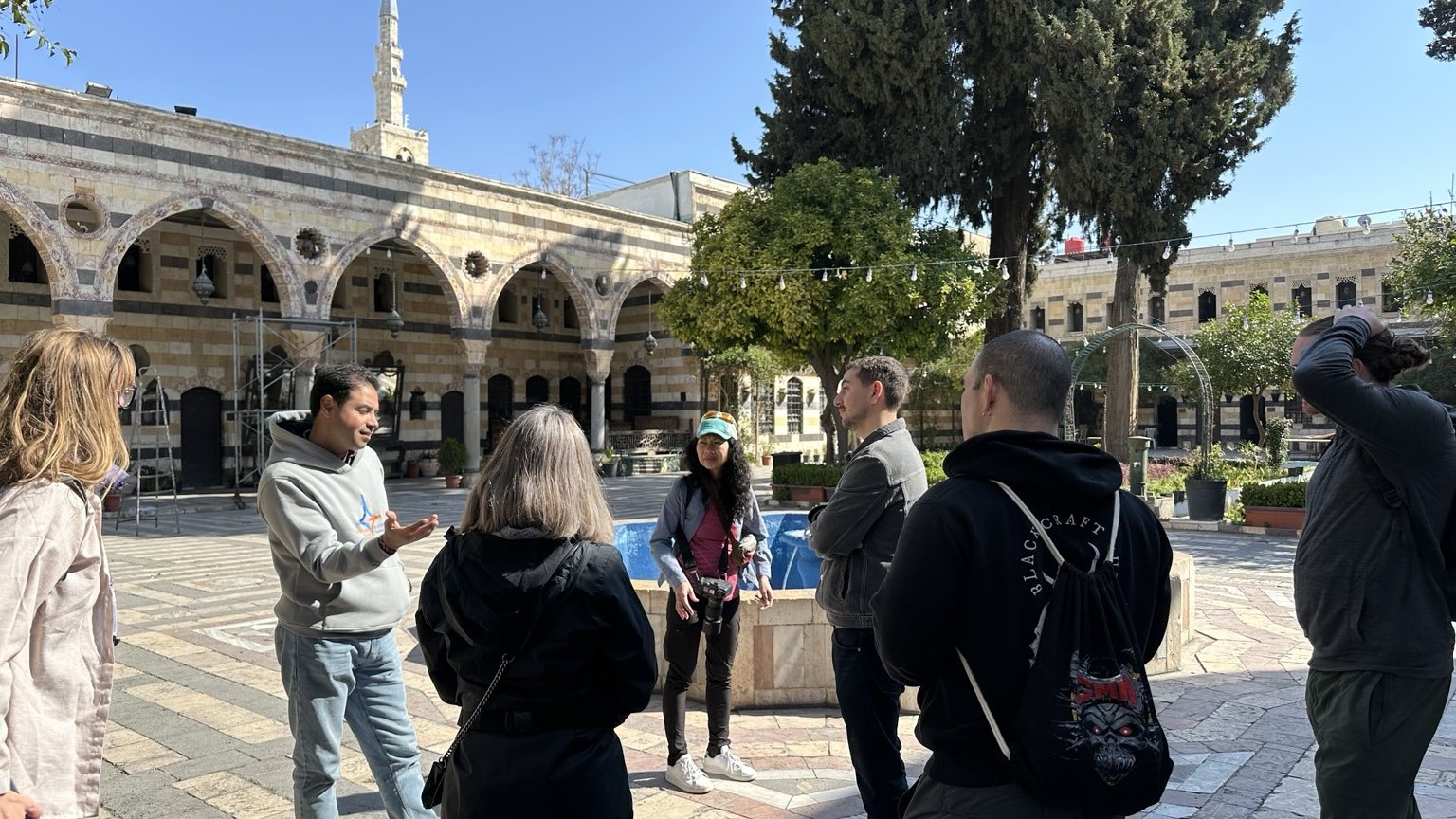
You can discover the palace and the surrounding historic neighbourhoods on our Damascus One-Day Tour.
Explore Damascus with a local guide →One Last Thought
Azm Palace is a reminder that Damascus has never been a city that reveals everything at first sight.
Behind ordinary doors, there are extraordinary stories.
Sometimes, all you need to do is step inside.
Discover Syria, one landmark at a time / Syrian Guides
You might also enjoy
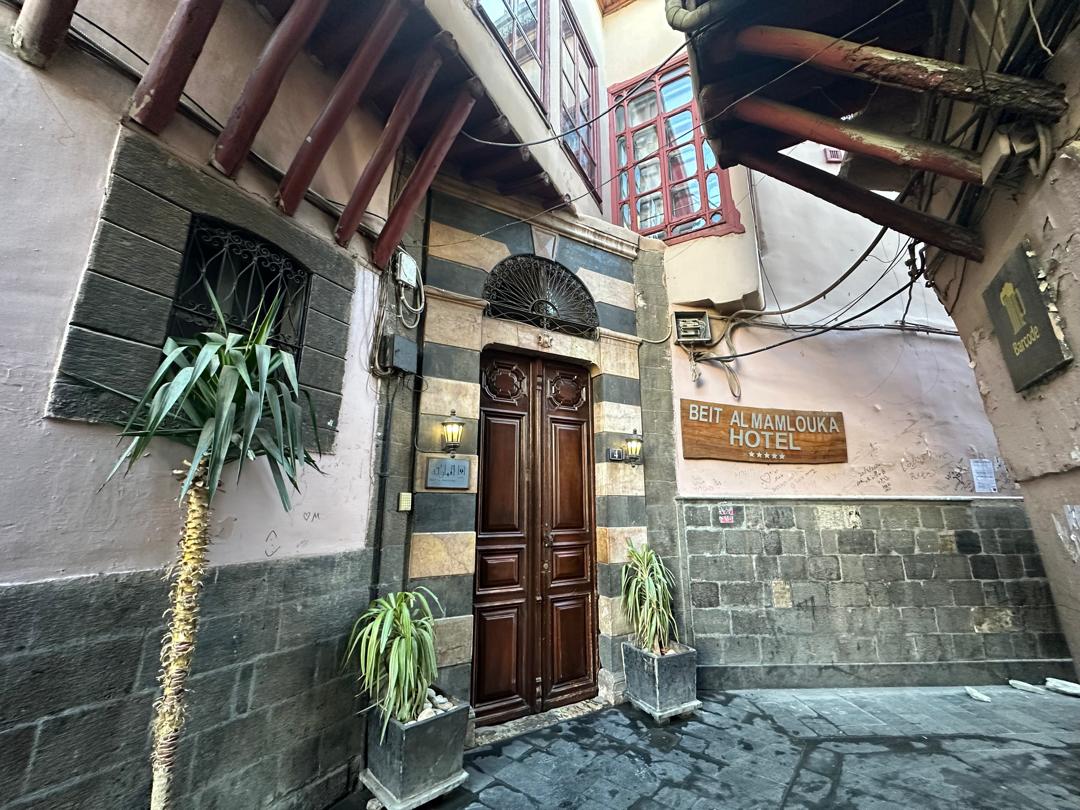 Architecture & hidden housesWhy Damascus Hides Its Most Beautiful HomesDiscover the private courtyards that make Damascus special.Read the story →
 Markets & local lifeShop Like a Local in Buzuriyeh SouqThe spices, sweets and local flavours right around the corner.Read the story →
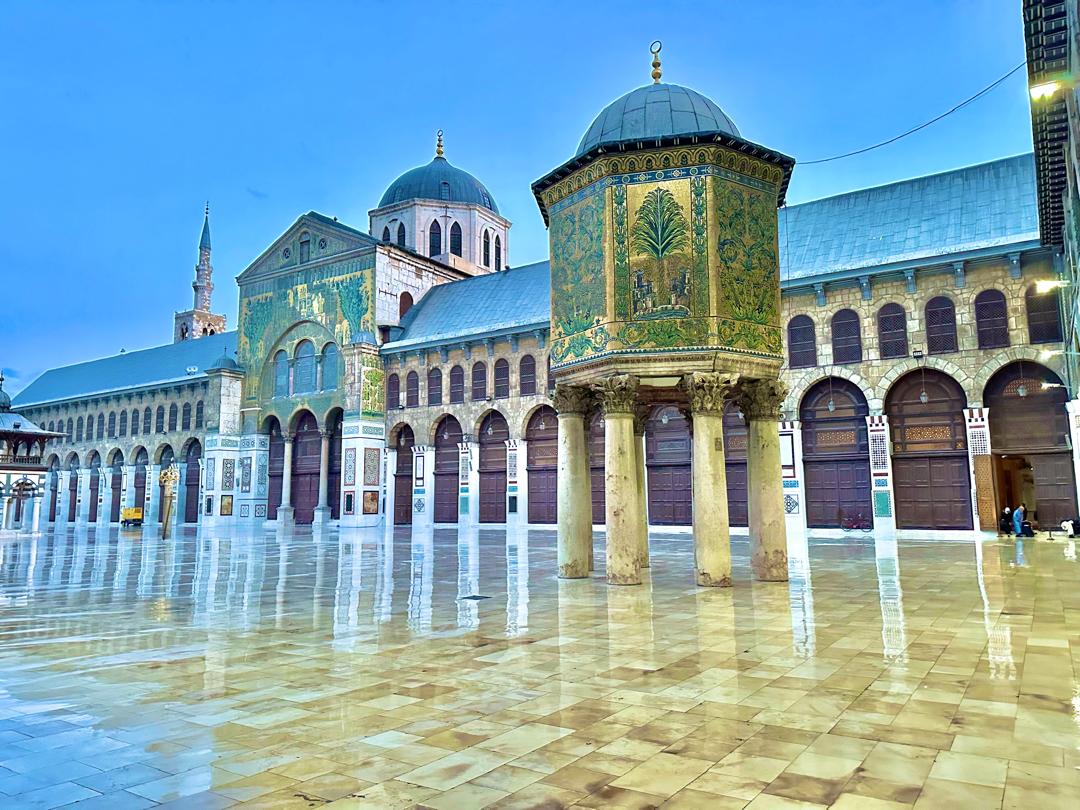 Nearby landmarkThe Umayyad Mosque: Before You VisitDiscover another extraordinary landmark in the Old City.Read the story →
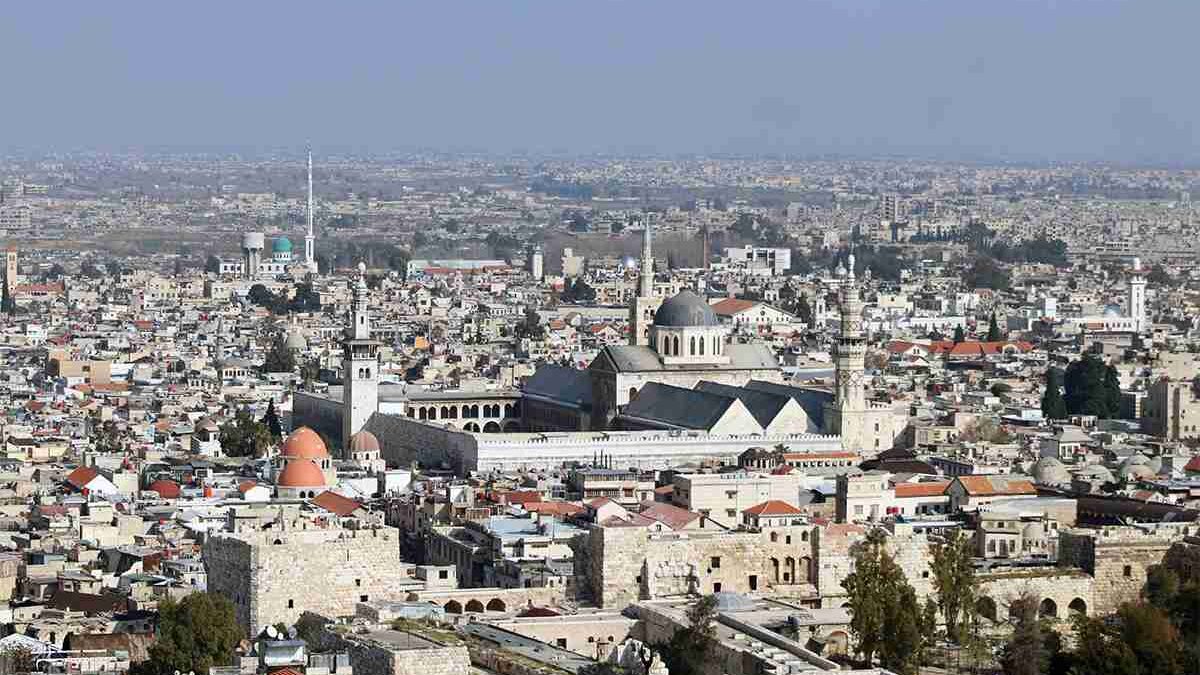 A walking itineraryOne Perfect Day in DamascusTurn your visit into a memorable stroll through the city.Read the story →