
Beit Jabri Damascus: A Courtyard Where Old Syria Lives
In Damascus, a plain door can conceal an entirely different world. At Beit Jabri, that world is still filled with conversation, food and people.
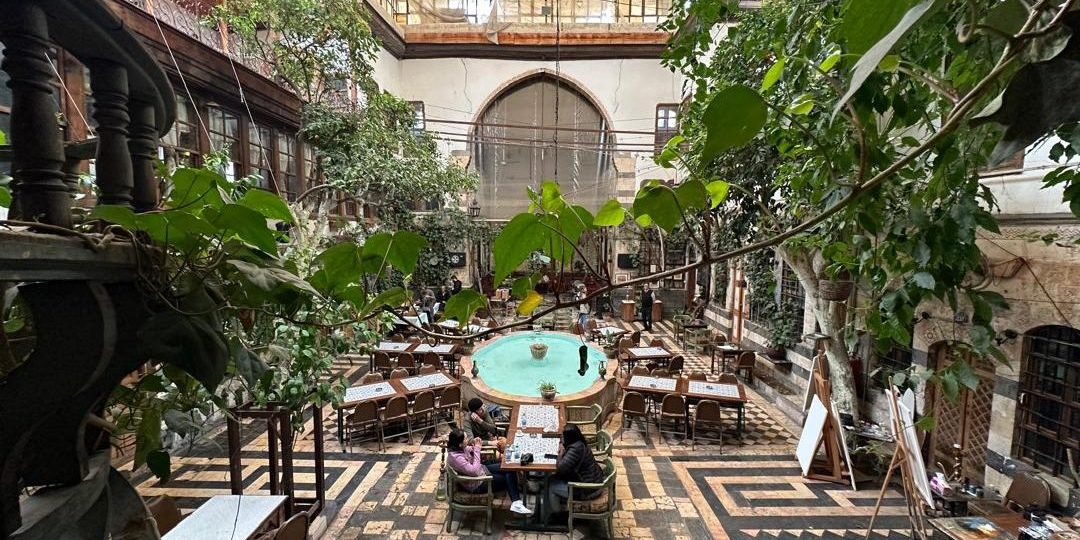
Follow one of the narrow streets behind the great monuments of Old Damascus, pass through an unassuming doorway and find a courtyard full of tables, orange trees and the sound of people enjoying their day.
Beit Jabri is more than a restaurant in a historic building. It demonstrates how a centuries-old Damascene home can gain a new public life while preserving the architectural qualities that made it special.
Visitors often remember the first moment of entering. The outside feels enclosed and ordinary; the inside opens into light, greenery and the changing sounds of the fountain and surrounding rooms.
Here, the story is not simply about the building’s past. It is also about how people continue to make use of old houses today.
At a Glance
Why Damascus Houses Turn Inward
Traditional houses in Damascus were often organised around a courtyard rather than a grand street-facing façade. This arrangement gave families privacy and a protected outdoor space within a busy city.
Trees, water, covered sitting rooms and thick stone walls could make the interior feel cooler and calmer. The architectural effect is especially striking after walking through a narrow alley in summer.
Beit Jabri is a fine place to notice that contrast. The surrounding streets are active and closely built, yet inside the building you can sit among greenery and watch the changing light.
The house is often described as dating from the eighteenth century. Its present form, however, reflects restoration and adaptation as well as older construction, so visitors should not assume every decorative feature has remained untouched since the 1700s.
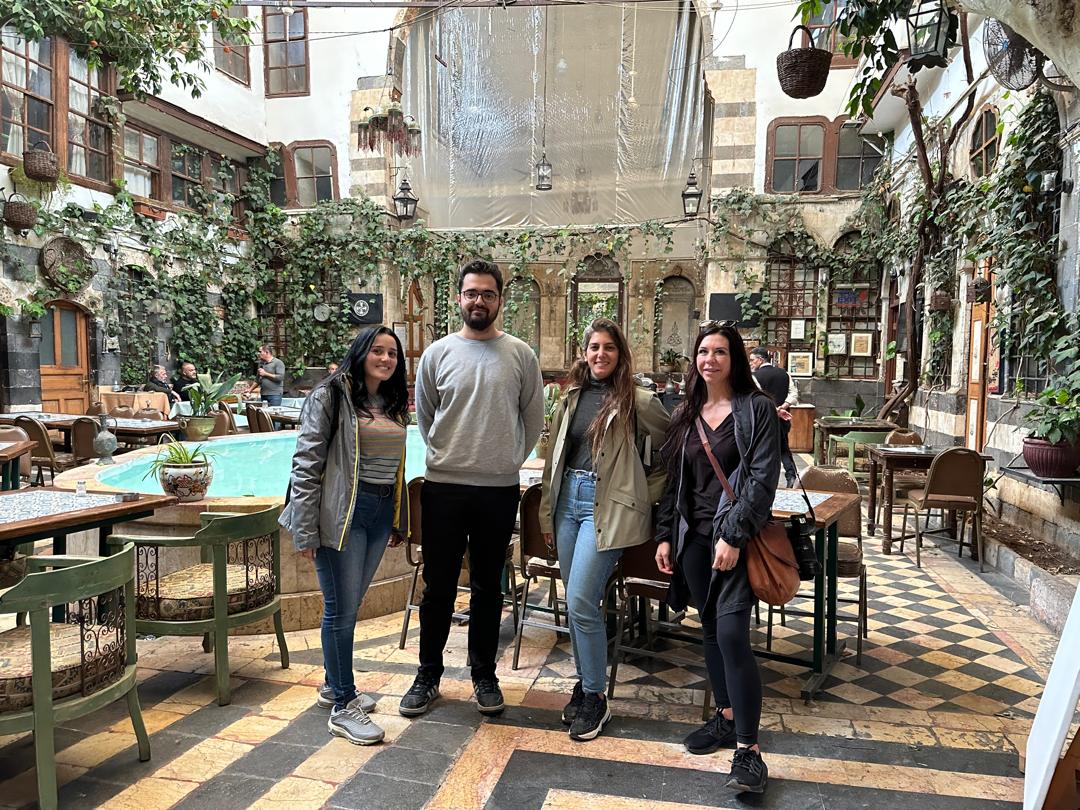
The atmosphere changes throughout the day. A quiet morning coffee gives a very different experience from a busy lunch or an evening gathering.
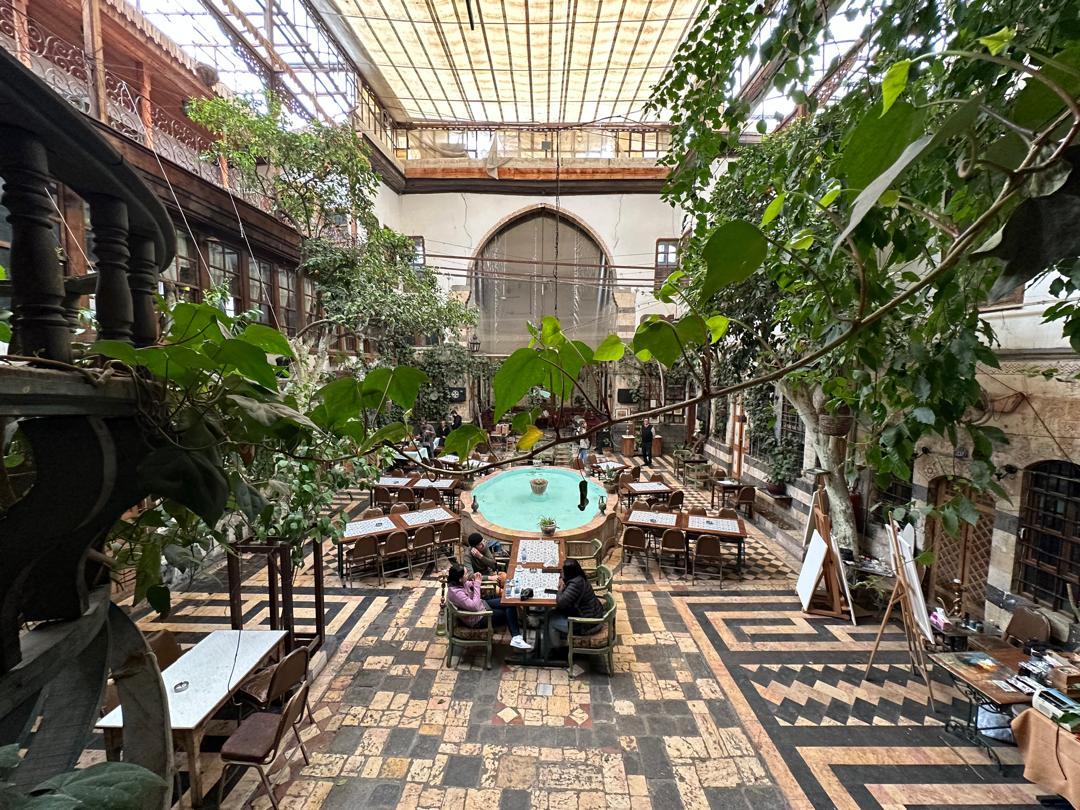
Some rooms retain the proportions of traditional reception spaces, while the central court is now used as a communal dining area.
Rather than treating the courtyard as a backdrop, take a moment to notice the sequence of spaces that brings you from the street to its centre.
How an Old House Became a Living Gathering Place
By the late twentieth century, many old houses in Damascus faced maintenance challenges. Some had been divided between families, altered or left in poor repair as people moved to newer neighbourhoods.
Beit Jabri became a widely discussed example of restoring a historic courtyard house for a new purpose. The family-run restaurant began welcoming guests in the 1990s.
Research on Damascus’s historic neighbourhoods identifies this kind of conversion as an early influence on the city’s later generation of courtyard restaurants and cafés.
Such reuse raises important questions. Changing a home into a public venue can help fund preservation, but it also introduces new furniture, services and visitor traffic. The challenge is to preserve the building’s character without freezing it as a museum.
A Cultural Experience That Isn’t a Museum
The sound of cutlery, conversation and people sharing food is part of the appeal. Unlike a formal heritage monument, Beit Jabri offers the chance to spend time inside traditional architecture rather than simply walk through it.
Typical meals may include Syrian mezze and familiar dishes from Damascene kitchens. Menus and prices change, so it is better to arrive curious than to depend on a fixed list from an old travel article.
Look around with courtesy. Some rooms may be used privately, and photography of staff or other customers should always be respectful.
A longer visit to the old city can connect Beit Jabri with nearby Azm Palace, Khan Asaad Pasha and residential streets, revealing how public monuments and domestic spaces shaped the same urban world.
Not every restored courtyard house has the same story. Beit Jabri is one example of a broader conversation about who owns, uses and cares for the historic houses of Damascus.
Order something, sit where you can see the courtyard and give yourself time. The best way to understand a living historic house is often to experience how people use it.
How to Visit
Beit Jabri is in the lanes of Old Damascus, within walking distance of major historic sites. It works particularly well as a lunch stop or a relaxed pause during a longer walking tour.
- Allow roughly 45–90 minutes for a meal or coffee rather than rushing in just for photographs.
- Ask about current opening hours, table availability and prices; they can change.
- Choose a courtyard table if one is available and the weather is comfortable.
- Ask permission before exploring rooms beyond the dining areas.
- Respect staff and other guests when taking photographs or recording video.
- Combine the stop with a visit to Azm Palace, Khan Asaad Pasha or the nearby market streets.
- Remember this is a working restaurant in a historic home, not a fully accessible museum.
Explore Syria beyond the guidebooks with our local guides.
Join our tours →One Last Thought
Beit Jabri offers one of the pleasures of Damascus: a place can be many centuries old and still feel entirely part of the present. Its heritage is not silent. It sits at the next table.
Latest Syria news




You might also enjoy
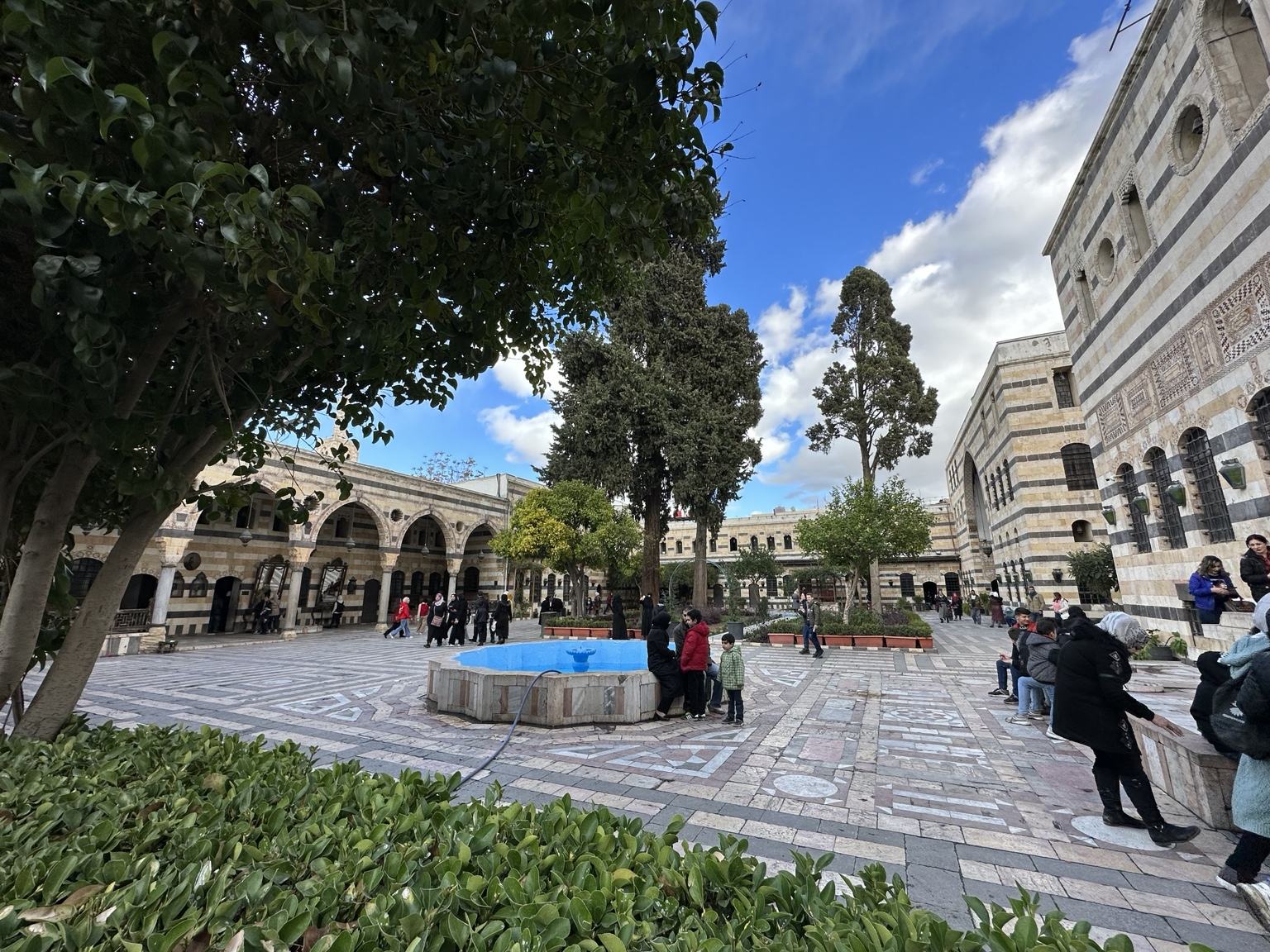 DamascusAzm Palace in DamascusAnother hidden courtyardRead the story →
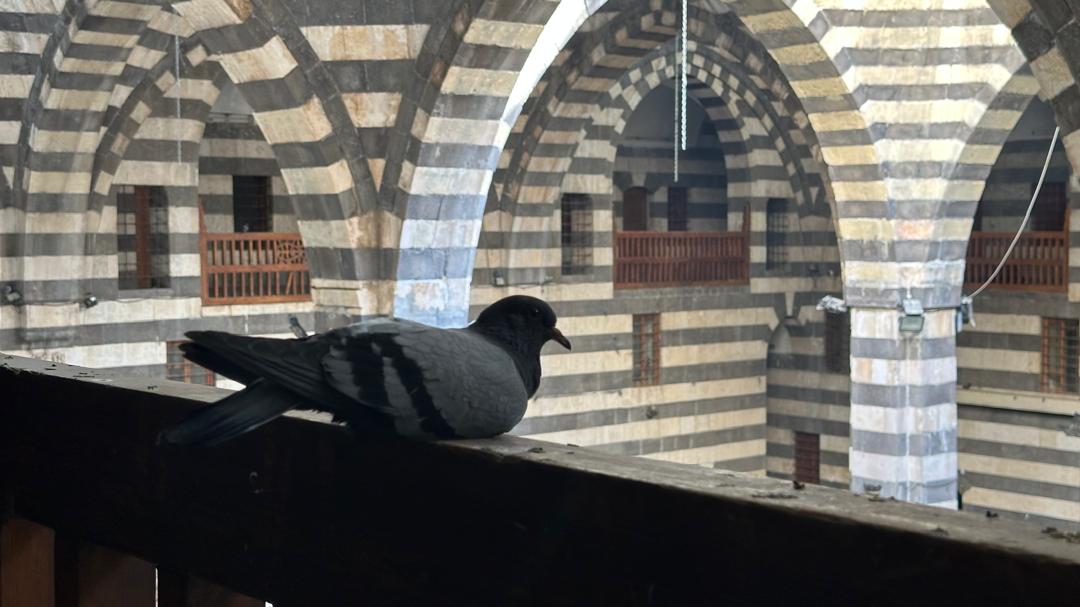 DamascusKhan Asaad PashaA magnificent market caravanseraiRead the story →
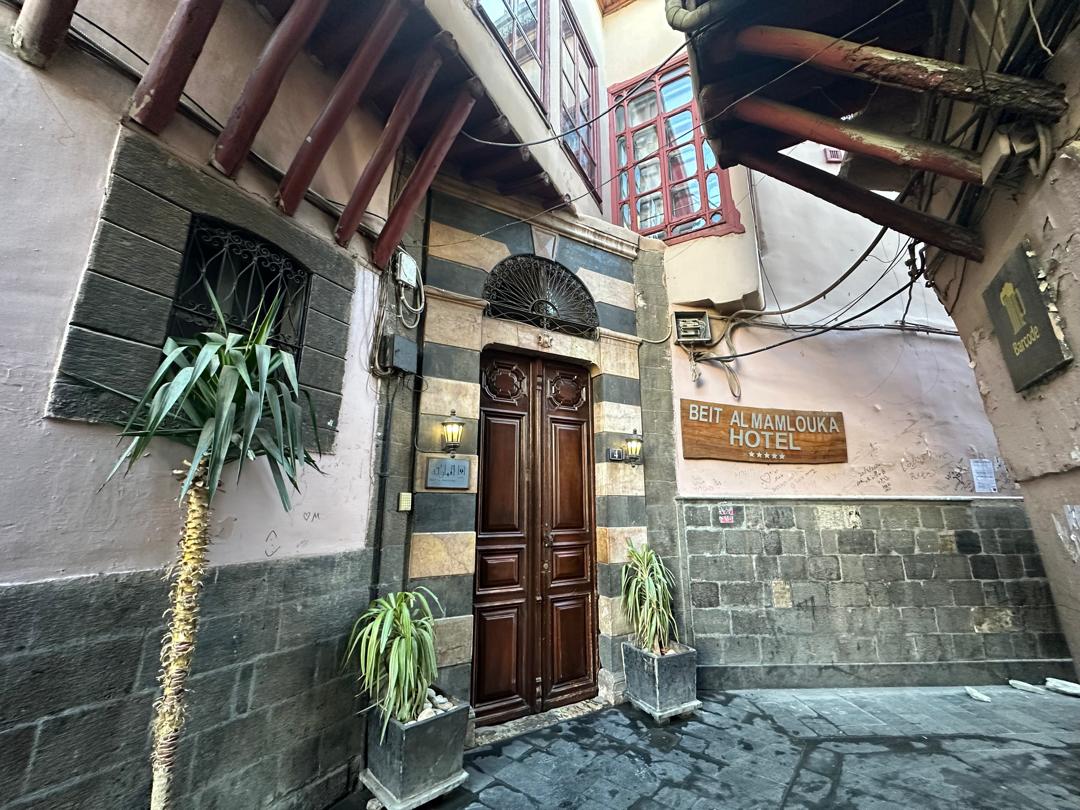 DamascusWhy Damascus Hides Its HomesDiscover the city’s domestic architectureRead the story →
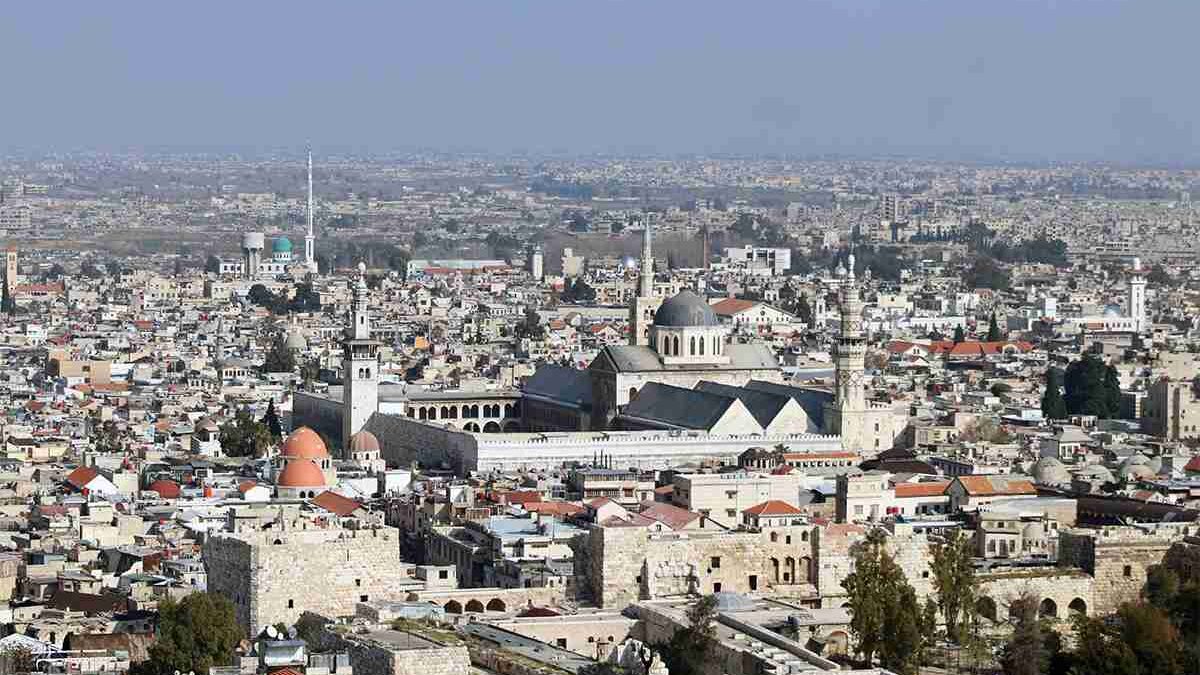 City walkOne Perfect Day in DamascusExplore the old city on footRead the story →