Azm Palace in Hama: The Ottoman House Beside the Orontes
Before As’ad Pasha al-Azm built his celebrated palace in Damascus, he created another remarkable home beside the Orontes River.
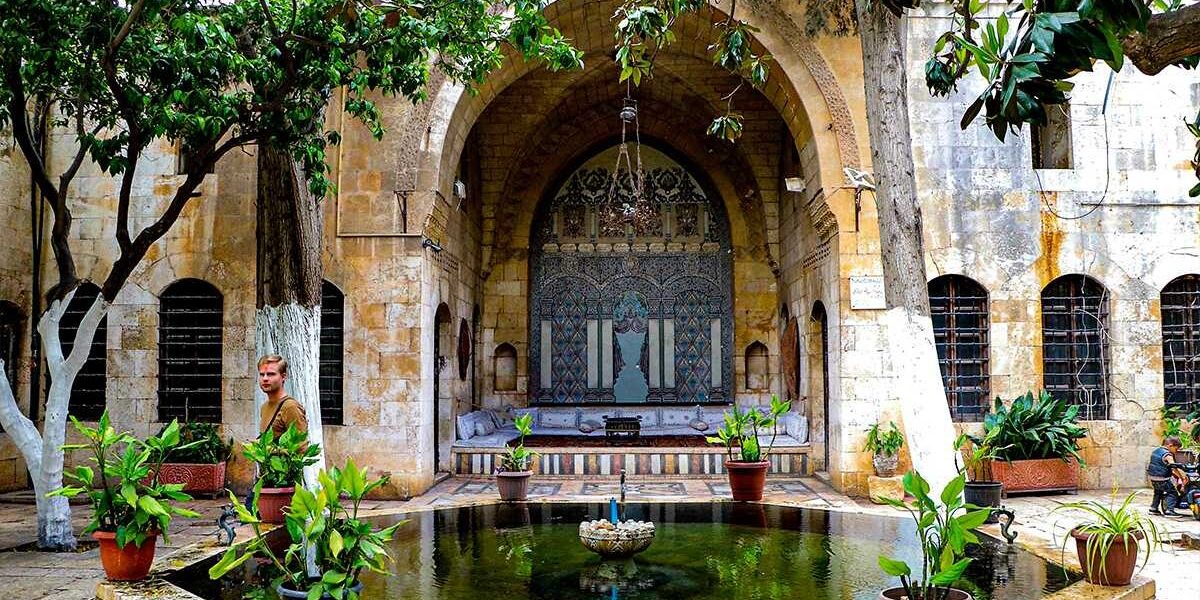
In Hama, the most famous sound is often imagined to be the water moving through its historic norias. But near the river stands a quieter treasure: a palace of shaded courtyards, carved stone, painted wood and private family rooms.
The Azm Palace in Hama was built during the Ottoman period for As’ad Pasha al-Azm, a powerful member of the family that later left another palace in the heart of Damascus. The two buildings invite comparison, but this earlier residence has an identity of its own.
Walk beyond the street-facing walls and the city seems to change pace. In the spacious rooms, the governor’s residence becomes a way to think about how public power and family life shared a single architectural world.
At a Glance
The Palace Before the Famous Damascus Palace
Hama’s Azm Palace dates to the early 1740s, when As’ad Pasha al-Azm held power in the region. Its original core is among the oldest surviving examples of an Ottoman governor’s residence in Syria.
Later, As’ad Pasha governed Damascus and built the palace that most visitors associate with his name. The Hama residence came first, and understanding that sequence makes a visit to both cities particularly rewarding.
The family belonged to the Ottoman provincial elite. Their homes needed to handle official receptions as well as private domestic life. That helps explain the separation between impressive gathering rooms and more secluded courtyards.
The German Archaeological Institute has studied the palace as part of the historical urban fabric of Hama. Its layered construction is evidence of changing tastes and additions rather than a building created all at once and never touched again.

Notice how the entrance gives little away about the world beyond it. In traditional Levantine domestic architecture, a plain exterior could hide remarkable interior spaces.
The palace balances spaces for welcoming guests with areas once used for family activities. Courtyards helped organise movement, privacy and the changing seasons.
Look for shifts in stonework and decoration. They are clues to the palace’s long history, including later alterations and restoration.
Fountains, Iwans and the Art of Living Inside
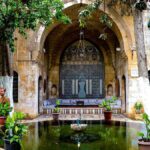
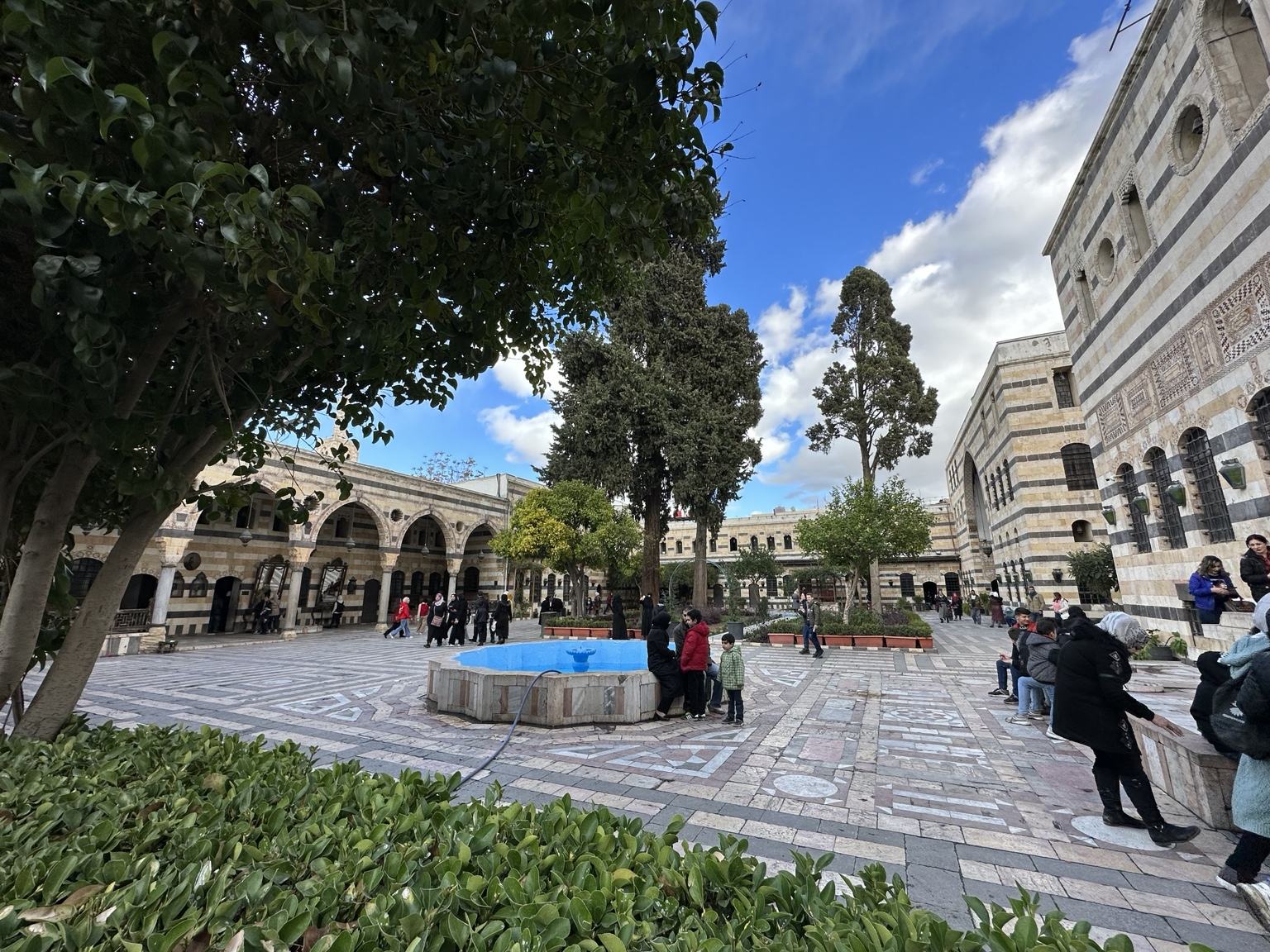
Within the palace, water and light are as important as the walls. Courtyards made shaded gathering places in Hama’s warm months, while fountains helped cool the air and created a soft, continuous sound.
The iwan—a covered sitting space open on one side to a courtyard—is characteristic of many traditional Syrian houses. At Hama, such spaces formed the setting for receiving guests or spending an afternoon in relative cool.
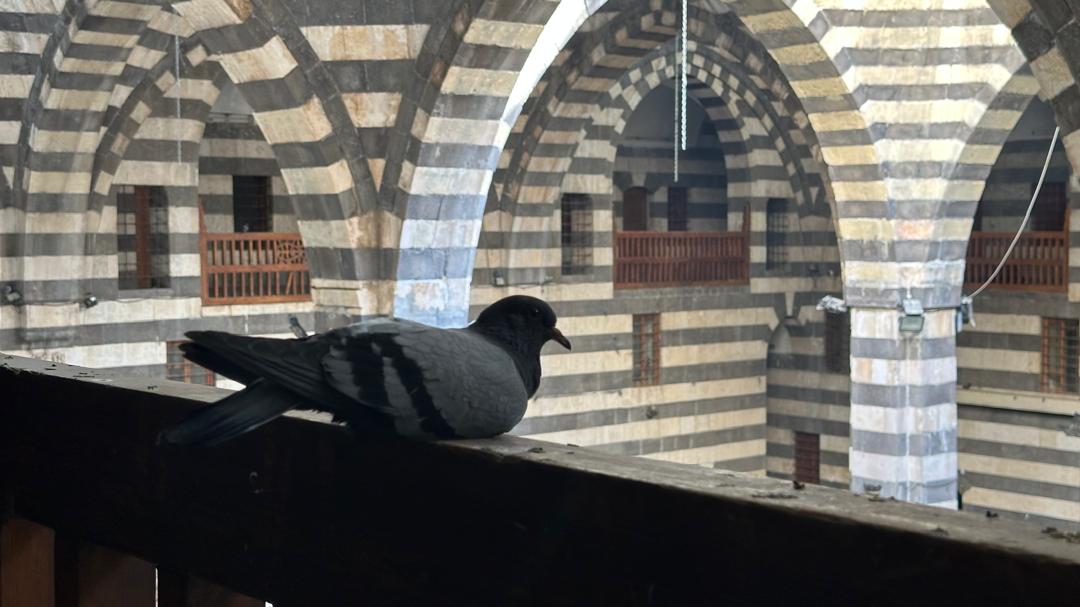
Decorative black-and-white masonry, carved window frames, painted wooden ceilings and stone fountains demonstrate the skill of local craftsmen. Do not rush the ornamental details: some of the most revealing work is at eye level, not high overhead.
Unlike the better-known Azm Palace in Damascus, the Hama complex makes notable use of courtyards at different levels. This is one of the features that makes it particularly interesting for visitors who love architecture.

From Governor’s Home to a Museum of Hama
The residence eventually took on a different role. In the twentieth century it became a museum, helping present the region’s material history and traditions to visitors.
The palace also endured serious damage during the violence in Hama in 1982. Subsequent restoration helped recover much of the architecture, although the changing condition of individual rooms and exhibits should not be assumed from old photographs.
A former palace can be difficult to read without context. Look for what belonged to its original residential design and what was added later to accommodate a museum collection. These two layers are both part of its story.
Outside, the banks of the Orontes and the nearby historic streets remind visitors that Hama’s landmarks were always connected with a living city. The riverside setting helps explain why this residence was such a valuable place to occupy.
Compare Hama’s palace with Azm Palace in Damascus. The similarities in courtyard design make the family’s architectural preferences clear, while differences in layout reveal two distinct urban settings.
How to Visit
The palace is in the older part of Hama beside the Orontes. It suits a walking exploration of the historic centre, where river views, old streets and traditional buildings offer context for the architecture.
- Plan around 45–75 minutes for the palace, allowing more time for careful photography and explanations.
- Check the museum’s current public access, exhibits and ticket arrangements locally before travelling.
- Look closely at fountains, doorways, painted ceilings and masonry; they reward more attention than a quick overview.
- Respect barriers around fragile rooms and decorative surfaces, and avoid touching old woodwork or stone.
- Combine your visit with a walk along the Orontes and other Hama heritage sites.
- If you have visited Azm Palace in Damascus, compare how the two buildings balance public and private spaces.
Explore Syria beyond the guidebooks with our local guides.
Join our tours →One Last Thought
The Azm Palace in Hama is easy to miss when visitors focus only on the river. But behind its walls is a beautiful chapter in Syria’s architectural history—one that began before its more famous counterpart in Damascus.