
You have finished dinner in a Syrian restaurant. The plates are almost empty, the last pieces of bread are still on the table, and small glasses of tea have arrived. Everyone is relaxed. But if you are unfamiliar with Syrian restaurant etiquette, you may be surprised by what happens next—because the moment someone asks for the bill, the calm meal can suddenly turn into a lively battle over who gets to pay.
One person reaches for it. Another grabs his arm. Someone else announces that the bill has already been taken care of. A wallet appears. Another person insists, “No, no, absolutely not.” The waiter stands nearby, perhaps smiling because he has seen this scene hundreds of times before.
What follows can look surprisingly serious to a visitor. Voices become louder. Hands reach across the table. The bill may physically disappear from one person’s hand into another’s. Someone might rush toward the cashier while everyone else is distracted. Another may have quietly spoken to the restaurant earlier and paid before the meal was even finished.
And yet nobody is really angry.
This is one of the most amusing—and revealing—social rituals you may encounter in Syria: the polite battle over who gets to pay the restaurant bill.
It may look like an argument about money. In reality, it is often an argument about generosity.
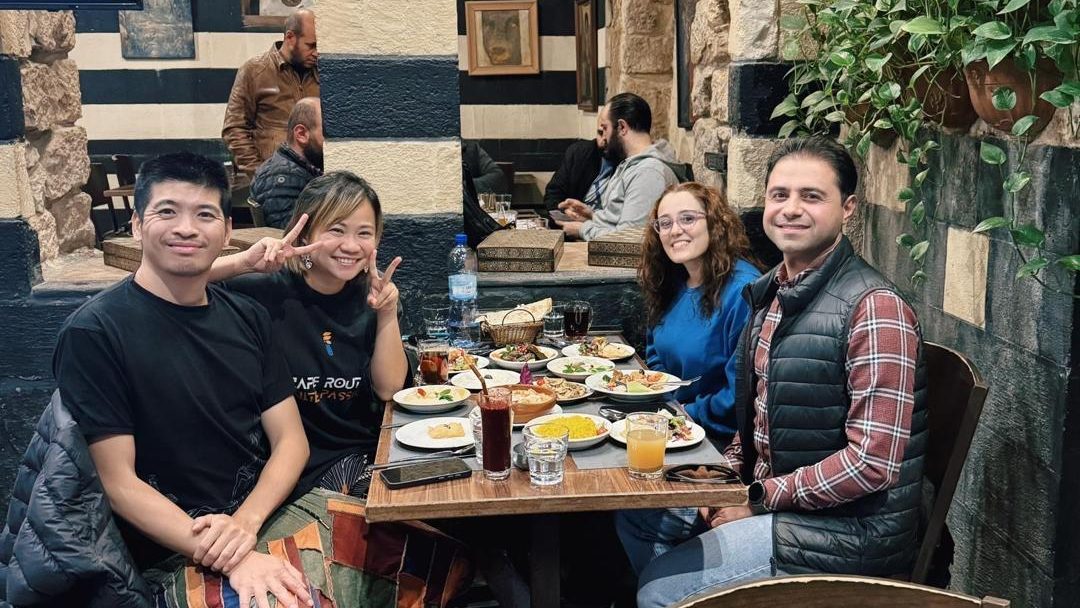
When Paying Is More Than Paying
In many countries, the end of a restaurant meal is fairly straightforward. The group divides the bill, everyone calculates what they ordered, or one person pays and receives money from the others. Understanding this exchange is an important part of Syrian restaurant etiquette, because paying is often connected to hospitality rather than simply settling a financial obligation.
In Syria, things can be considerably more theatrical.
When someone invites you to dinner, the word “invitation” is often understood literally. If a Syrian says, “I invite you,” they may not simply mean, “Come with me to the restaurant.” They may mean, “You are my guest, and I intend to take care of you.”
That distinction matters.
Hospitality occupies an important place in Syrian social life. Guests are commonly offered food and drink repeatedly, and politeness traditionally involves an interesting exchange: the guest may initially refuse, while the host insists. Cultural guides describing Syrian etiquette note precisely this pattern—the insistence demonstrates hospitality, while the initial refusal signals modesty rather than rejection.
The restaurant bill follows a similar logic.
Offering to pay says something.
Refusing to let someone else pay says something.
And sometimes allowing another person to pay also says something.
The money is only part of the conversation.
The Bill Arrives, and Everybody Becomes Alert
A visitor unfamiliar with the tradition may notice something interesting just before the meal ends.
People begin watching one another.
The person who invited the group may already be thinking several moves ahead. They may quietly ask the waiter for the bill. They may leave the table under the pretext of going to the bathroom and settle the bill with the cashier. Perhaps they already told the restaurant when they arrived: “Whatever happens, don’t take money from anyone else.”
Their friends, however, may know exactly what they are planning.
So they develop countermeasures.
One gets up first.
Another calls the waiter discreetly.
Someone hands money to a member of staff before dessert.
Another simply waits until the bill appears and grabs it immediately.
What began as dinner has become strategy.
For first-time visitors, this can be one of the most surprising parts of Syrian restaurant etiquette: the competition may begin before the bill even reaches the table.
This is why the custom can be so funny to watch. Everyone understands the game. Everyone knows that everyone else understands it. And yet each person still behaves as if securing the bill is a matter of enormous importance.
“No, This One Is on Me”
There are many ways the discussion can begin.
A Syrian might say:
“Khalliha ‘alayye.” — خليها عليّ
Leave it to me.
Or:
“Hay al-marra ‘alayye.” — هاي المرة عليّ
This time is on me.
Another person immediately answers:
“La, wallah.” — لا والله
No, absolutely not.
Then comes another round of insistence.
The exact phrases vary between regions, families and generations, but the rhythm is familiar: offer, refusal, insistence, counter-insistence.
A person places a hand over the other person’s wallet. At times, they push the bill back across the table. Sometimes the waiter becomes an unwilling referee.
And occasionally the negotiation continues even after someone has paid.
“You shouldn’t have done that.”
“Why shouldn’t I?”
“You were my guest.”
“Next time you’re my guest.”
That final sentence is important.
Because the battle rarely ends permanently.
It simply moves to the next meal.
Why Syrians Do This
To understand Syrian restaurant etiquette, it helps to understand the importance Syrians place on karam (generosity).
Hospitality in Syria is not limited to restaurants. It is visible in homes, neighborhoods, weddings, religious occasions and ordinary visits. Guests are offered coffee, tea, fruit, sweets and meals, sometimes whether they intended to eat or not. Syrian cultural descriptions consistently emphasis welcoming guests and sharing food as expressions of generosity and respect.
The restaurant is simply another setting in which that value appears.
Paying for a meal allows someone to say, without actually saying it:
I am happy you are here.
Your company matters to me.
You are my guest.
I want to take care of this.
This is why immediately dividing every cost down to the last amount can sometimes feel strangely transactional in a social situation where the participants see the meal primarily as an expression of relationship.
The person paying is not necessarily trying to demonstrate wealth.
Often they are demonstrating affection.
Hospitality Is a Kind of honor
There is also an element of social honor attached to hosting well.
If you invite someone, particularly a visitor, an older relative or someone who has come from another city or country, there can be a strong desire to make sure they leave feeling properly welcomed.
The meal itself is part of this. Enough food should be ordered. Guests should be encouraged to taste different dishes. Plates are shared. Someone notices when your glass is empty. Another person pushes the best piece of meat toward you.
Then comes the bill.
For the person who sees themselves as the host, allowing the guest to pay may feel as if the entire logic of the invitation has been reversed.
The guest is supposed to be cared for.
So the host fights.
Not because the bill is pleasant to pay, but because paying completes the act of hospitality. This is why Syrian restaurant etiquette cannot really be separated from the wider culture of welcoming and honoring a guest.
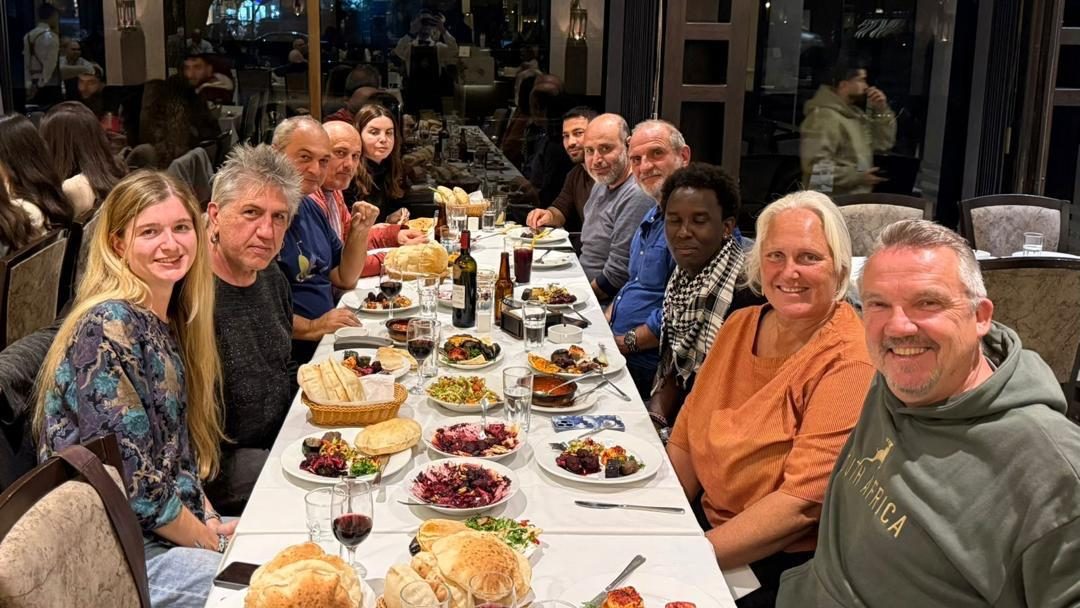
But Why Does the Guest Fight Back?
This is where the custom becomes interesting.
If hospitality requires the host to insist on paying, politeness may require the guest not to surrender immediately.
Imagine somebody invites you for a large dinner, orders generously and then pays while you sit silently without even reaching for your wallet.
Depending on the relationship, that might appear a little too comfortable.
The polite response is often to offer.
Perhaps genuinely.
Perhaps symbolically.
Usually both.
Cultural descriptions of Syrian etiquette note that an initial refusal of an offered gesture can itself be a form of politeness, followed by acceptance after the host insists. The restaurant ritual follows a related social pattern.
This back-and-forth is one of the unwritten rules of Syrian restaurant etiquette: the host demonstrates generosity by insisting, while the guest demonstrates consideration by offering to contribute.
The host shows generosity by insisting.
The guest shows consideration by resisting.
Both people perform respect for the other.
This is why the argument can continue even when everybody knows perfectly well who will probably pay.
Sometimes Everybody Genuinely Wants to Pay
It would be wrong, however, to dismiss the entire exchange as theater.
Sometimes both sides genuinely intend to pay.
Friends may feel they owe one another from previous meals. A relative visiting from abroad may want to treat the family. Someone may have just received a promotion or returned after a long absence. An older person may insist on paying for younger relatives, while younger relatives insist that this time they should be allowed to host.
Generosity creates a kind of informal cycle.
You paid last time.
I pay this time.
You invited me in Aleppo.
I will invite you in Damascus.
You hosted me when I visited your family.
Now you are in my city.
There is rarely a written record.
People remember.
Relationships keep their own accounting system.
And unlike a restaurant receipt, that accounting system is measured less in exact amounts than in gestures.
The Secret Payment
The most effective strategy in the Syrian bill battle is not fighting at all.
One of the funniest unwritten tricks in Syrian restaurant etiquette is to pay the bill before anyone else realizes what is happening.
It is paying before anyone notices.
Experienced hosts know this.
At some point during the meal, they quietly stand up and walk toward the cashier. Perhaps they appear to be answering a phone call. Perhaps everyone thinks they are going to wash their hands.
Five minutes later, the meal ends.
Someone calls for the bill.
The waiter smiles.
“It has already been paid.”
Chaos.
“Who paid?”
“Why did you pay?”
“I told you I was paying!”
“You didn’t even give me a chance!”
The victorious host sits calmly.
The battle was over before the other side realized it had begun.
This technique is particularly useful when dining with somebody who is known to be stubborn about paying. Trying to defeat them at the table may be impossible. Paying secretly removes the opportunity to argue.
Although, of course, they will still argue afterward.
The Restaurant Staff Know What Is Coming
Waiters in Syria can occasionally find themselves placed in a difficult position.
Two customers are both trying to hand them money.
One says, “Don’t take anything from him.”
The other says, “If you take his money, I’ll be upset.”
A third person may be standing at the cashier waving banknotes.
The waiter has to decide whose instructions to follow.
Experienced restaurant staff often recognize the situation immediately. Sometimes the person who arranged the dinner tells them in advance not to accept payment from anyone else.
From the restaurant’s perspective, there may be little difference who eventually pays.
From the customers’ perspective, the difference can apparently be enormous.
The waiter becomes part cashier, part diplomat.
The Most Dangerous Moment: Reaching for Your Wallet
Imagine you are traveling in Syria and a local friend invites you to dinner.
The meal ends.
The bill appears.
Naturally, you reach for your wallet.
Your Syrian companion may react as though you have proposed something completely unreasonable.
“No.”
You explain that you are happy to pay your share.
“No, no.”
You insist.
“No. You are my guest.”
You insist again.
Now their hand is physically preventing your wallet from opening.
You have just entered the ritual.
For travelers, this can be confusing because the cultural meanings are different. At home, offering to split the bill may be the fairest and most respectful thing you can do. In Syria, someone who has explicitly invited you may interpret your insistence on paying as unnecessary because they already decided that hosting you includes paying.
If you are learning Syrian restaurant etiquette for the first time, this is the moment when the cultural difference becomes very obvious.
The easiest approach is to offer sincerely, particularly once or twice, but pay attention to the relationship and situation. If your host continues to insist strongly, allowing them to host you can itself be an act of courtesy.
Then find another opportunity to return the generosity.
Buy the coffee afterward.
Bring sweets the next time you meet.
Invite them to dinner later.
Hospitality does not have to be settled immediately.
“Next Time Is Mine”
This may be the most useful phrase in the entire battle.
If somebody simply refuses to let you pay, you can surrender with:
“Next time is mine.”
Suddenly, everyone is happy.
The host has succeeded in paying.
The guest has preserved the possibility of reciprocating.
And, importantly, another meeting has already been promised.
That is perhaps the most beautiful part of the custom.
The disagreement about the bill actually assumes there will be another meal.
Friendship continues.
The account remains open.
What Happens Among Close Friends?
Among close friends, the rules can become much more flexible.
Younger Syrians may split costs, alternate payments or use whatever arrangement makes sense for their circumstances. Economic realities also matter. Nobody should imagine that every Syrian social gathering automatically involves one person paying a huge restaurant bill.
The tradition is a tendency, not an absolute rule.
Yet even among friends who normally divide expenses, the instinct to host can suddenly appear on special occasions.
A birthday.
A visitor returning from abroad.
A new job.
An engagement.
A reunion.
Someone announces, “Today is on me.”
Then the old rules return.
The others protest.
The argument begins.
Family Makes the Battle Even More Complicated
Family dinners create their own hierarchy.
Parents may feel they should pay for their children long after those children have become financially independent.
Adult children may desperately try to prevent this.
Older siblings may claim responsibility.
Uncles may intervene.
Someone visiting from abroad may believe they have automatic payment rights because they have not seen the family for years.
Suddenly six people are competing for one receipt.
Age, relationship, financial situation and the reason for the gathering all affect the result. There is no universal formula.
But the underlying idea remains remarkably consistent:
Paying can be a form of care.
This helps explain why the discussion sometimes looks disproportionate to the amount involved. People are not only negotiating money. They are negotiating roles within the relationship.
Which side hosts whom?
Which entity honors whom?
Gestures reveal who owes whom.
Which person finally paid last time?
The receipt is carrying far more information than the restaurant printed on it.
Food Has Always Been Social Currency in Syria
The competition over restaurant bills makes more sense when viewed alongside other Syrian food traditions.
One example is Sikbeh, the custom of sending portions of a household’s meal to neighbors, particularly associated with Ramadan. Families exchange dishes shortly before sunset, turning privately cooked food into something shared across the neighborhood. Recent Syrian reporting describes the practice as an expression of solidarity, affection and social connection rather than something dependent on expensive ingredients.
The principle is similar.
Food does not stay entirely within the boundaries of the household.
Someone else should taste what you cook.
When guests arrive, they should eat well.
You go to a restaurant together, and someone wants to host.
Food becomes a way of maintaining relationships.
This is why Syrian hospitality can sometimes feel almost competitive.
Generosity invites generosity in return.
It Is Not Really About Showing Wealth
From the outside, fighting to pay may look like a display of financial status.
Sometimes social status certainly plays a role, as it does almost everywhere. But interpreting the whole custom as showing off misses much of its meaning.
A person may insist on hosting even when the restaurant is inexpensive.
The same instinct appears over coffee.
Someone pays for four cups of tea.
Another person protests.
The amount may be tiny.
The ritual remains.
That tells you something important.
The value of the gesture is not necessarily connected to the value of the bill.
It is the act of saying “you are with me, so allow me to take care of this” that matters.
And Sometimes It Is Just Funny
Syrians themselves recognize the comedy.
There is something objectively absurd about grown adults wrestling over a small piece of paper while the waiter tries to escape.
That is part of the charm.
The ritual survives partly because everyone understands its exaggerated nature. The argument may sound dramatic, but smiles often appear between the objections.
Nobody needs a cultural anthropology lecture at the table.
Everyone already knows the script.
One person grabs the bill.
Another protests.
Someone says, “Wallah, no.”
A hand pushes money away.
The waiter disappears.
Everybody laughs.
Dinner continues for another ten minutes because nobody can stop discussing who should have paid.
Syrian Restaurant Etiquette: What Should a traveler Do?
If you experience this during a trip to Syria, don’t panic when the volume rises.
Your hosts probably have not suddenly fallen out with each other.
You are witnessing hospitality in action.
If someone clearly invited you, offer to contribute, but don’t feel you need to turn the evening into an uncomfortable argument. If they insist strongly on paying, accept the gesture warmly and thank them.
You can always reciprocate later.
Offer the next coffee.
Buy dessert.
Bring a small gift.
Invite them somewhere another day.
The aim is not to defeat Syrian hospitality.
It is to participate in the exchange.
And if you are determined to pay?
You may need to learn the secret-payment technique very quickly.
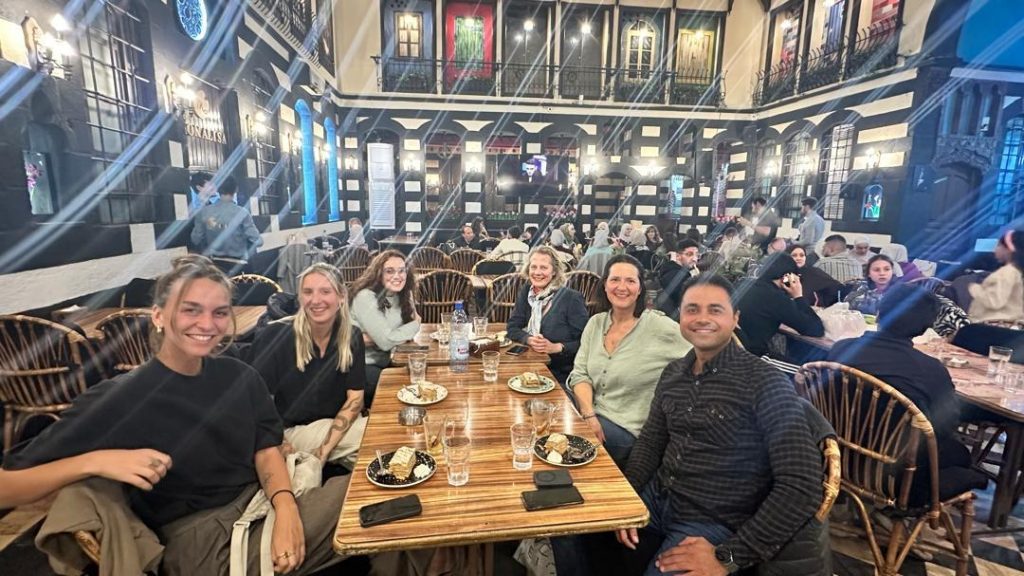
A Small Ritual That Reveals a Bigger Culture
The battle over the bill may seem like a tiny detail of everyday life.
But small habits often reveal more about a country than famous monuments do.
Through this one moment, you can see hospitality, friendship, family hierarchy, modesty, generosity, reciprocity and humor operating at the same time.
Nobody gives a speech about these values.
They simply reach for the bill.
That is why this ordinary restaurant scene can become one of the memories travelers carry home from Syria.
You may forget what the meal cost.
You may even forget exactly what you ordered.
But you will probably remember watching three Syrians almost wrestle each other for the privilege of paying for it.
The Bill Is Paid, but the Relationship Continues
Eventually, someone wins.
The receipt disappears.
The wallets return to pockets.
Tea is finished.
Everyone stands to leave.
But the person who lost the battle has not forgotten.
At the restaurant door, they may point at the winner and issue a warning:
“Next time, don’t even try.”
The other laughs.
They both know what will happen.
There will be another restaurant.
Another meal.
Another bill.
And another polite battle to see who can be the more generous host.
Because in Syria, sometimes the hardest part of dinner is not choosing what to eat.
It is convincing somebody to let you pay.
What appears to be a small detail of Syrian restaurant etiquette actually reveals much bigger ideas about generosity, friendship, family and reciprocity.
Experience Syrian Hospitality for Yourself
Some Syrian traditions, including Syrian restaurant etiquette are easy to explain in an article. Others make much more sense once you find yourself sitting around a table with Syrians.
Food is an important part of our Syrian Guides tours because meals are not simply breaks between monuments. They are opportunities to experience everyday Syrian life: sharing mezze, trying regional dishes, eating in restaurants that locals actually use and spending time around a table rather than rushing to the next attraction. Our tours regularly incorporate relaxed local meals and authentic Syrian food experiences.
And when the bill finally arrives, you may get to witness the tradition from this article firsthand. Someone may insist on paying, someone else may protest, and your guide might have to explain why what sounds like an argument is actually one of the friendliest battles you will see in Syria.
These small human moments are often what travelers remember most. You can photograph monuments anywhere, but sitting around a table, laughing with local people and gradually understanding the unwritten rules of Syrian hospitality gives you a completely different connection with the country.
Join a Syrian Guides Tour and Experience Syria Beyond the Monuments
Come hungry. And if you plan to pay the bill, you may need to be faster than the Syrians.
Sources and Further Reading
- Cultural Atlas – Syrian Culture: Etiquette
One of the most directly relevant references for this article. It discusses Syrian hospitality, the custom of initially refusing offers out of politeness, and specifically notes the tendency to compete over paying restaurant bills. - SANA – Ramadan Sikbeh: A Popular Tradition Reflecting Compassion and Community
Background on the Syrian tradition of neighbors exchanging portions of their meals, illustrating the wider cultural importance of sharing food, generosity and social connection. - SANA – Ramadan Takriza: A Damascene Tradition Reviving Heritage and Bringing People Together
Further reading on the social role of shared meals, gatherings, friends and neighbors within Damascene traditions. - Syrian Guides – Syria Group Tours
Information about Syrian Guides tours and the emphasis on local experiences, Syrian food and the human moments that form part of traveling through the country. - Syrian Guides – Once in a Lifetime Syria September Tour
An example of how Syrian Guides incorporates relaxed local restaurants, family-style meals and authentic Syrian flavors into its itineraries.