
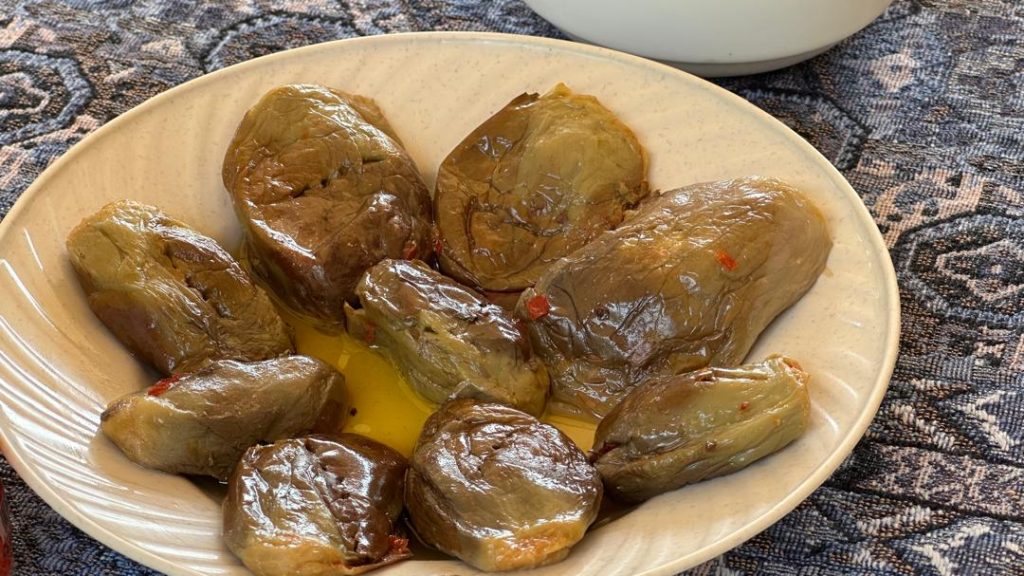
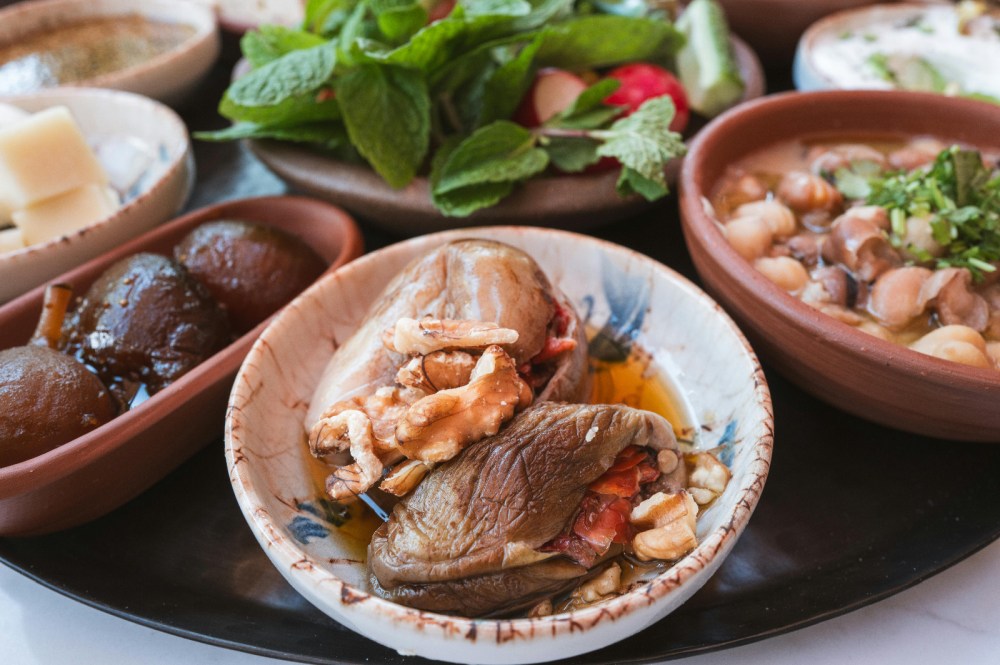
Makdous is one of those Syrian foods that solves a whole cultural puzzle with one simple idea. It is baby eggplants that are softened, salted, pressed, stuffed with walnuts, garlic, and red pepper, then preserved under olive oil. Over time, the flavors deepen and soften into something bold, rich, and quietly addictive. Syrians don’t just “make” Makdous. They prepare it as a season, store it as security, and serve it as identity.
The best way to understand Makdous is this: it is a capsule of summer. In late summer, markets overflow with eggplants, peppers, walnuts, and fresh oil. Winter comes later and asks for warmth. Makdous is how Syrian kitchens answer winter in advance. It captures the peak of the harvest and seals it in a jar so that a cold morning can still taste like sunshine.
What the Word “Makdous” Really Means
Even the name explains the dish. “Makdous” comes from an Arabic root connected to the meaning of piling up or packing tightly, describing the way the eggplants are stacked into jars and pressed under oil. The word is practical, not poetic, because the dish itself is built on practical wisdom.
A Syrian Dish With Deep Roots
Makdous is widely known across the Levant today, but it is strongly tied to Syrian household tradition, especially the autumn pantry season. It is not a trendy invention or a restaurant creation. A version of stuffed, preserved eggplant appears in a well-known 13th-century Syrian cookbook, “Kitab al-Wuslah ila al-Habib,” which shows that the logic behind Makdous—curing, stuffing, preserving—has existed in Syria for centuries.
In other words, Makdous did not become Syrian because Syrians like it. It is Syrian because it grew naturally from Syrian life: from harvest cycles, from pantry culture, and from the need to preserve food long before modern refrigeration.
The Annual Ritual: When Syrian Homes Turn Into Workshops
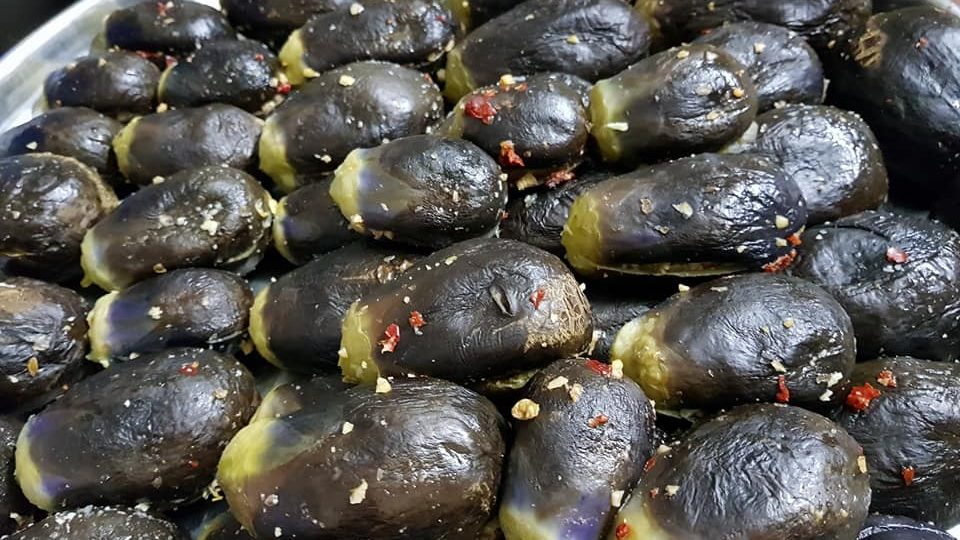
Makdous is not usually made randomly. It has a calendar. Syrian households often prepare it in the fall to supply the pantry for winter, and the making itself becomes a ritual that repeats year after year.
If you step into a home during Makdous season, the kitchen feels like a small factory powered by family. Eggplants are boiled, then salted and pressed. Walnuts are chopped, garlic is crushed, peppers are mixed in. Jars line the counter like a plan for the future. Everyone has an opinion about the “right” amount of salt and the “best” oil. It is food preparation, but it is also the family’s way of saying: we are ready for the coming months.
The Ingredients, Explained Like a Simple System
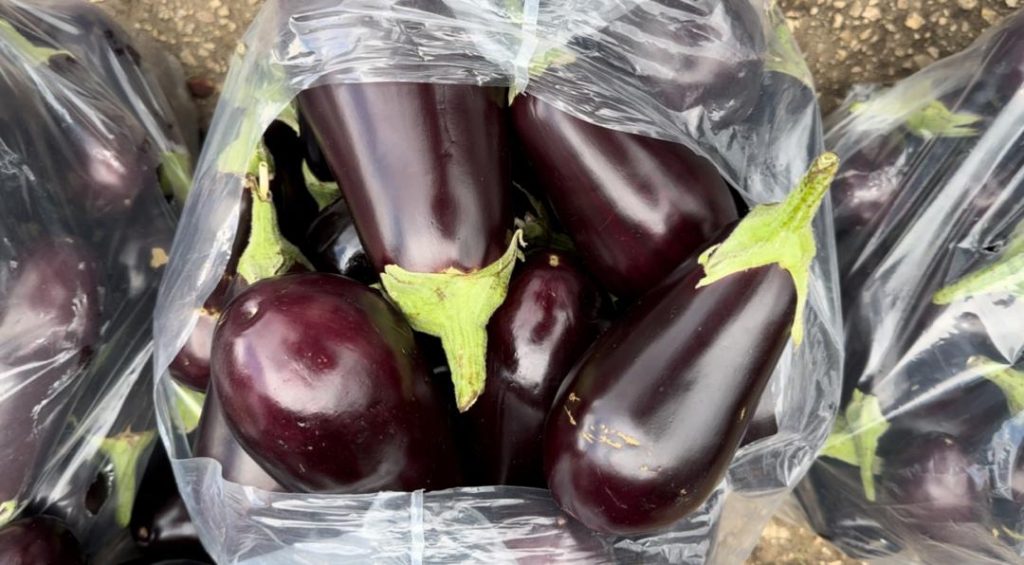
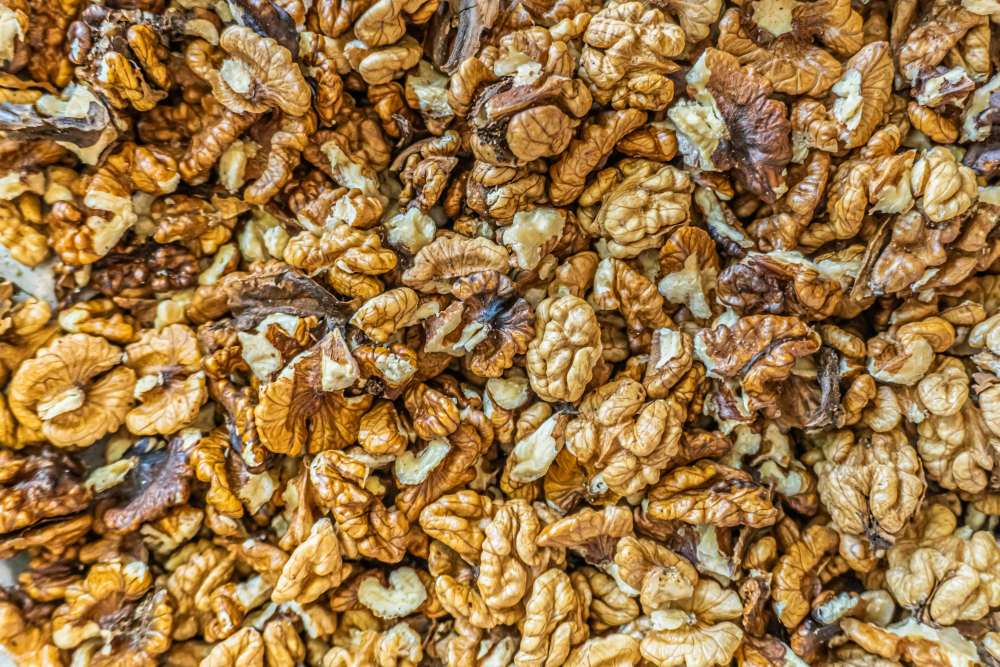
Makdous works because each ingredient has a job. The eggplant is the container, like a soft pocket that holds flavor. Walnuts are the body of the filling, giving richness and real “meal” satisfaction. Garlic is the loud signature; it announces itself before you even take a bite. Red pepper is the warm glow that makes the flavor feel deep, not flat. Salt is the discipline that pulls moisture out of the eggplant so it can keep. Olive oil is the seal, like a protective blanket that locks everything away from air and gives the final smoothness.
This is why Makdous feels complex even though the recipe is simple. It is not complicated cooking. It is smart assembling plus time.
How It’s Made, Without the Noise
The process is simple if you see the logic. The eggplants are softened so they can be shaped. They are salted and pressed because moisture is what shortens shelf life. Then they are stuffed and packed into jars. Olive oil is poured over until everything is covered. Then time takes over.
If you want a clean analogy, think of Makdous as a “slow-marinated bite.” Some foods are cooked by heat. Makdous is cooked by waiting. Time is not a pause here. Time is an ingredient.
What It Tastes Like, and Why It Sticks in Your Memory
Makdous tastes like a whole Syrian mezze table compressed into one bite. The eggplant is tender and slightly tangy from curing. The walnuts feel earthy and rich. Garlic hits first, then settles into a balanced warmth. The pepper gives depth. Olive oil rounds the edges, so the bite feels smooth instead of sharp.
This is why people remember it. Makdous doesn’t taste like “one thing.” It tastes like layers coming together, the way a good city feels when you finally understand its streets.
A Perfect Food for Vegetarians and Vegans
Makdous is naturally vegetarian and, in its classic form, vegan. It is one of the best examples of how Syrian cuisine can feel satisfying without any meat or dairy. Walnuts and olive oil provide the fullness people often expect from heavier meals, while garlic and pepper keep it lively. It doesn’t feel like a compromise dish. It feels complete.
Why Makdous Matters on Syria Tours
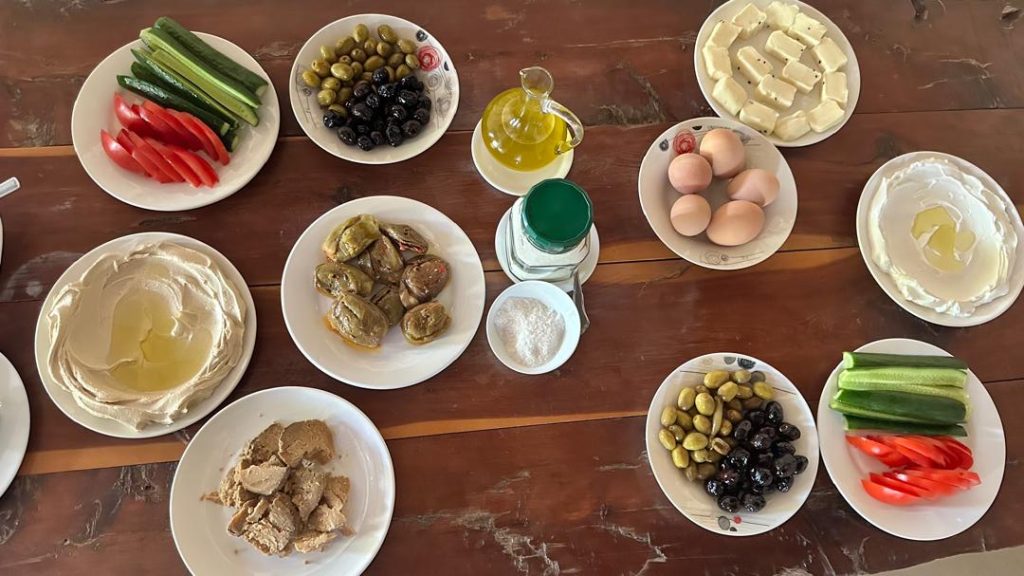
If you are doing Syria tours, especially Damascus tours through the old markets and traditional neighborhoods, Makdous is not just something “nice to try.” It is one of the fastest ways to taste Syrian daily life. It belongs to breakfast tables, to guest hospitality, to pantry shelves, to family rhythm.
On a Syria food tour, Makdous also connects perfectly to what you see around you. In the souqs you’ll notice walnuts piled high, pepper in red mountains, garlic hanging in strings, olive oil treated like treasure. When you finally eat Makdous, the market stops being scattered items. The puzzle pieces connect. The ingredients become one clear meaning.
Makdous and the Bigger Syrian Story: Farming, the Fertile Crescent, and Olive Oil
Makdous makes even more sense when you place it inside Syria’s deeper relationship with agriculture. Syria sits in the Fertile Crescent, a region widely described as the heartland of the Neolithic Revolution, where early farming and settled village life emerged and reshaped human history.
That long farming story is also why olive oil feels so central to Syrian food. Research on olive cultivation points to very ancient beginnings in the Levant, with archaeological evidence of olive oil production and cultivation reaching back thousands of years.
And Syria has one especially powerful ancient name in this olive story: Ebla. Ebla’s archives and economic records are a major window into Bronze Age Syria, and many popular historical summaries highlight Ebla’s connection to olive groves and oil as an organized commodity in that era. In Syrian storytelling, you may also hear a local tradition that places the “first olive tree” in Ebla; it’s best understood as cultural pride and legend rather than a strict scientific claim, but it shows how deeply Syrians link identity, land, and olive oil in one sentence.
Makdous is where all of that becomes edible. It is agriculture turned into comfort, and history turned into breakfast.
Benefits, Said Honestly
Makdous combines eggplant, walnuts, garlic, pepper, and olive oil, so it naturally brings fiber and plant-based fats along with strong flavor. It also tends to be salty and rich because it is preserved and stored in oil, so the Syrian way is the smart way: eat a few pieces with bread, alongside fresh vegetables or labneh if you like, and let it be a concentrated highlight rather than a huge portion.
The Simple Conclusion
Makdous is not complicated, and that is exactly why it is brilliant. It is a capsule of summer, sealed in olive oil, opened when winter arrives. It is Syrian because it grew from Syrian seasons, Syrian agriculture, and Syrian family rituals. And for travelers, it is one of the most direct and authentic tastes you can add to your Syria tour experience—because it doesn’t just feed you. It explains a way of life.