
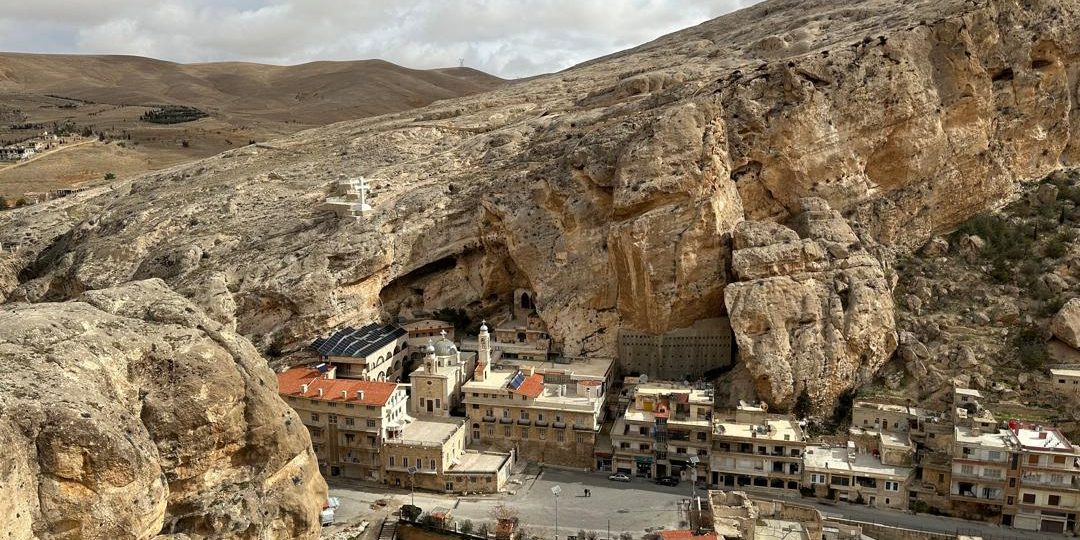
The stories behind Syria’s landmarks
Saint Thecla’s Convent in Maaloula: A Sanctuary in the Rock

The most unforgettable part of Saint Thecla’s Convent may be the mountain around it. Here, landscape, language and faith have been telling stories together for centuries.
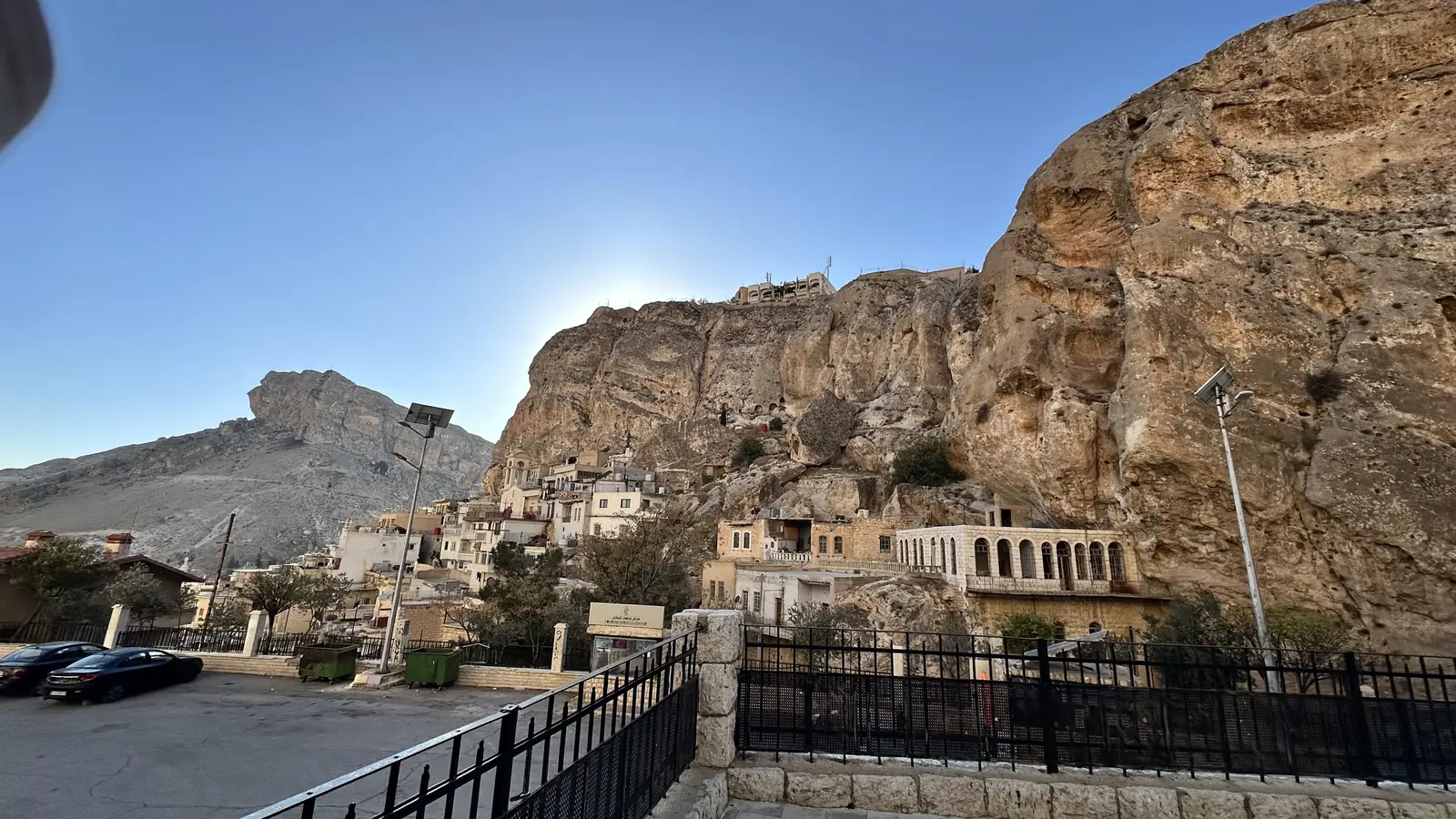
In the Qalamoun Mountains, northeast of Damascus, Maaloula’s houses seem to cling to the cliffs. A convent rises among them, beside a grotto associated with Saint Thecla, an early Christian figure whose story has inspired pilgrims for generations.
It is a place of prayer, but also a place where history and tradition need to be heard with care. Local believers connect the saint with the pass through the rocks, while scholars distinguish the legend from what can be established about the surviving buildings.
That distinction does not make the visit less meaningful. It gives visitors a richer way to understand the sacred landscape of Maaloula.
← Explore all Syria landmarksSaint Thecla’s Convent in Maaloula at a Glance
The Story of a Mountain Opening
According to a long-standing Christian tradition, Thecla fled persecution and found refuge when the mountain opened before her. The cleft in the rock became inseparable from the story, and the nearby grotto became a sacred place.
Thecla also appears in the early Christian Acts of Paul and Thecla. Versions of her story are associated with places outside Syria as well. The Maaloula tradition belongs to the devotional life of this community rather than to a verifiable archaeological event.
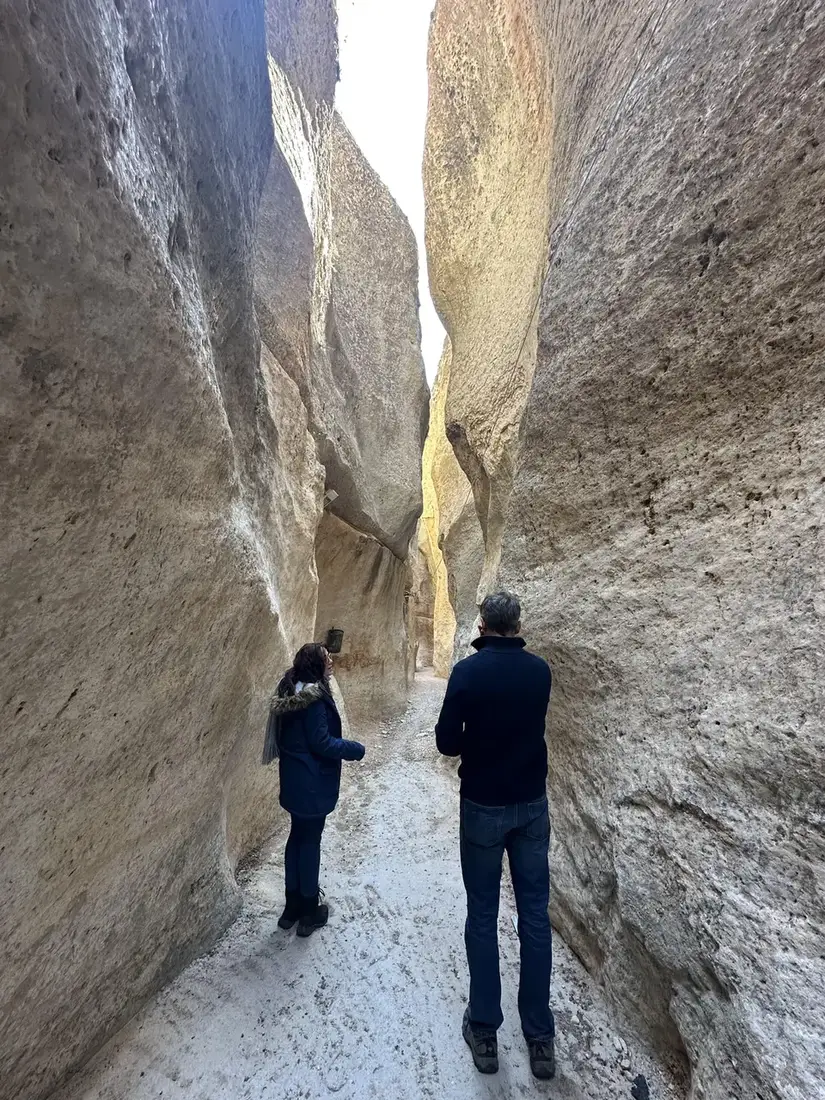
As you approach the convent, the narrow passages and tall cliffs help explain why the story took root here. The rock is not a scenic backdrop—it is a character in the legend.
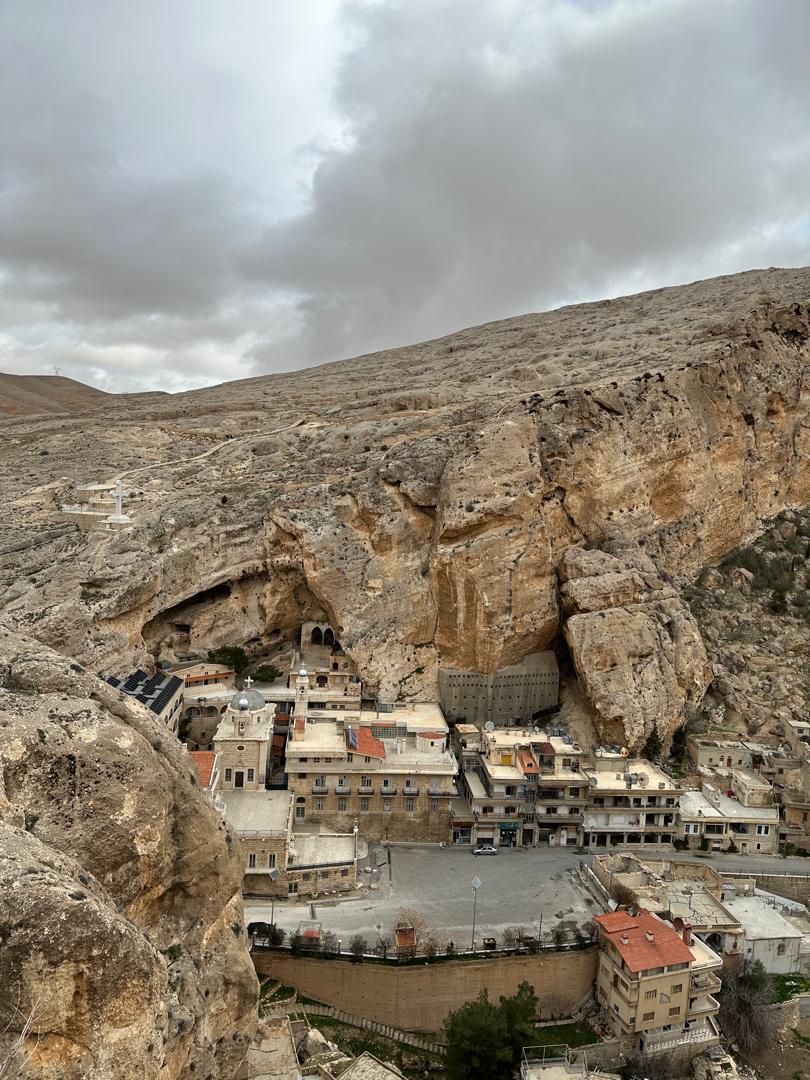
The view from above reveals how the monastery and the village fit into the Qalamoun landscape. Stone buildings, paths and natural cliffs appear almost to merge.
Slow down before entering. Pilgrimage sites are not only monuments to inspect; they are working religious places where prayer may be taking place.
The local guide’s task is to tell the tradition while making clear which details are beliefs passed through generations and which belong to the documented history of the buildings.
A Sacred Grotto and a Convent with Many Layers
The Orthodox Patriarchate of Antioch describes the convent as growing around the grotto where Thecla is traditionally believed to have taken refuge. The site includes a sacred spring and small prayer spaces associated with the shrine.
The structures visitors see today were built and rebuilt over time. According to the Patriarchate’s historical account, a church was constructed beside the sacred spot in 1906, and work on the modern convent building began in 1935.
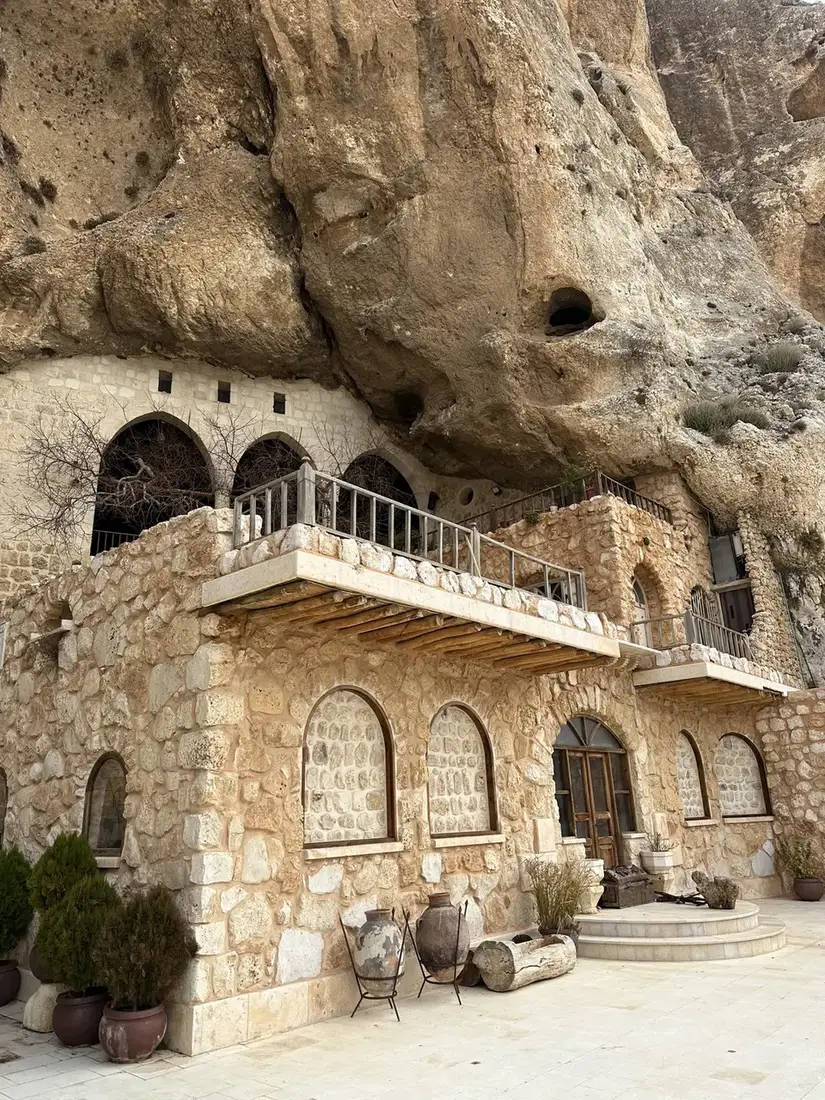
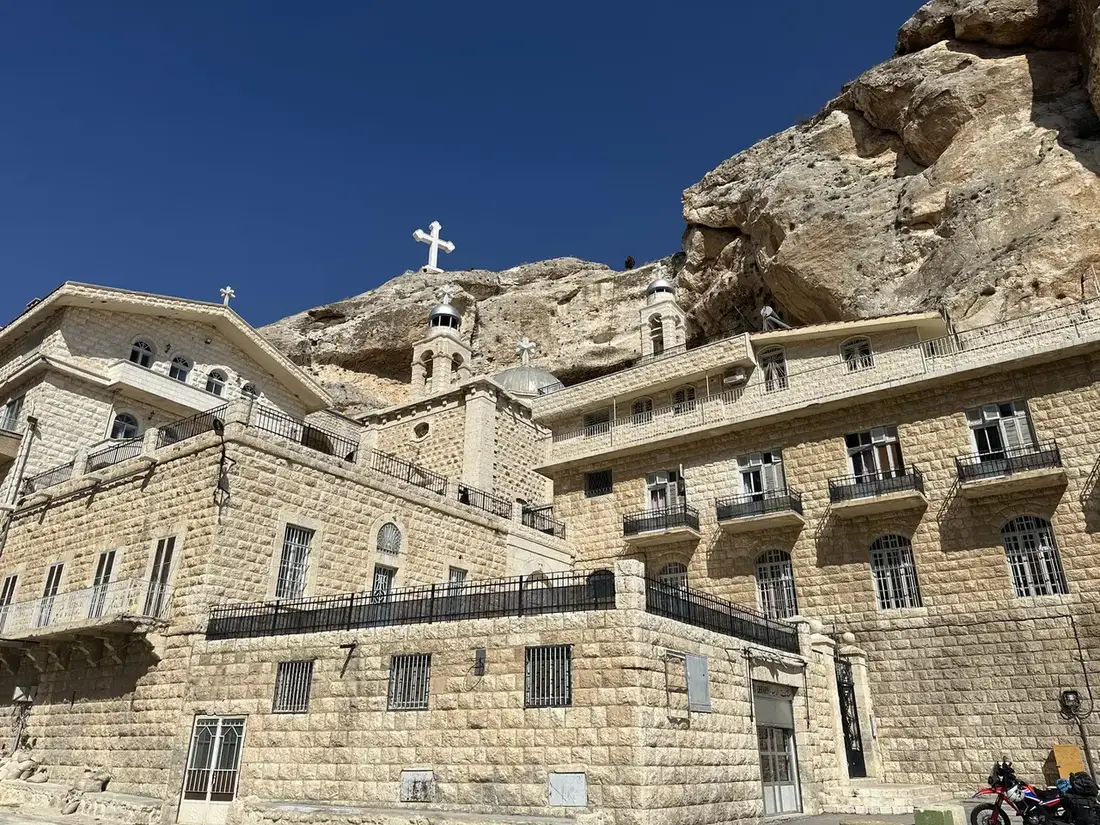
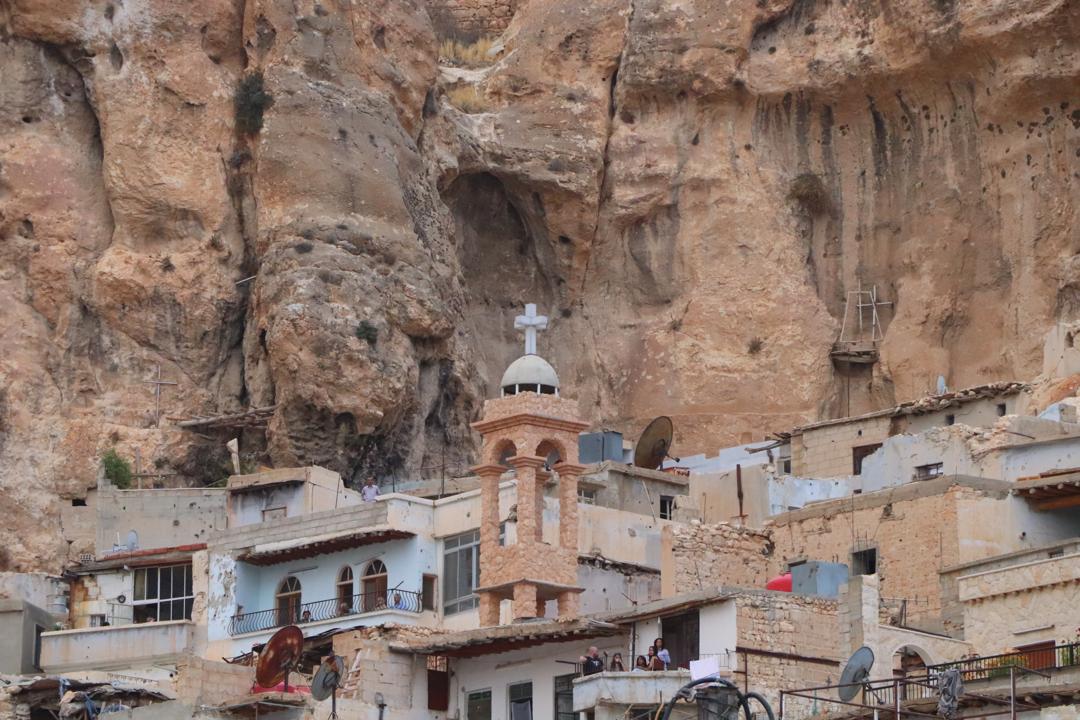
This matters because it would be misleading to describe the present monastery as a completely unchanged building from the first Christian centuries. Its significance comes from centuries of devotion on the site, as well as the historical fabric that survives.
Listen for the different sounds of Maaloula while you are here: conversation drifting from the village, wind through the passage and moments of quiet around the shrine.
Maaloula’s Living Christian Heritage
Maaloula is especially famous for its Western Neo-Aramaic speech, one of the remarkable linguistic survivals of the region. It is a living modern dialect, not simply the ancient Aramaic spoken unchanged for two thousand years.
The convent is part of a wider religious landscape that includes the monastery of Saints Sergius and Bacchus, local churches, memorials and annual celebrations. These places connect traditions of faith with the daily lives of residents.
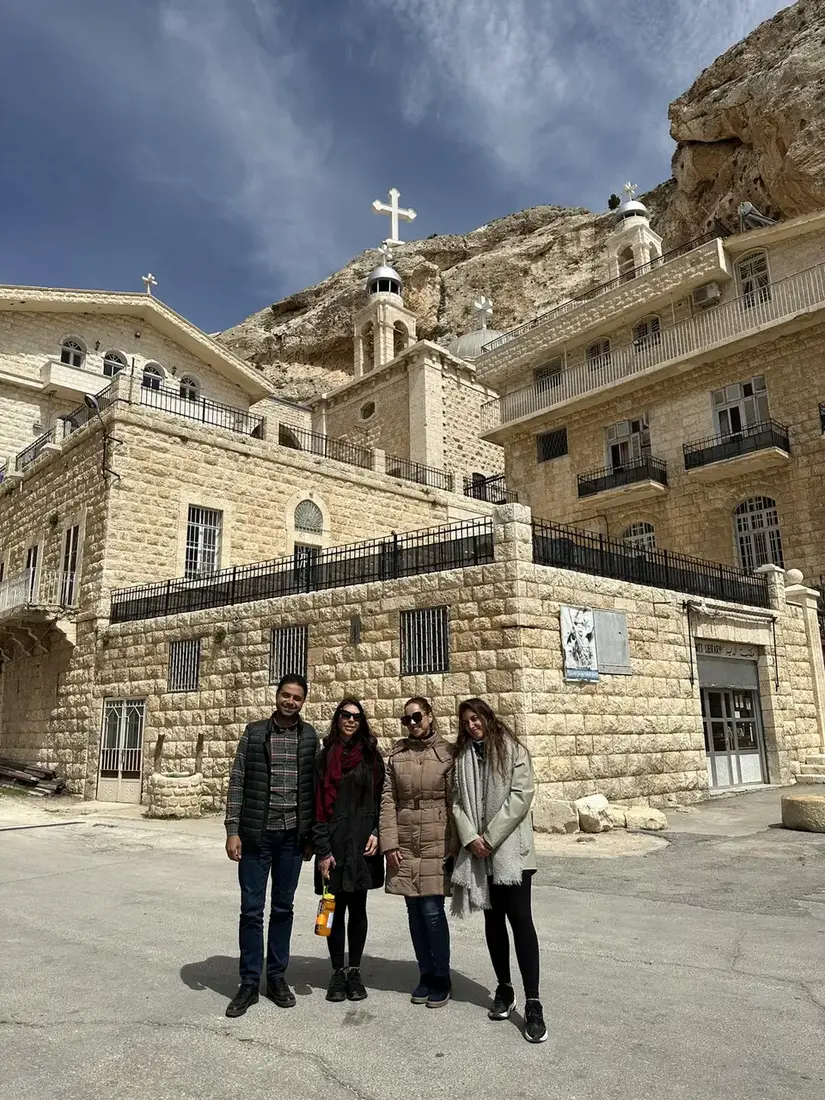
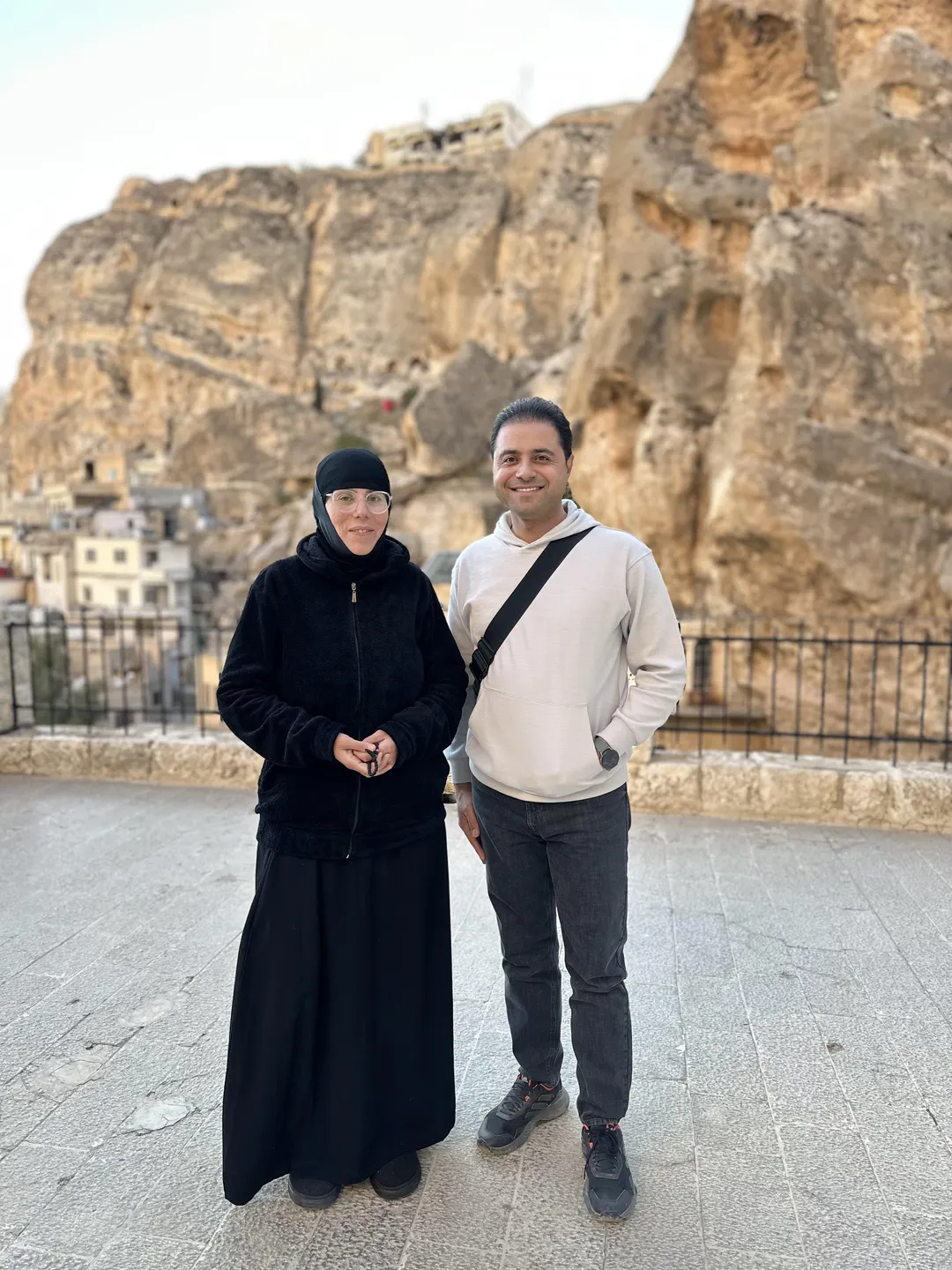
During the Feast of the Cross, Maaloula’s mountains and neighbourhoods become part of a public celebration. At other times, the quiet convent offers a very different experience.
A respectful visit means remembering that Maaloula is a real village with homes, families and religious communities—not merely a historical theme park.
If you are interested in both history and culture, explore the village as a whole. A short walk between the monasteries reveals more than a single religious monument can.
How to Visit Saint Thecla’s Convent in Maaloula
Maaloula is about 60–65 kilometres northeast of Damascus, depending on the route. Saint Thecla’s Convent is normally included in a walking visit through the historic centre and religious sites.
- Allow at least 30–60 minutes at the convent, and longer to explore the whole village.
- Dress modestly, keep conversations quiet and respect areas reserved for worship or the religious community.
- Ask before photographing people, altars or services, and follow the instructions of those caring for the site.
- Expect slopes and steps. Some areas are difficult for visitors with limited mobility.
- Check current opening arrangements with a local guide rather than relying on old published schedules.
- Combine the convent with a walk through Maaloula and, where accessible, the monastery of Saints Sergius and Bacchus.
Before travelling, check the practical information in our Syria Travel Guide.
Discover these places in person with local guides who know the history and the people behind it.
Explore our Syria tours →One Last Thought
In Maaloula, the mountain and the monastery tell one story in two languages: the language of stone and the language of generations who continue to remember Saint Thecla.
Saint Thecla Convent & Maaloula in Photos
Explore the cliffside sanctuary, stone architecture and mountain village through photographs from Syrian Guides. Tap any image to view it larger without leaving the article.
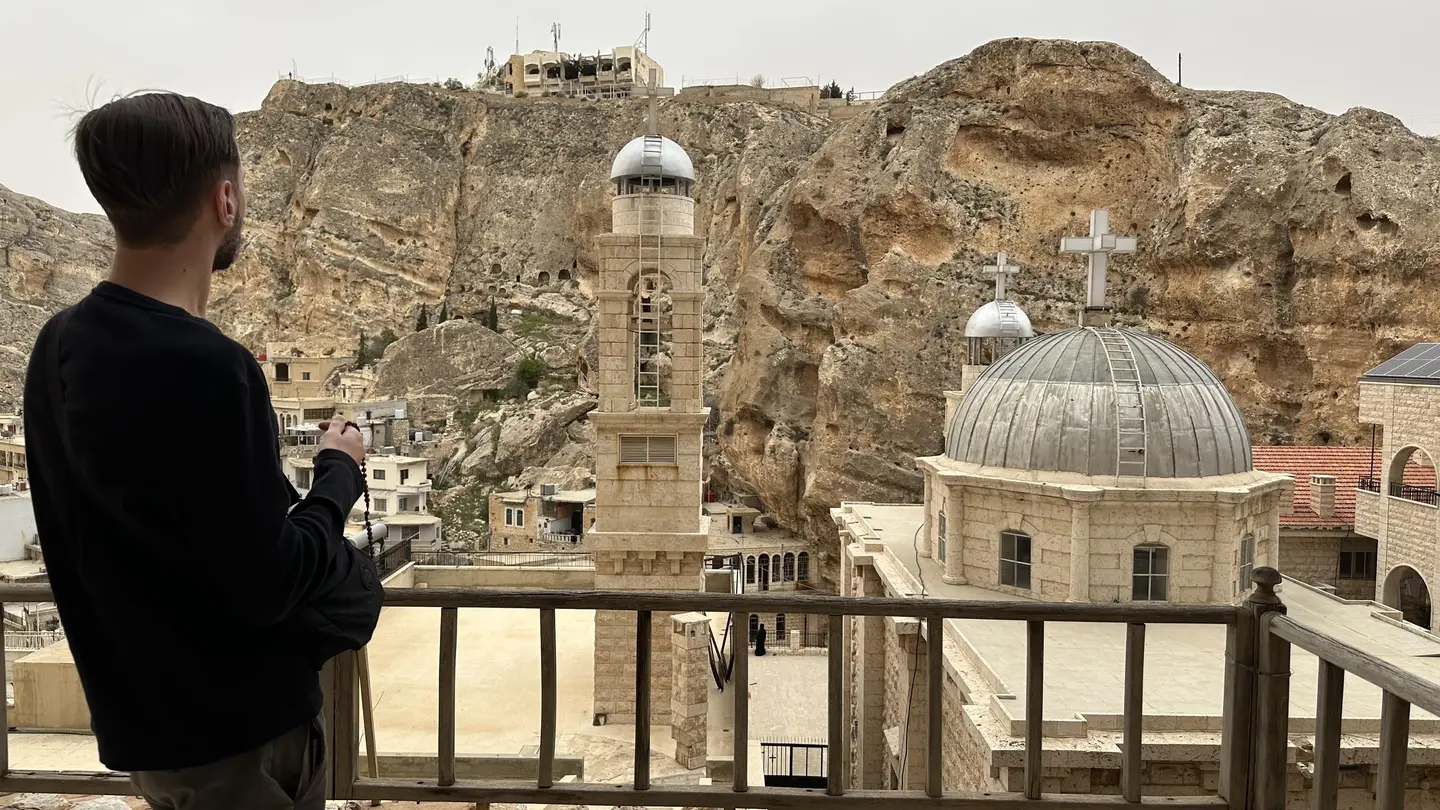 The convent bell tower and domes beneath the cliffs.
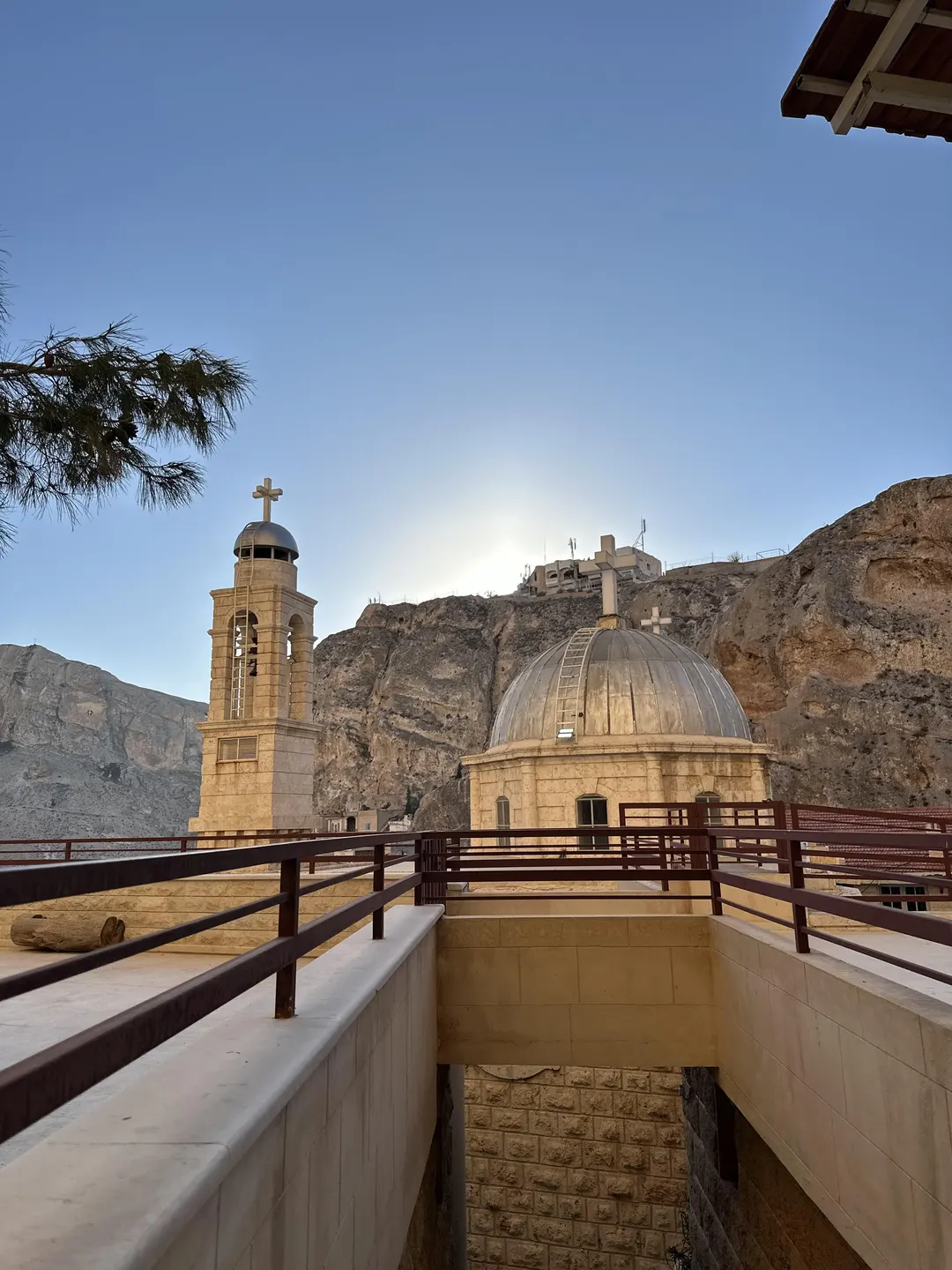 Church dome and bell tower at Saint Thecla Convent.
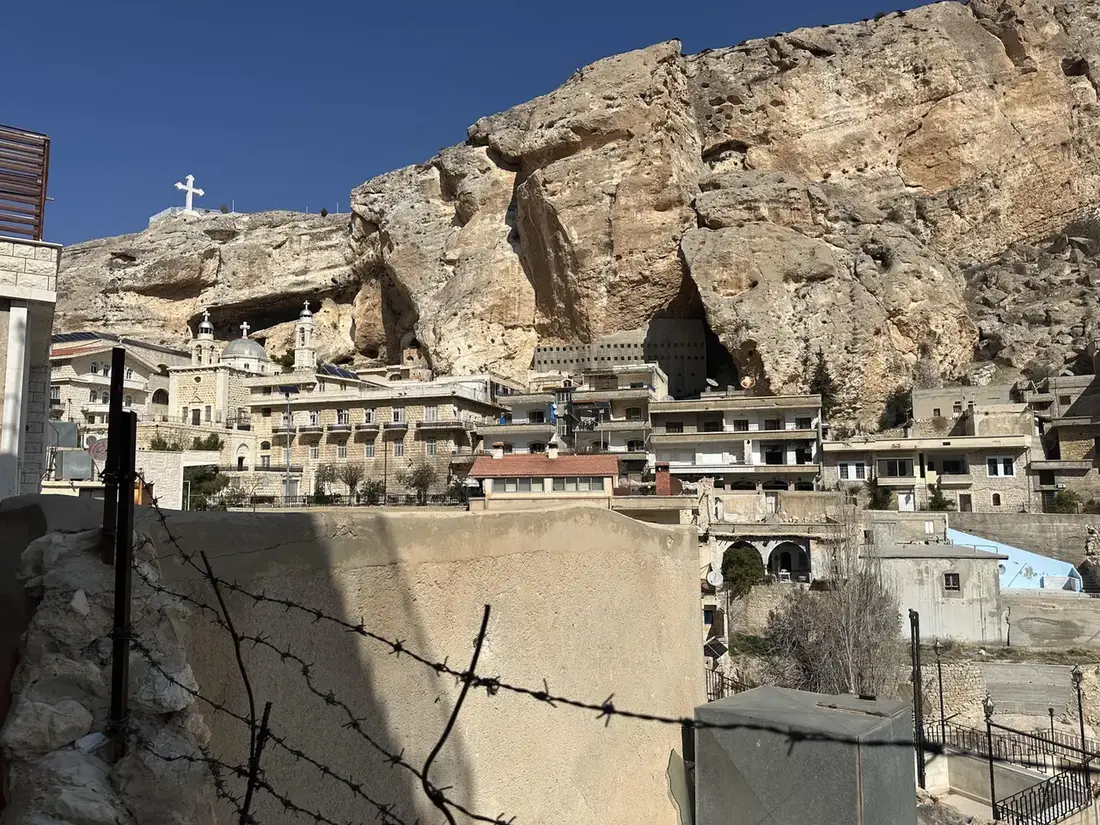 The monastery seen against the rock face.
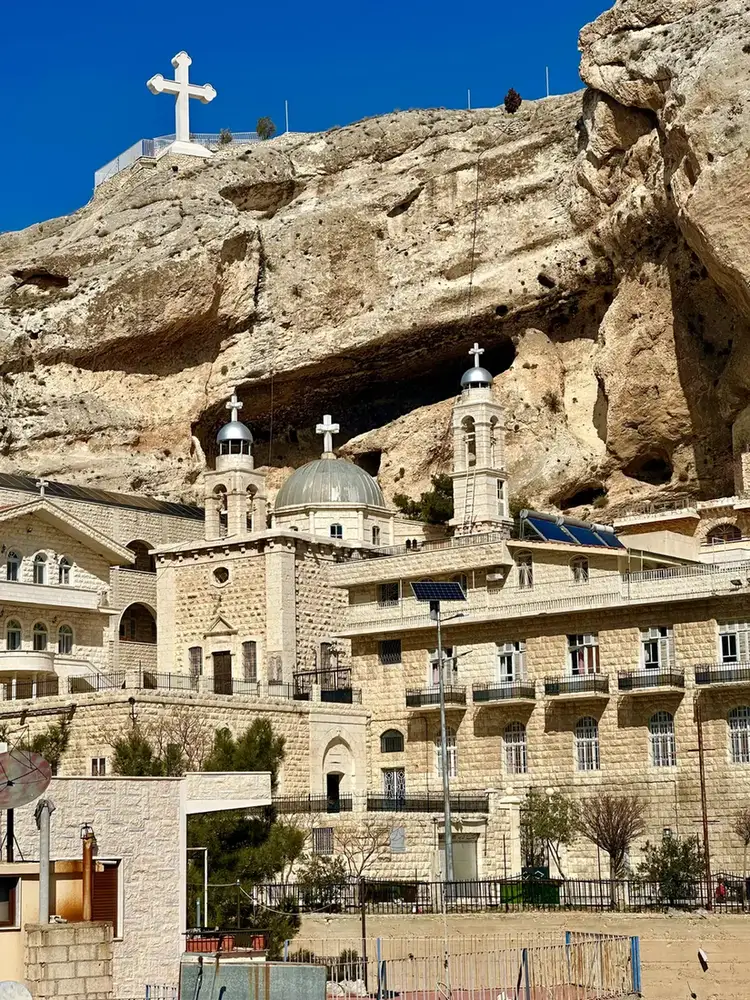 The rock-cut chapel and cross above the monastery.
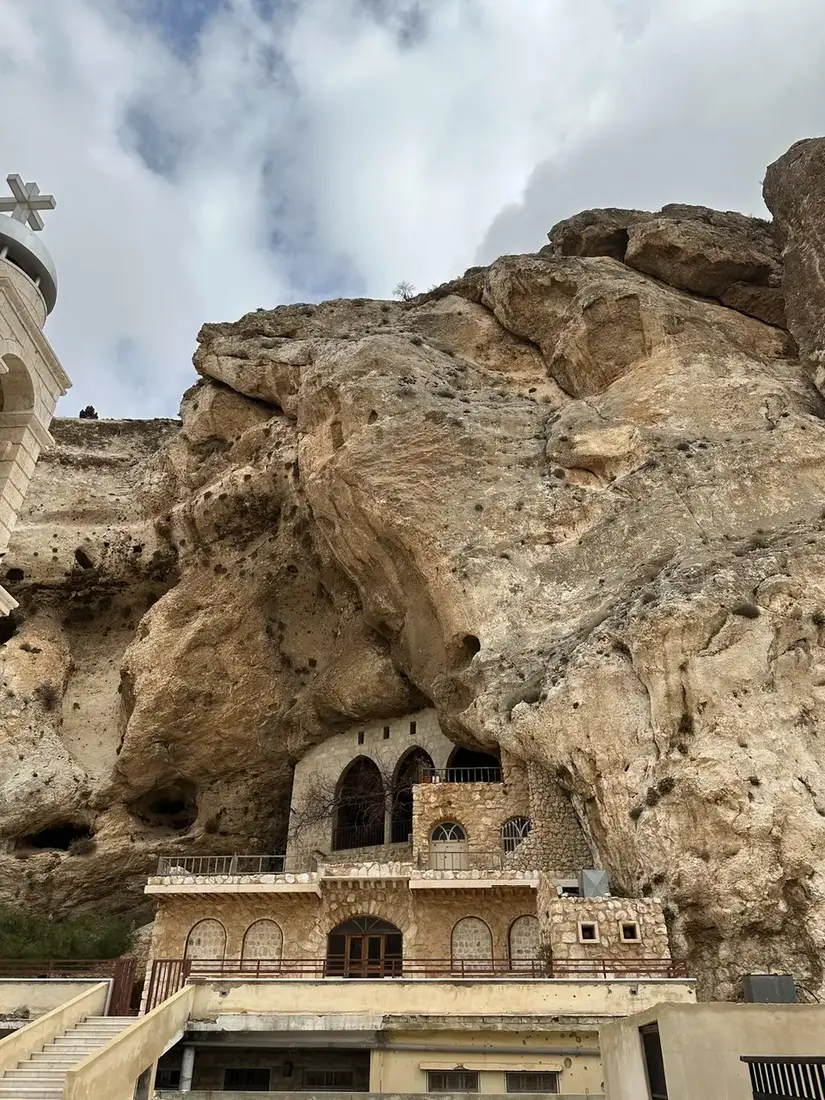 A cliffside shrine and stone architecture.
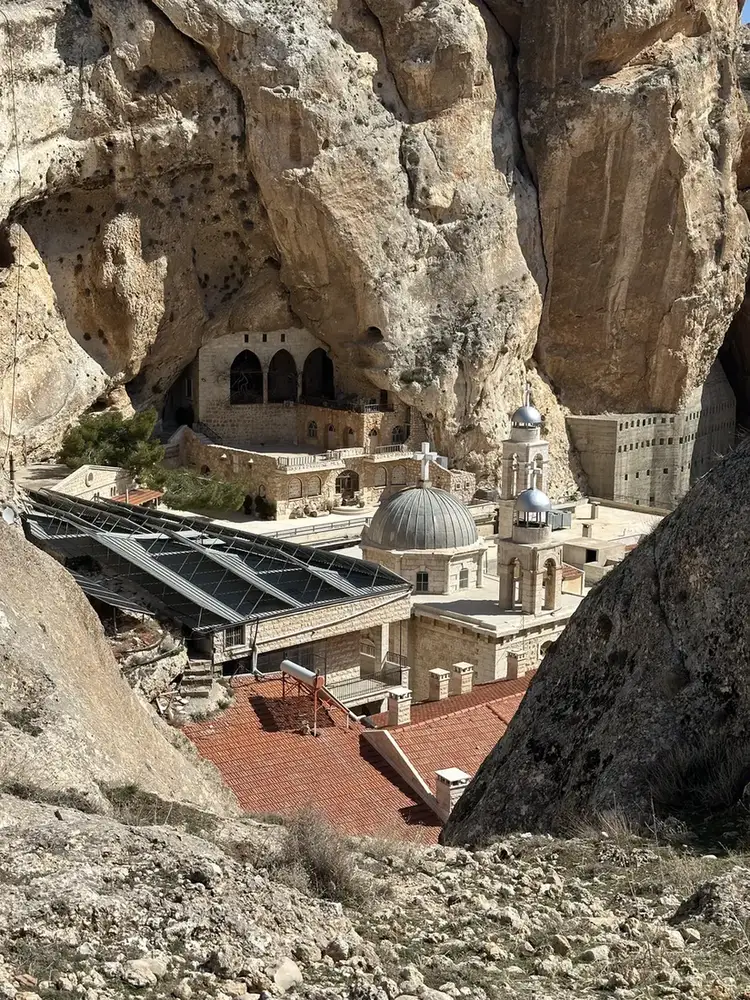 Looking down towards the convent and the caves above it.
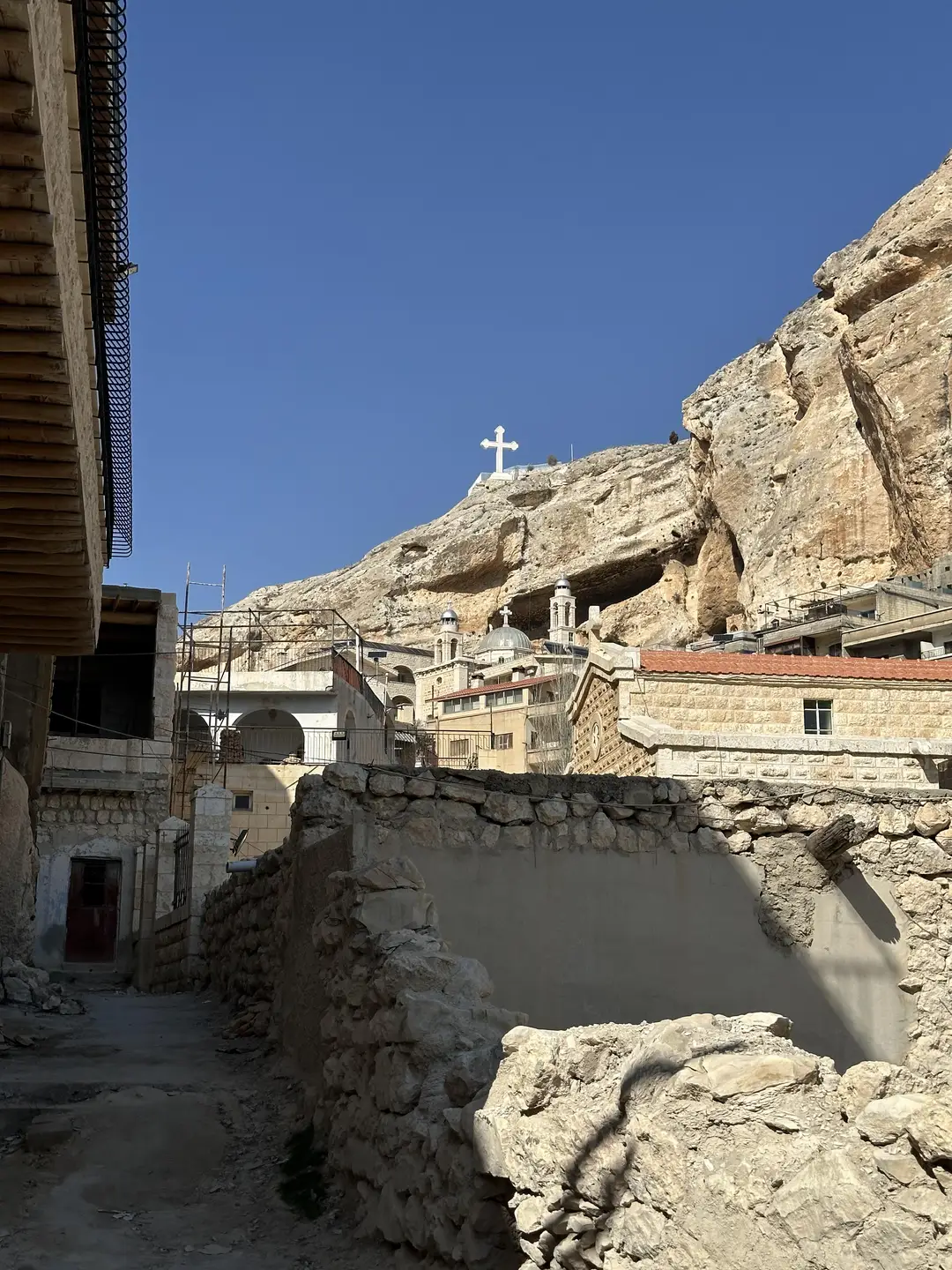 A path among the convent buildings and rocks.
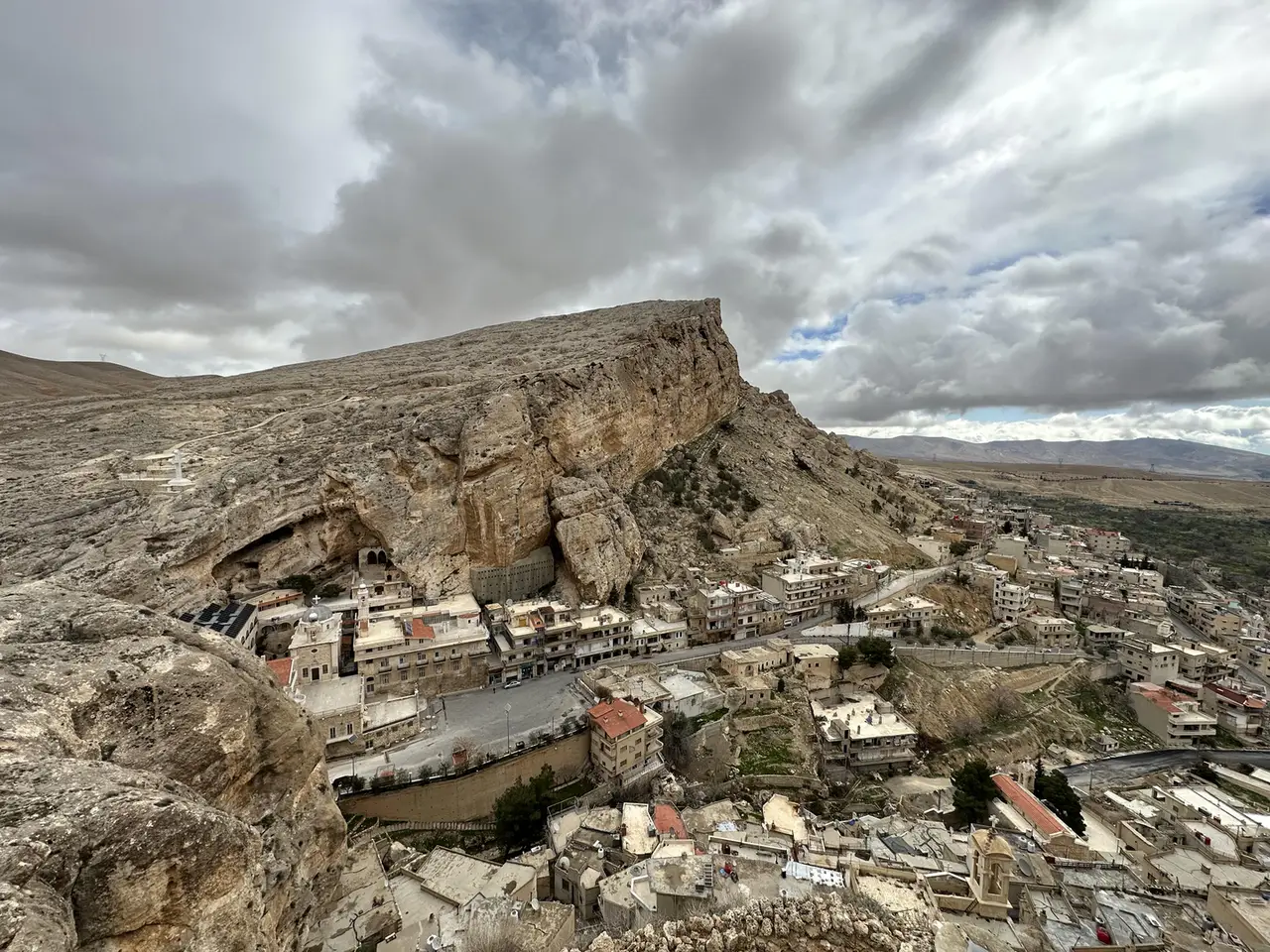 Maaloula and the surrounding mountain landscape.
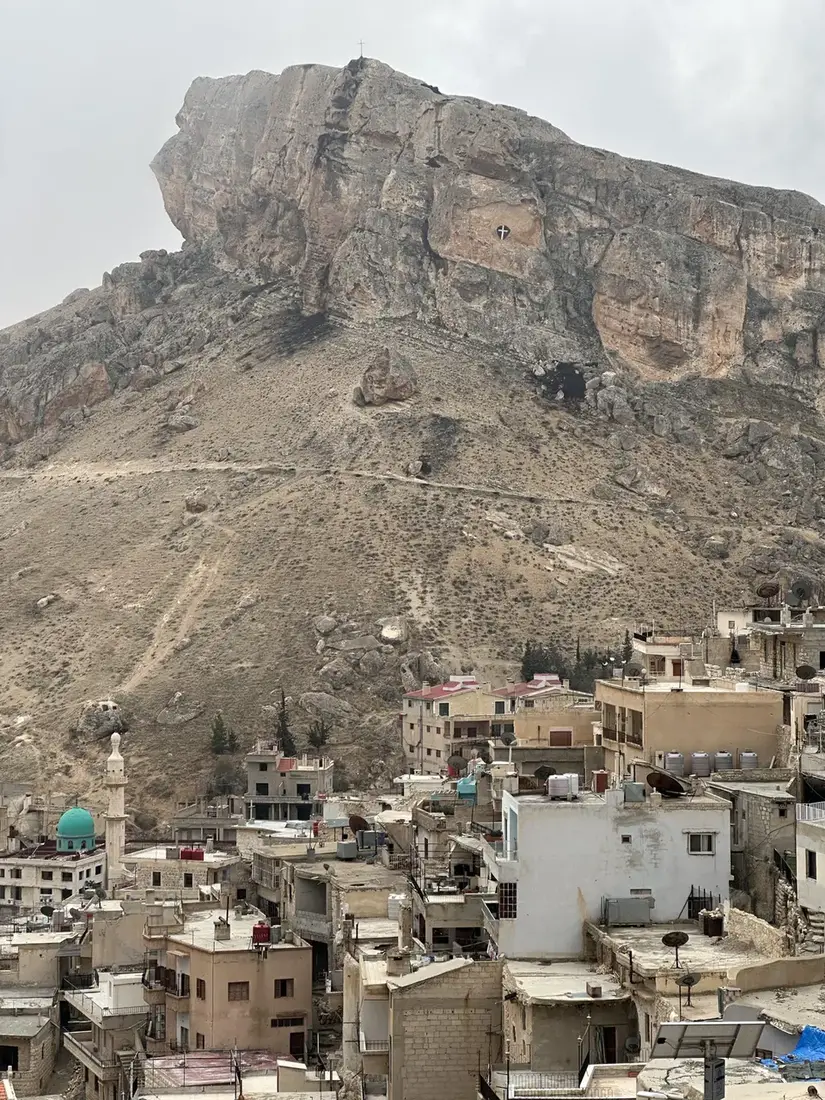 Village houses set beneath Maaloula’s dramatic cliffs.
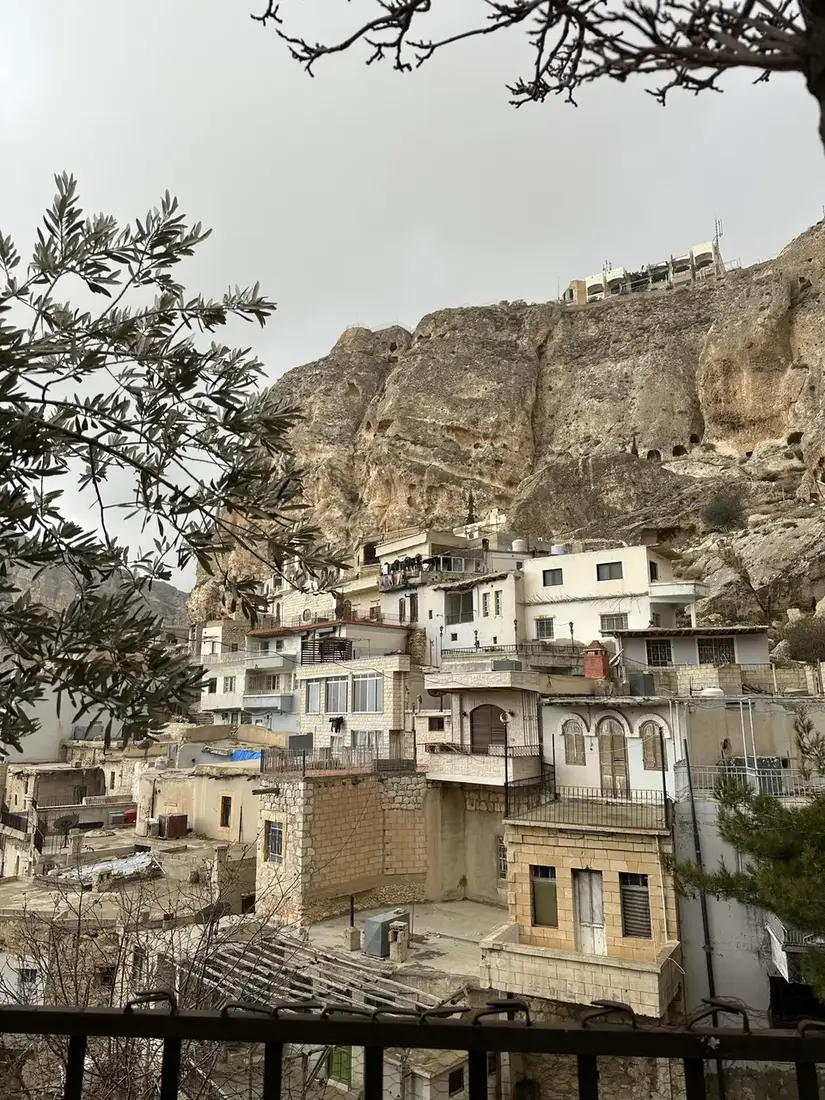 View over Maaloula’s houses and cliffs.
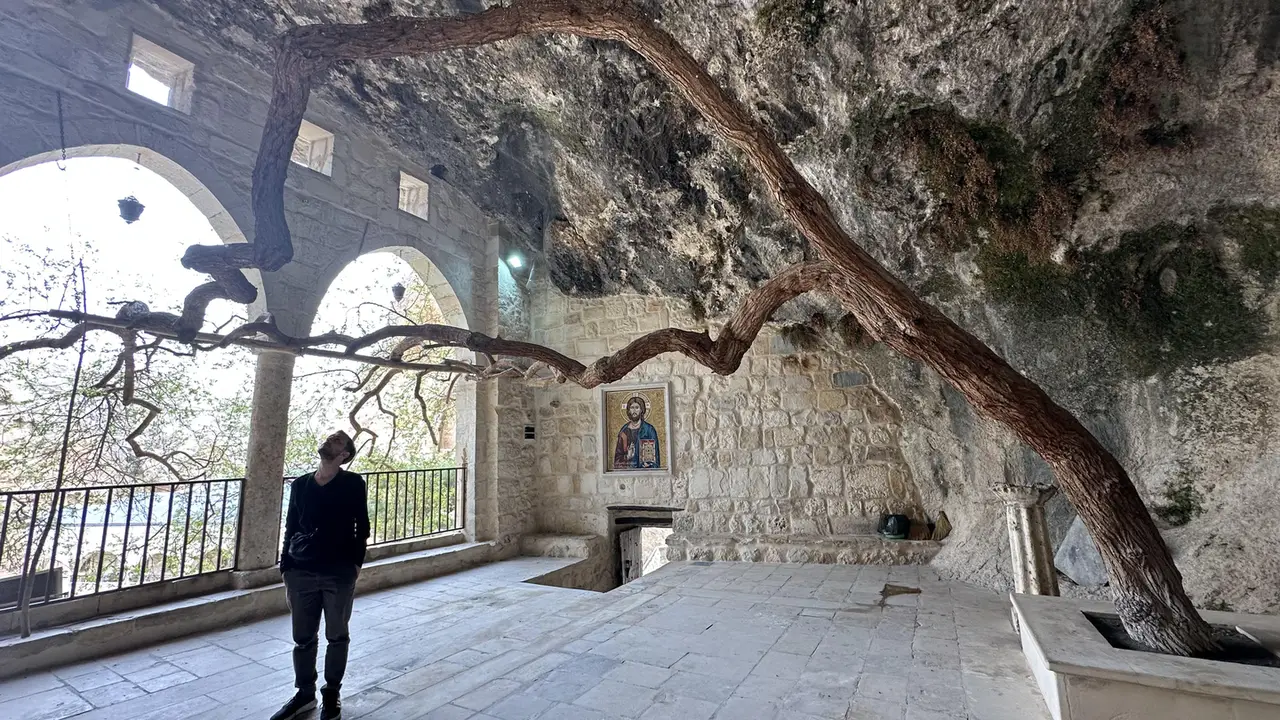 Historic stone courtyard and tree in Maaloula.
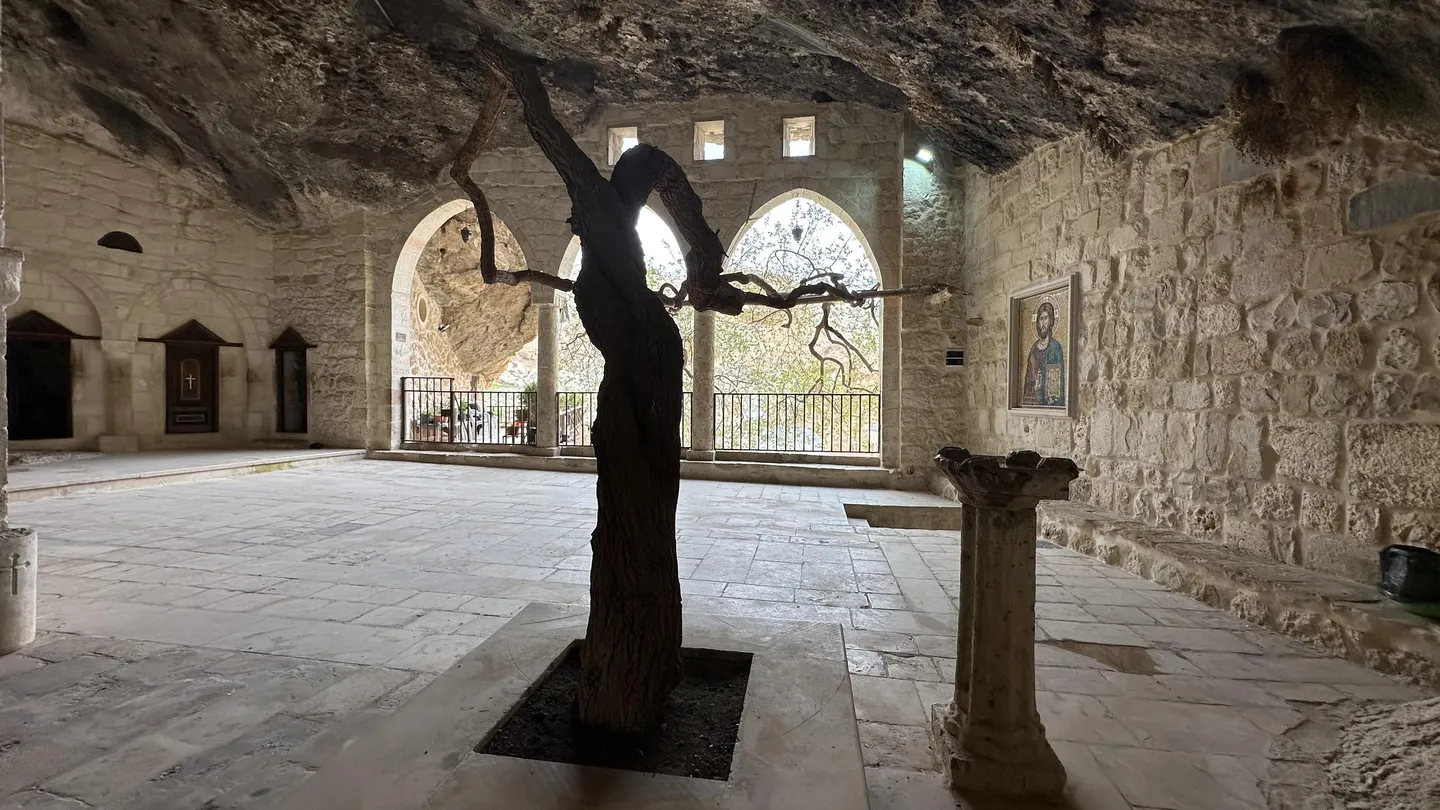 Looking through the old stone arches.
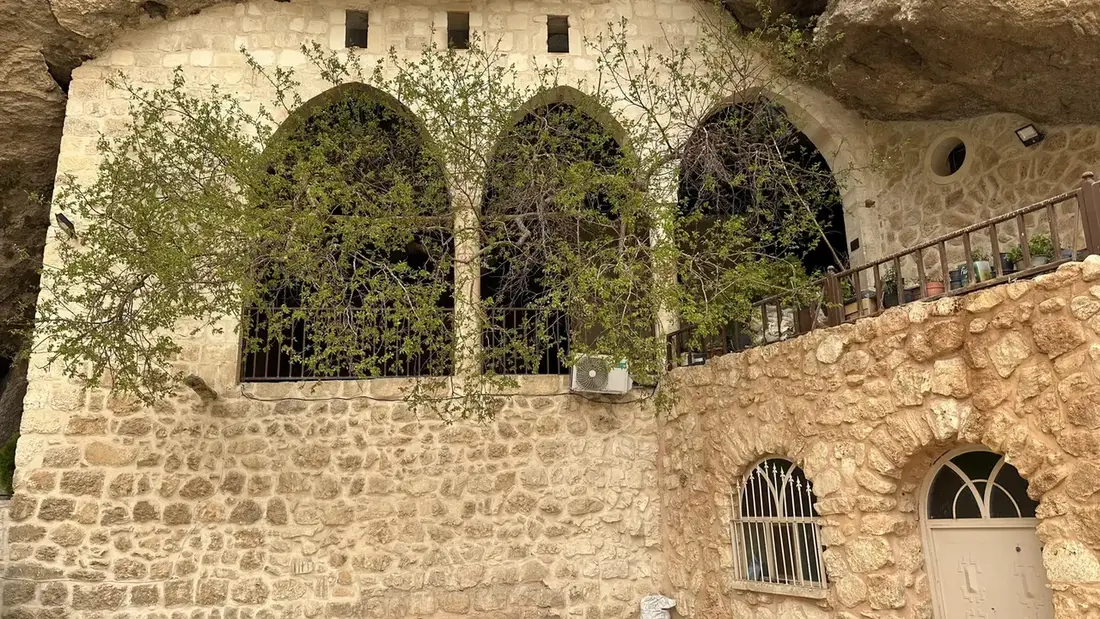 Traditional architecture and arches in Maaloula.
Historical references: Greek Orthodox Patriarchate: The Convent of St Thecla · Academic heritage study: St Thecla, Maaloula. Visiting hours, permitted areas and fees may change; check locally.


Keep exploring
You might also enjoy
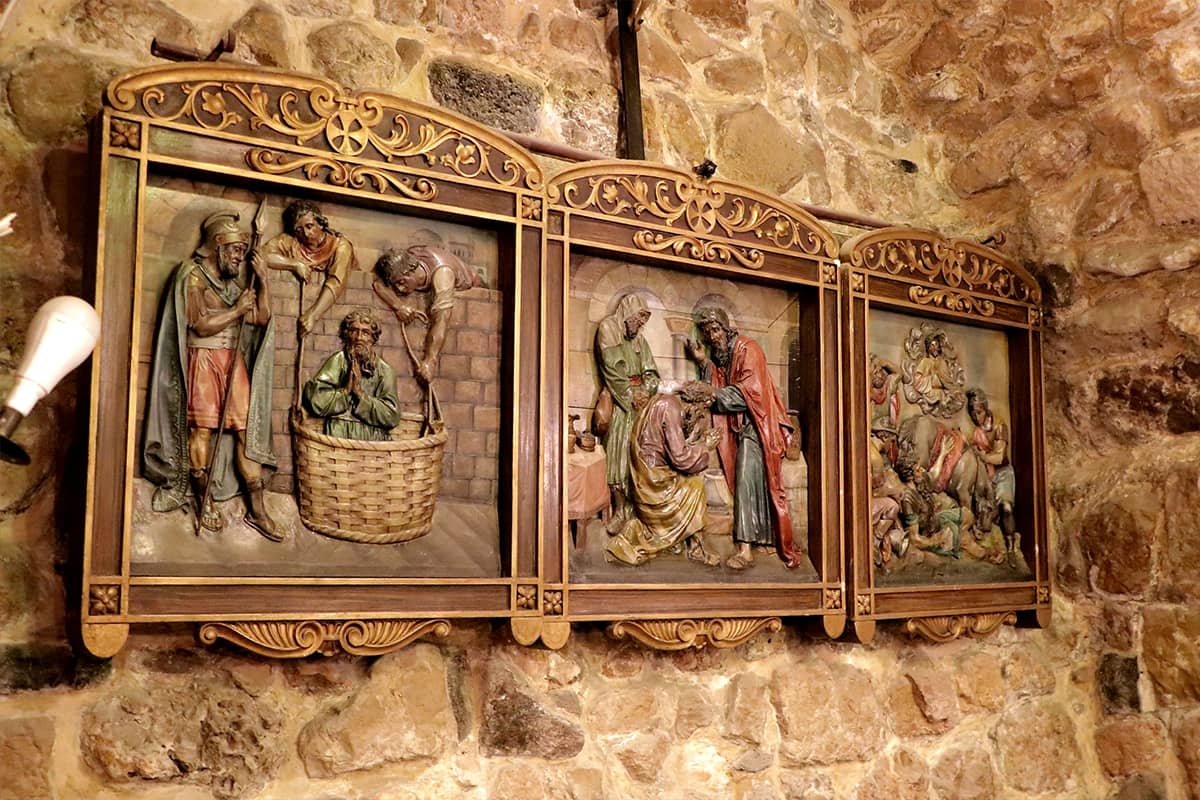 Christian heritageSaint Ananias ChapelA quiet landmark of early Christian memory in Damascus.Read the story →
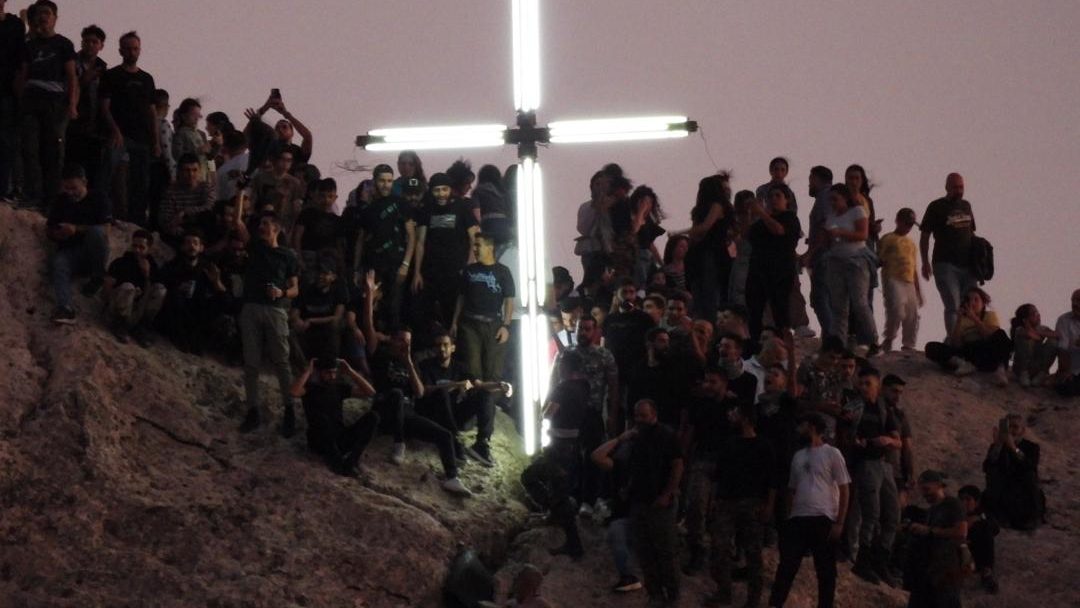 MaaloulaThe Festival of the CrossSee another living tradition in the same mountain village.Read the story →
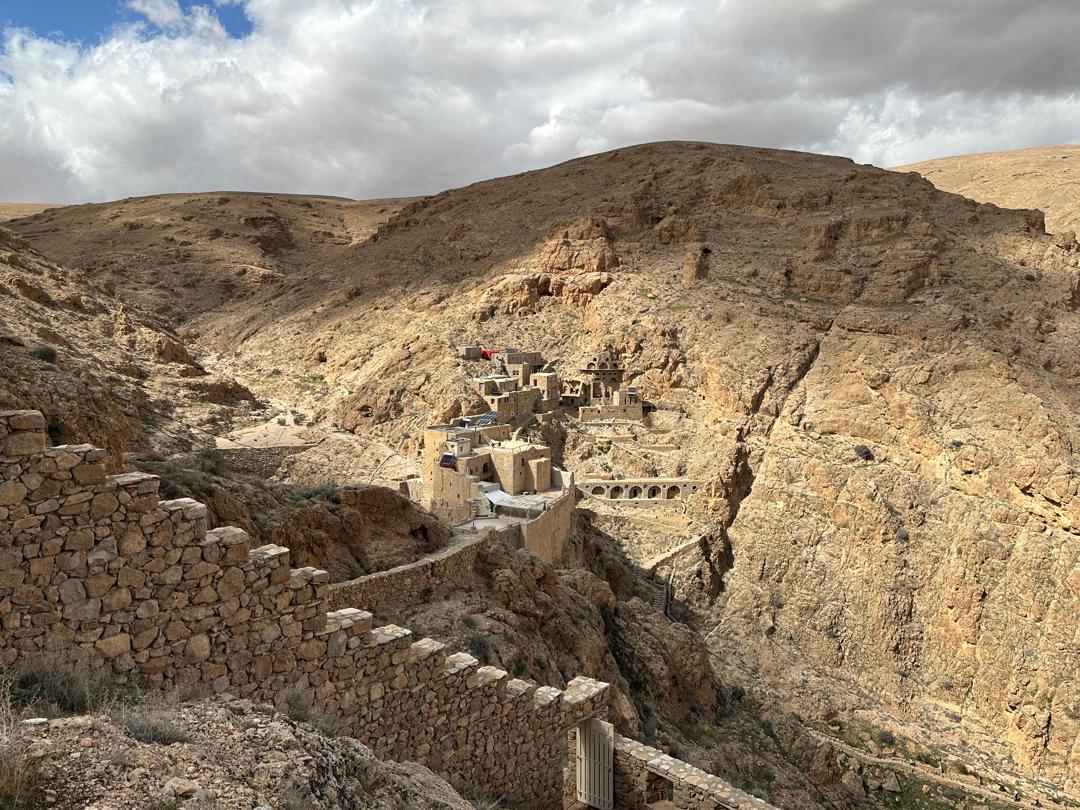 Monastic lifeThe Mar Musa ExperienceA beautiful monastery and spiritual retreat near Nabek.Read the story →
 Historic storiesThe Damascus RoadExplore the story of Paul and early Christianity in Syria.Read the story →