
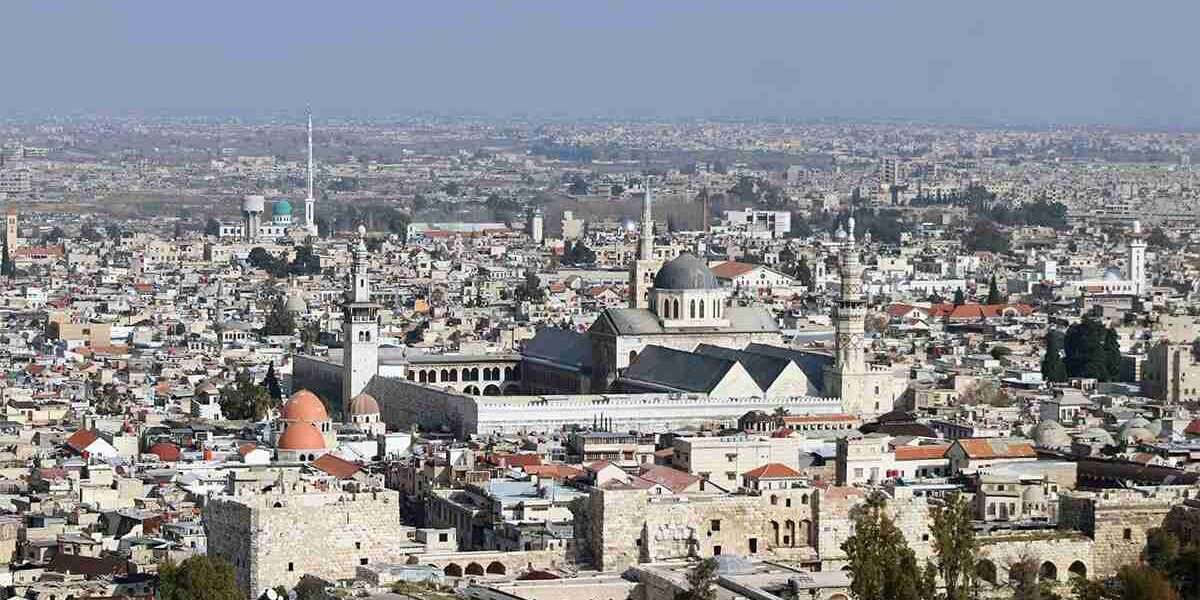
15 Best Things to Do in Damascus
The best experiences in Damascus are not only monuments. They are old streets, courtyard houses, storytellers, workshops, souqs, food stops and small details that make the city feel lived in rather than displayed.

Walk through Al-Hamidiyah Souq
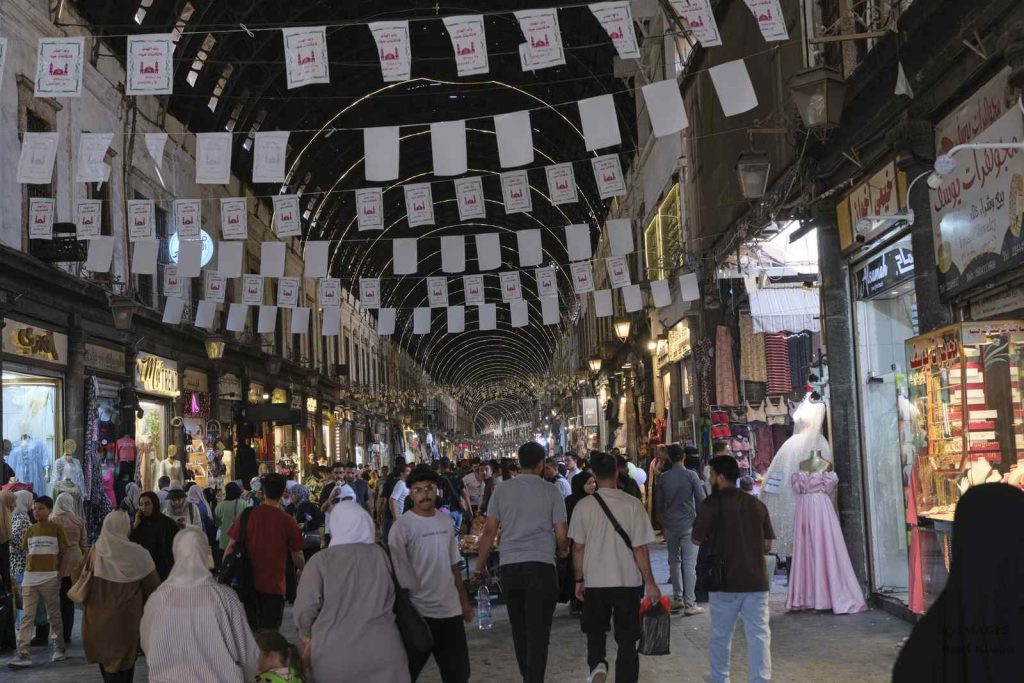
Al-Hamidiyah is the natural introduction to the Old City. The long covered market runs toward the Roman remains beside the Umayyad Mosque, and its mix of clothing shops, sweets, household goods and local shoppers makes it feel far more alive than a heritage attraction.
Look up at the metal roof, notice the light filtering through it, and resist the urge to rush straight to the mosque. Stop for pistachio ice cream, watch how locals use the market, and explore the smaller lanes branching away from the main passage.
Spend real time at the Umayyad Mosque
The Umayyad Mosque is one of the defining monuments of Damascus, but its importance comes from more than scale. Its courtyard, mosaics, prayer hall, religious traditions and layers of earlier sacred history make it one of the places where the city’s long continuity becomes visible.
Give yourself enough time to walk around the courtyard, observe the details and understand what you are seeing. Afterwards, continue on foot into Al-Qaymariyya and Al-Nawfara rather than treating the mosque as an isolated stop.
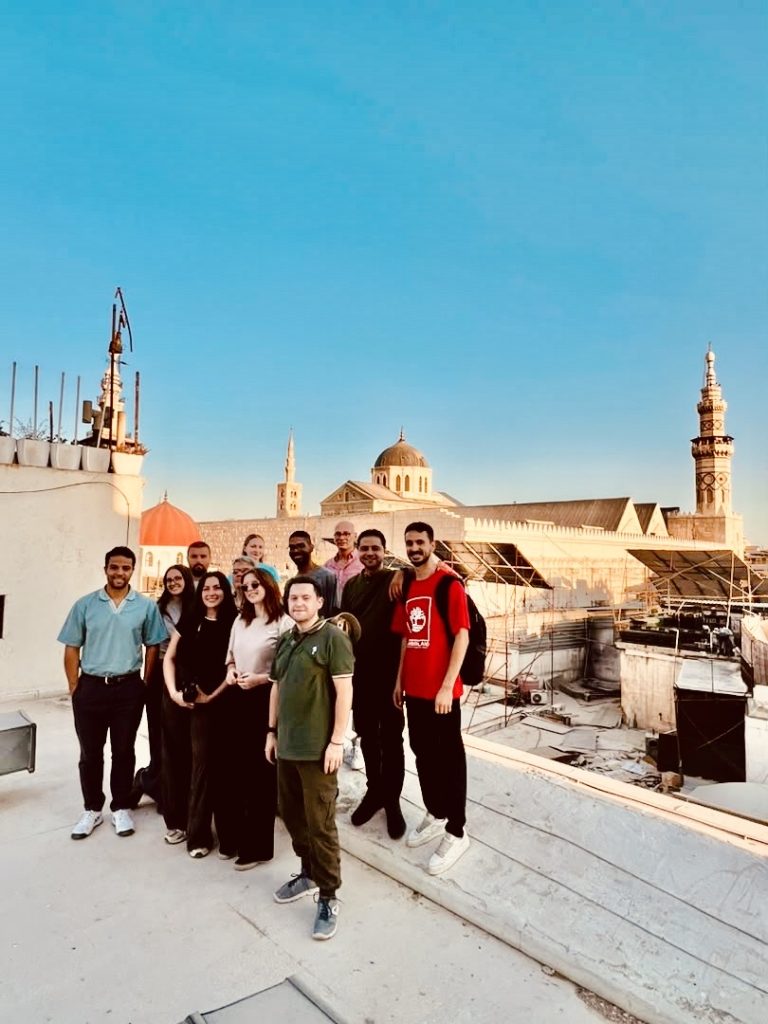
Follow Straight Street through the Old City
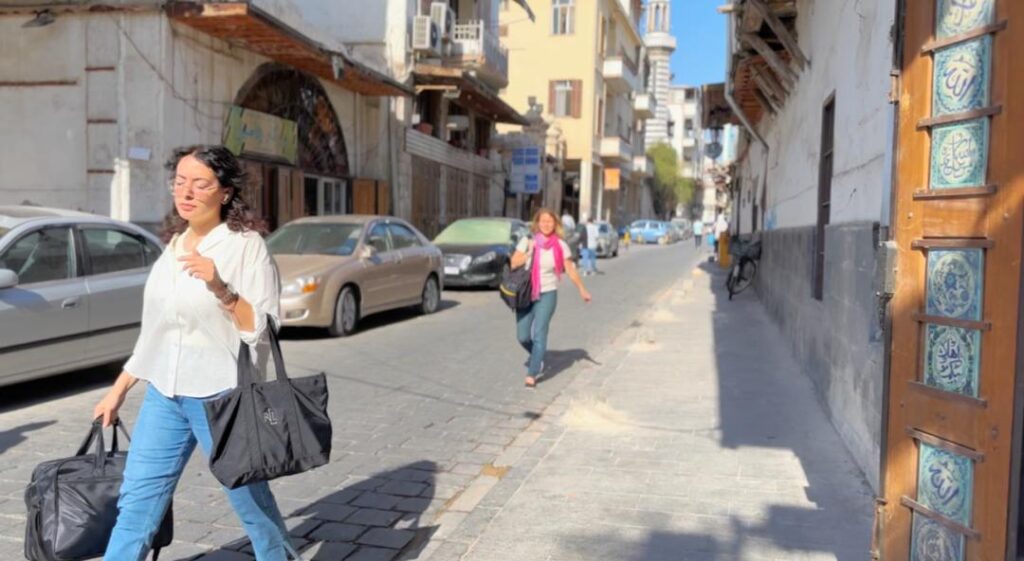
Known from antiquity and still used today, Straight Street is less about a single sight than about movement through the city. Shops, churches, historic houses, hotels, residential alleys and everyday street life overlap along and around the route.
The best way to experience it is slowly. Leave the main line whenever something catches your attention, especially around Bab Sharqi and the Christian Quarter. The street becomes much more meaningful once you stop seeing it as a line on a map and start using it as a spine for exploring the neighbourhoods around it.
Step inside Azm Palace
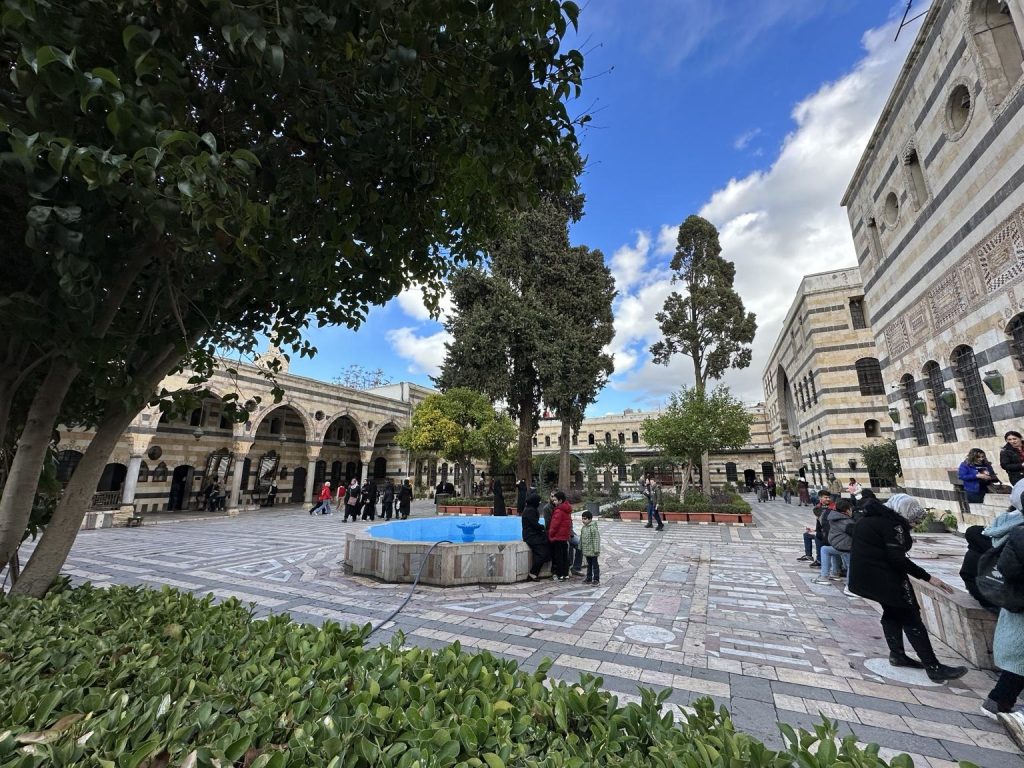
Azm Palace is one of the clearest places to understand the architecture of elite Damascene homes. From the street, little prepares you for the courtyard inside: fountains, trees, striped stone, carved details and rooms arranged around a private interior world.
Pay attention to how the house separates public and private areas, how water and shade are used, and how richly decorated interiors are hidden behind restrained exterior walls. This contrast is central to traditional Damascene architecture.
Visit a traditional Damascene house
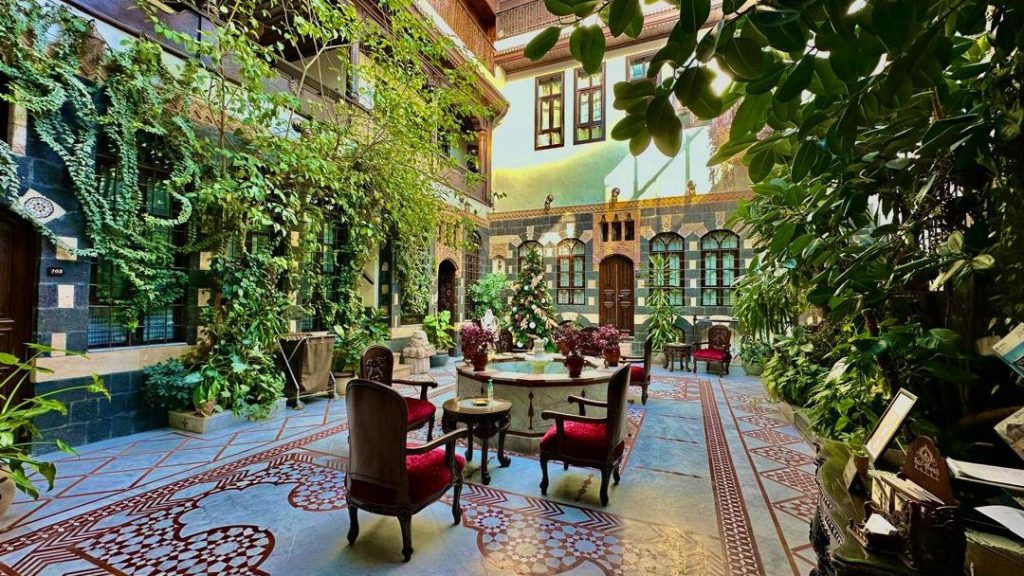
Azm Palace shows the grand version, but an ordinary historic house gives a more intimate sense of how Damascenes lived. Courtyards cooled the home, fountains softened the atmosphere, and rooms opened inward rather than toward the street.
Restored houses such as Beit Jabri and similar heritage properties let you sit inside this architecture instead of only observing it. A coffee or lunch in a courtyard can be as valuable as another museum visit because it lets you experience the space at the pace it was designed for.
Listen to the storyteller at Al-Nawfara Café
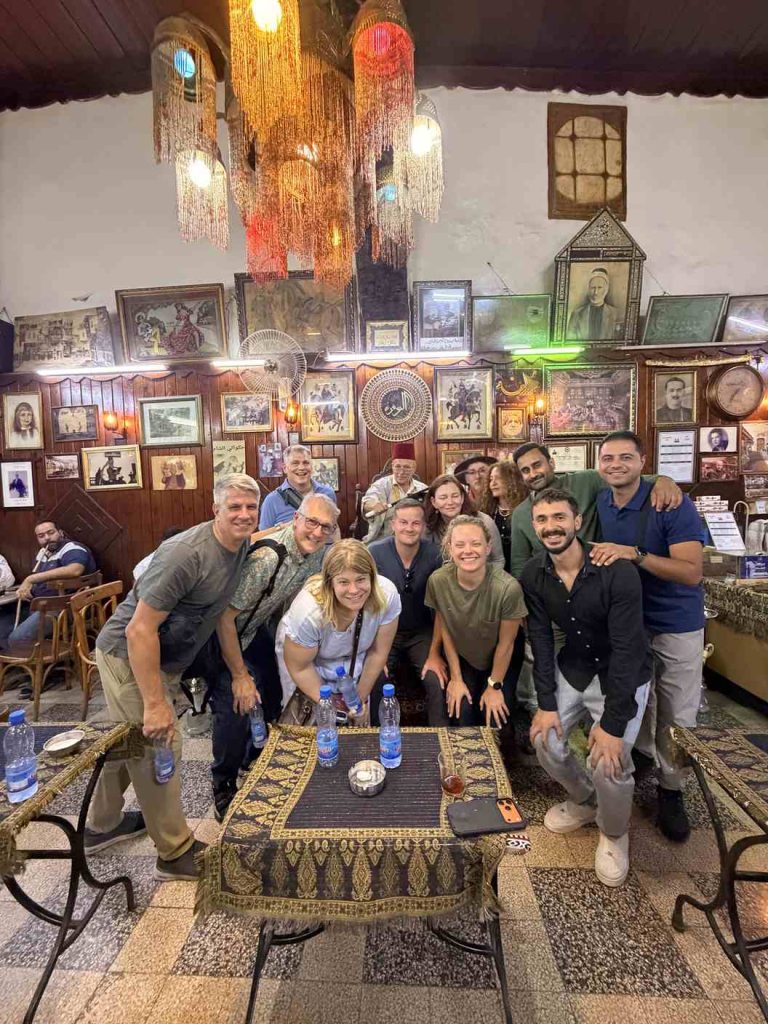
Al-Nawfara is famous for the hakawati, the traditional storyteller who performs tales for the café audience. The tradition connects Damascus with an older culture of oral storytelling, when cafés were places for entertainment, news and social life long before television.
Even when a performance is not taking place, the café is worth visiting for its location, atmosphere and proximity to the Umayyad Mosque. If you can catch a storytelling session, stay long enough to watch how the audience interacts with the performance rather than only filming a few seconds.
Explore Bzuriyeh Souq
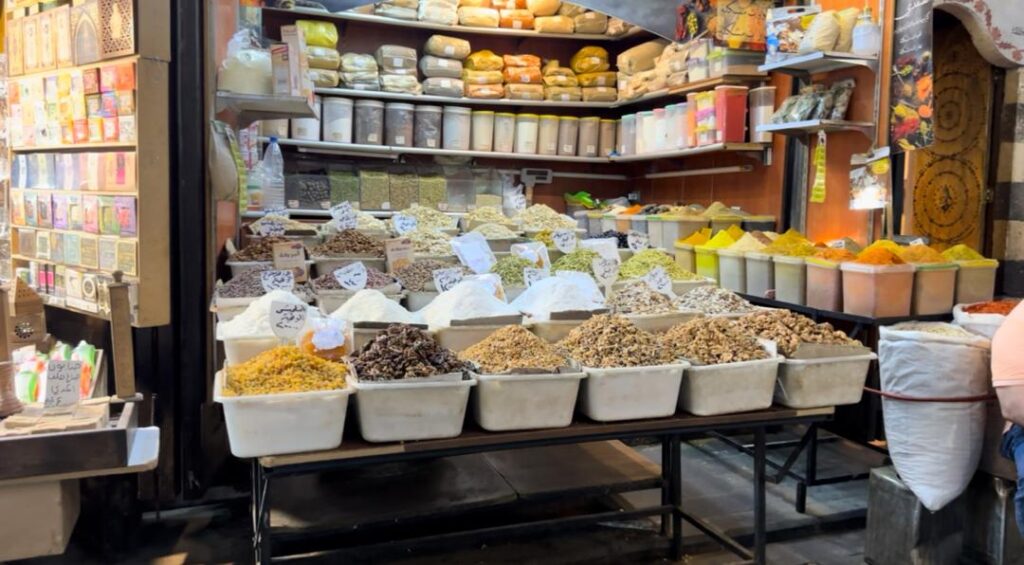
Bzuriyeh is one of the most sensory parts of the Old City. Spice shops, sweets, dried fruits, herbs, soap and traditional products fill a narrower, more intimate market than Al-Hamidiyah.
Slow down enough to smell and identify the spices, ask what unfamiliar products are used for, and look at the older shop interiors. This is also a good place to buy small edible gifts that are genuinely connected to daily Syrian life rather than generic souvenirs.
Enter Khan As’ad Pasha
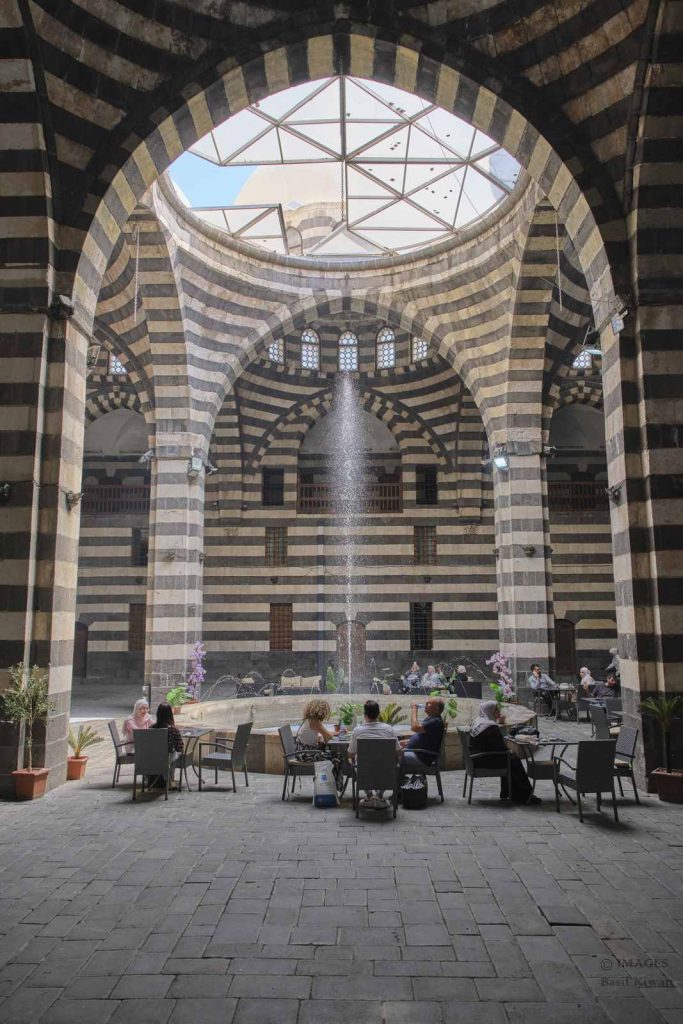
Khan As’ad Pasha is one of the most impressive surviving caravanserais in Damascus. The experience begins with contrast: you leave a tight market street and suddenly enter a monumental courtyard beneath large domes and alternating bands of dark and light stone.
Caravanserais were built for merchants, goods and animals moving through regional trade networks. Understanding that function changes the space from a beautiful courtyard into evidence of Damascus’s importance as a commercial city.
See Damascene mosaic being made

Damascene wood mosaic is made from tiny pieces of wood, bone or mother-of-pearl assembled into repeating geometric patterns. The finished boxes and furniture are familiar across souvenir shops, but seeing the process reveals how much patience and precision the craft requires.
Look for a workshop where an artisan can show the stages before the final polishing. Watching strips of patterned material being constructed and sliced makes the finished designs much easier to appreciate.
Learn about Damascene brocade
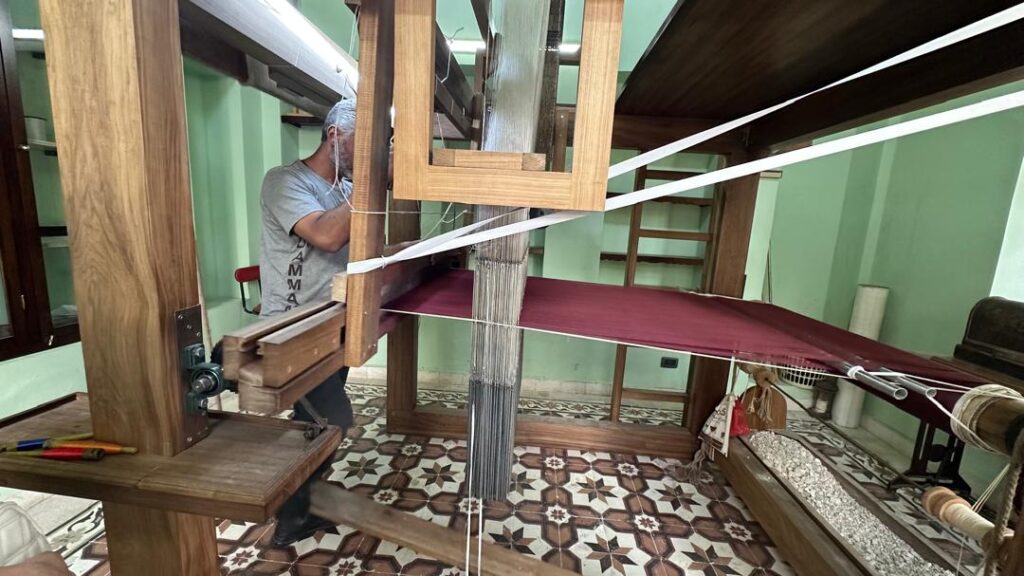
Damascene brocade is one of the city’s great textile traditions, known for intricate woven patterns and fine silk work. The most interesting visit is not a fabric shop but a place where you can see a loom, understand the weaving technique and hear why the number of artisans practising the craft has declined.
Ask how patterns are built, how long a piece takes to make and how handwoven brocade differs from machine-produced fabric. Seeing the loom in motion turns a beautiful textile into a story about skill, memory and survival of craft.
Meet a traditional sword maker
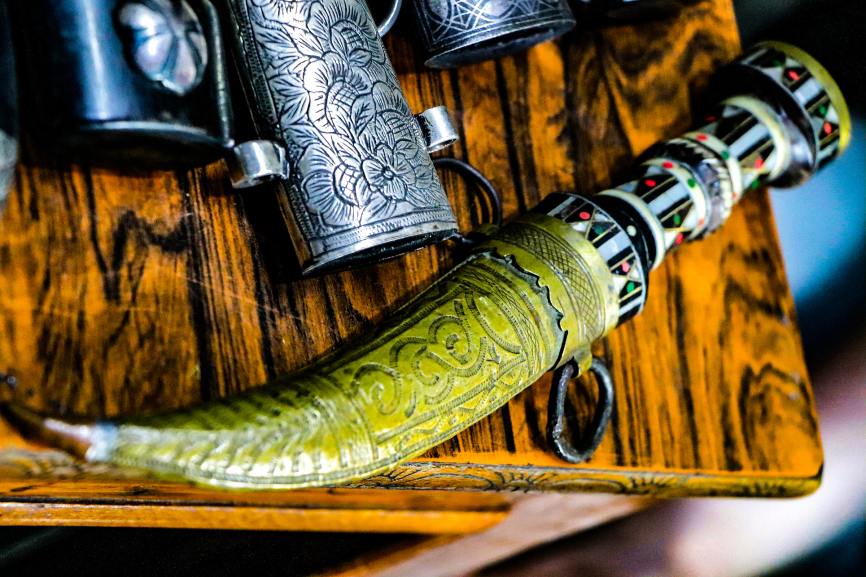
The name “Damascus steel” has become famous far beyond Syria, but the city’s modern sword-making tradition is best understood by meeting an artisan rather than shopping for a decorative blade. A workshop visit can show forging, shaping, engraving and the symbolism that surrounds the Damascene sword.
It is also useful to separate legend from living craft. The historical metallurgy associated with old Damascus blades is a complex subject, while today’s craftsmen keep different parts of the city’s metalworking heritage alive through modern methods.
Have coffee in an old-city courtyard
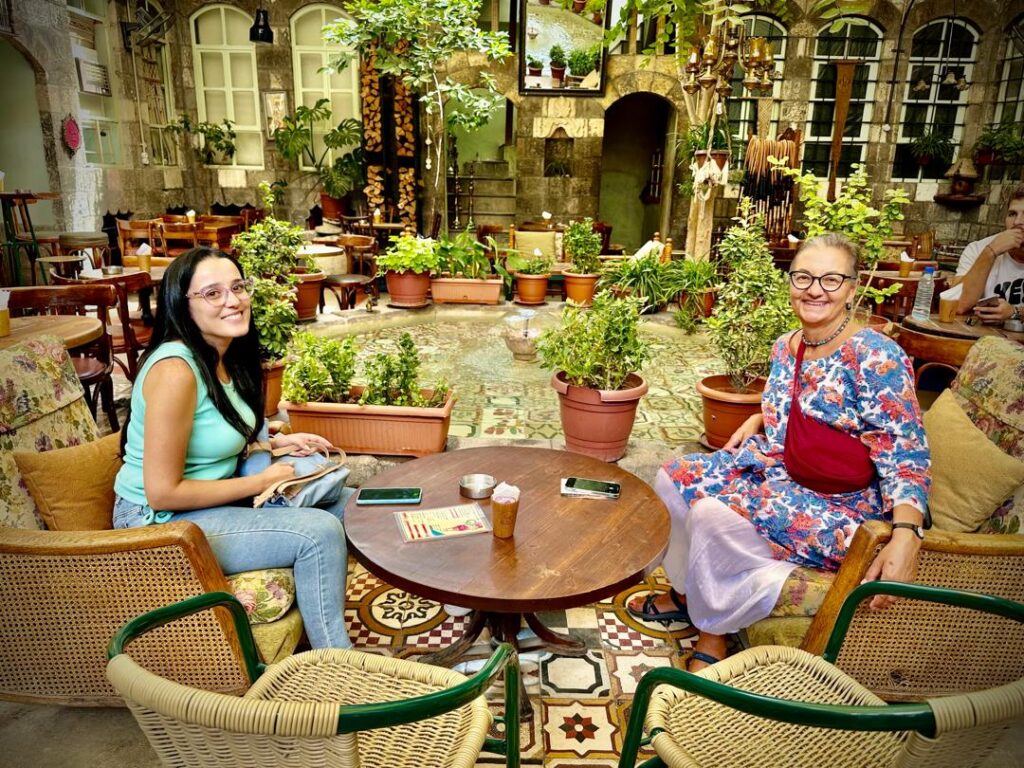
Damascus is not a city that should be experienced entirely while walking. Courtyard cafés give you a reason to stop, sit under trees or beside a fountain, and watch the rhythm of the Old City slow down around you.
Qishla, Beit Jabri and similar venues are especially pleasant after several hours of sightseeing. Order coffee, tea or a cold drink and give yourself time rather than treating the stop as a ten-minute break between monuments.
Eat your way through the Old City

Food works best in Damascus when it is woven into the day rather than confined to one formal restaurant. Stop for shawarma, falafel, fresh juice, sweets or pistachio ice cream as you move through the Old City, then leave one meal for a longer Damascene lunch or dinner.
Ask what is seasonal and what a shop is especially known for. Small places that specialise in one thing can be more memorable than restaurants trying to serve every Syrian dish at once.
Good approach: snack while exploring, then save your appetite for one proper local meal.
Walk the Christian Quarter
The Christian Quarter around Bab Touma and Bab Sharqi has a different rhythm from the markets west of the Umayyad Mosque. Churches, old houses, small bars, cafés and residential alleys sit close together, and the area is particularly rewarding in the late afternoon and evening.
Explore beyond the main street. Visit one or two churches, look at the historic façades and allow time for the neighbourhood itself. This is one of the places where Damascus feels most clearly like a living mosaic of communities rather than a historic district frozen in time.
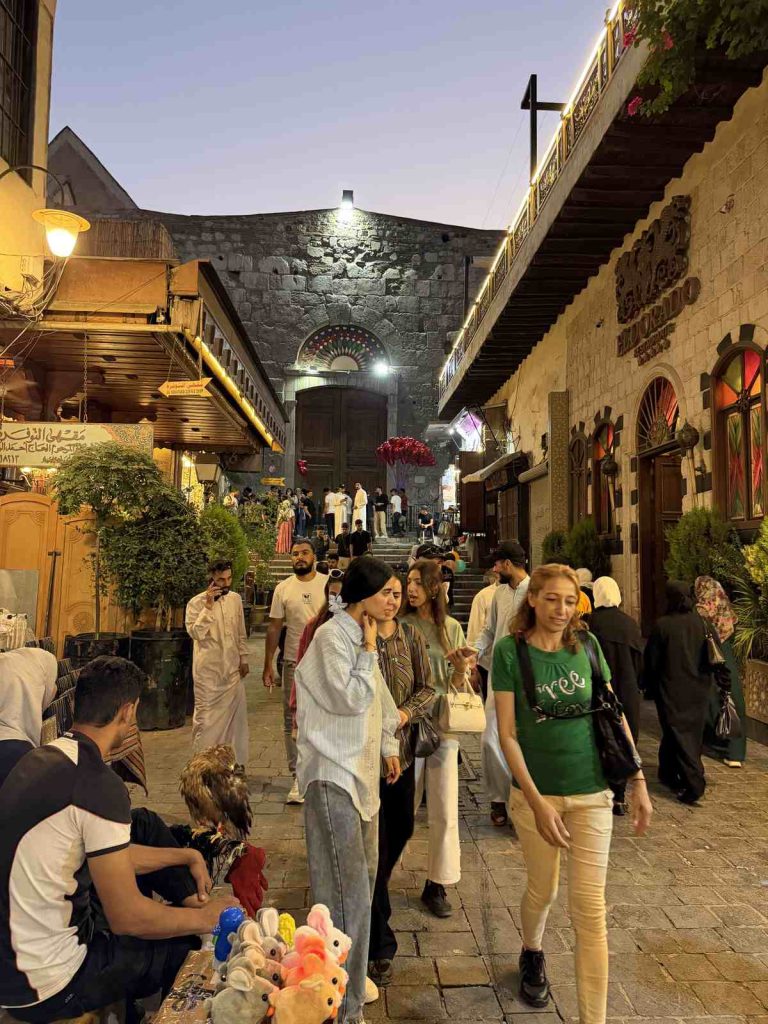
See Damascus after dark
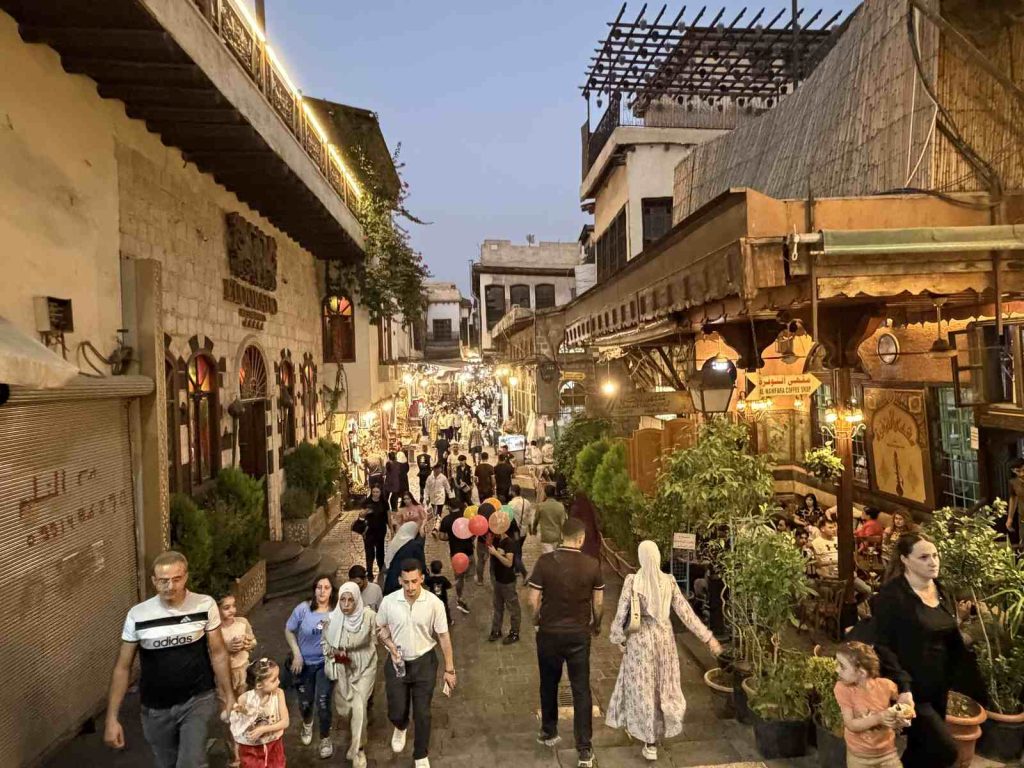
Do not assume the day ends when the monuments close. Old Damascus becomes more social after dark: restaurants fill, cafés grow louder, lights change the appearance of stone streets and people linger outdoors longer.
Return to an area you saw during the day and notice how different it feels at night. Al-Qaymariyya, Straight Street and the Christian Quarter are particularly good for an evening walk, especially when combined with dinner or a café stop rather than more scheduled sightseeing.
How to fit the best experiences into two days
Day 1: Al-Hamidiyah → Umayyad Mosque → Al-Nawfara → Bzuriyeh → Khan As’ad Pasha → Azm Palace → evening in the Old City.
Day 2: Straight Street → Christian Quarter → courtyard house → artisan workshops → relaxed café stop → dinner or an evening walk.
Go beyond the monuments
Our Damascus tours combine the main landmarks with workshops, local stories, food stops and the parts of the city that are easy to miss when travelling alone.
Damascus one-day tourPlan a private tour