
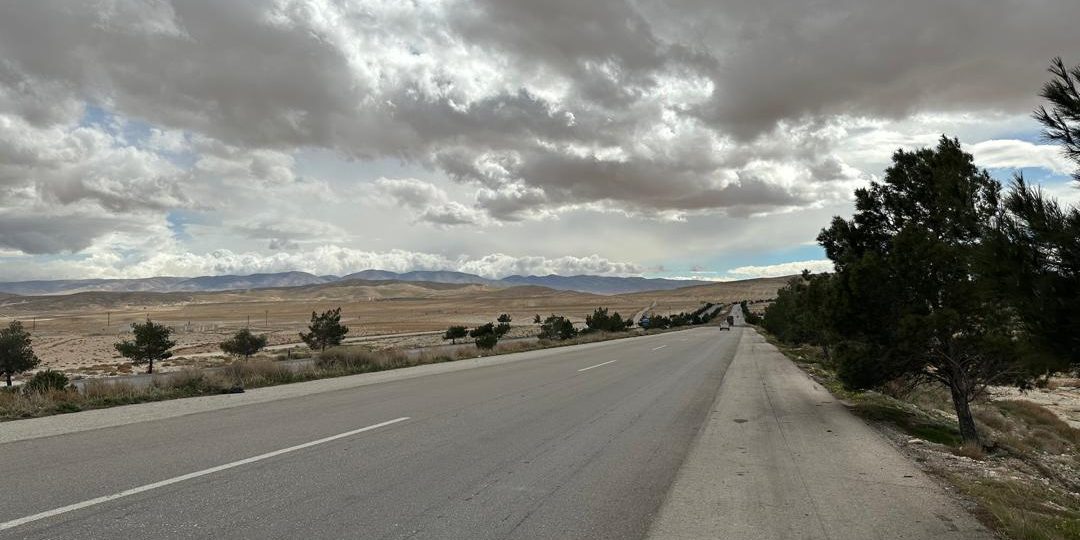
These reports describe the floods of 27 October–2 November 2026
This page preserves the official flood warnings, damaged-road reports and the 1 November 2026 suspension of nighttime intercity passenger departures from Deir ez-Zor. It is not a live bus-suspension notice or a verified list of roads currently closed. The original restrictions were reported as applying until the hazard had passed; we have not independently confirmed which roads or services have subsequently reopened.
For a trip now, check with your bus company, local transport authorities or guide immediately before departure. For broader travel planning, use our Syria entry-route guide and latest travel news.
Syria Floods in October–November 2026: Road Disruption Report
A dated report on the flooding, road damage and Deir ez-Zor night-bus suspension announced on 1 November 2026. Confirm today’s road and bus conditions independently.
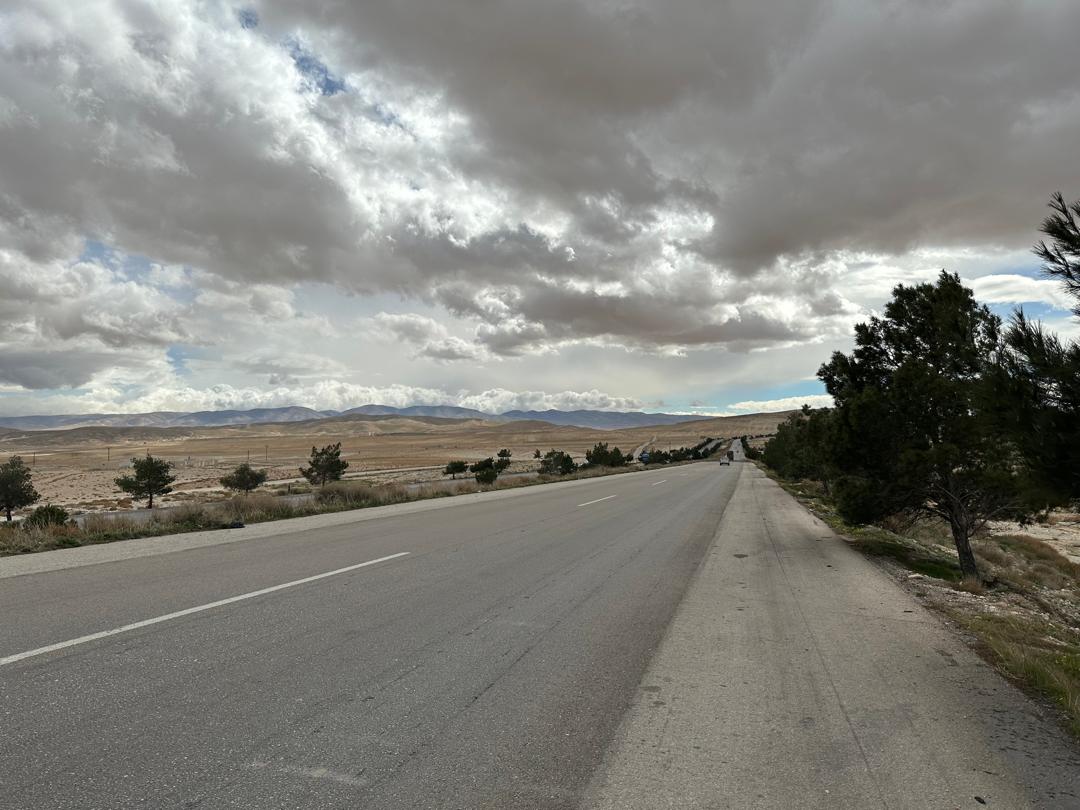
Nighttime departures suspended on 1 November 2026
Deir ez-Zor’s Passenger Transport Directorate announced at 5:50 pm on Sunday, 1 November 2026 that all nighttime passenger services departing Deir ez-Zor for other Syrian governorates are suspended. The authority cited roads damaged or undermined by recent flash floods and the risk of further thunderstorms overnight into Monday, 2 November.
The suspension will remain in effect until the hazards have passed and affected roads are considered safe. The announcement concerns nighttime passenger transport departures from Deir ez-Zor; it does not establish a nationwide ban on intercity buses or confirm that every road is physically closed to all vehicles. Travelers should not assume daytime services are unaffected without checking directly.
Advice at the time: Travelers were warned against relying on evening or overnight buses departing Deir ez-Zor without checking with the operator. If you are traveling now, confirm current bus operations and conditions on roads through Deir ez-Zor, Palmyra and nearby desert routes directly with local transport authorities or your driver.
Official source: SANA — Deir ez-Zor suspends nighttime passenger trips, 1 November 2026.
Storm warning issued for 1–2 November 2026
Syria’s Ministry of Emergency and Disaster Management has warned of another spell of intense thunderstorms, heavy rainfall and possible flash floods from the afternoon of Sunday, 1 November 2026, through the early hours of Monday, 2 November. Strong downdrafts may also bring dust storms and sharply reduced visibility; hail is possible.
The ministry and Syrian Civil Defense say the greatest concern is the desert areas around Damascus and Homs, with heavy showers potentially reaching parts of Hama, Homs, southern Aleppo, Raqqa and Hasakah. This is an official forecast and precautionary warning, not a report that all these regions have already flooded or that new specific roads have closed.
What travelers should do: Check routes again shortly before any Sunday afternoon or overnight drive, particularly on desert journeys toward Palmyra or eastern Syria. Avoid dry riverbeds, low-lying terrain and flooded or hail-covered roads. Never drive through flowing water, even if it looks shallow. During dust storms, visibility may fall quickly: reduce speed, follow local instructions and postpone exposed journeys when necessary.
Source: SANA, 1 November, reporting the Ministry’s warning. A separate official Arabic bulletin confirms the timing and affected regions. The condition of individual roads must still be confirmed locally.
Road damage around Palmyra and eastern Syria
Flooding has now caused significant damage on roads around Palmyra. Authorities reported erosion along the shoulders and sides of the Deir ez-Zor–Palmyra road, with weakened sections of asphalt that may make passage unsafe, especially at night or in fog.
Roads north of Palmyra toward al-Kom, al-Taybah and Qasr al-Hayr were also affected. The al-Kom bridge between al-Kom and al-Taybah suffered major damage, while emergency teams helped stranded motorists and residents.
The wider Deir ez-Zor–Damascus highway reopened on 30 October under escorted-convoy arrangements after earlier flood closures. Drivers were instructed to stay within the convoy and follow highway patrols. The Deir ez-Zor–Raqqa road also reopened for light vehicles only. These announcements do not guarantee that every connecting route remains safe.
Additional night-road warning, 31 October: The Palmyra district director said authorities closed the al-Sukhnah–Raqqa road on Friday evening and in the early hours of Saturday as a precaution. Floods had damaged road edges and weakened sections that are difficult to spot after dark. The official report did not establish unrestricted reopening for subsequent nights, so confirm the latest road status locally before attempting this route, especially in darkness.
Heavy rain, thunderstorms and strong winds have affected several parts of Syria, causing flooding, damaged bridges and temporary road closures across several governorates. As of 31 October 2026, the main concern for travelers is the condition of roads after flooding, especially in the Palmyra desert and eastern Syria. Allow extra travel time and check your route before departure.
The severe weather began on 27 October. Although there was some easing on Saturday, 31 October, authorities have forecast a renewed period of storms from 1 November afternoon into early 2 November. Earlier road damage and unsafe bridges may remain hazardous even when rainfall stops. Syrian emergency teams have been responding to blocked roads, fallen trees, stranded vehicles and dangerous floodwaters. In an official update published on 31 October, Emergency Minister Raed al-Saleh reported eight deaths linked to the flash floods: seven people drowned, including five children, and another person died in a flood-related road accident. Four people were still missing at the time of that report. Do not attempt to cross flowing water or damaged road sections.
Flooding has affected roads in several regions
According to the Emergency Minister’s update reported by SANA on 31 October, emergency teams had received more than 900 reports and carried out over 550 field responses by Friday morning. Civil Defence teams rescued 60 people stranded in vehicles, recovered more than 150 stranded vehicles and evacuated 375 families from camps in Raqqa. Response operations covered Aleppo, Raqqa, Deir ez-Zor, Hasakah, Hama, Idlib, Homs, Latakia, Tartous and Daraa.
Seven bridges, culverts or unpaved roads were reported out of service in affected areas, while other routes were reopened after emergency crews cleared floodwater, rocks, soil and fallen trees.
In Damascus Countryside, the Damascus–Daraa highway near Deir Ali Bridge was temporarily obstructed by debris carried by floodwater before being reopened. Roads around Jaramana, al-Malihah and Zamalka were also affected by fallen trees and later reopened.
What to do if you are traveling in Syria now
- Check the road condition with your driver, guide or hotel before leaving.
- Avoid attempting to cross flooded roads, wadis or low-lying areas.
- Allow additional travel time, especially on intercity road journeys.
- Reduce speed during heavy rain and poor visibility, and avoid damaged desert roads after dark.
- Be prepared for itinerary changes if a local road becomes temporarily inaccessible.
Emergency teams have already reopened several affected roads. Conditions are changing hour by hour, so a current local check is more useful than an older social-media report.
Most important impact is on road timing and local access
For visitors already in Syria, the main operational concern is road travel rather than a nationwide halt to tourism. Some affected areas are outside the classic visitor route, while others connect major destinations.
Syrian Guides is monitoring road conditions and would adjust a day’s routing if flooding, debris or poor visibility makes a planned journey unsuitable. Travelers should also keep an eye on our latest travel updates until the weather system passes.
For travelers, the key message is simple: check the road before you leave.
New storms are forecast for Sunday afternoon into early Monday, and damaged road sections and bridges may take longer to repair. Before travelling through Palmyra or eastern Syria, confirm the latest access restrictions, avoid night driving on damaged stretches and follow local traffic and convoy instructions.
Sources: SANA — road damage around Palmyra and Deir ez-Zor; SANA — Deir ez-Zor–Damascus highway reopening under convoy restrictions; SANA — wider flooding and emergency response; SANA — 31 October ministerial update: fatalities and emergency response; SANA — 1 November renewed flash-flood and dust-storm warning.
2 Comments