
The stories behind Syria’s landmarks
Mariamite Cathedral: A Living Church in Damascus
Some of Damascus’s most important places are not only historic. They are still deeply alive.
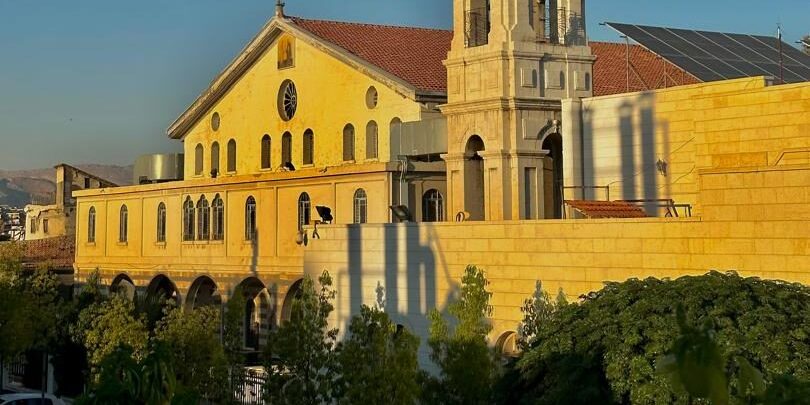
On a busy street in Old Damascus, a doorway leads into one of the city’s most important Christian spaces. The Mariamite Cathedral, often called the Maryamiyya, is not just a place to admire religious art. It is an active church and the seat of the Greek Orthodox Patriarchate of Antioch and All the East.
Damascus is a city where the history of Christianity is woven into daily urban life. The Mariamite Cathedral embodies that continuity, even though its current structure was rebuilt and restored over centuries.
Visiting it offers a different perspective from the grand palaces and mosques nearby: the rhythms of worship, icons, candles and local community.
← Explore all Syria landmarksMariamite Cathedral at a Glance
A Cathedral in the Heart of Old Damascus
The Mariamite Cathedral stands close to the famous Straight Street in the Christian quarter of Old Damascus. Accounts of Christian worship on this site reach back to Late Antiquity, but the building you see today is the result of later reconstruction.
The cathedral’s importance grew as Damascus became the principal seat of the Greek Orthodox Patriarchate of Antioch. Its connections extend far beyond one neighbourhood to Orthodox Christian communities across the eastern Mediterranean.
It remains a place of religious services and communal life. A visitor is entering a functioning institution, not a museum that has been sealed off from its original purpose.
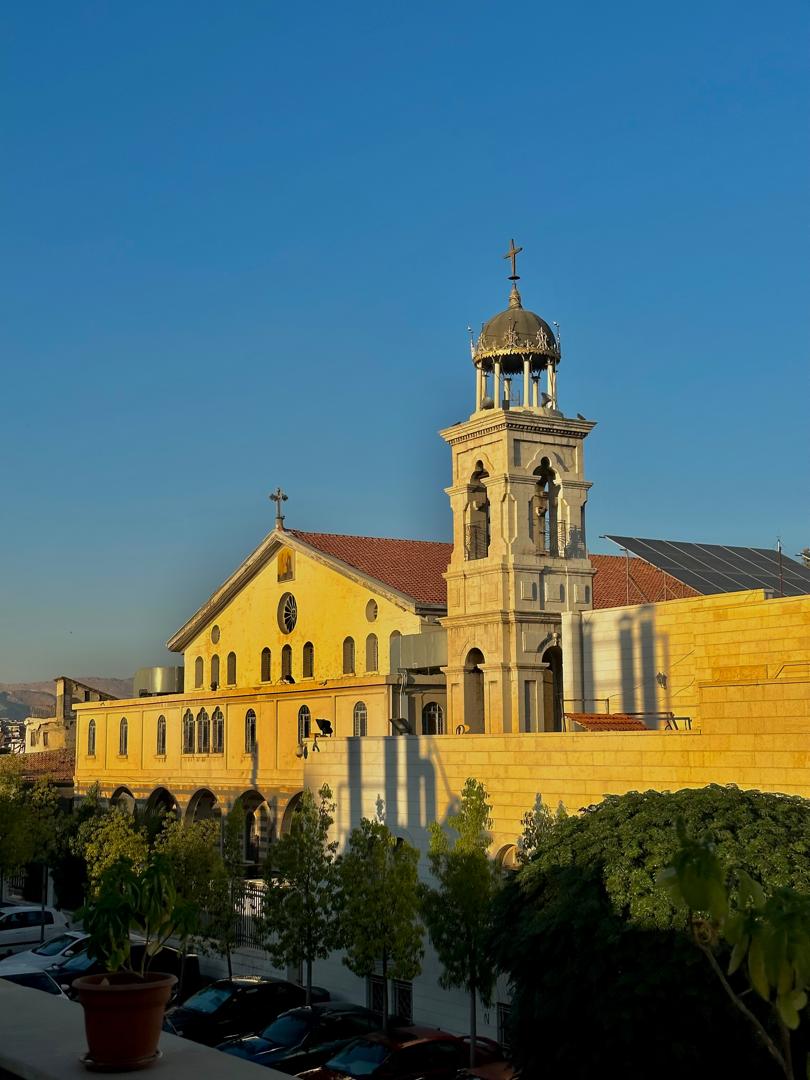
The interior rewards patient observation. Icons, lamps and images are arranged for liturgy and devotion, not merely decoration.
Look at how the nave directs attention toward the iconostasis, the decorated screen associated with Orthodox worship. Different images and sacred objects carry meaning for the faithful who pray here.
Even without sharing the religious tradition, visitors can appreciate the quiet choreography of the space: candlelight, steps, doors and the way light reaches the central areas.
The atmosphere can change completely during a service, when the building fills with voices and movement.
A Church Rebuilt by Generations
The cathedral’s history includes repeated rebuilding, fires and periods of insecurity. The events of 1860 were particularly destructive for the Christian quarter of Damascus, and the church suffered devastating damage.
The present building took shape through reconstruction following that disaster. Sources differ in the precise dating of some stages, but they agree that the structure standing today is not an unchanged early-Christian church.

A significant restoration occurred in 1953, with further care continuing in later decades. The building expresses the determination of successive communities to keep their place of worship alive.
That history also offers a lesson about preservation: continuity can belong to a community and its use of a place even when much of the physical structure has been repaired.
Why the Community Matters as Much as the Building
One of the pleasures of Old Damascus is how closely different forms of heritage live together. Walking from the cathedral into the neighbouring streets, you move past houses, shops, churches, small courtyards and layers of history.
The Christian quarter remains a residential and commercial neighbourhood. It is easy for travel articles to focus on monumental buildings while forgetting that people still live beside them.
The cathedral’s title reflects devotion to the Virgin Mary. Its identity is distinct from the nearby churches of other Christian denominations, even when those communities share parts of Damascus’s wider historical experience.
Visitors who wish to understand the city should learn the difference between the Greek Orthodox Patriarchate, the Syriac Orthodox Church, the Melkite Greek Catholic Church and other communities, rather than assuming they are all the same.
Combining the cathedral with Straight Street and Saint Ananias Chapel is a rewarding way to explore the long Christian history of Damascus without treating it as one uninterrupted building style.
A visit becomes more meaningful when combined with Straight Street, Saint Ananias Chapel and the surrounding neighbourhoods. The story extends beyond the cathedral door.
How to Visit Mariamite Cathedral
Approach from Straight Street and give yourself time to explore the Christian quarter at an unhurried pace.
- Plan a quiet stop as part of a walking route through the Christian quarter and Straight Street.
- Allow 20–40 minutes, or more if you have permission to attend a service.
- Cover shoulders and knees, and follow any additional dress instructions provided on site.
- Speak quietly; avoid photography during prayers unless expressly permitted.
- Be mindful of worshippers and spaces reserved for the clergy or congregation.
- Opening arrangements may change for religious services, holidays and special events, so check locally.
- Explore nearby Saint Ananias Chapel and the old streets on foot for a fuller sense of the neighbourhood.
Discover the living religious and cultural history of Damascus with a local guide.
Explore our private tours →One Last Thought
The Mariamite Cathedral has survived not because every stone is ancient, but because a community continued to care for it and worship within it. That living continuity is its most important treasure.
Sources: Museum With No Frontiers · Historical account in Vatican archives · Historical overview of Mariamite Cathedral.


Keep exploring
You might also enjoy
 Christian heritageSaint Ananias ChapelA sacred place linked with the story of Paul in Damascus.Read the story →
 Nearby landmarkStraight StreetWalk the ancient street through Old Damascus.Read the story →
 Living faithCross Feast in MaaloulaDiscover the religious traditions of a mountain village.Read the story →
 Walking itineraryOne Perfect Day in DamascusA beautiful walking route through the historic city.Read the story →