
SYRIAN GUIDES / DISCOVER SYRIA
The Hakawati
of Old Damascus
A book. A raised voice. An entire room listening. Discover a storytelling tradition that still belongs to the living city.
Before stories were something we watched on a screen, they were something we experienced together.
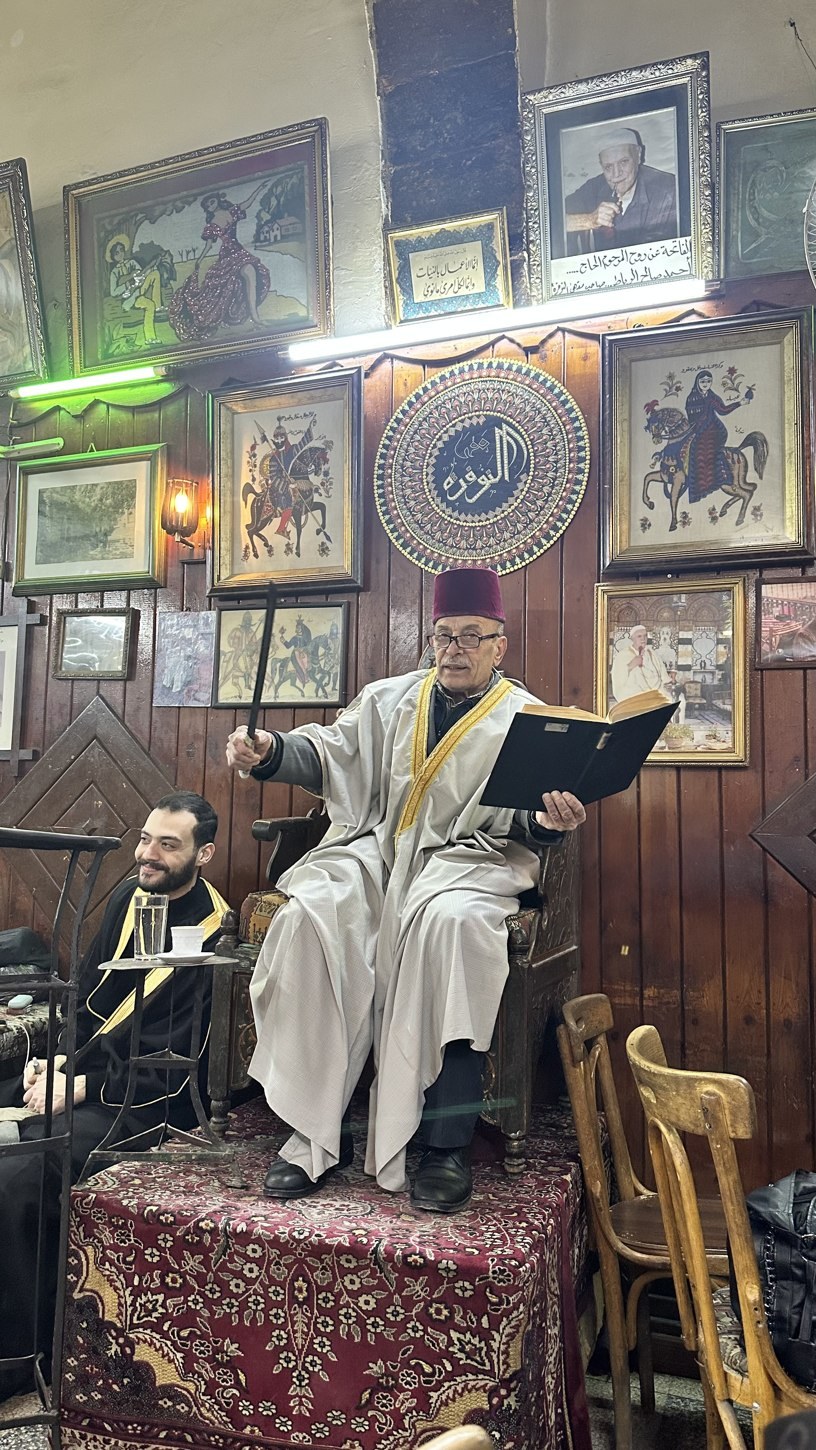
Just off the ancient streets around the Umayyad Mosque, Al-Nawfara (also written Al-Nofara) is much more than a place for tea. It is associated with one of the best-loved cultural figures of Damascus: the Hakawati, or traditional storyteller. He sits above the café’s tables, opens a book and transforms tales of bravery, love and intrigue into a performance.
There is something wonderfully human about it: the voice, the gestures, the people leaning in, and the knowledge that the story is not meant to be consumed in a hurry. This guide explores what the Hakawati does, why the ritual matters and how to experience it when you visit Damascus.
A living Damascene tradition
Who is the Hakawati?
The name comes from the Arabic word for telling a story. The Hakawati is an oral performer, not simply a reader. Long before radio and television changed the rhythm of evening entertainment, coffeehouses were social stages where people came to listen, debate, laugh and return the next night for another instalment.
Traditionally, the storyteller wore a tarboush (fez) and distinctive clothing. He held a large book and sometimes a stick or sword, using changes in tone, movement and timing to give each character a personality. The audience was part of the scene: reactions and anticipation mattered as much as the words themselves.
At Al-Nawfara, this older way of sharing stories has remained part of the atmosphere of the café, even as the city around it continues to change.
More theatre than reading
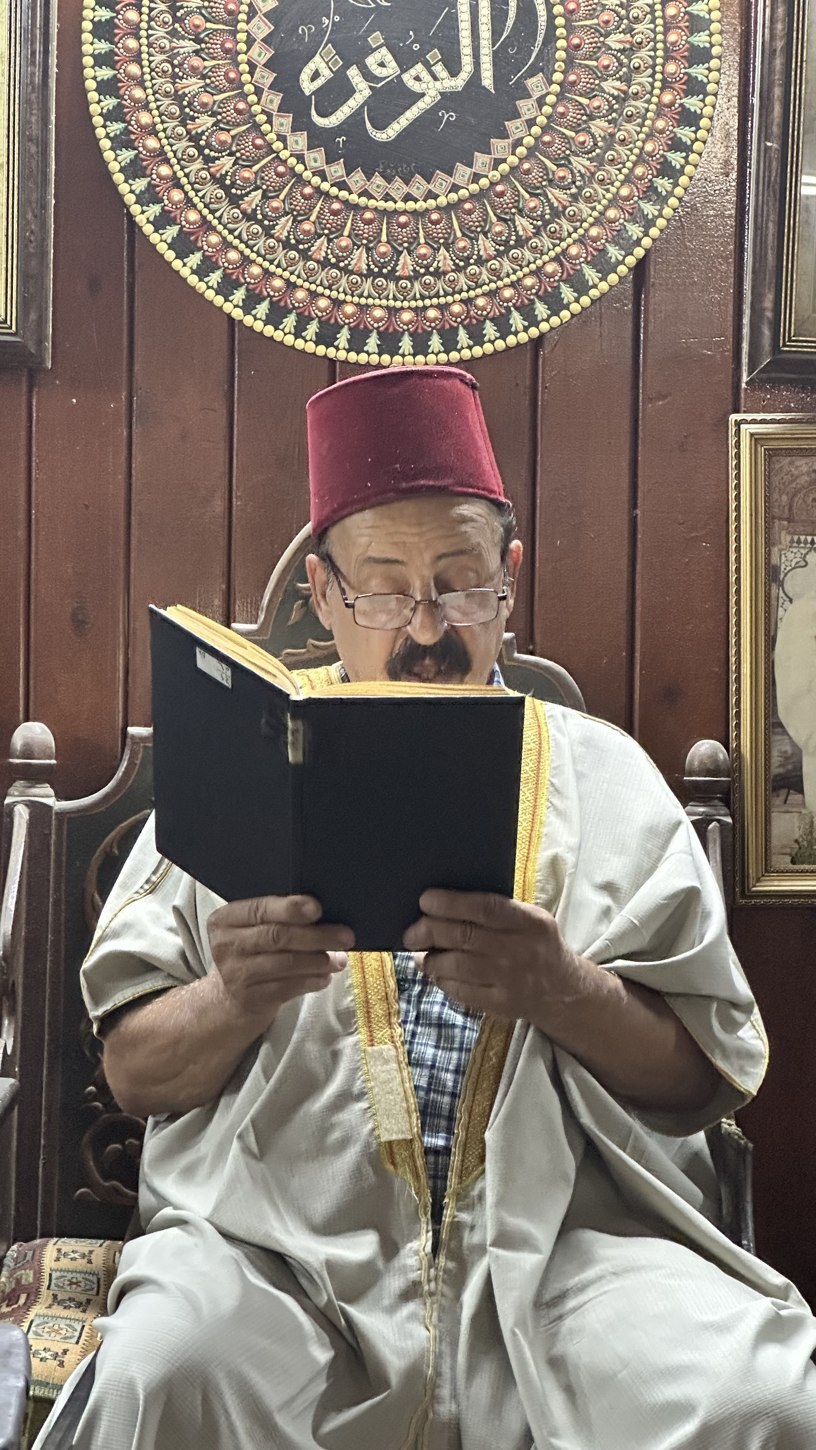
A voice, a book and a sword
To understand the difference between a Hakawati performance and an ordinary reading, watch what happens when the tale gathers pace. The storyteller shifts his voice from one character to another, pauses to build suspense and punctuates dramatic scenes with gestures. A sword or cane may become part of the performance, while the book remains the anchor of the narrative.
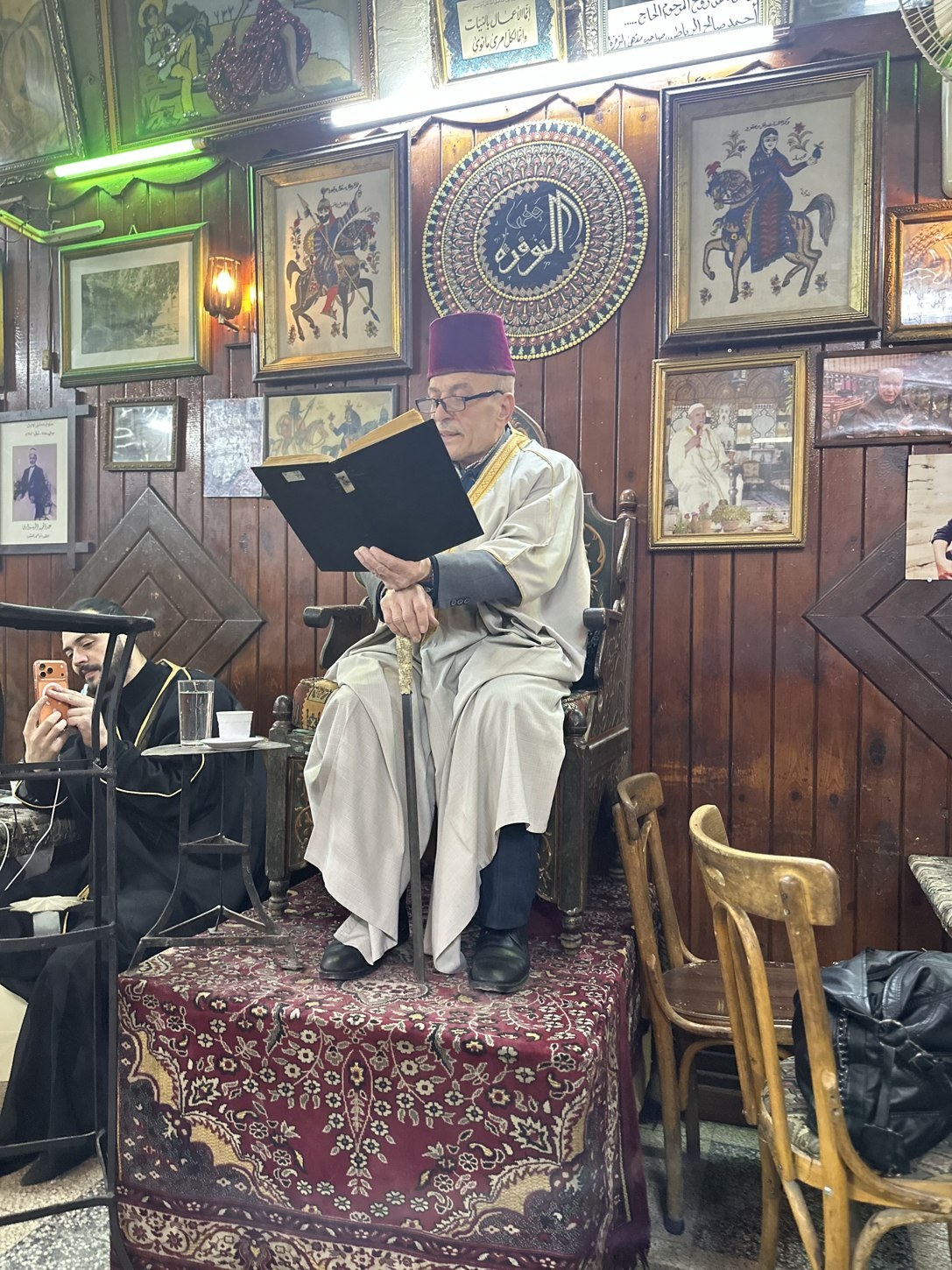
It is easy to focus only on the man at the front. But watch the listeners too. Some are completely absorbed; others share a remark or a smile over their tea. The story becomes a communal moment rather than a private one, and that is what gives the experience its special character.
The stories behind the tradition
Heroes, love and unfinished adventures
The Hakawati draws on an expansive world of Arabic epic literature, where each story can branch into hundreds of adventures. The best-known subjects associated with the Damascene tradition include the hero Antar ibn Shaddad and the Mamluk Sultan al-Zahir Baybars. These tales mix history, folklore, loyalty, courage, romance and dramatic rivalry.
These are not necessarily short stories with a beginning and ending in one sitting. Traditionally, a lengthy narrative could continue over many evenings, and the storyteller knew when to stop at exactly the point that would bring the audience back.
The setting matters
Inside Al-Nawfara Café
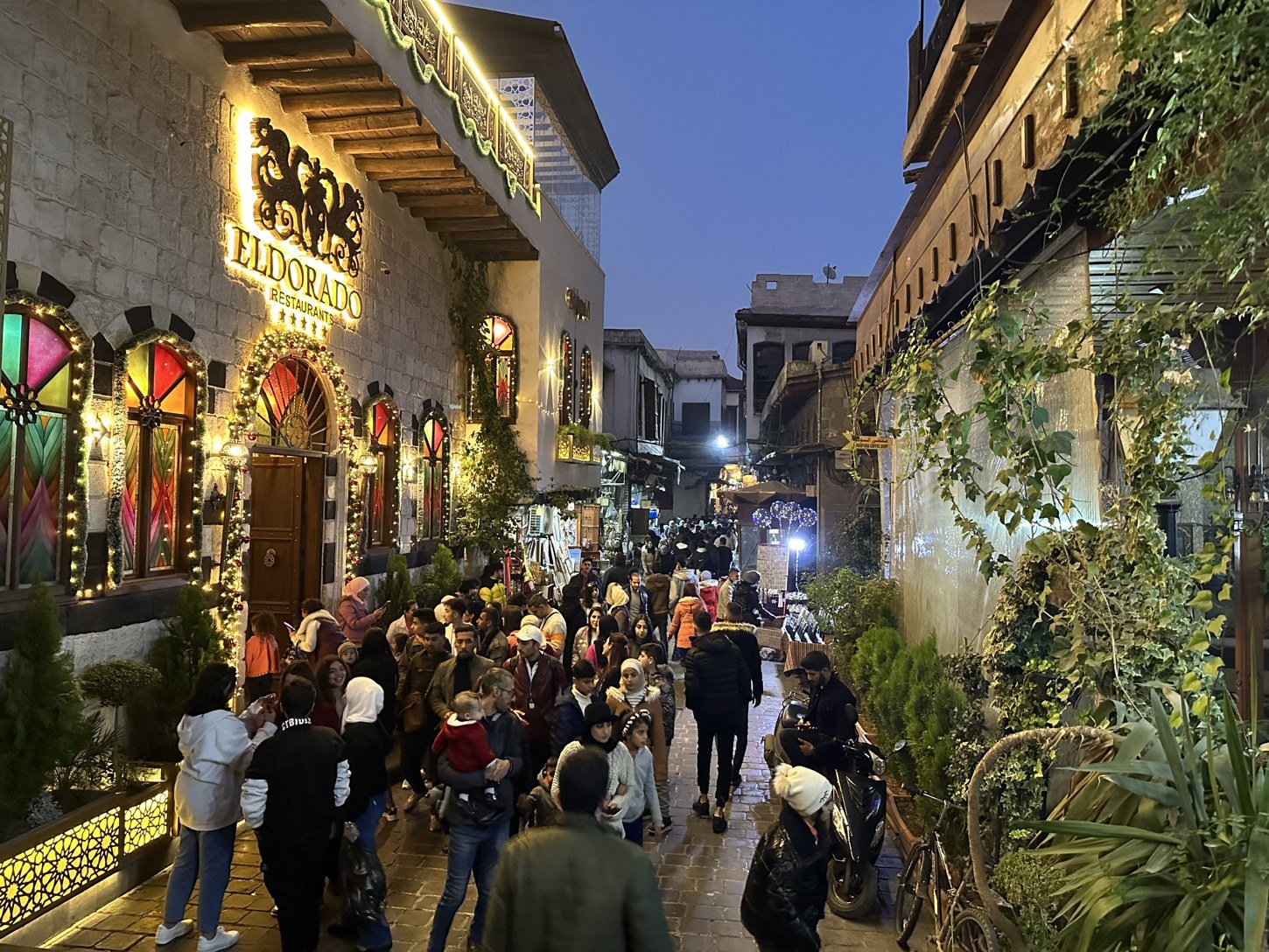
Al-Nawfara sits close to the eastern side of the Great Umayyad Mosque, in the maze of lanes around Al-Qaymariyya. The café is celebrated as one of Damascus’s historic coffeehouses. Its name refers to a fountain associated with the site; published accounts give varying ages for the café, so it is better appreciated as a long-standing local landmark than reduced to a single disputed number of years.
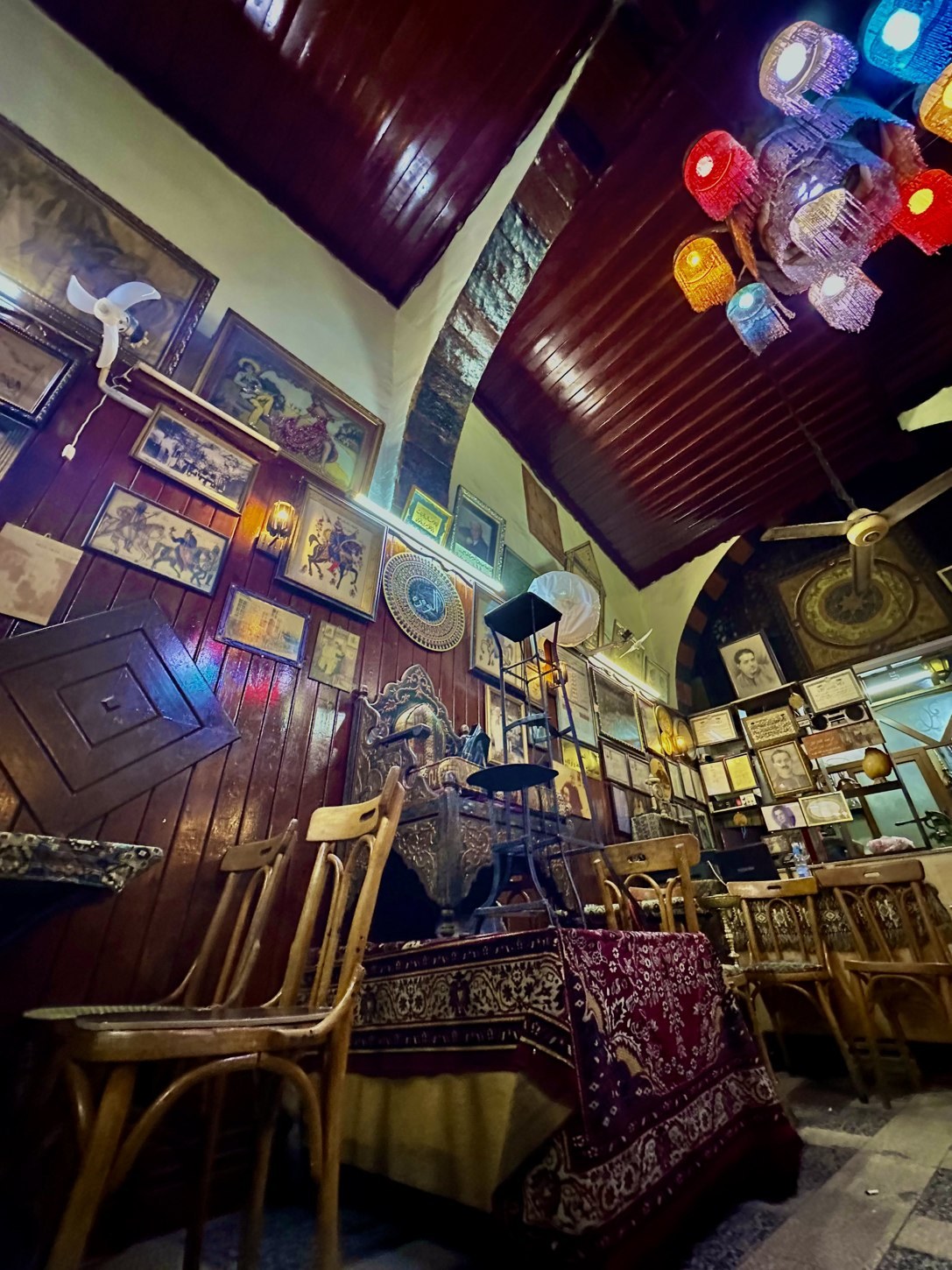
Inside, the walls tell stories of their own: framed photographs, pictures of legendary heroes, wood panelling and generations of café life. The seats are close together. Conversations overlap. Some visitors come for the Hakawati; others simply come for the familiar atmosphere. This mix is part of what makes the place feel lived in rather than staged for tourists.
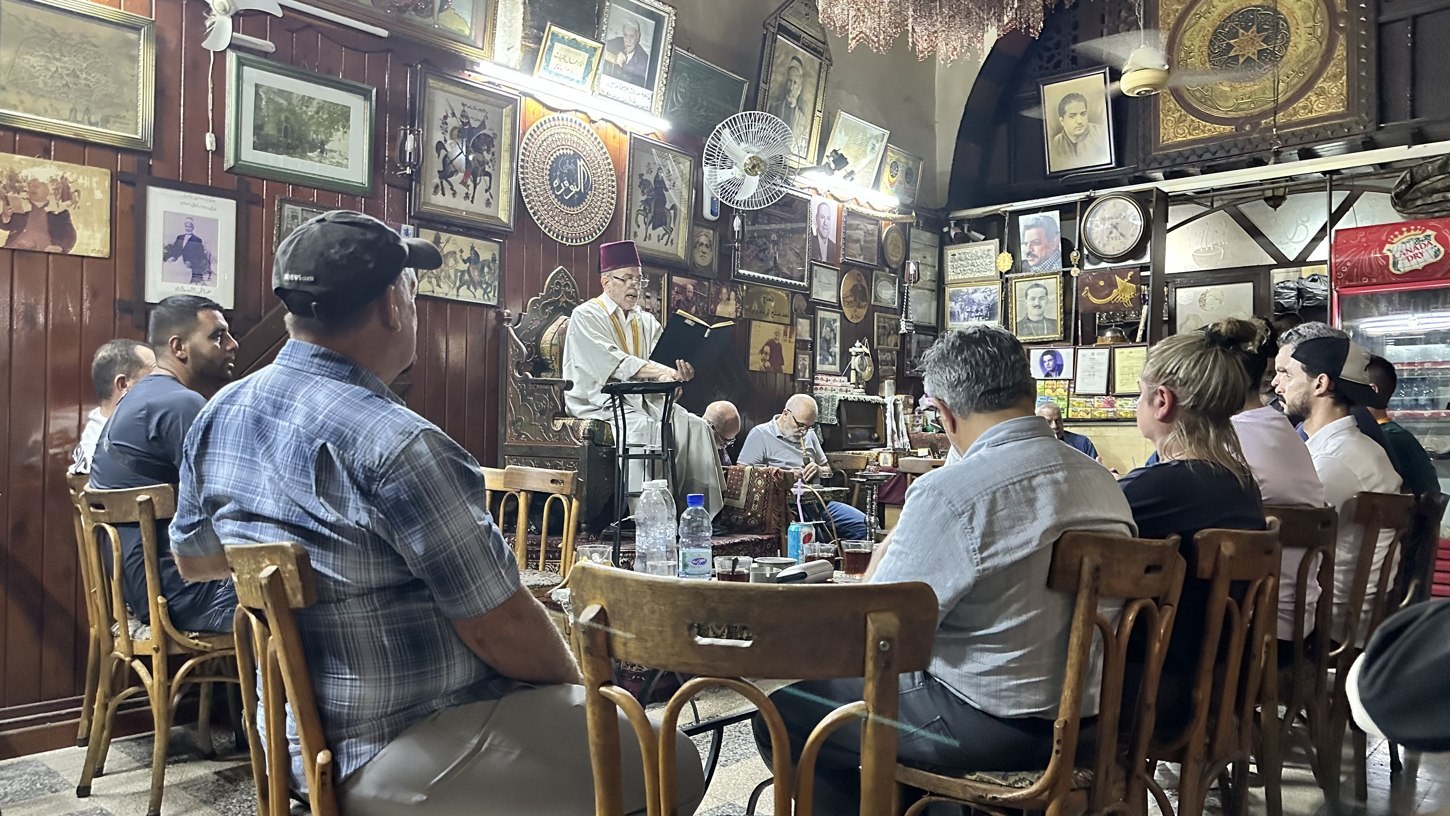
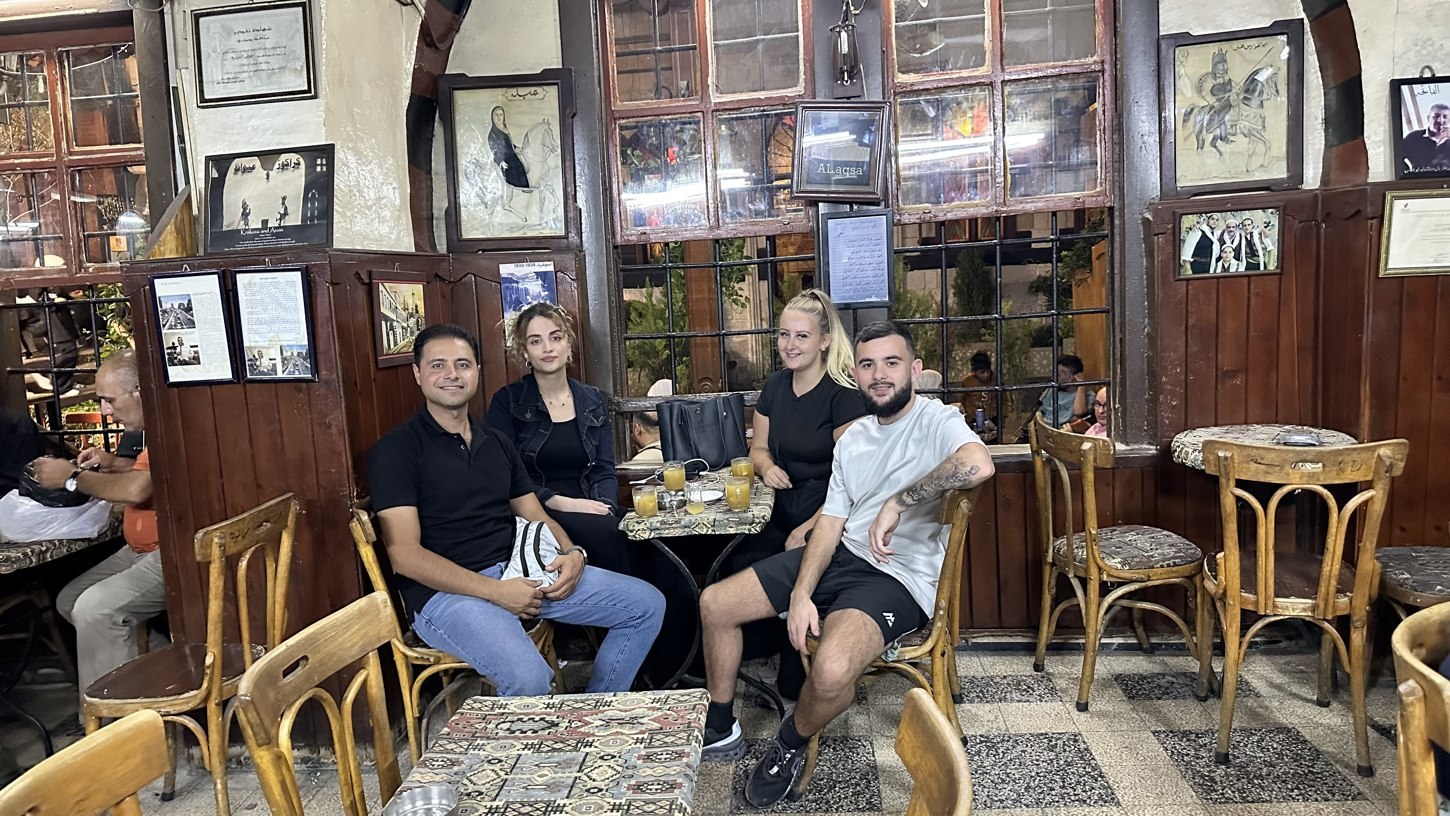
Historically, many cafés were primarily male social spaces. That has changed over time, and Al-Nawfara today welcomes women as well as men, along with visitors who are curious about local traditions. Its significance is not only that the performance has survived, but that it can still bring people together around a shared story.
A local visitor’s guide
How to experience the Hakawati in Damascus
Find Al-Nawfara in the Old City, near the eastern entrance to the Umayyad Mosque, around Al-Qaymariyya.
The atmosphere is especially memorable in the evening. Performance times and days can change, so confirm the current schedule before making a special trip.
The traditional performance is in Arabic. Even without fluency, the expressions, costumes, gestures and audience reactions are part of the experience.
Set aside at least 30–60 minutes for a relaxed café visit, and more if you plan to listen to a full performance.
Beyond the monuments
Why this tradition is worth discovering
Damascus is famous for its ancient monuments. Yet some of the most memorable things you can take away from the city are moments that do not fit into a conventional sightseeing list: a familiar face in a café, the sound of a story being told, and the feeling of sharing a small piece of local life.
The Hakawati is a reminder that heritage is not only architecture and objects behind glass. It is also a voice, a performance and a relationship between the storyteller and the people in front of him.
For Syrian Guides, this is the spirit of exploring beyond the beaten path: meeting the people who keep the city’s traditions meaningful.
Continue exploring
More stories from Damascus
Hear the stories, meet the city.
Join Syrian Guides for a thoughtful exploration of Old Damascus, from its historic landmarks to the people, workshops and living traditions that make it memorable.
Explore our private Syria tours →