
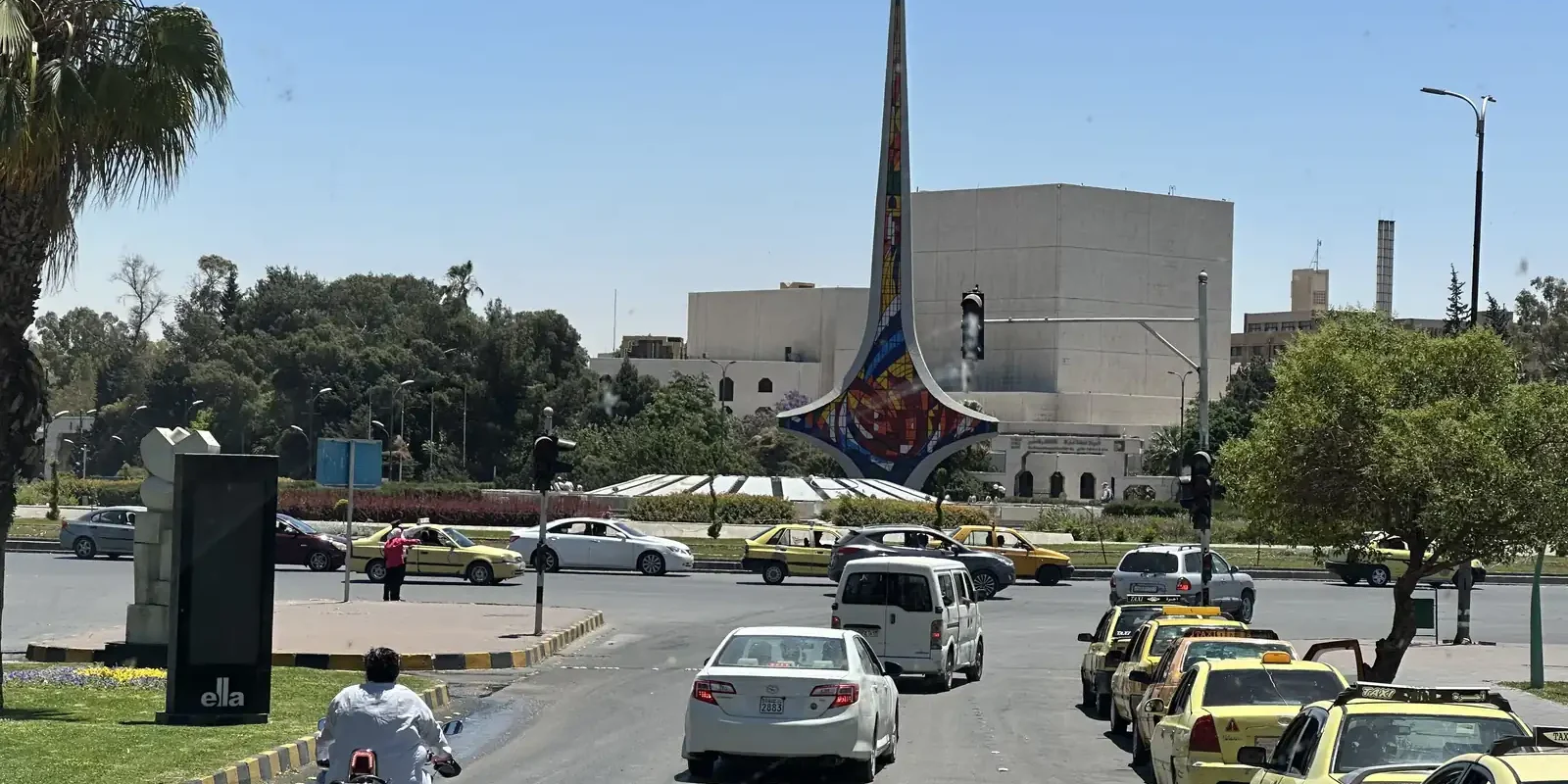
Everyone in Damascus knows the Sword. Far fewer people know the artist who gave it its colours.
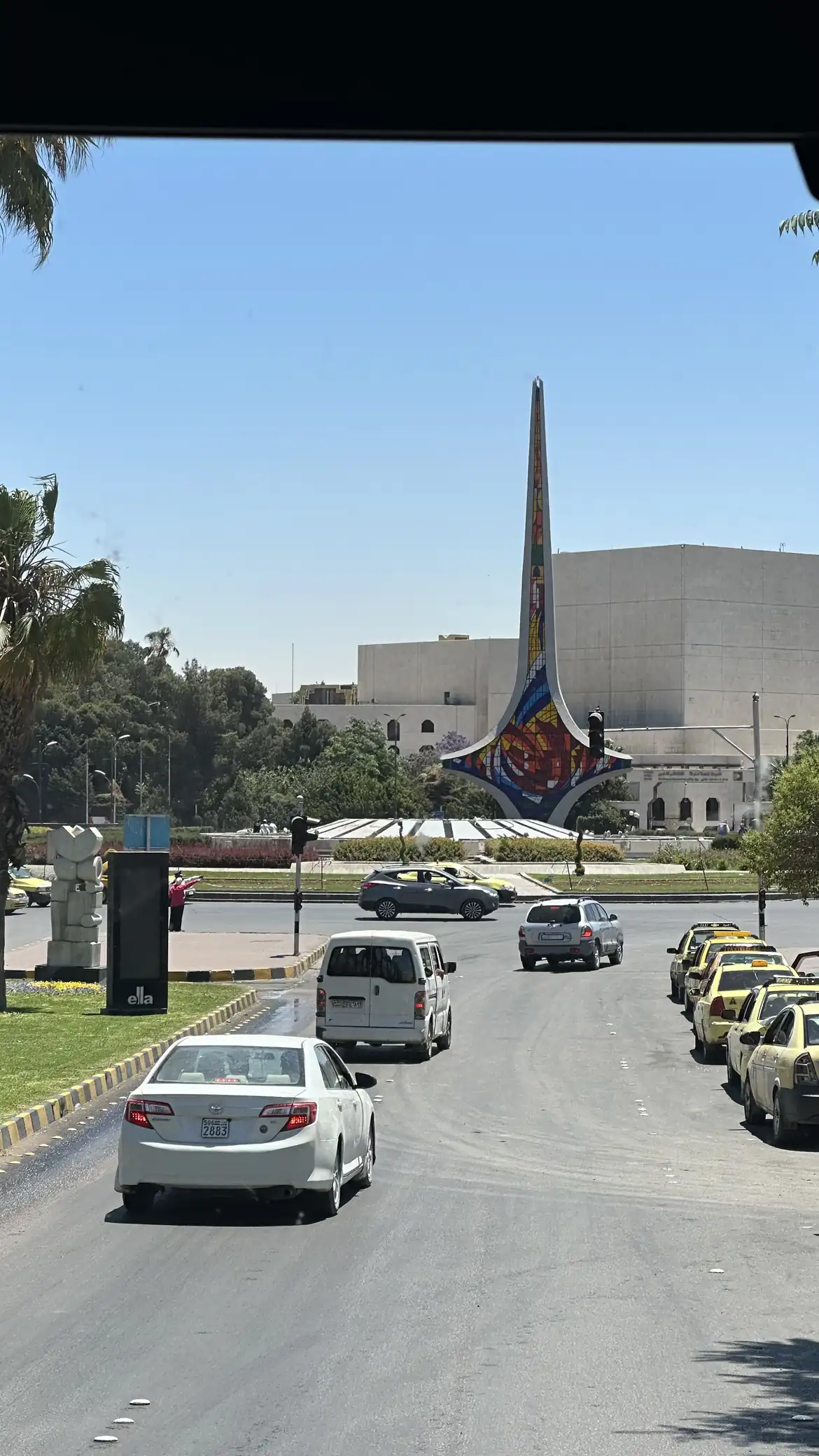
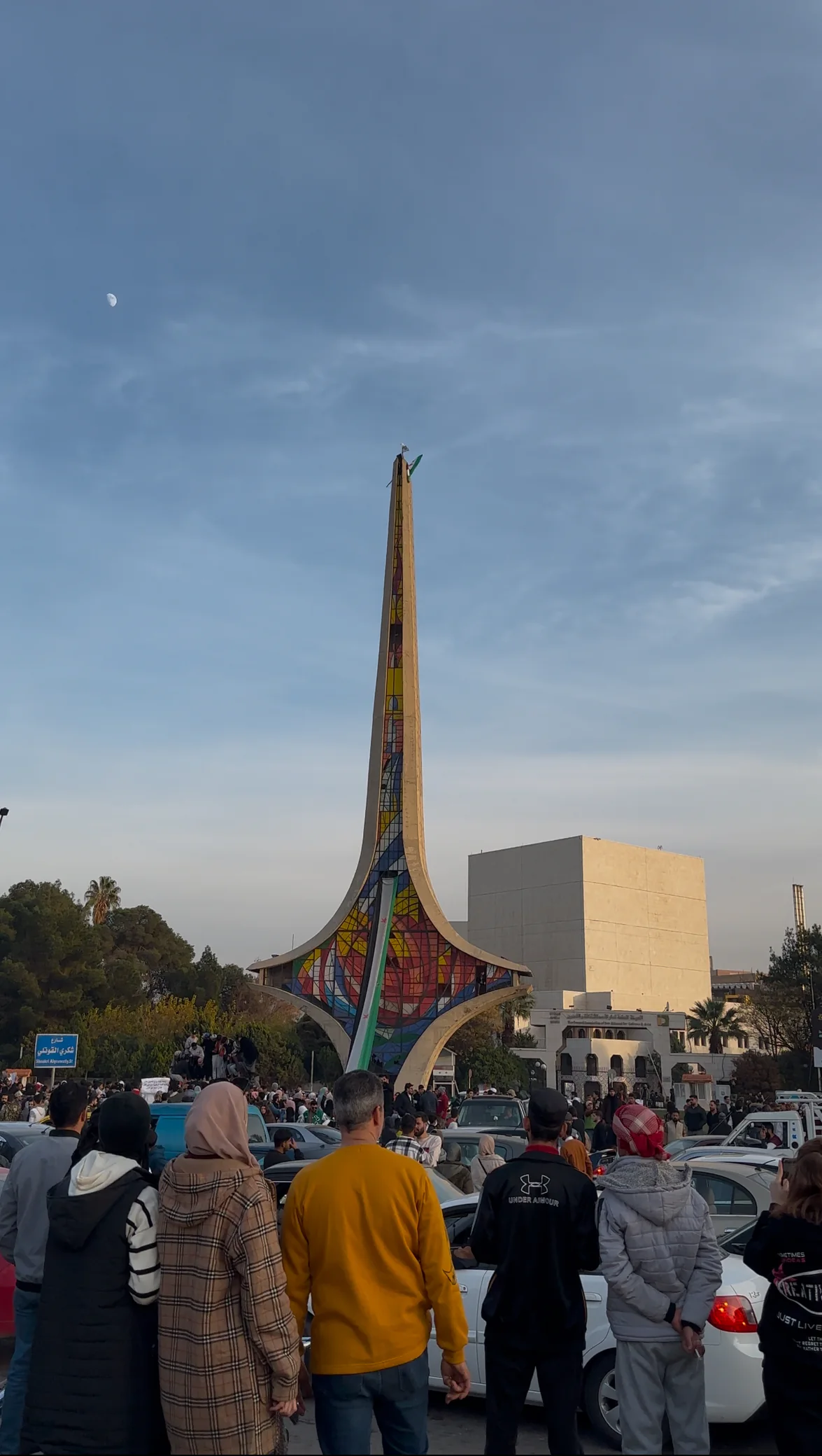
Stand in Umayyad Square and it is impossible to miss: a soaring, sword-shaped monument rising above the traffic, its centre filled with vivid fragments of red, blue, yellow and green. For generations of Damascenes, the Damascus Sword (السيف الدمشقي) has been a meeting point, a landmark and part of the city’s everyday visual memory.
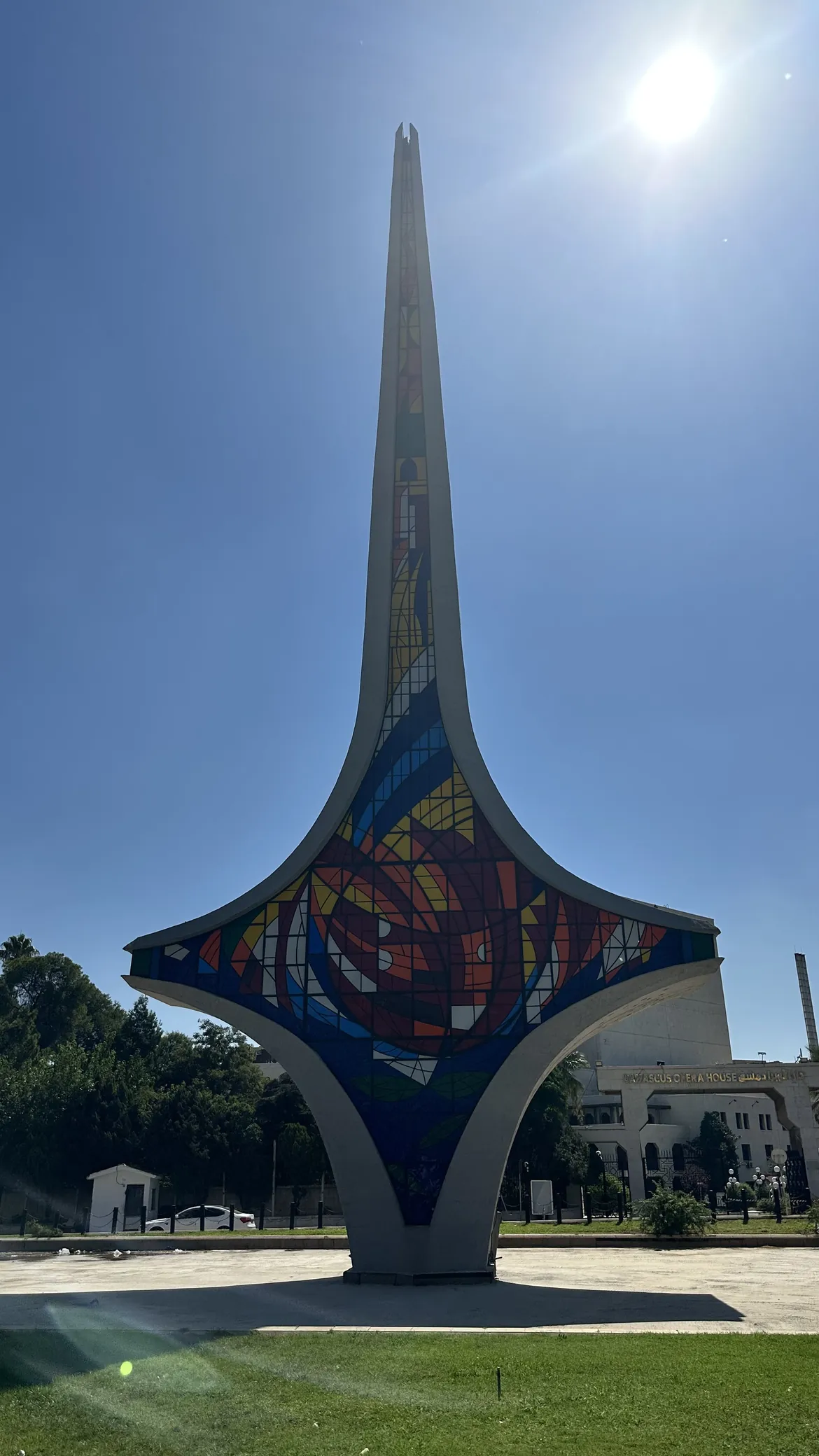
But behind those geometric colours is another story. The celebrated Syrian artist Ehsan (Ihsan) Antabi designed the monument’s stained-glass composition in 1998, working in collaboration with sculptor Mustafa Ali. The monument itself is considerably older. Understanding the difference reveals how a public structure became one of Damascus’s most recognisable pieces of modern art.
Before the colours: a monument to the Damascus International Fair
The Damascus Sword did not begin as the stained-glass artwork people recognise today. The structure dates to the early 1960s and was closely associated with the Damascus International Fair, an event that once occupied an important place in the city’s modern cultural and commercial life.
Its earlier design displayed the flags of countries taking part in the fair. The artist Abdul Qadir Arnaout is associated with that original visual treatment. The sword-shaped concrete structure remained, but the way it was presented to the city would change dramatically decades later.
In 1998, Antabi’s abstract composition replaced the earlier flag imagery. The commission, carried out with Mustafa Ali, transformed the familiar concrete landmark into an artwork that could be read from across the square. Rather than simply identifying participating countries, the monument now expressed ideas rooted in Damascus itself.
The Damascene rose, fire and a city in colour
Look closely at the centre of the monument. What at first seems like an arrangement of coloured panels begins to suggest a pattern of petals, movement and flame. In the artist’s own account, the abstract design brings together the Damascus rose and fire, using deliberately irregular geometric shapes.
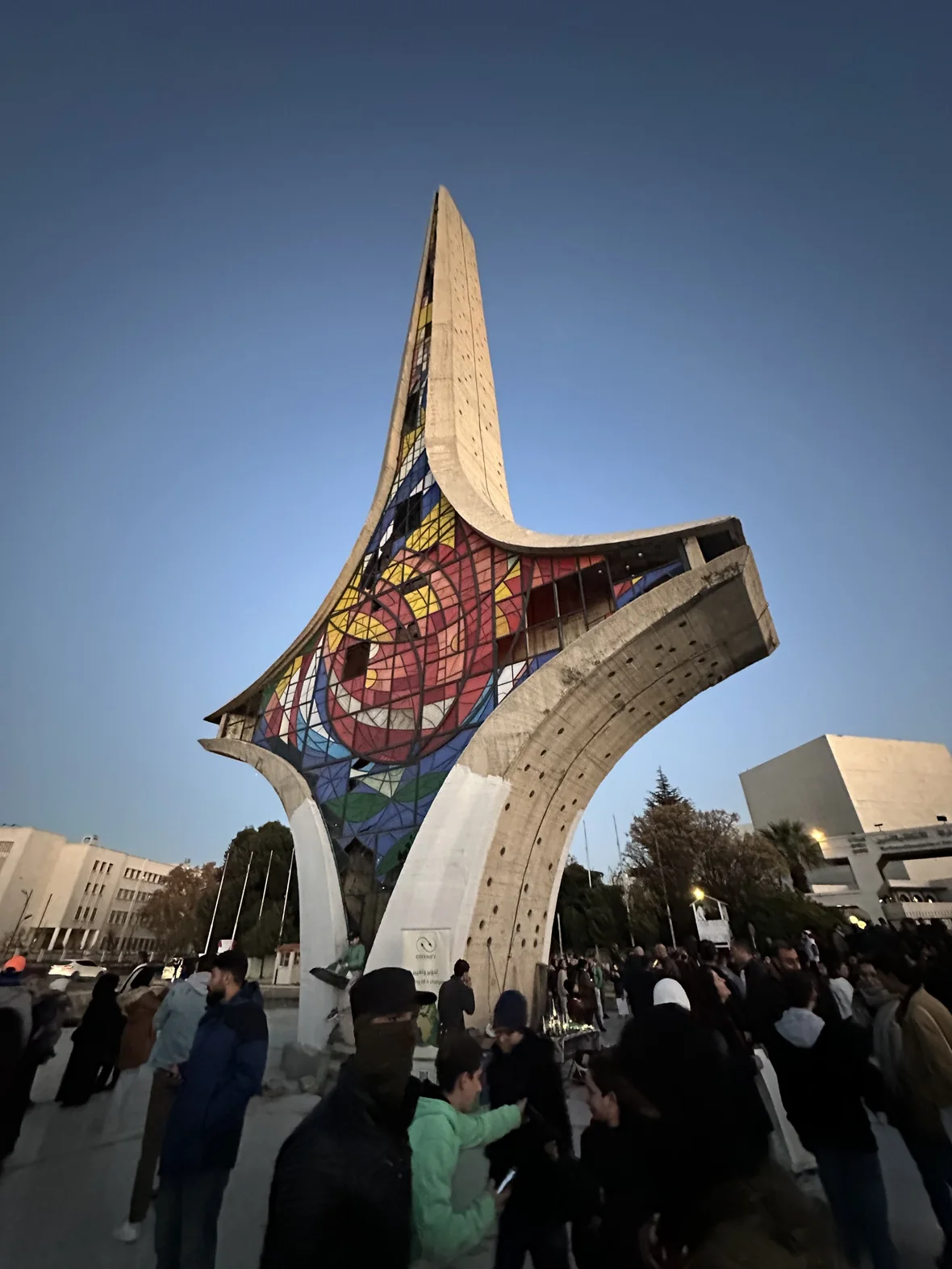
The rose is among the city’s most enduring cultural motifs. Fire introduces another kind of energy: warmth, transformation and force. The work does not depict either symbol literally. Instead, Antabi allows colours and intersecting lines to carry the idea. Seen from different angles and under changing daylight, the shapes appear to shift.
The Sword’s most memorable feature is not just its height. It is the way an abstract artwork became part of how an entire city recognises itself.
The collaboration also reflects a wider Damascus tradition of decorative glasswork, here reinterpreted on the scale of a monumental public artwork. The design occupies the structure’s two large faces, allowing people approaching from different directions to encounter the same striking composition.
Who was Ehsan Antabi?
Ehsan Antabi (also written Ihsan Antabi or Ihsan Intabi) was born in Aleppo in 1945. He studied fine arts at Damascus University and later continued his education in Paris. He developed a career that moved between painting, graphic design, photography and visual communication.
His posters, book covers and visual identities reached audiences beyond the gallery. His work was exhibited internationally, including at major graphic-arts exhibitions and biennials. He also helped shape art education in Syria, serving as a founder and dean of the Faculty of Arts at the Arab International University.
His paintings explored acrylic, watercolour and charcoal. Some drew on landscapes, the sea and the movement of light; others approached more difficult questions about memory, humanity and what images can communicate. In his 2017 solo exhibition, Seen (شوهد), he turned toward the experience of witnessing during Syria’s years of conflict.
That breadth matters. The artist responsible for the Damascus Sword’s stained-glass design was not simply a specialist in architectural decoration. He was someone who moved naturally between the personal scale of a painting and the public scale of a city landmark.
More than a monument: a piece of everyday Damascus
For visitors, the Damascus Sword offers a different chapter of the city’s story. Damascus is rightly celebrated for its old houses, mosques, churches, markets and centuries of architecture. But it is also a city of modern artists, designers, institutions and public spaces.
Umayyad Square, with the Damascus Opera House nearby, is a good place to see that side of the capital. The Sword is not a remote archaeological site. It sits in the middle of a living urban landscape, surrounded by movement, people and the rhythms of the city.
A familiar landmark, a shared memory
On a guided visit, Umayyad Square is more than a place to stop for a photograph. Looking closely at the Sword introduces visitors to the artists and modern history behind one of Damascus’s best-known landmarks. It is also a chance to experience the city together.
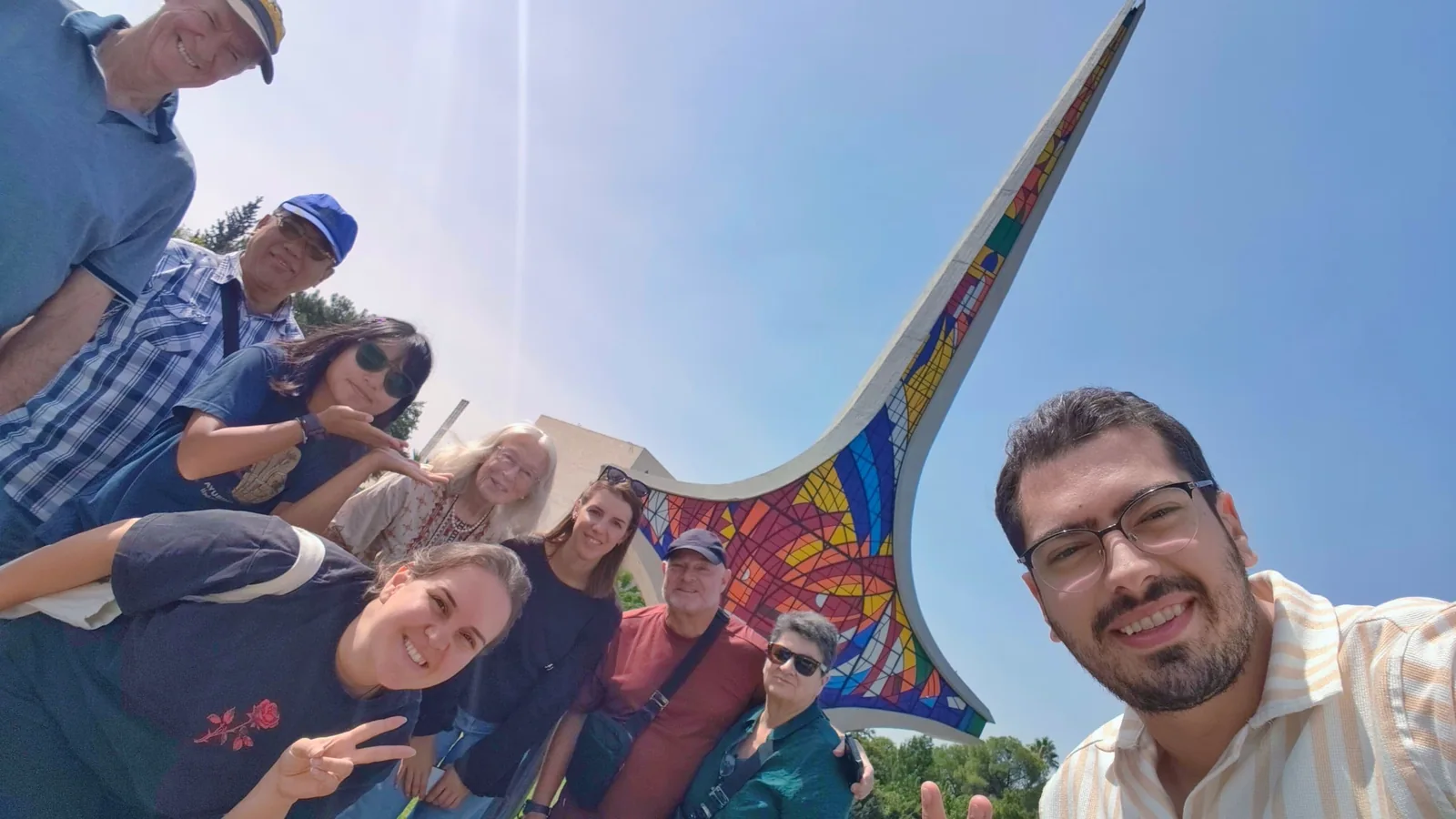
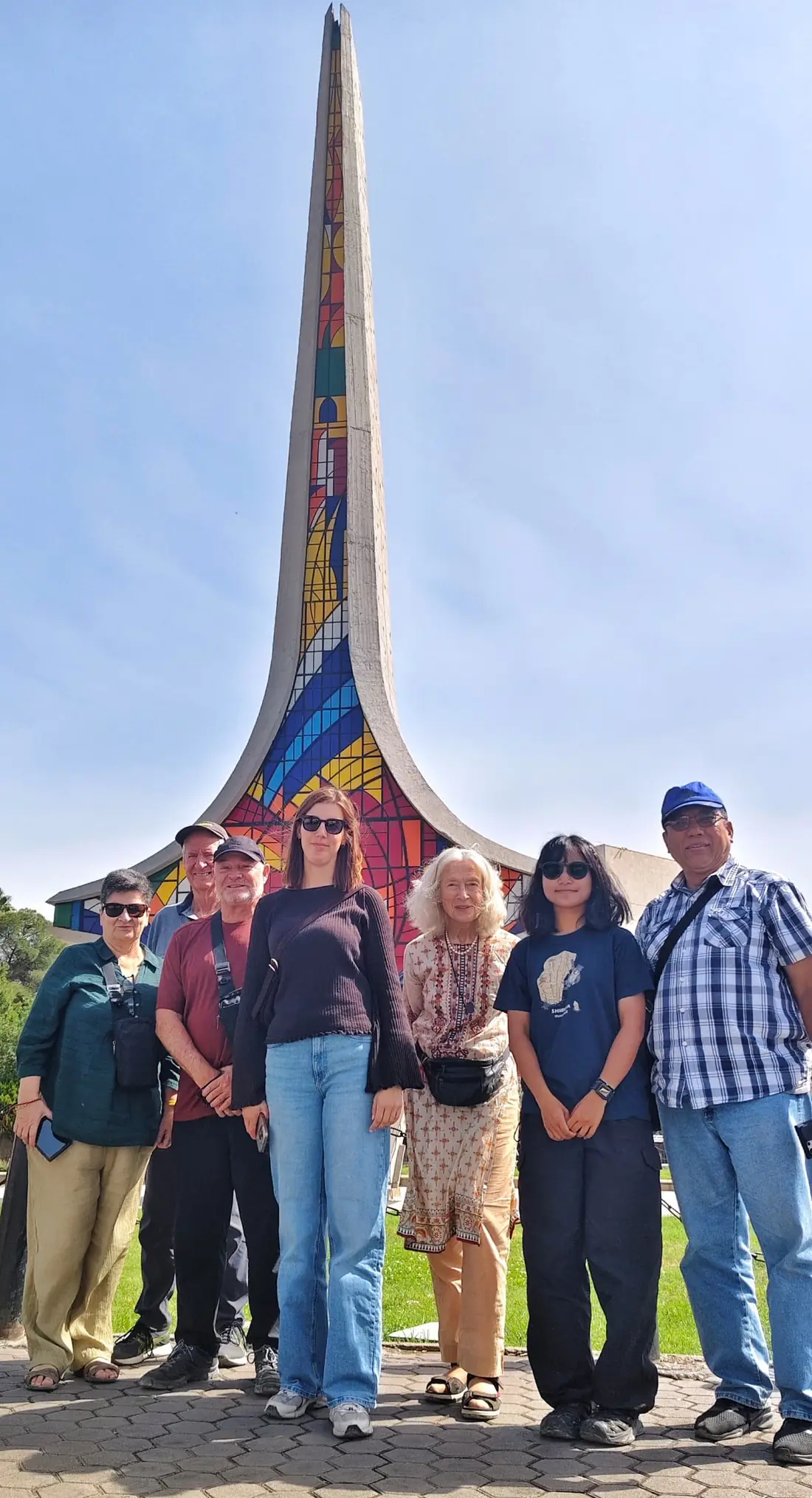
The symbol has travelled far beyond the square itself. Miniature versions appear in decorative displays and souvenir shops, carrying its unusual outline and bright geometric pattern into homes and everyday objects. That is one measure of a successful public design: people recognise it even when it is reduced to a small silhouette.
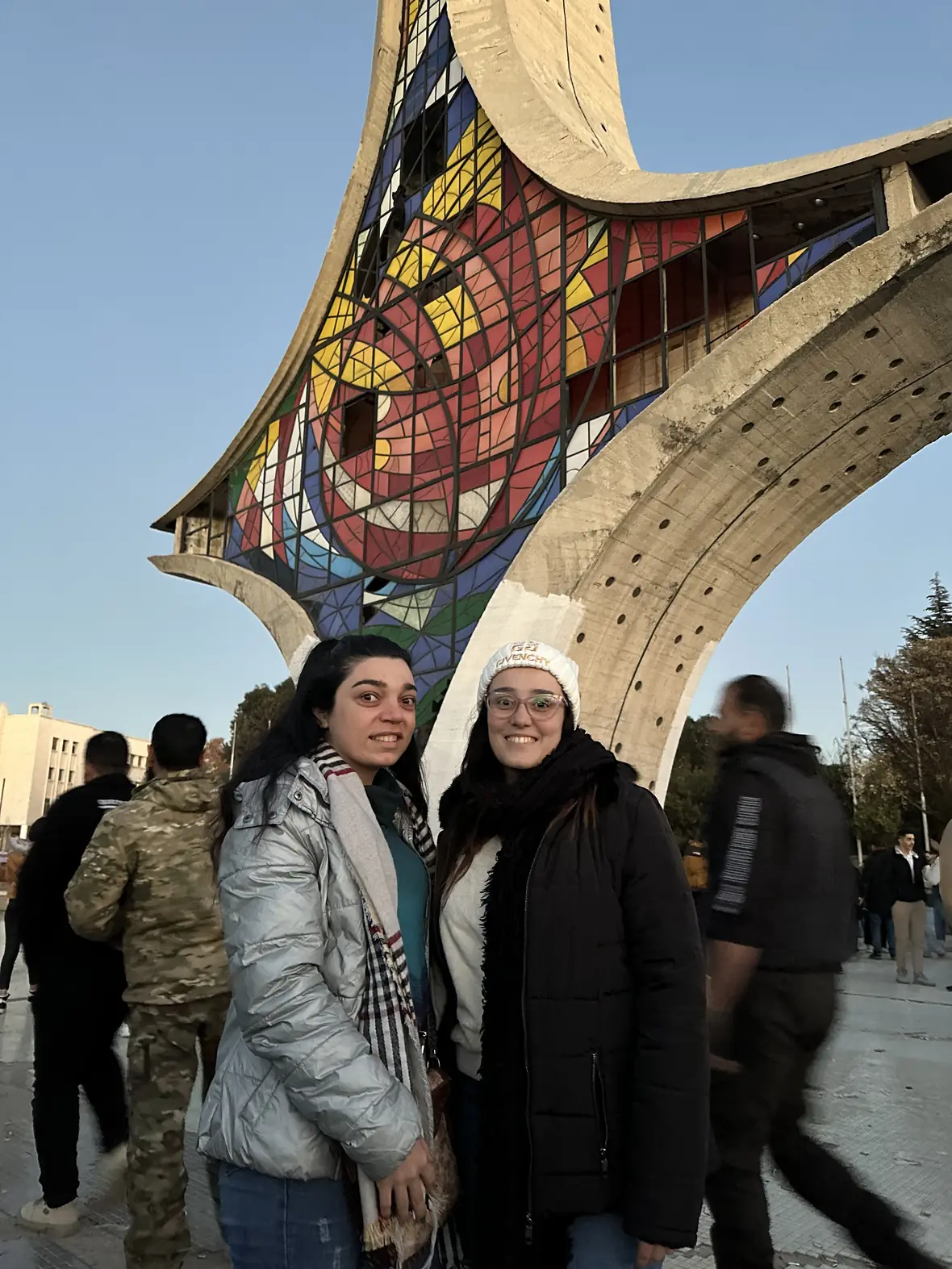
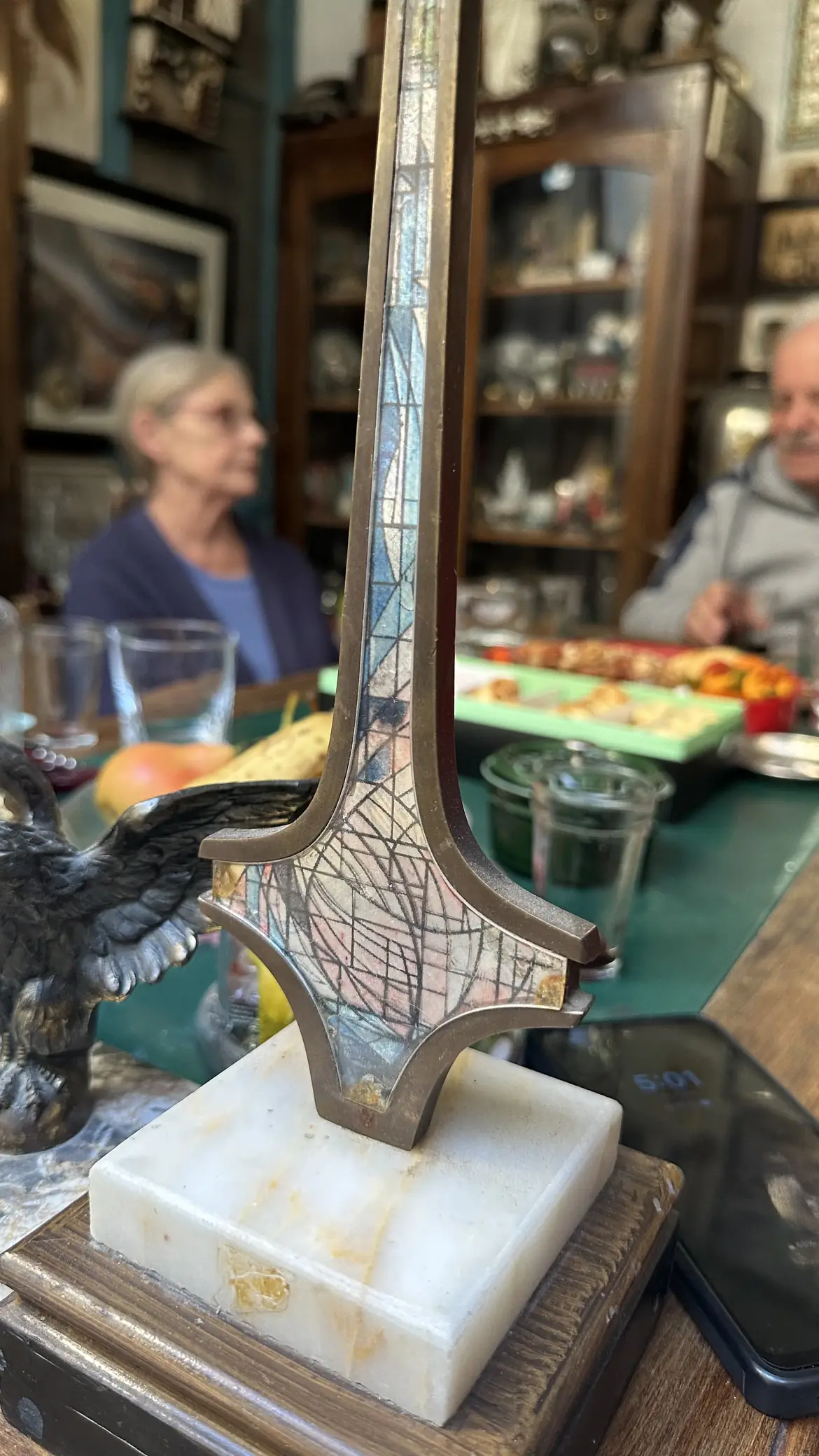
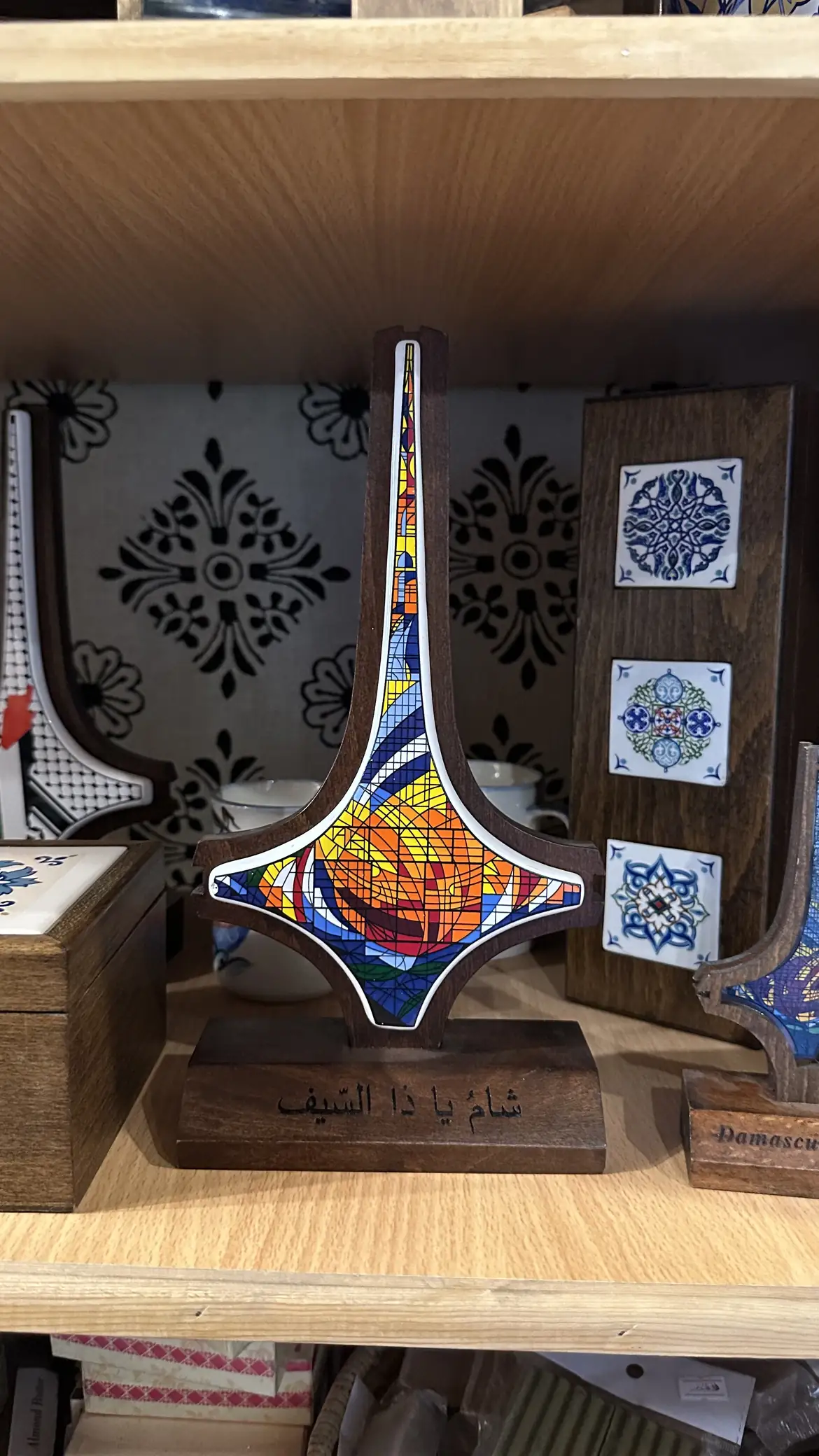
Visiting tip: The monument stands at Umayyad Square, a busy traffic area. It is best appreciated from a safe public viewpoint rather than attempting to cross active road lanes for a photograph. The colours are particularly interesting as the light changes through the day.
A note on conservation: The monument has been repaired over the years. Restoration work in 2025 also prompted public discussion about replacement materials. The 1998 date in this article refers to Antabi’s artistic redesign, not a claim that every panel now visible is part of the original installation.
The stories behind the places we pass every day
It is easy to pass a landmark hundreds of times without knowing who imagined it. Once you learn about Antabi, the Sword stops being only a monument in a roundabout. It becomes a story about Syrian creativity, collaboration and the way art quietly becomes part of a city’s identity.
And that is part of the pleasure of exploring Damascus: even its most familiar landmarks have stories hiding in plain sight. For more places to explore, see our guide to the best things to do in Damascus.