
Private day trip from Damascus · Ancient Tadmor
Palmyra: The Desert Jewel
UNESCO World Heritage Site · Inscribed in 1980
Walk among the monumental columns of a legendary caravan city, follow the story of Queen Zenobia and discover the remarkable beauty of Syria’s desert.
Plan my Palmyra tripExplore the journeyOne of the world’s remarkable ancient cities
A city of columns, caravans and a queen who challenged Rome.
Palmyra is not just a collection of spectacular ruins. It is the story of an oasis city that became rich by connecting distant cultures — where merchants moved goods across the desert, public buildings rose in golden stone and Queen Zenobia briefly ruled an empire that rivalled Rome.
Inscribed on the UNESCO World Heritage List in 1980, Palmyra stands among Syria’s most important archaeological treasures. Its monumental colonnades, temples, civic spaces and funerary landscape tell the story of a city where Greco-Roman architecture met local traditions of the Near East. The surrounding desert is essential to its beauty: it is difficult to imagine the ancient city without the open horizon beyond it.
Our private day trip from Damascus is built for travellers who want to understand Palmyra, not simply check it off a list. Explore the accessible archaeological areas with a Syrian guide, learn what remains and why it matters, pause for beautiful views and, where available, enjoy a taste of local desert hospitality.
Discover why Palmyra’s architecture and cultural crossroads earned global recognition.
Follow the third-century power struggle that took a desert city into conflict with Rome.
Ancient columns, desert light and a setting that makes history feel remarkably close.
The desert city at a glance
The places, the stories and the extraordinary scale.

Your suggested full-day experience
From Damascus to Palmyra — a journey into the ancient desert.
The schedule is deliberately flexible: the road, site access, conservation work, weather and local services may affect which locations are open. We confirm the route and any required arrangements for your chosen date. This is a long but rewarding day, with several hours of travel each way.
01 · Early morning · Departure from Damascus
The road east — from the capital into the Syrian desert
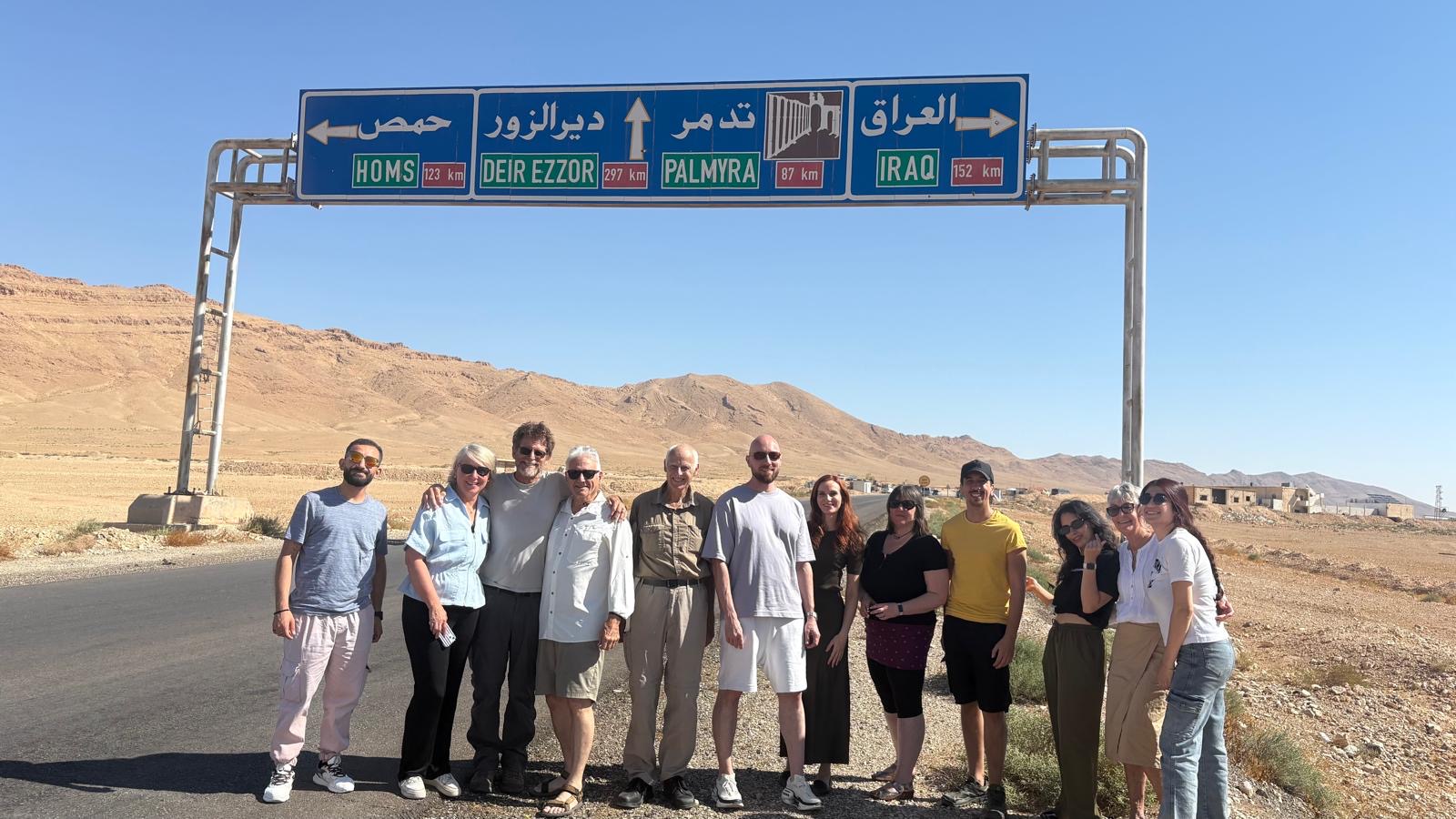
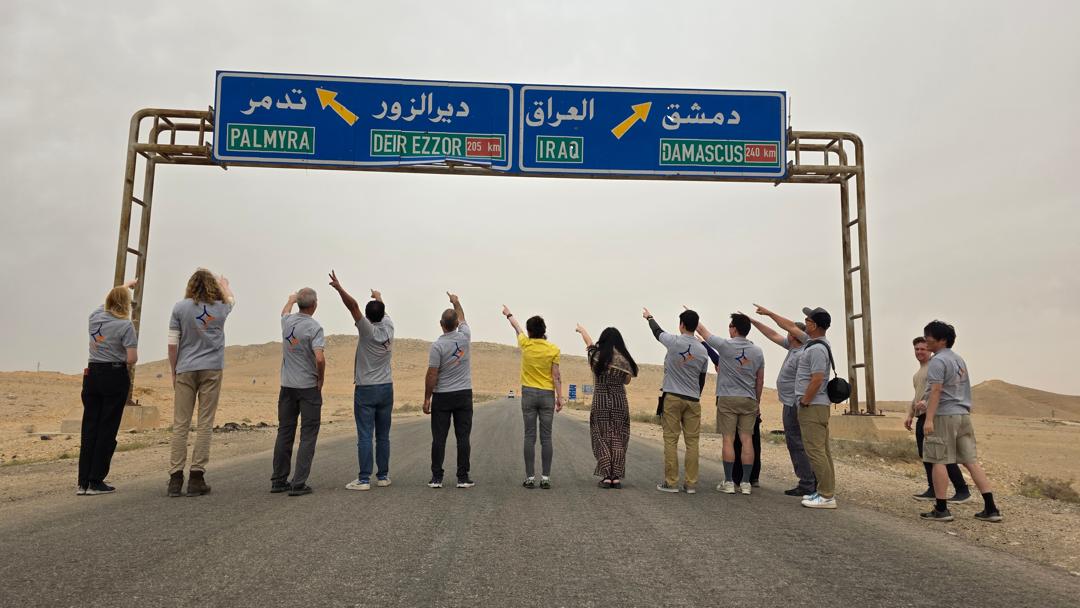
Leave Damascus early by private vehicle, exchanging the city’s busy streets for the sweeping horizons of central Syria. The journey toward Palmyra is part of the experience: villages gradually give way to pale hills, open plains and the immense landscape that once separated thriving cities and caravan stations.
Your Syrian guide introduces the story of the old desert routes and how Palmyra, known locally as Tadmor, grew wealthy by connecting long-distance merchants with markets across the region. The road itself helps explain the city’s extraordinary success. It is not difficult to imagine why a reliable water source in this landscape could become so important.
This is a substantial day trip. Expect roughly three to four hours of driving each way, depending on the route, traffic and checks along the road. We plan comfort stops where possible and set out with enough water and provisions for the visit.
02 · Late morning · First view of Palmyra
The desert oasis that became a world-famous city
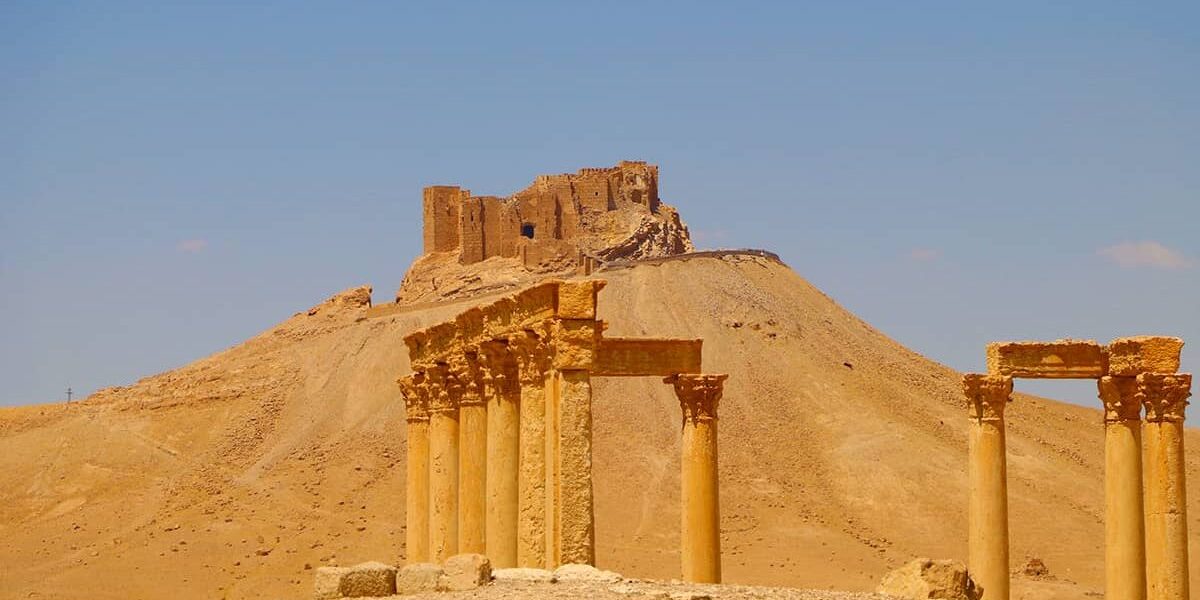
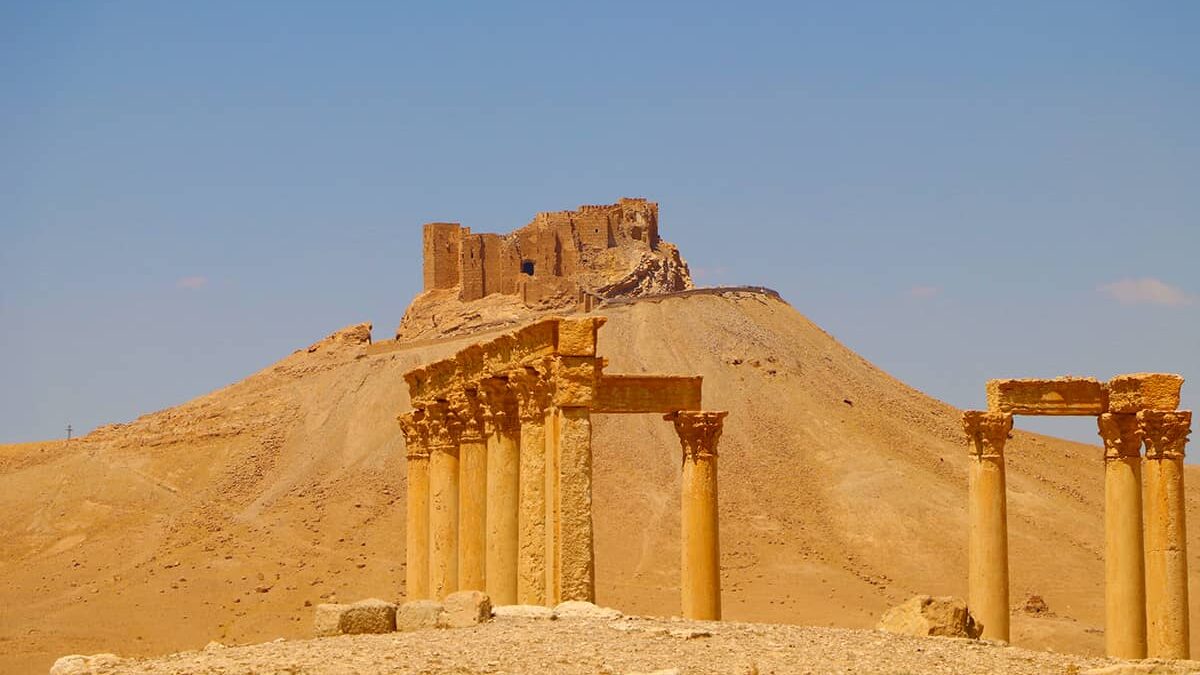
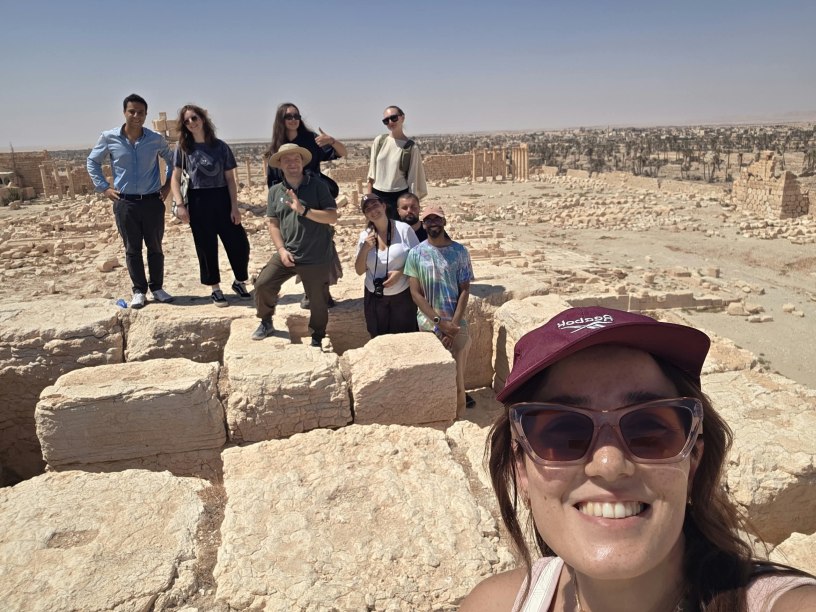
Palmyra appears almost unexpectedly, with honey-coloured columns and scattered monuments rising from the desert floor against distant hills. Long before it was a UNESCO World Heritage Site, the oasis sustained an important settlement that developed into a prosperous caravan city.
From a suitable accessible viewpoint, take in the extraordinary scale of the archaeological landscape. Your guide explains how geography, water, commerce and diplomacy helped Palmyra connect the Mediterranean world with Arabia, Mesopotamia and trade networks farther east. The city’s identity was neither simply Roman nor simply eastern; it developed a remarkably original culture of its own.
We use the first stop to orient ourselves before walking into the parts of the site currently open for visitors. With a place as extensive as Palmyra, understanding the layout makes every later monument more meaningful.

03 · Late morning · Great Colonnade
Walk the streets where the ancient world met
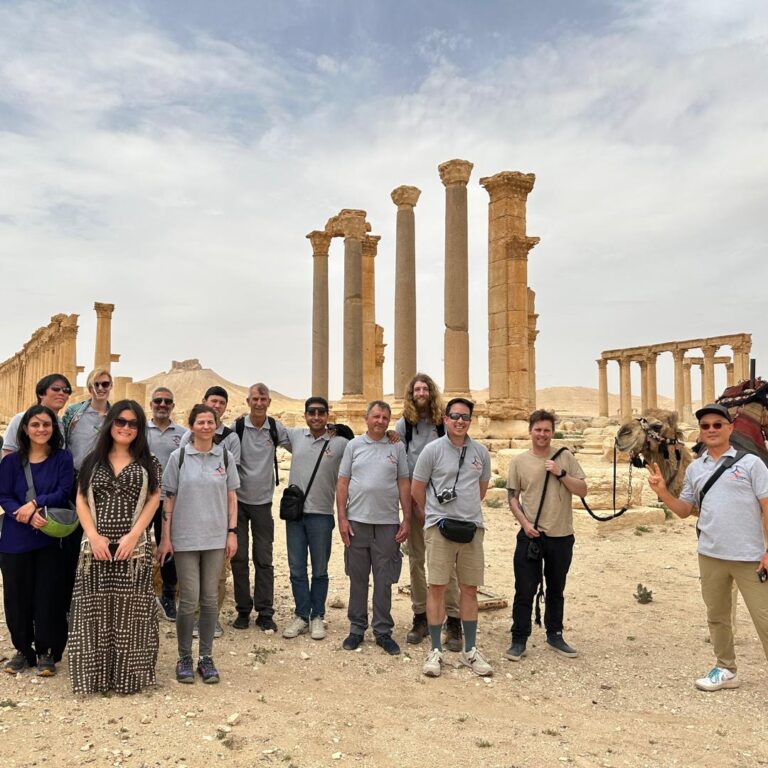
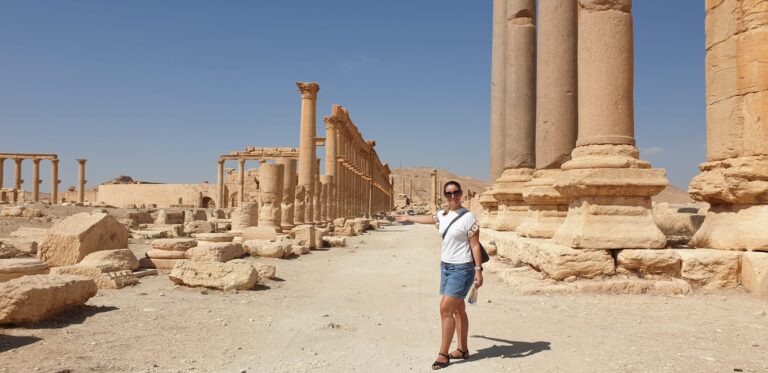
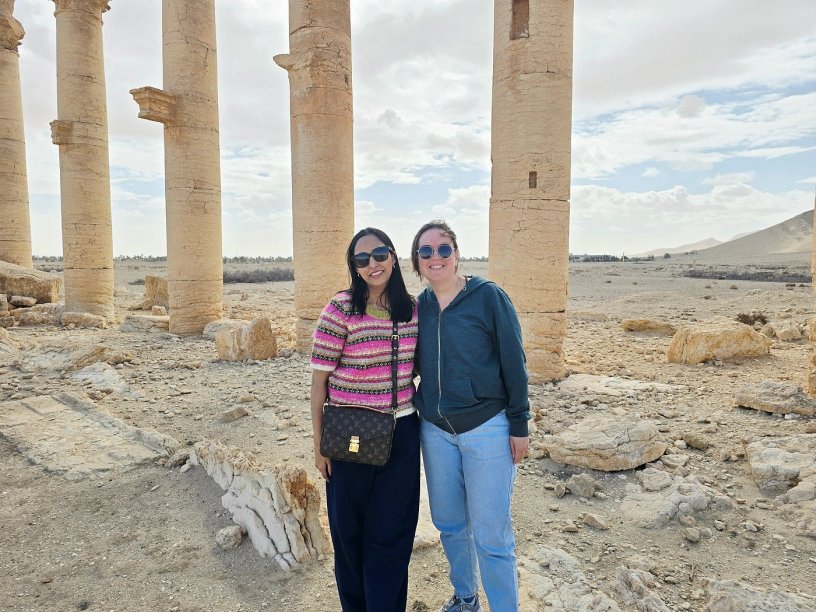
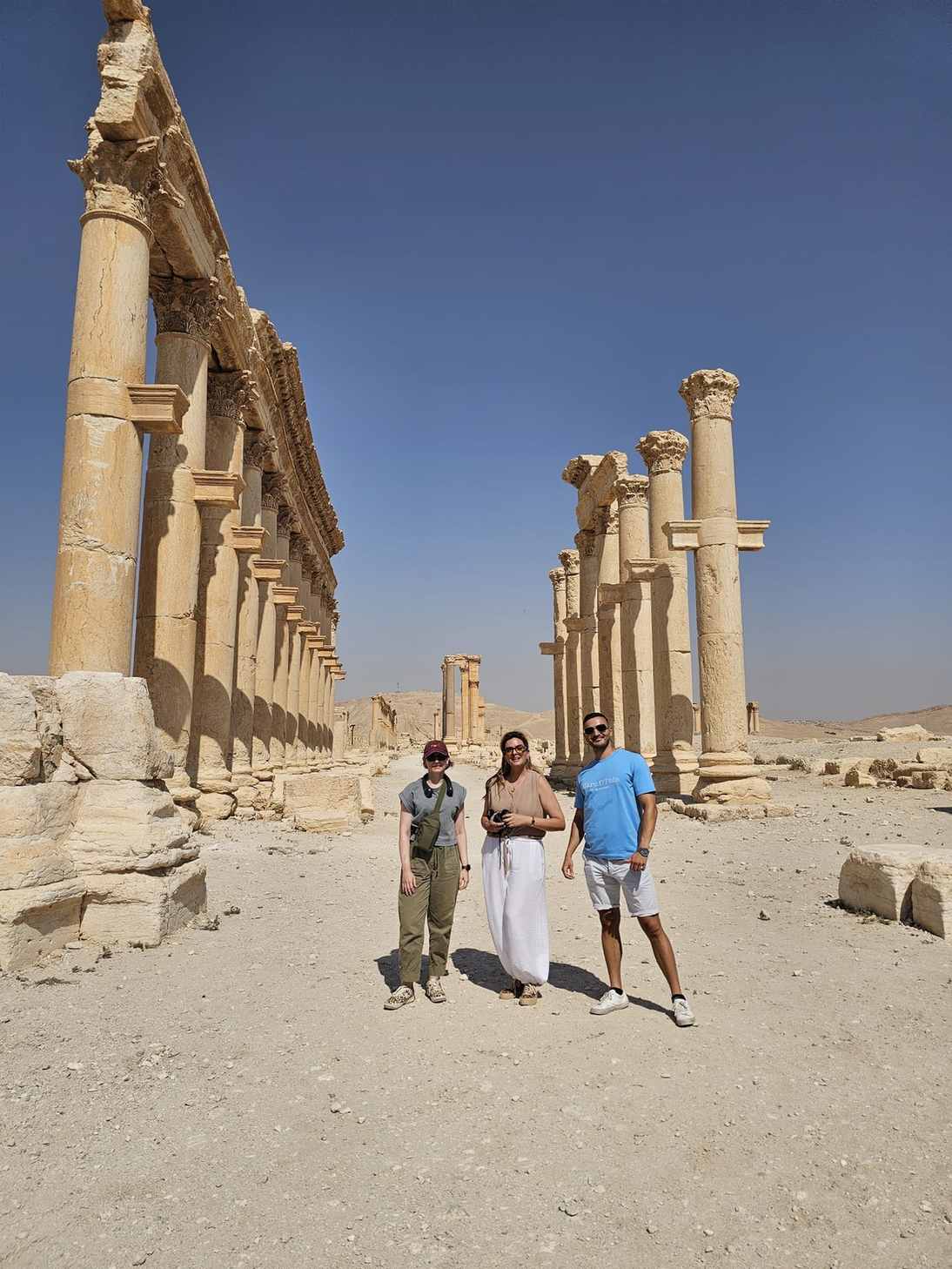
One of Palmyra’s unforgettable sights is its Great Colonnade, the monumental street that gave the city its spectacular ceremonial heart. Walk among surviving stretches of columns and architectural remains, imagining how statues, shops, processions and daily conversations once animated the avenue.
Look closely at the columns and the spaces around them. Palmyra absorbed ideas from the Greek and Roman worlds while developing distinctly local styles of decoration and urban life. Inscriptions in Greek and Palmyrene Aramaic reveal a city of multilingual merchants, patrons and civic institutions. Your guide helps you read the ruins as evidence of how people actually lived.
The scene is beautiful precisely because the monuments stand in their original desert setting. We follow designated, currently accessible routes rather than moving through unstable or closed archaeological areas.
04 · Midday · Public life & the Roman-era city
The theatre, agora and the architecture of everyday life
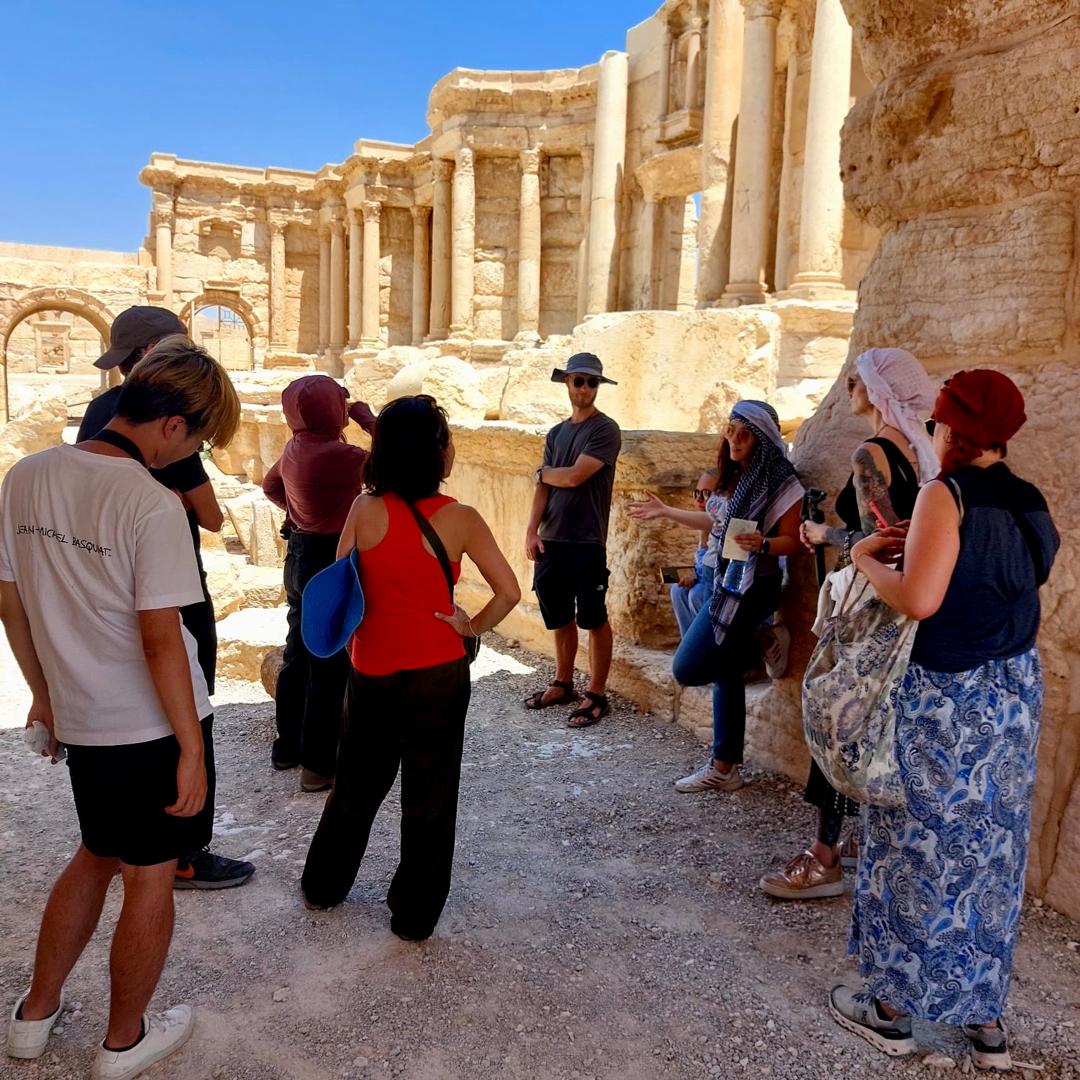
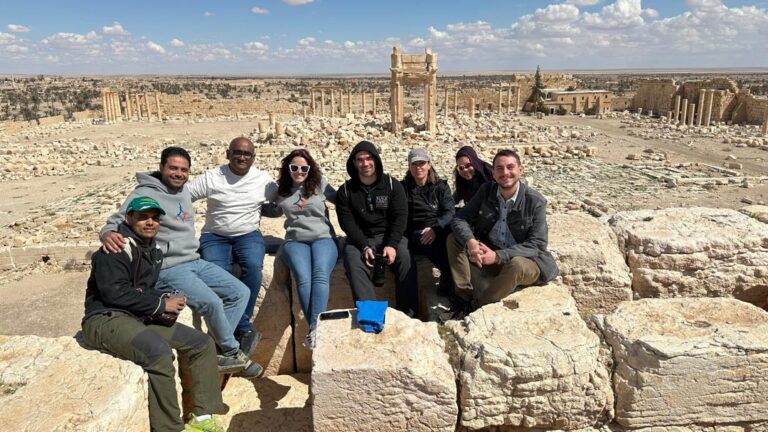
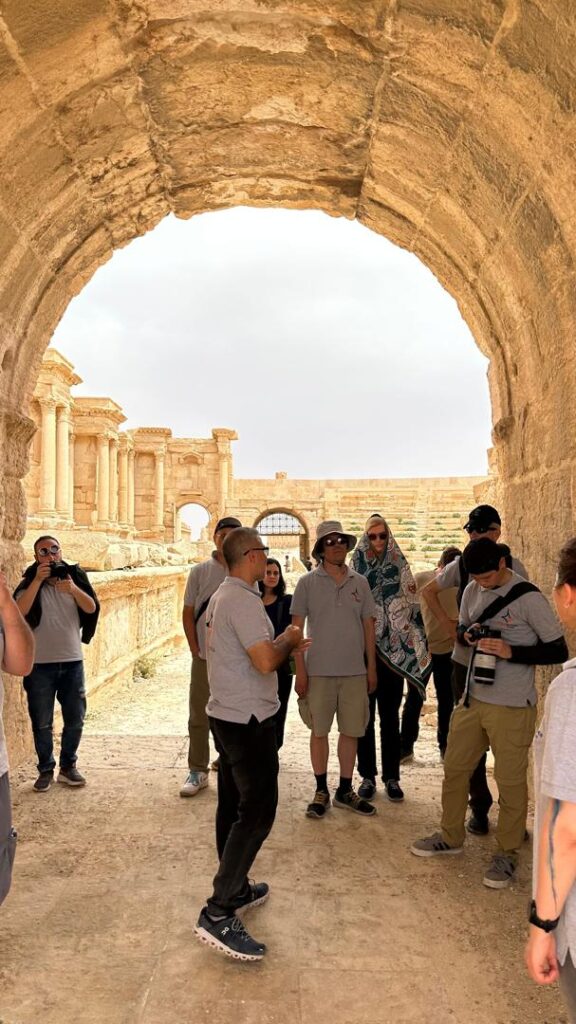
Palmyra was famous for its temples, but the city also had places where people gathered for performances, discussions and commerce. As access allows, explore the archaeological area around its Roman theatre and the remains of civic spaces that once supported a sophisticated urban society.
Your guide explains how public buildings, streets and marketplaces were arranged, what merchants might have sold, and how benefactors helped fund impressive monuments. The theatre, the agora and nearby architectural remains reveal the civic personality of a city celebrated for its trade routes.
Parts of these ancient structures have suffered damage and some areas may be closed for conservation or safety work. Where a particular monument cannot be approached, we use an authorised viewpoint and explain its role in the city without treating a closed area as a missed attraction.
05 · Early afternoon · Temple of Bel area
The Temple of Bel — understanding what remains
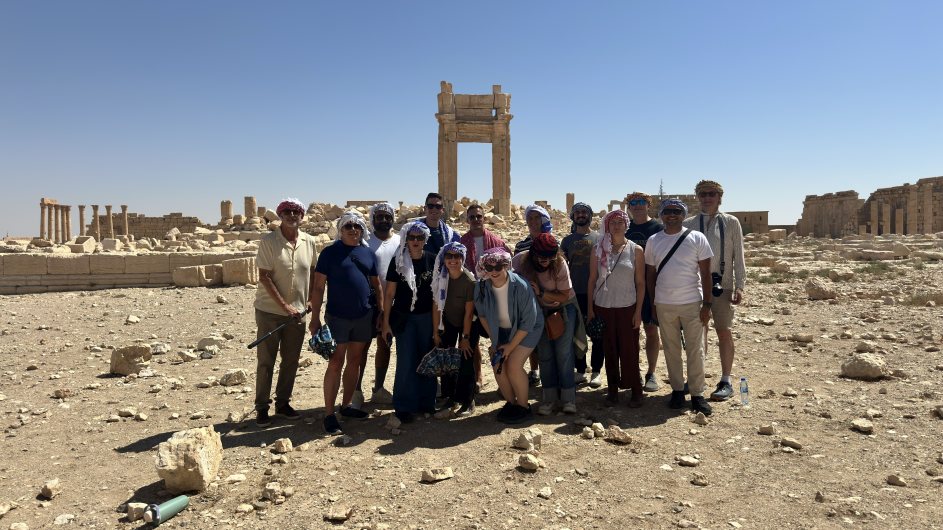
The Temple of Bel was once the heart of Palmyra’s religious life, a remarkable sanctuary where local beliefs and the artistic language of the Roman world came together. Its vast courtyard and richly decorated temple expressed the city’s prosperity and its distinctive spiritual traditions.
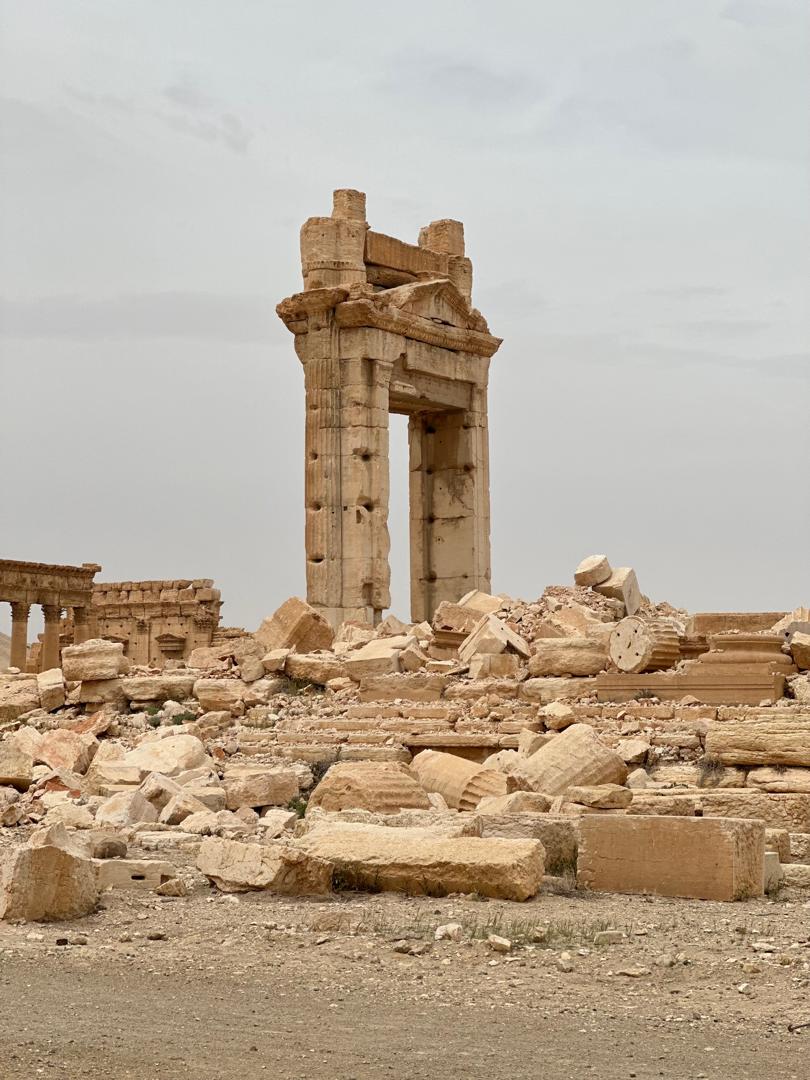
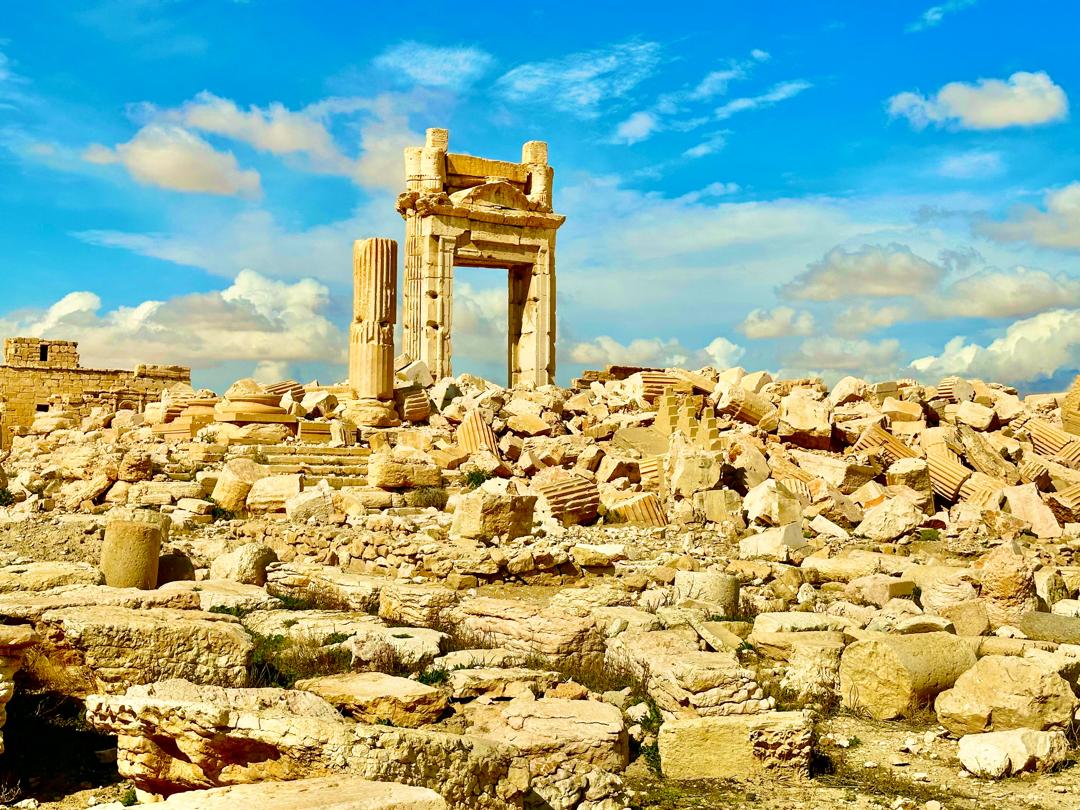
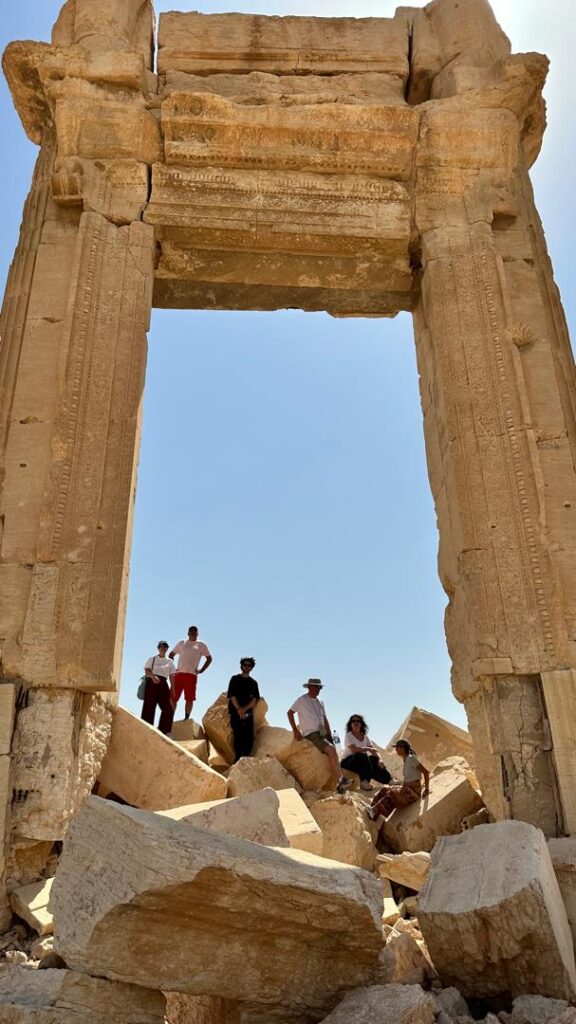
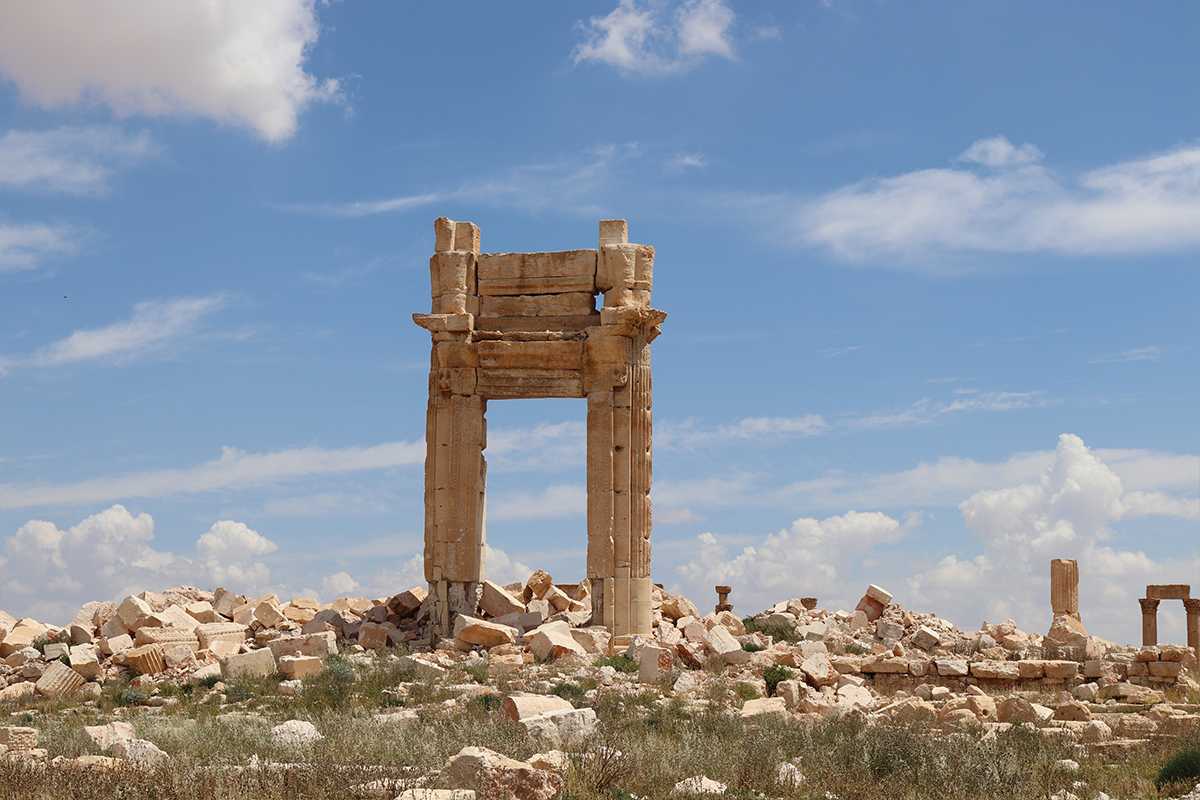
The main temple building was deliberately destroyed in 2015. Today, the surviving monumental gateway, foundations and scattered architectural fragments still tell a powerful story. Your guide explains how the sanctuary once looked, which features have survived, and why careful conservation matters for the generations who will inherit this heritage.
We visit or view the Temple of Bel area only where permitted. Photographs of Palmyra taken before 2015 may show monuments that are no longer intact; our tour makes this distinction clear rather than promising a reconstruction of the past.
06 · Early afternoon · Zenobia’s Palmyra
A queen, a trade empire and a city that challenged Rome
The most famous name associated with Palmyra is Queen Zenobia. In the third century, she ruled during a dramatic period when Palmyrene power extended across much of the Roman East. The city that had prospered through trade briefly became the centre of a political challenge to the Roman Empire.
Your guide brings this chapter to life through stories of Zenobia, her predecessor Odaenathus and Emperor Aurelian, whose campaign in 272 CE ended Palmyra’s bid for regional supremacy. Rather than repeating every legend as historical fact, we explore what contemporary evidence reveals and where later storytellers have added colour.
Throughout the walk, take time for photos and questions. Palmyra’s history is not a single episode of ruins and destruction; it is a remarkable story of commerce, culture, creativity and ambition in the heart of the Syrian desert.
07 · Afternoon · Desert hospitality
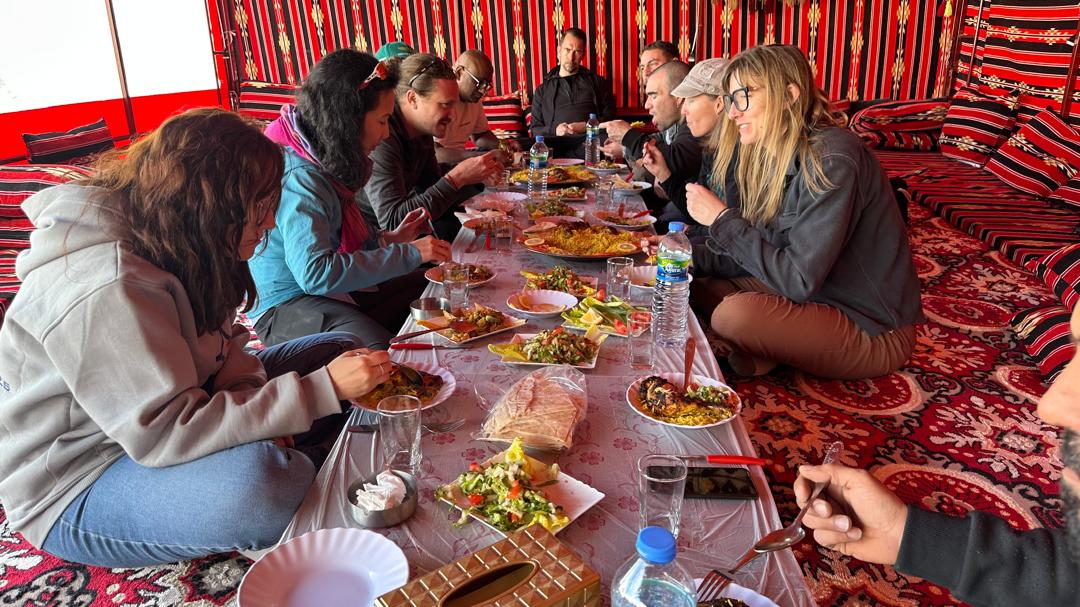
A local welcome — a meal or refreshments in the Palmyra area
Exploring Palmyra is not only about looking at stones. The surrounding desert also has living traditions of hospitality, and a local encounter can be a memorable contrast to the grandeur of the ruins.
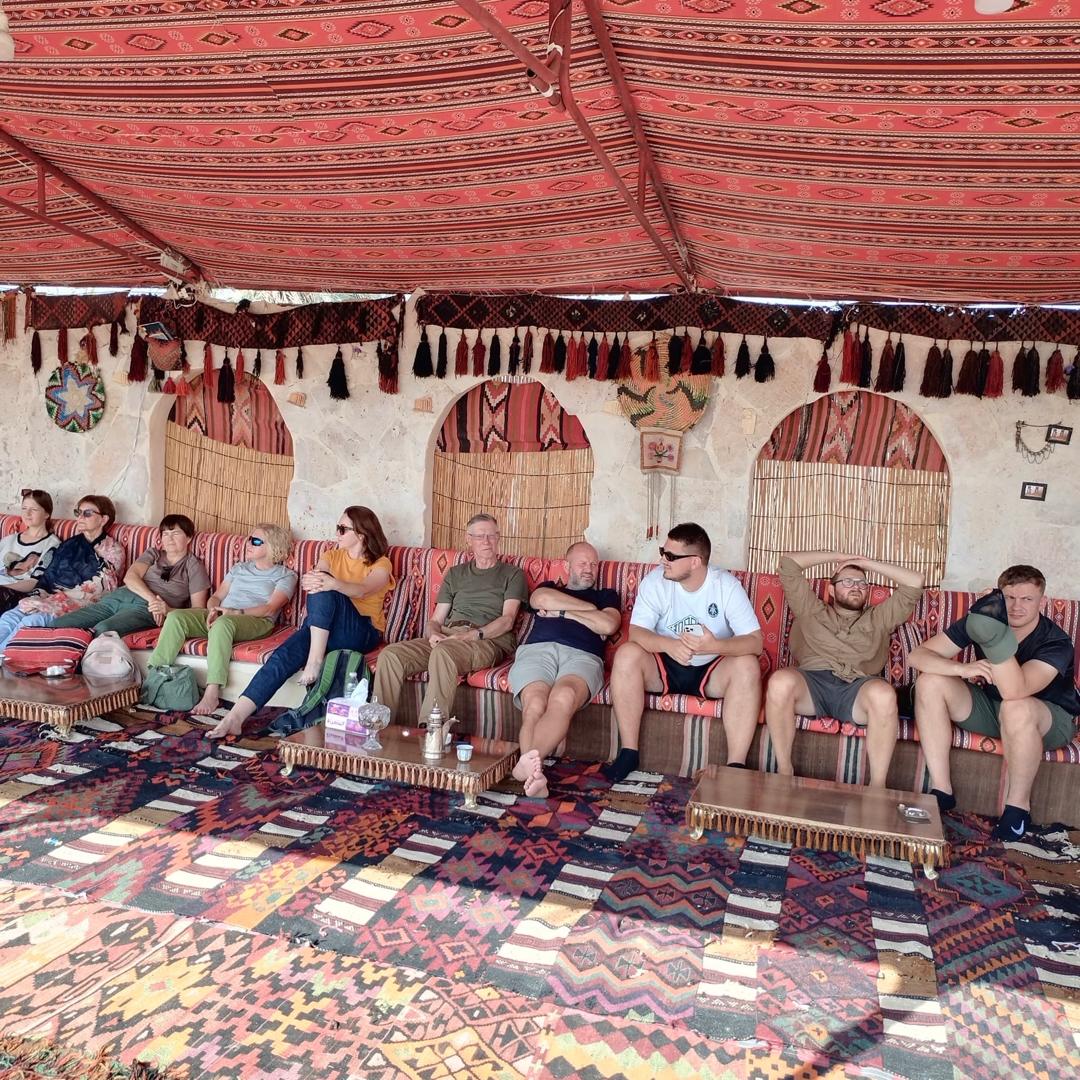
When suitable arrangements are available, we can include a simple meal or refreshments in a Bedouin-style tent or another locally organised setting. This provides a welcome chance to rest, taste Syrian food and connect your experience of ancient caravan hospitality with the people who live in the region today.
Such arrangements are optional and depend on current providers, road conditions and your chosen programme. The tour does not promise a particular meal or private gathering unless it has been confirmed in advance. We carry water and can plan a practical alternative if local services are limited.
08 · Late afternoon · Final views & drive to Damascus
One last look at the columns, then the journey home
Before leaving, enjoy one final perspective on Palmyra’s monumental landscape. The afternoon light can bring out remarkable colours in the stone and surrounding hills. If the route and current conditions permit, we will stop at a suitable viewpoint for a last photograph of this extraordinary UNESCO city.
Your guide connects the city’s distant past with the present: a place that brought different cultures together, suffered serious damage and remains important to Syrians and to world heritage. We keep the visit thoughtful and respectful, with conservation and visitor access always taking priority over an ambitious list of stops.
Return privately to Damascus, generally in the evening, with drop-off at your hotel or another agreed location. Those who want more time at Palmyra can ask us about an extended journey rather than rushing a long day trip.
More moments from the journey
Palmyra through our lens.
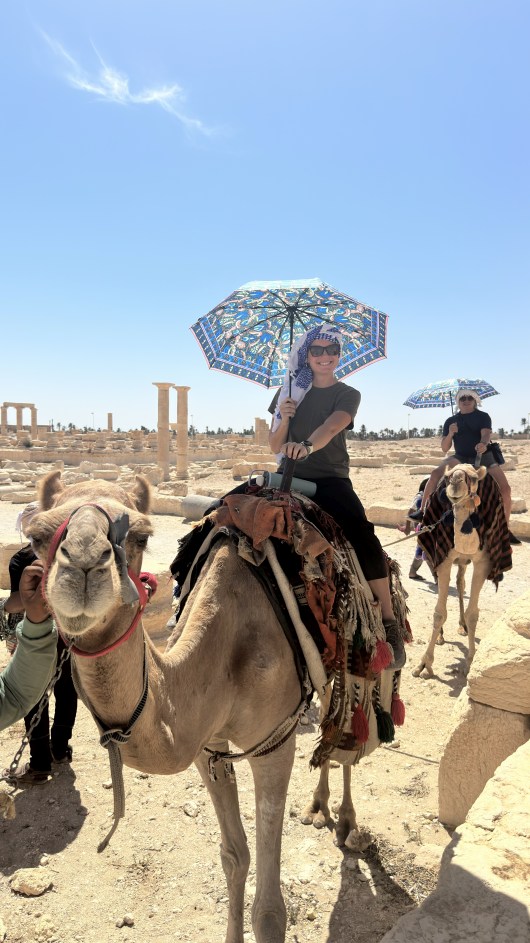
From ancient stonework to quiet moments with local people, the beauty of Palmyra reveals itself in details as much as in its famous panoramas.
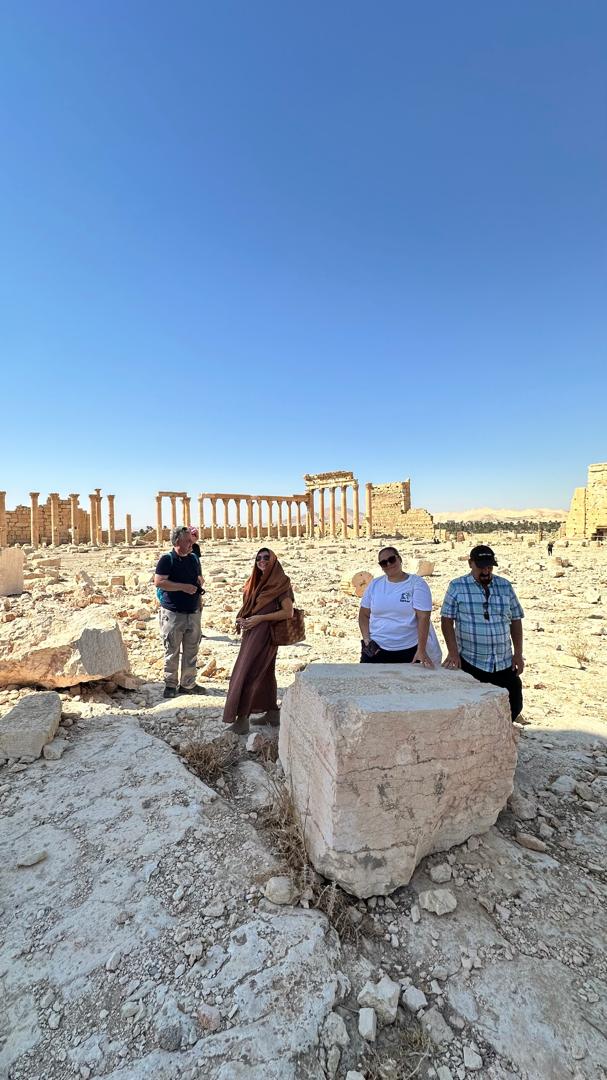
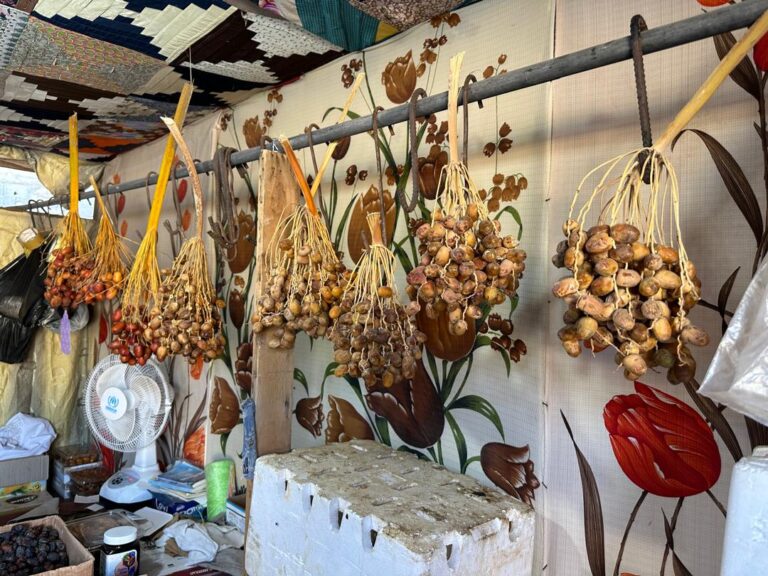
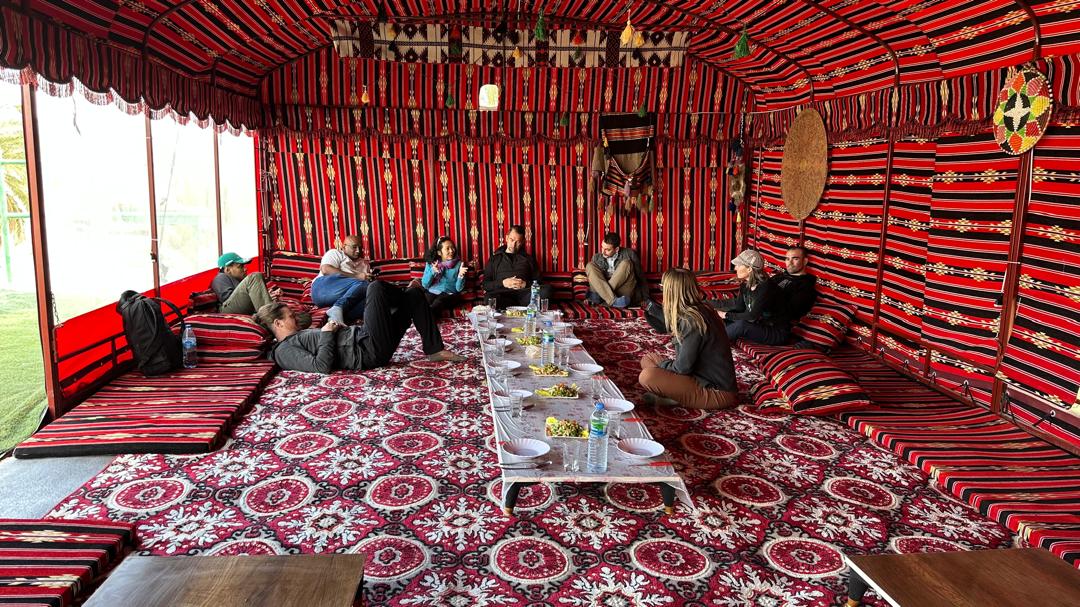
For more about this destination, read Palmyra: The Desert Jewel That Challenged an Empire and Temple of Bel: What Still Remains.
Plan your visit
A private desert day, thoughtfully arranged.
Proposed private-tour services
- Private vehicle and driver from Damascus and return
- English-speaking Syrian guide familiar with the site
- Guided visit to permitted archaeological areas of Palmyra
- Time for desert views, photography and cultural storytelling
- Flexible pacing for your group
- Coordination of practical access arrangements before departure
Any meals, entry charges, local hosting or special arrangements are explained in your individual quotation rather than automatically included.
What to know before the trip
- Expect an early departure and approximately 11–13 hours for the full day, subject to conditions
- The drive is approximately 3–4 hours each way depending on the route and checkpoints
- Bring plenty of drinking water, sun protection and sturdy shoes
- Services, shade and facilities can be limited in the desert
- Carry your passport or agreed identification when travelling
- Follow your guide and stay within accessible, established paths
- Do not climb fragile remains or remove archaeological fragments
Palmyra’s World Heritage status and conservation information can be checked on UNESCO’s official site page.
Frequently asked questions
Before you discover Palmyra.
Can Palmyra be visited on a day trip from Damascus?
Yes, a private day trip is possible, but it is a long day. Allow roughly three to four hours of travel each way, plus time in the archaeological area. We recommend an early departure and arrange the day’s schedule around conditions.
Is Palmyra a UNESCO World Heritage Site?
Yes. The Site of Palmyra was inscribed on the UNESCO World Heritage List in 1980 for its exceptional historical and architectural significance. It has also been on the List of World Heritage in Danger since 2013 because of threats to its heritage and damage to the site.
How much of Palmyra can we see today?
Many extraordinary remains can be appreciated, including parts of the colonnaded city and other major archaeological areas. However, access differs from one part of the site to another and can change. We confirm which areas are open before the tour and do not enter closed or unsafe locations.
Can we visit the Temple of Bel and see it as it used to be?
The central Temple of Bel was deliberately destroyed in 2015. Surviving gateways and other elements of the sanctuary remain, and your guide can explain the site’s history. The visit depends on current access; historic photographs show structures that no longer stand.
Will there be lunch in a Bedouin tent?
It may be possible to arrange a local meal or refreshments in a Bedouin-style setting, but it depends on availability and the day’s route. We will confirm any such experience and its cost before travel. It is not included automatically.
Is Palmyra suitable for photographers?
Yes. The monumental structures and surrounding desert offer remarkable compositions, especially in soft morning or afternoon light. Photography must respect local rules, designated paths and any restrictions on drones, people or sensitive areas.
Can we combine Palmyra with other destinations?
We can discuss a longer private itinerary connecting Palmyra with Homs, Krak des Chevaliers or other destinations. Because of the travel time, we do not recommend packing too many sites into a single day from Damascus.
When will you confirm that the trip can operate?
Before confirming your itinerary, we review current road and archaeological access arrangements. If conditions do not allow a suitable visit, we discuss alternative dates or destinations rather than promising access we cannot deliver.
Syria tours beyond the beaten path
Step into the story of Palmyra.
Tell us your preferred date, group size and what excites you most: ancient architecture, Queen Zenobia, photography or desert hospitality. We will plan a private visit around current access arrangements and send a personalised quotation.
Request a private quoteContact Syrian Guides