
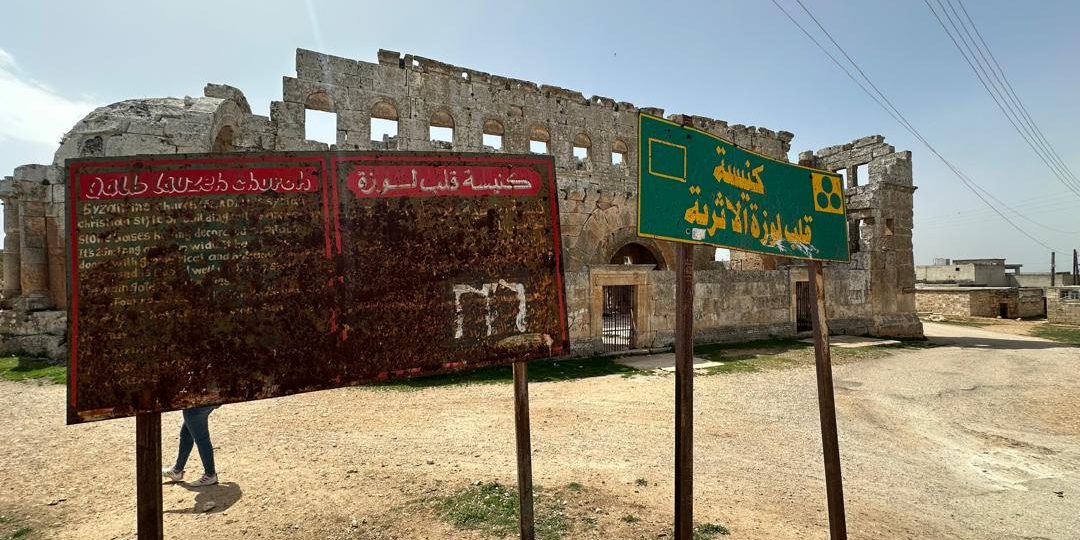
Qalb Lozeh Church: A Fifth-Century Masterpiece in Idlib
In a village of northwestern Syria, a fifth-century church still has the power to surprise visitors with an entrance that looks unexpectedly monumental.
The Church of Qalb Lozeh stands in the Limestone Massif of Idlib, where early Christian villages once supported a remarkable network of farms, churches and stone houses.
At first glance, the church’s western front is the great attraction. Two towers flank a central opening, creating a facade that feels remarkably modern in its confident composition. Yet the building dates to the fifth century, many centuries before medieval European church towers became familiar.
This is not an empty archaeological landscape removed from the present. The ancient basilica stands in or near a modern village, and the everyday life of local residents is part of what makes the visit distinctive.
Qalb Lozeh belongs to the UNESCO-listed Ancient Villages of Northern Syria, a cultural landscape recognised for the extraordinary survival of rural architecture from Late Antiquity.
At a Glance
Why a Rural Village Built an Extraordinary Church
The Limestone Massif of northwestern Syria was once a thriving rural region. Houses, oil presses, agricultural terraces and churches reveal communities capable of both sophisticated farming and ambitious stone construction.
Qalb Lozeh was part of this rural world. Its basilica was not the monument of a great imperial capital, yet its builders created an architecture that continues to impress historians.
Archaeologist Emma Loosley identifies the church as a well-preserved three-aisled basilica dating to the fifth century, with repairs and changes during later centuries.
The site’s setting matters. The church demonstrates that the spread of Christianity was deeply connected with villages and local communities, not only famous cities or imperial patrons.
UNESCO recognises the surrounding villages as evidence of the transition from the classical world toward Byzantine Christian culture.
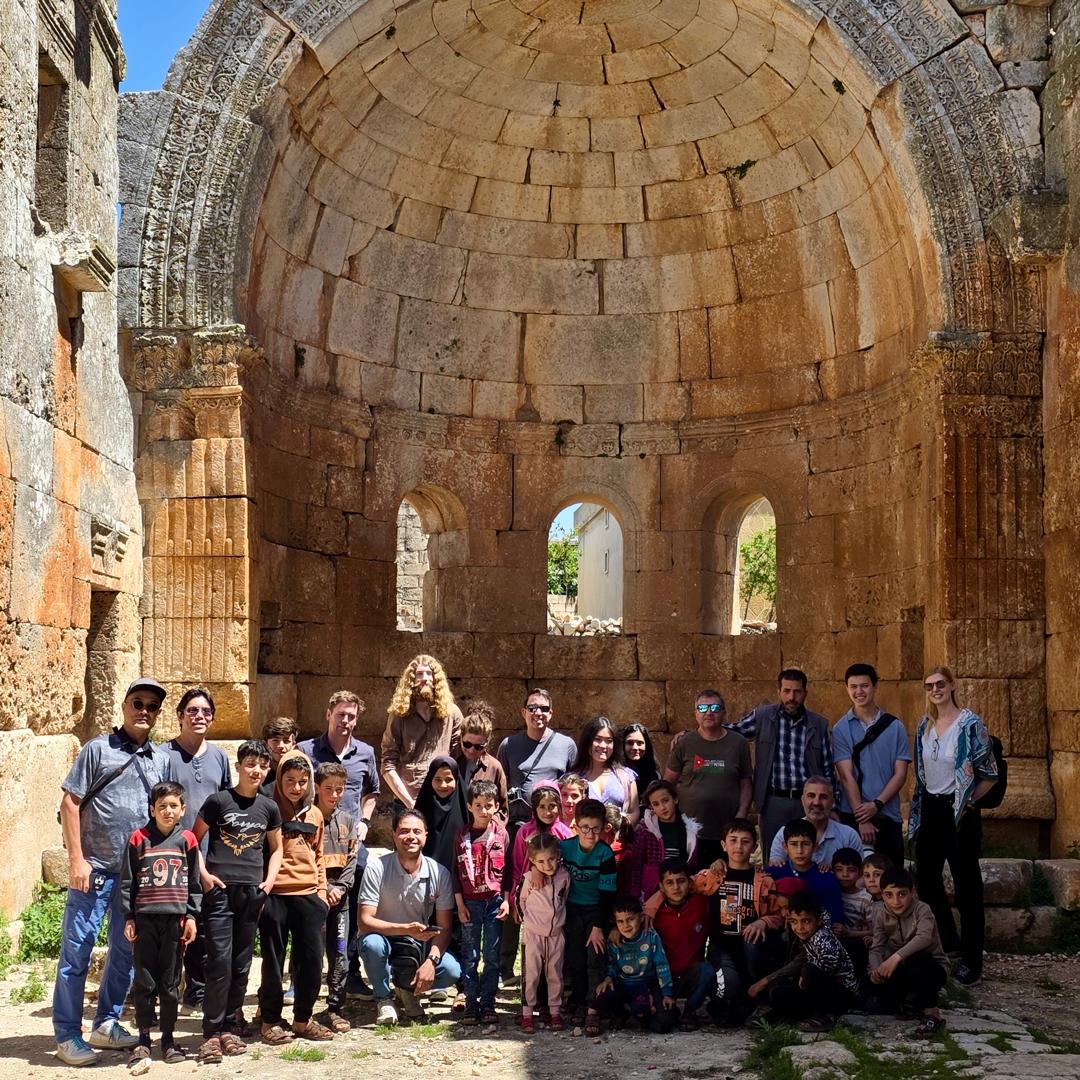
The large western facade is only part of the experience. The modern village surrounding the church continues to be a place where people live and meet.
Respect privacy when photographing nearby houses or residents. Archaeological significance does not turn someone’s home into a public exhibit.
The best visits connect the monument with its landscape: local stone, agricultural land and the other settlements that formed a network across these hills.
Two Towers, a Stone Basilica and an Ancient Worship Space
The western facade is Qalb Lozeh’s most distinctive architectural feature. Two rising towers frame an imposing entrance, while decorative details create an effect unusual for so early a rural church.
The church originally had three aisles separated by arches, with space arranged around an eastern sanctuary. The structural system helps reveal how Syrian builders developed large interior religious spaces from locally quarried stone.
Academic research also identifies evidence of a bema in the nave—a raised platform used in certain early Syriac Christian liturgical settings. Although the platform itself was removed, traces remain in the floor.
The stone arches and facade have sometimes been compared with later Romanesque churches in Europe. The resemblance is striking, but direct architectural influence should not be claimed without specific evidence of how designs travelled.
Look at the scale of the entrances and the precision of the masonry. Rural setting and architectural sophistication are not opposites.
An Ancient Church Within a Living Village
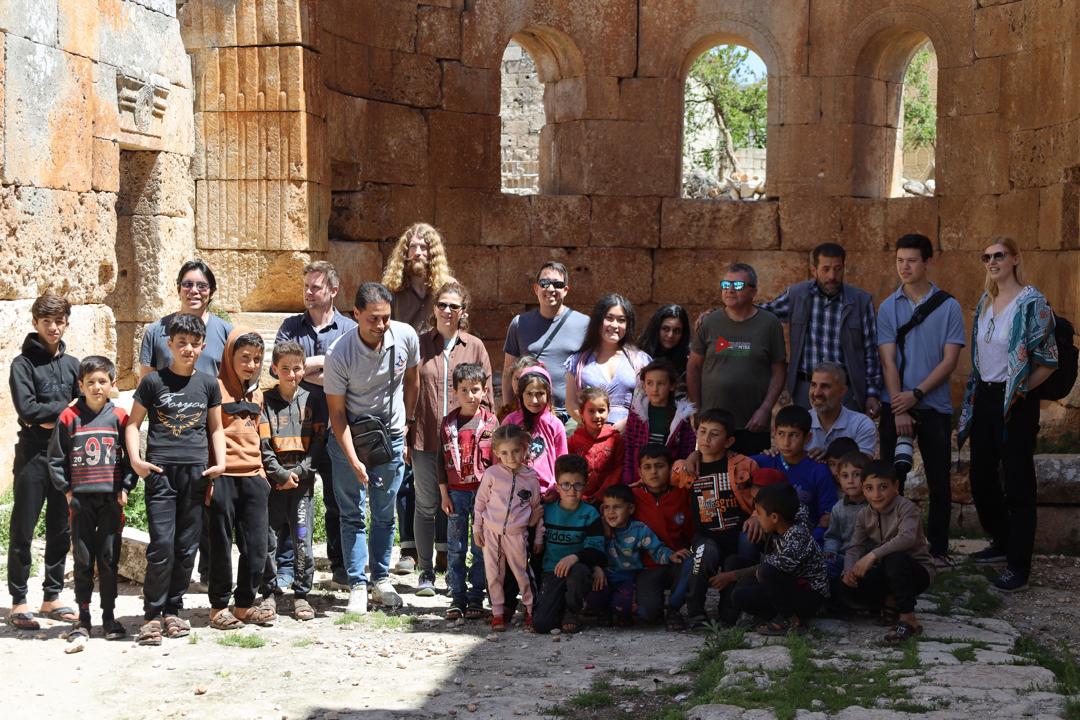
Qalb Lozeh differs from archaeological settlements where every house has been abandoned for centuries. The church still occupies a place in the landscape of a contemporary community.
The monument has undergone damage and repairs, and researchers have documented changes to parts of its fabric. Modern conservation must balance structural safety with respect for original materials.
Other buildings across the Limestone Massif survived because stone was plentiful and strong, but wars, weather and inappropriate repairs can still threaten what remains.
The village is a useful stop when exploring the larger UNESCO landscape, especially alongside Serjilla or the Monastery of Saint Simeon, provided local access is safe and permitted.
To understand the place, think not only of the people who worshipped in the fifth century, but also of the people whose lives continue in the surrounding village.
Look for the traces of the former bema in the nave and the unusual form of the western towers. The monument is as informative inside as it is photogenic outside.
How to Visit
Qalb Lozeh lies in Idlib’s Jabal al-A’la area. Regional access and the state of archaeological buildings can change, so plan it only with reliable current local guidance.
- Allow 45–75 minutes to understand the church, the facade and the surrounding village setting.
- Do not enter fenced, unstable or restricted areas; ancient walls can be less secure than they look.
- Wear practical footwear for uneven stones, steps and village tracks.
- Do not photograph private houses or residents without permission.
- Use the opportunity to learn about everyday life in the nearby modern community, without intruding.
- Check whether the church interior can be entered before travelling; access conditions may vary.
- Combine the site with other Idlib heritage places only if road and security conditions permit.
Discover Syria with guides who can explain the people and places behind the monuments.
Explore our Syria tours →One Last Thought
Qalb Lozeh is an extraordinary reminder that some of the most influential-looking buildings of Late Antiquity were built far from imperial capitals, by communities who wanted a place to gather and worship.

You might also enjoy
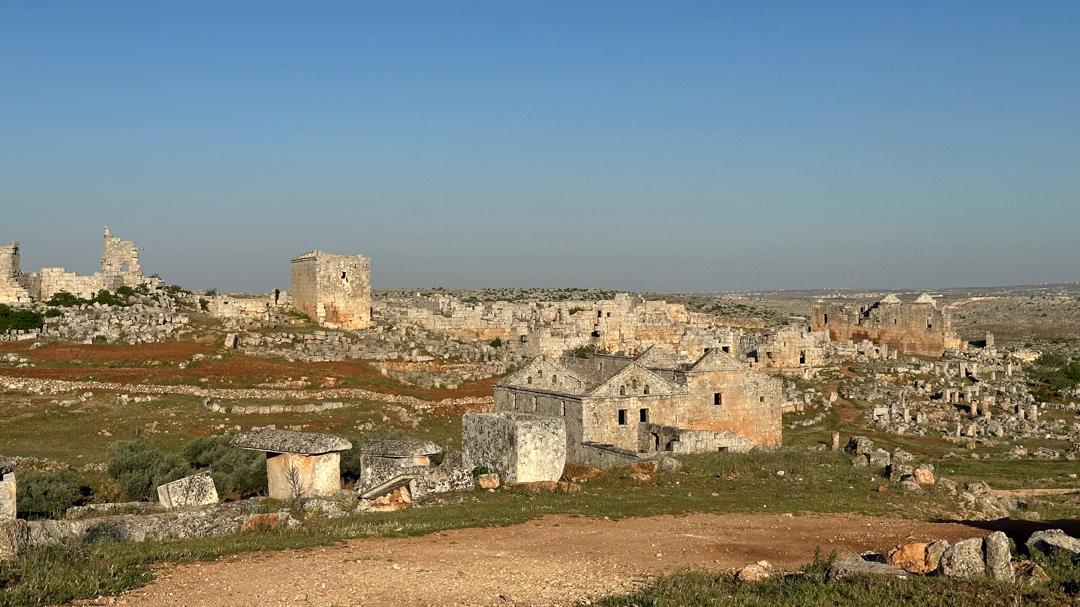 IdlibSerjilla Stone VillageRural homes and public spaces nearbyRead the story →
 MaaloulaSaint Thecla’s ConventA different Christian sanctuaryRead the story →
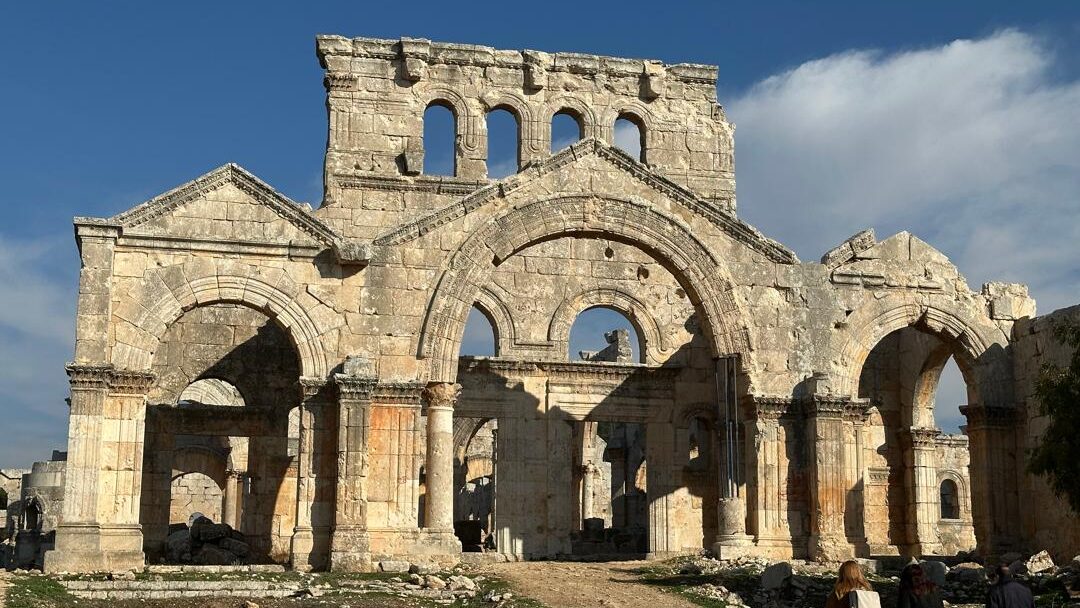 Near AleppoSt. Simeon ReopensA larger pilgrimage complex in the northRead the story →
 Discover SyriaSyria LandmarksExplore more historic placesRead the story →