
Private day trip from Damascus · Qalamoun Mountains
Mar Musa Monastery
Climb to an ancient church of medieval frescoes, mountain silence and a living tradition of hospitality and interfaith dialogue.
Plan this experienceExplore the journeyA different kind of journey
Where silence begins before you arrive.
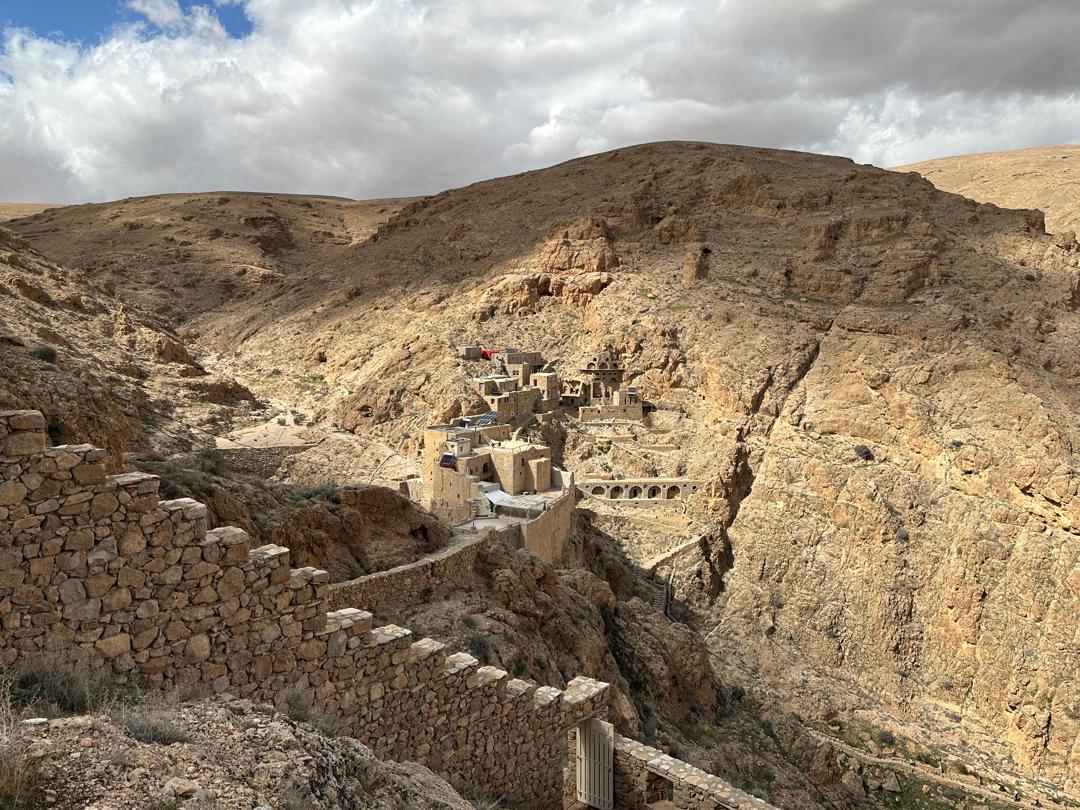
High in the rocky mountains near Al-Nabk, Deir Mar Musa al-Habashi seems almost carved from the hillside. Reached by a winding stone stairway, this ancient Christian monastery offers something rare: extraordinary medieval frescoes, vast semi-desert views and the welcoming spirit of a living community.
The monastery’s history reaches back to the early centuries of Christian monastic life. Its present church dates to the eleventh century, and its beautifully painted walls preserve layers of medieval art. The modern revival of its monastic community has made Mar Musa known far beyond Syria for prayer, hospitality, simple living and friendship across religious traditions.
This private day trip is designed for people who want to experience the place thoughtfully — whether drawn by art, landscape, Christian history, interfaith dialogue or simply a few hours away from the noise of city life. We allow time to climb carefully, study the frescoes and appreciate the monastery without disrupting the people who live there.
An eleventh-century church with extraordinary painted frescoes.
Prayer, work, learning and hospitality for visitors of different backgrounds.
A remarkable stone staircase and broad semi-desert vistas.
The place, the art, the journey
What makes Mar Musa unforgettable.
Your suggested full-day route
From Damascus to Mar Musa — art, mountains and reflection.
This is a suggested itinerary. Prayer times, visitor arrangements, community activities, weather and the pace of the climb can change the day’s programme. Meetings with members of the community and shared meals cannot be promised.
01 · Morning · Damascus to Al-Nabk
The road to the desert monastery
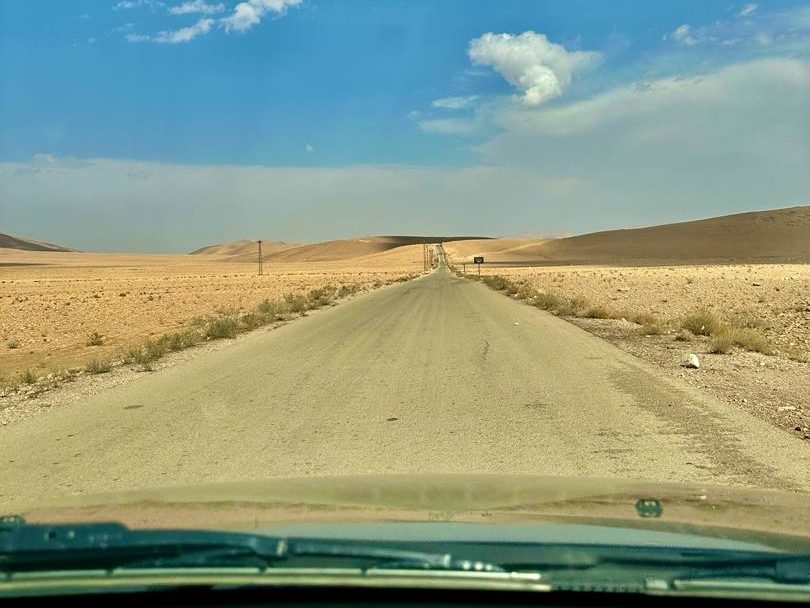
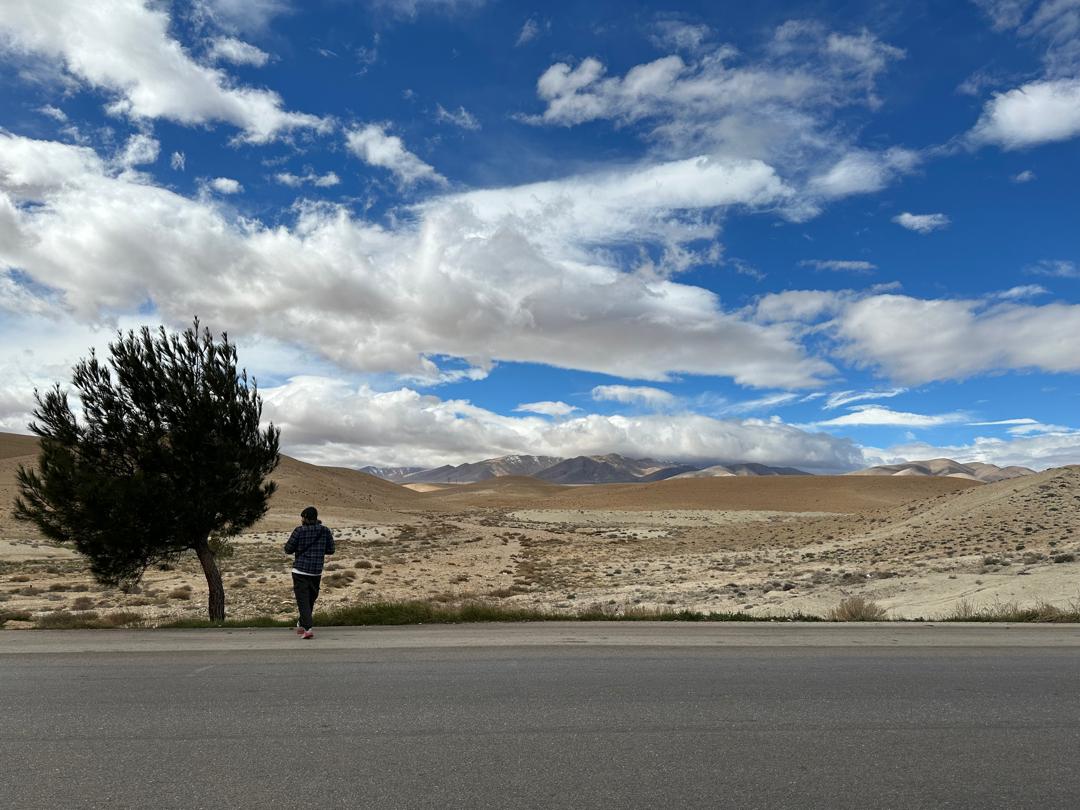
Leave Damascus in a private vehicle and travel north toward Al-Nabk. The road opens onto the broad plains and dry hills of the Qalamoun region, where the landscape has a beauty all its own. Your guide introduces the history of the region and the role monasteries have played in Syria’s rich religious heritage.
Beyond Al-Nabk, the last stretch leads into a quiet semi-desert valley. As the monastery comes into view, its honey-coloured stone walls seem to emerge from the mountain itself. There is time for photographs and a first introduction to the story of this remarkable place.
The journey from Damascus generally takes around one and a half to two hours depending on traffic and road conditions. We plan our departure with enough daylight for a relaxed visit and safe return.
02 · Late morning · Stone stairway
The climb that begins the experience
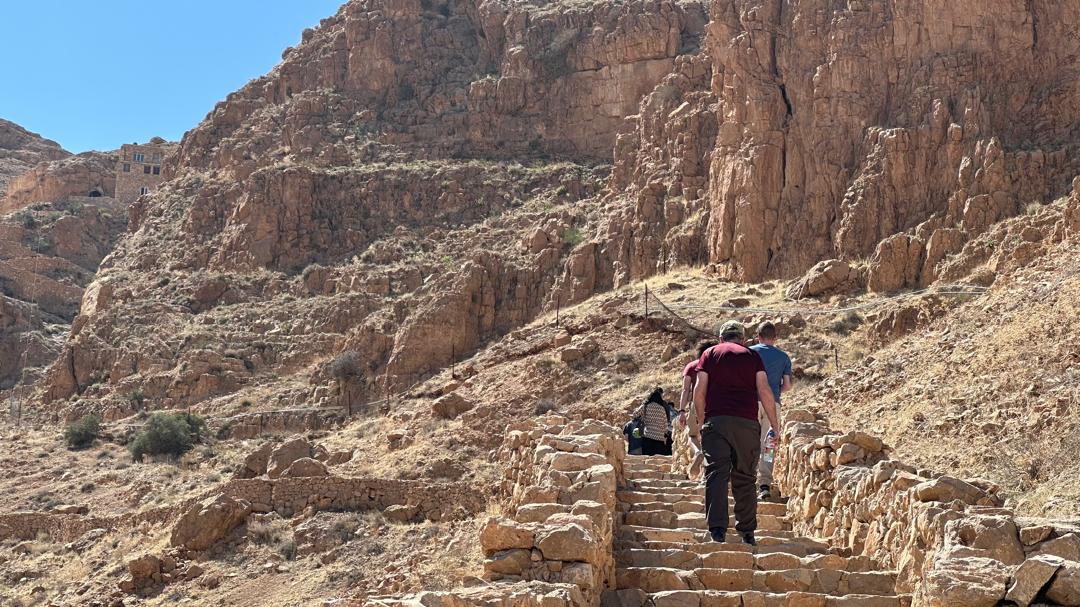
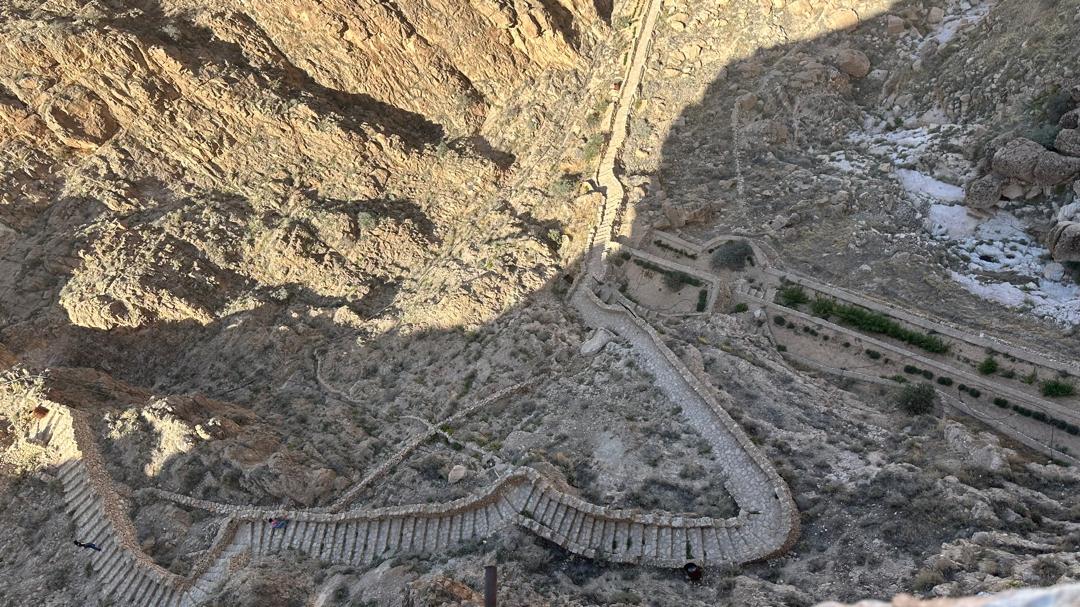
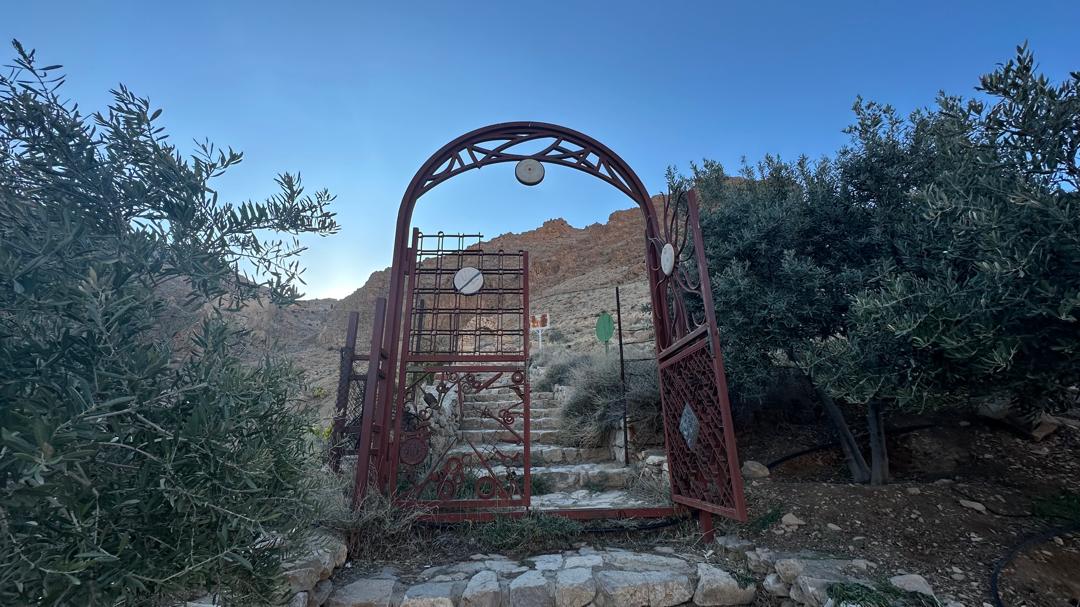
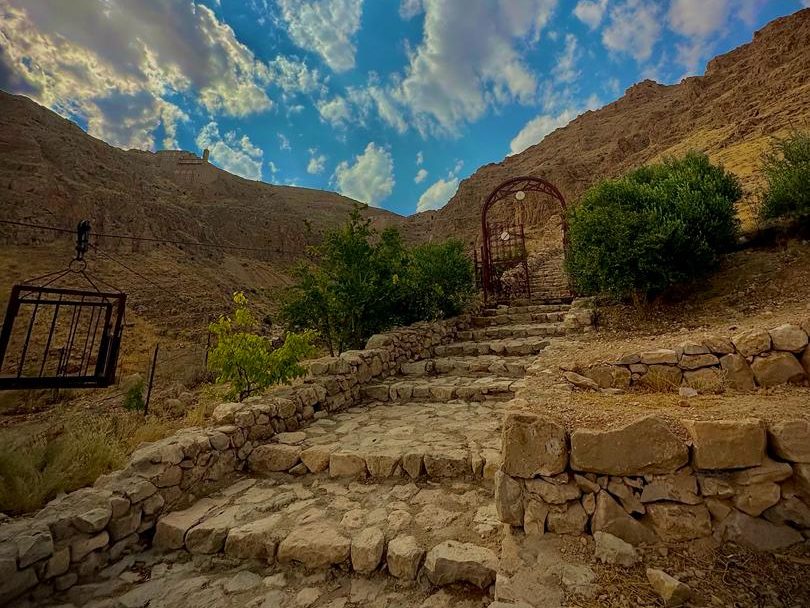
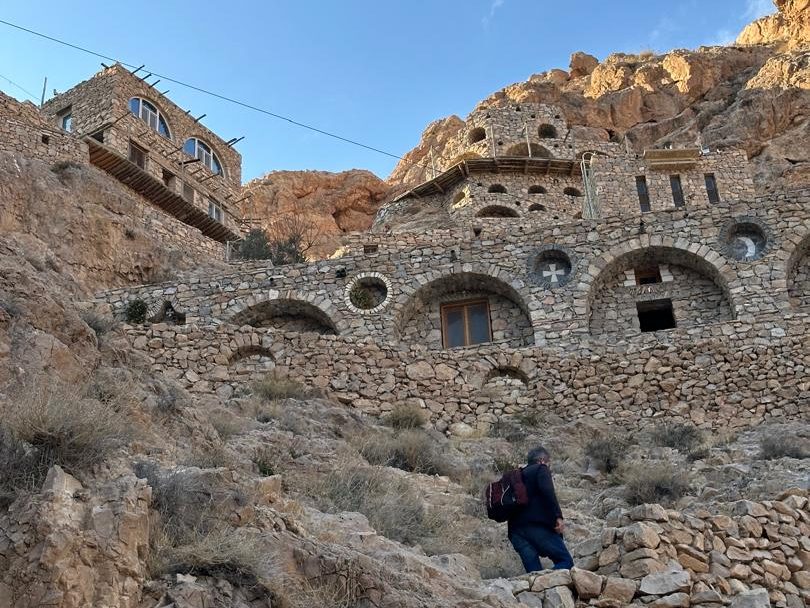
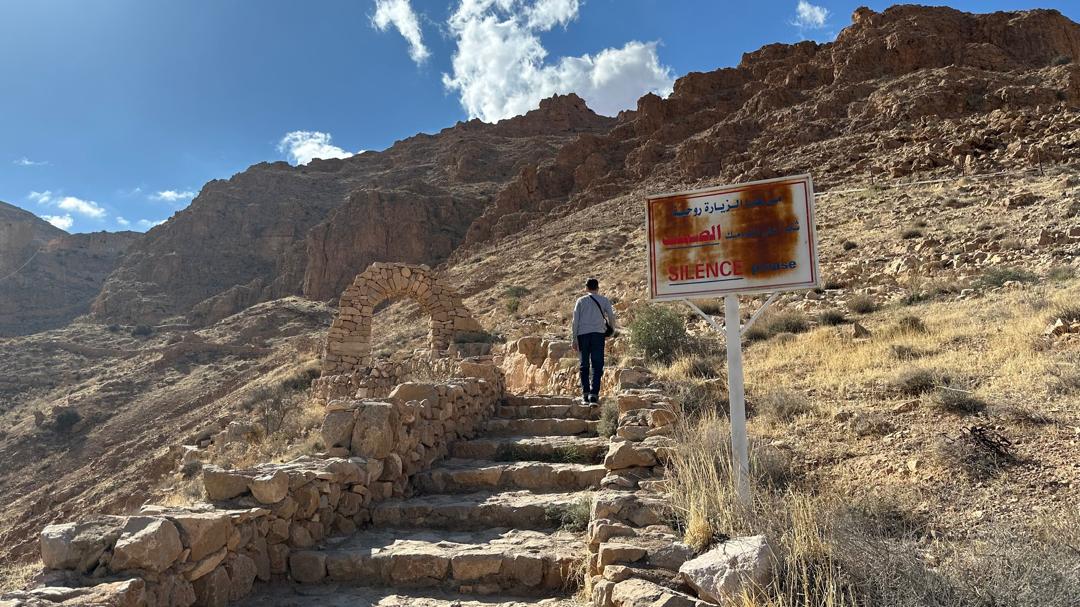
Mar Musa is reached on foot. From the lower parking area, a stone staircase rises through rocky terrain toward the monastery, offering ever-wider views over the surrounding valley. The approach is as much a part of the experience as the buildings at the top.
Expect roughly 400 or more uneven outdoor steps, depending on where the count begins. Some visitors climb in 20–30 minutes, while others need considerably longer. We take the ascent at a comfortable pace, with breaks for water and photographs rather than rushing.
The climb can be hot and exposed, and the descent also requires care. There is no visitor road to the upper monastery. We make sure you understand the physical effort before booking.
03 · Midday · Ancient monastery
Stone architecture shaped by the mountain
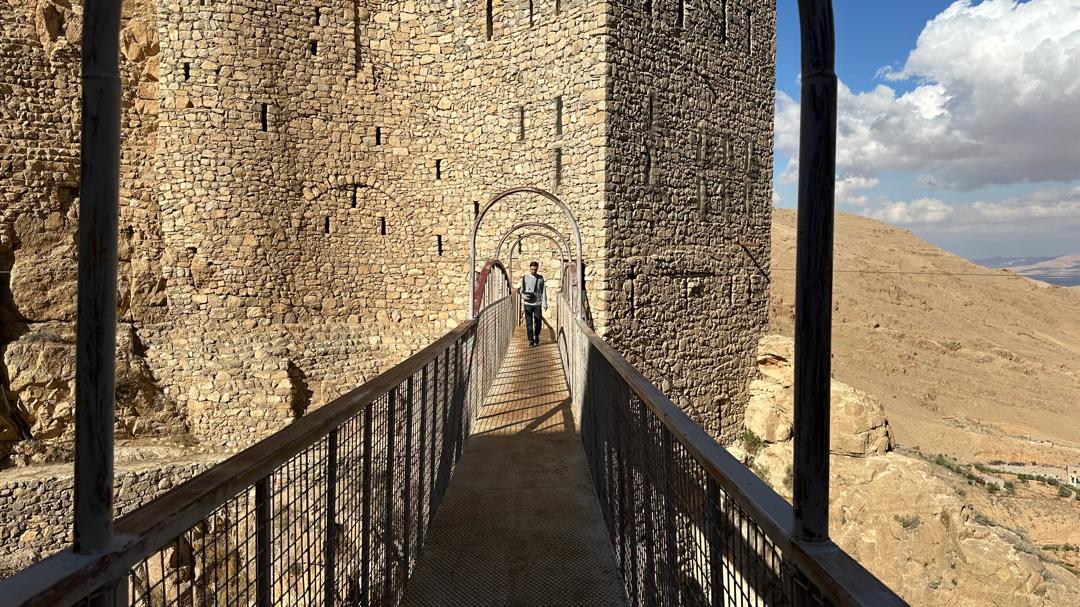
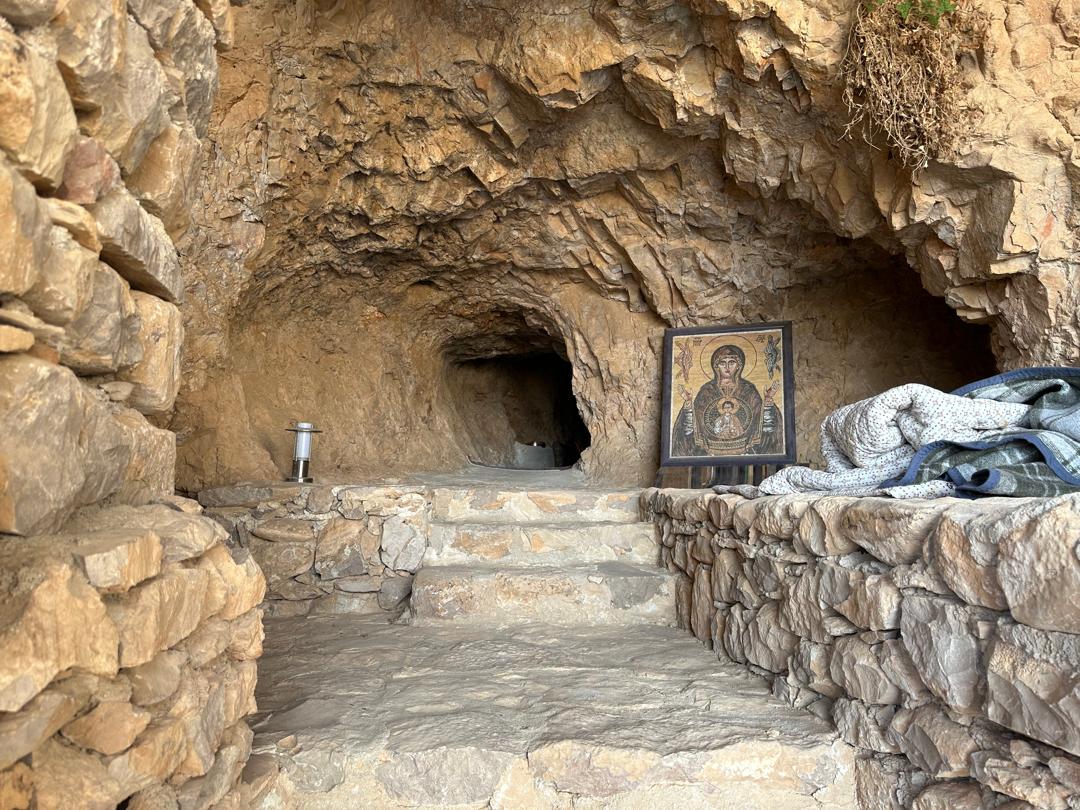
At the top, step into a complex of terraces, passages and stone buildings carefully woven into the mountainside. Known as Deir Mar Musa al-Habashi — the Monastery of Saint Moses the Abyssinian — the site traces its origins to the early centuries of Christian monastic life in the region.
Your guide introduces the long architectural history, including the eleventh-century church and later additions that adapted to the remote terrain. Notice how small windows, narrow entrances and thick walls create spaces designed for a simple life rather than grand display.
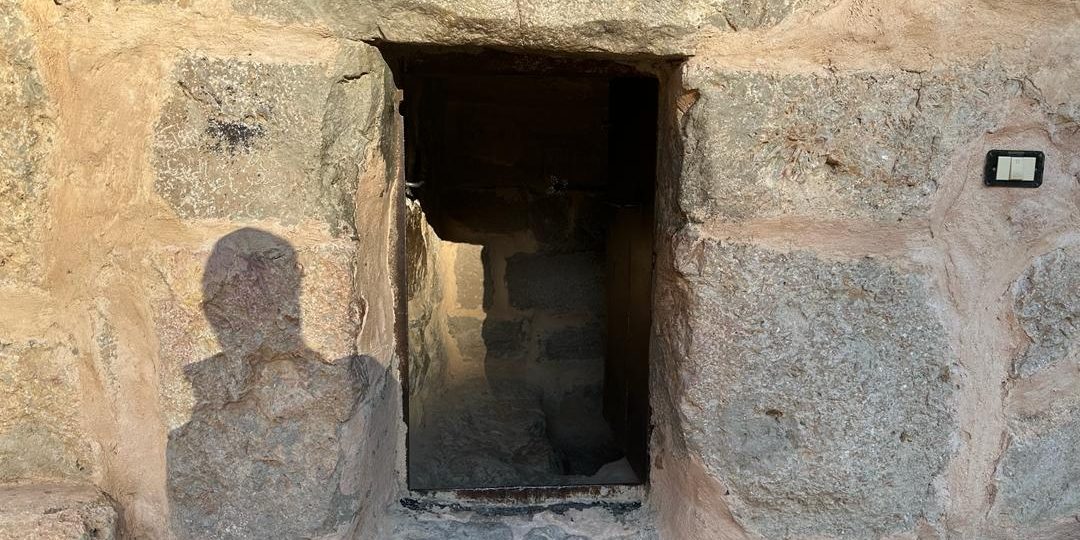
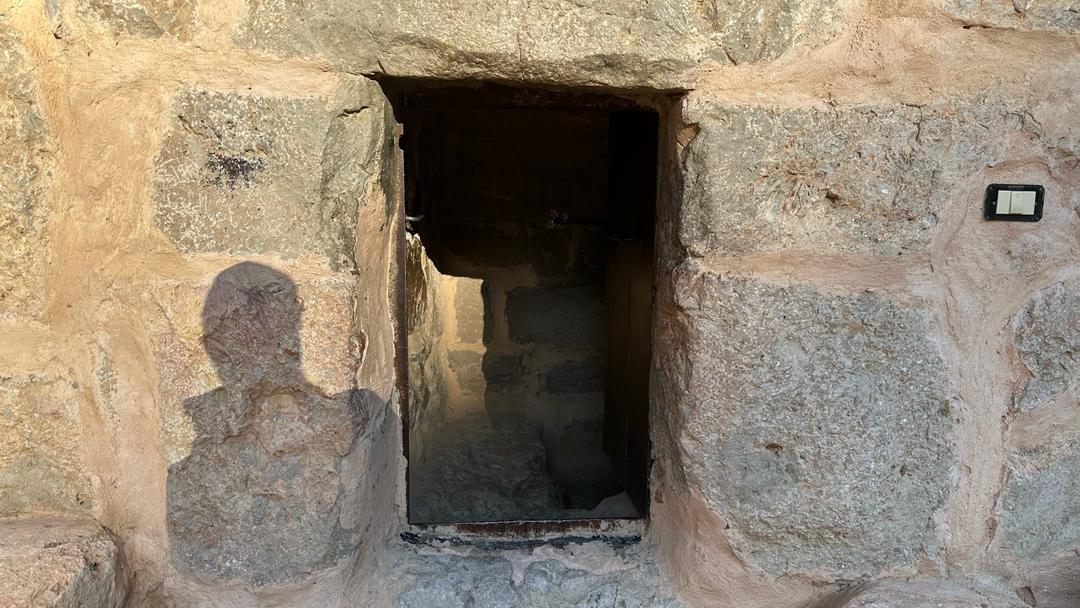
Some historic doors are low, and the interior includes steps and uneven surfaces. We follow the community’s instructions, speak quietly and give people space to pray or work.
04 · Midday · The painted church
The frescoes: centuries of art and devotion
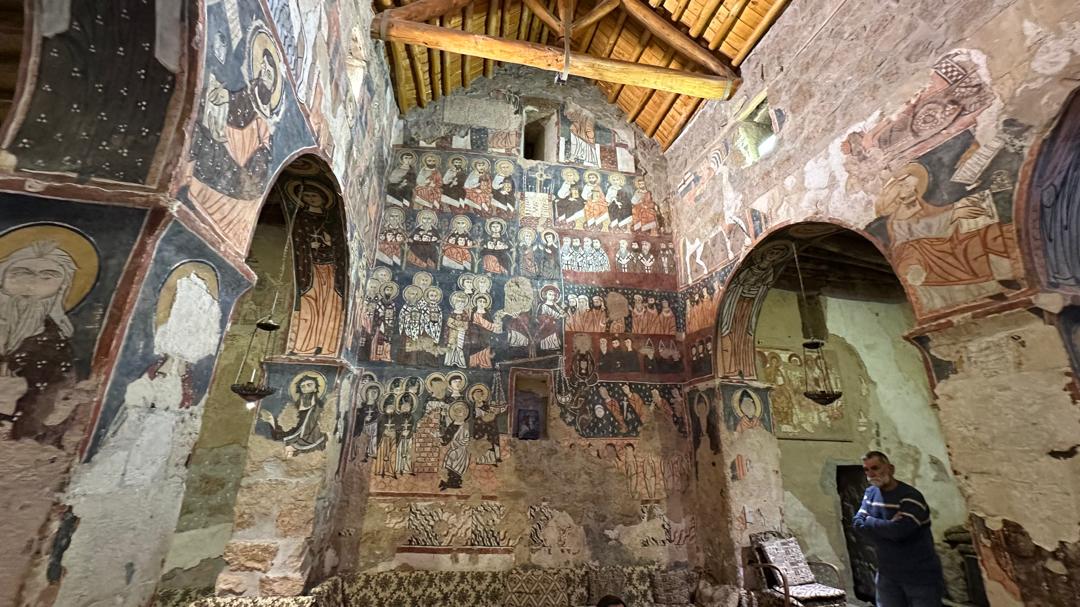
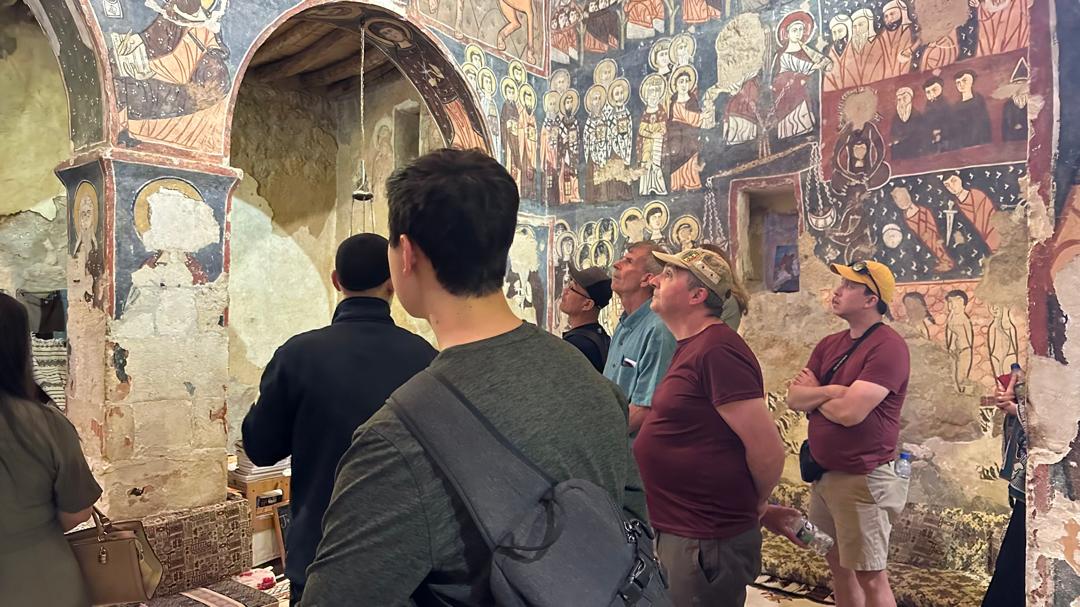
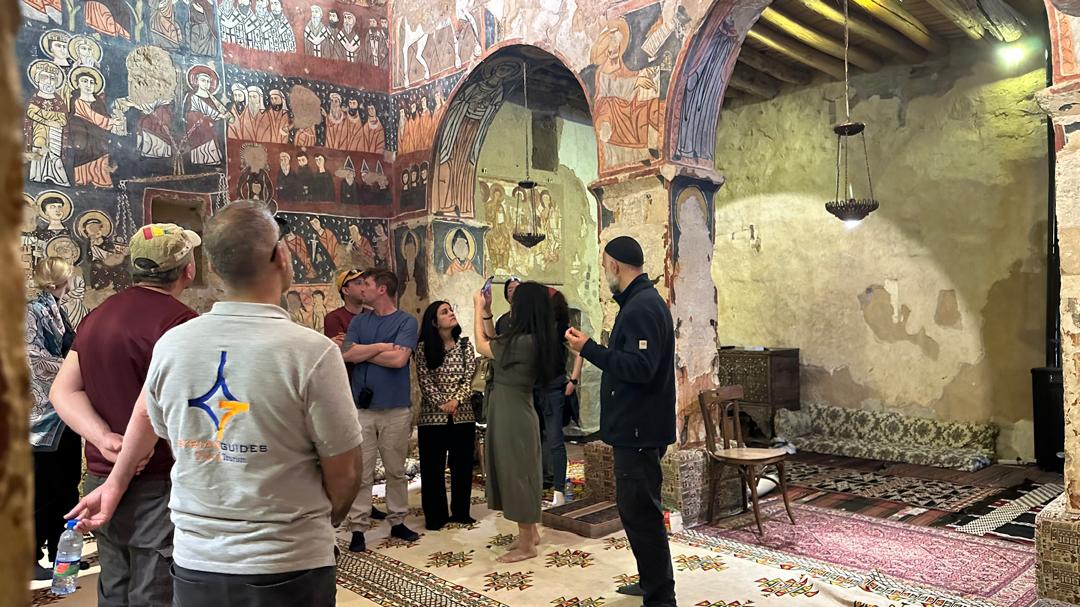
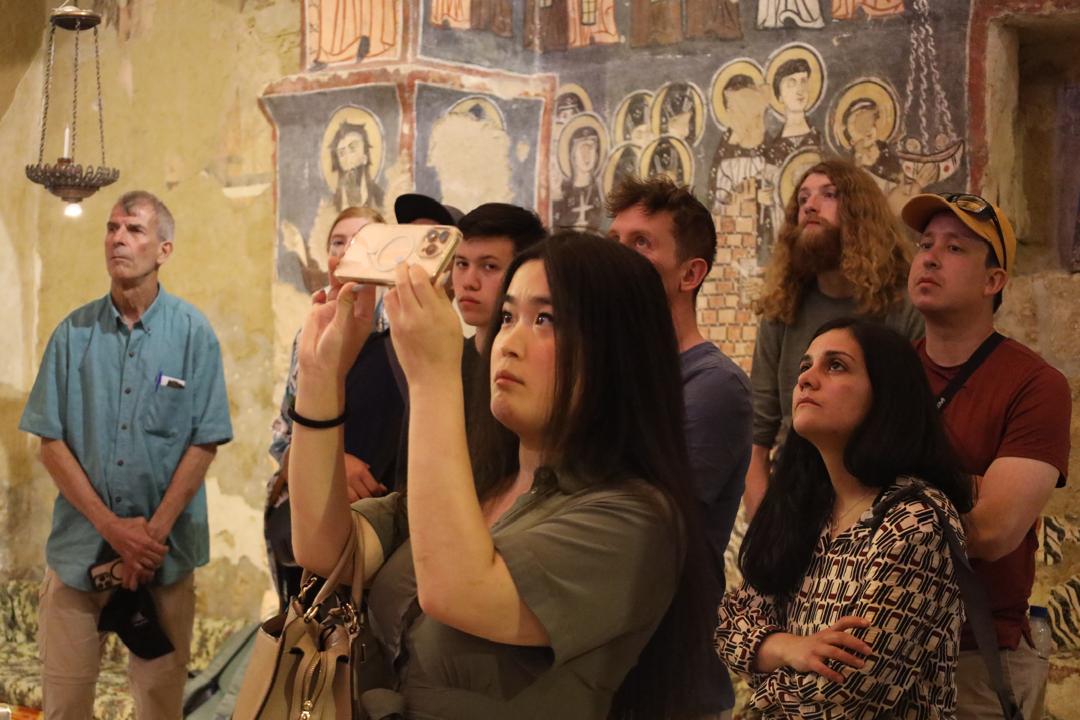
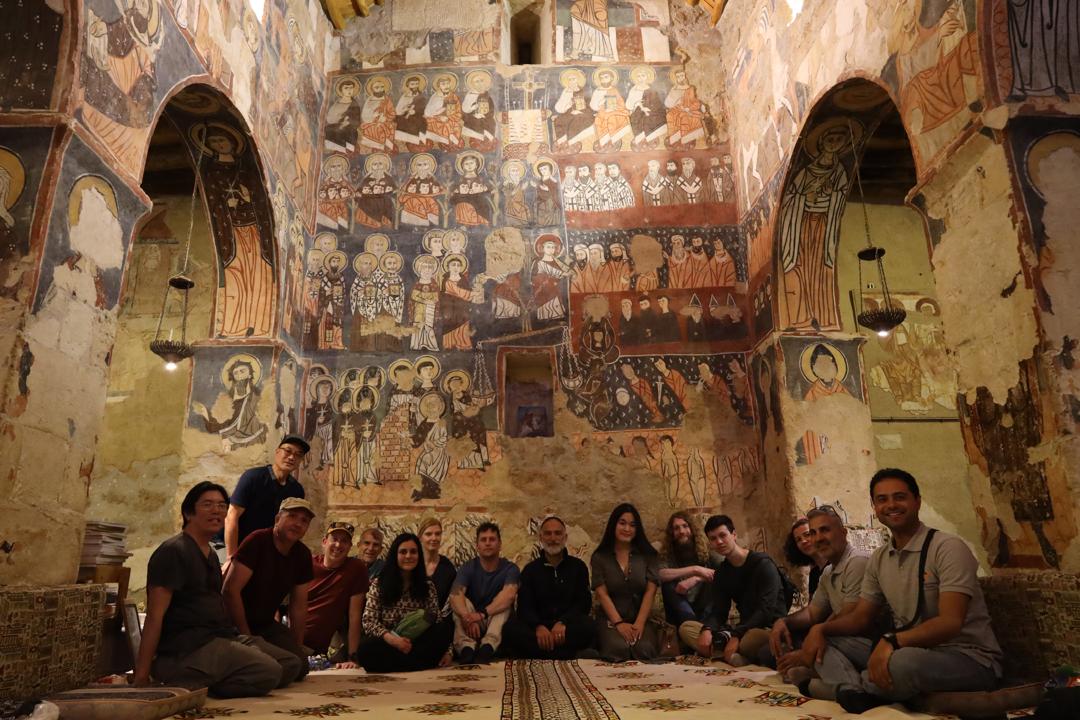
Inside the monastery church, layers of medieval frescoes transform a modest stone interior into a place of extraordinary colour and storytelling. The paintings, dating from the eleventh through the early thirteenth centuries, depict sacred figures and narratives, revealing how artistic traditions evolved over time.
Your guide explains what you can see and why the images mattered to the people who prayed here. Unlike visiting a huge cathedral, this experience is close and intimate: the art surrounds you, and details emerge as your eyes adjust to the gentle light.
These frescoes are fragile cultural heritage. We respect photography restrictions and avoid flash, intrusive filming or any disturbance during worship. There is time simply to look and reflect.
05 · Early afternoon · Monastic life
A tradition of prayer, welcome and interfaith dialogue
Mar Musa is not simply a historic monument. The monastery’s contemporary community follows a rhythm of prayer, work, hospitality and reflection. Its modern revival in the late twentieth century also placed dialogue between Christians and Muslims at the heart of the community’s mission.
Your guide shares the story of the monastery’s renewal and the importance of hospitality to people of different backgrounds. Where community members have time and wish to engage, a spontaneous conversation may offer a glimpse of life in this remote place — but a personal meeting is never guaranteed.
Visitors of every faith, or none, are welcome to approach the place with curiosity and respect. You can appreciate the art, history and landscape without participating in religious worship.
06 · Early afternoon · A quieter moment
Simple hospitality and time to slow down
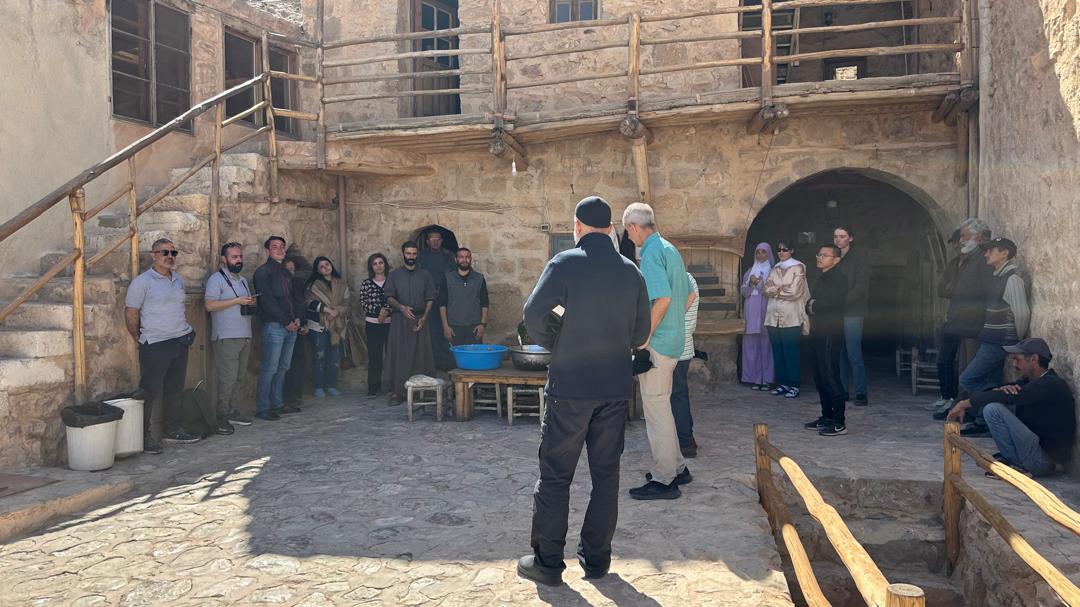
One of the most memorable things about Mar Musa is its pace. When the community’s arrangements allow, there may be time to sit in a shared space, admire the valley from a terrace or observe the quiet rhythm of daily life.
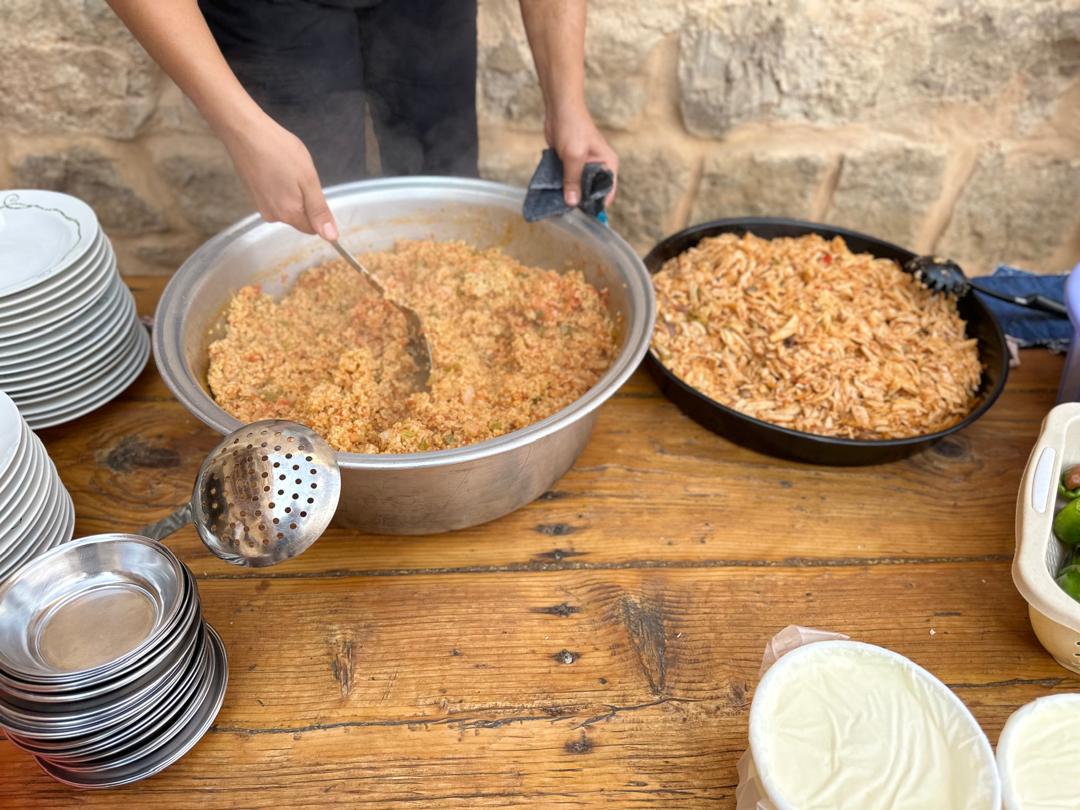
Visitors are sometimes invited to share a simple communal meal, but the monastery is not a restaurant and no meal or conversation should be assumed. We can plan an alternative lunch stop or bring suitable snacks if needed. Any food offered is an act of hospitality, not a paid tour service.
The community does not normally charge a fixed fee for its hospitality; donations are voluntary and given directly to the monastery. Your private transport and guide are separate services, clearly itemised in your quotation.
07 · Afternoon · Descent & return
A final mountain view and the journey home
Before leaving, take a moment to appreciate the surrounding semi-desert and the remarkable way the monastery fits into the mountain. If permitted, we may look at other accessible exterior details or linger for a final photograph.
We then descend the same stone steps at an unhurried pace. Going down can be challenging for knees and balance, so your guide leaves time for a safe return to the lower parking area.
The private vehicle takes you back through Al-Nabk to Damascus. We finish the day at your accommodation or another agreed drop-off point, leaving you with memories of art, mountain silence and the people who care for this extraordinary sanctuary.
A closer look
Small moments, lasting memories.
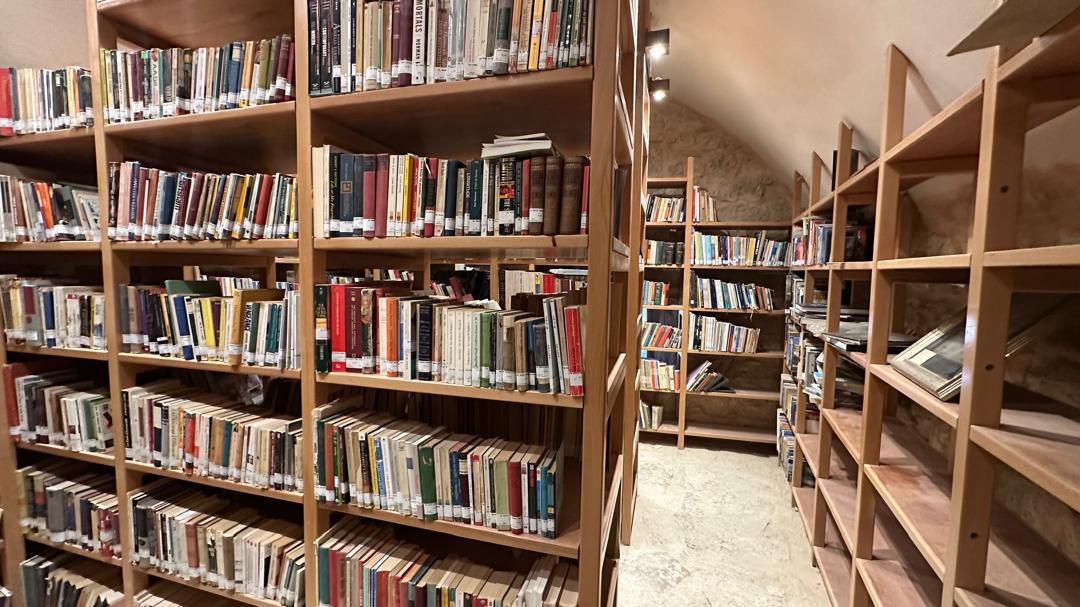
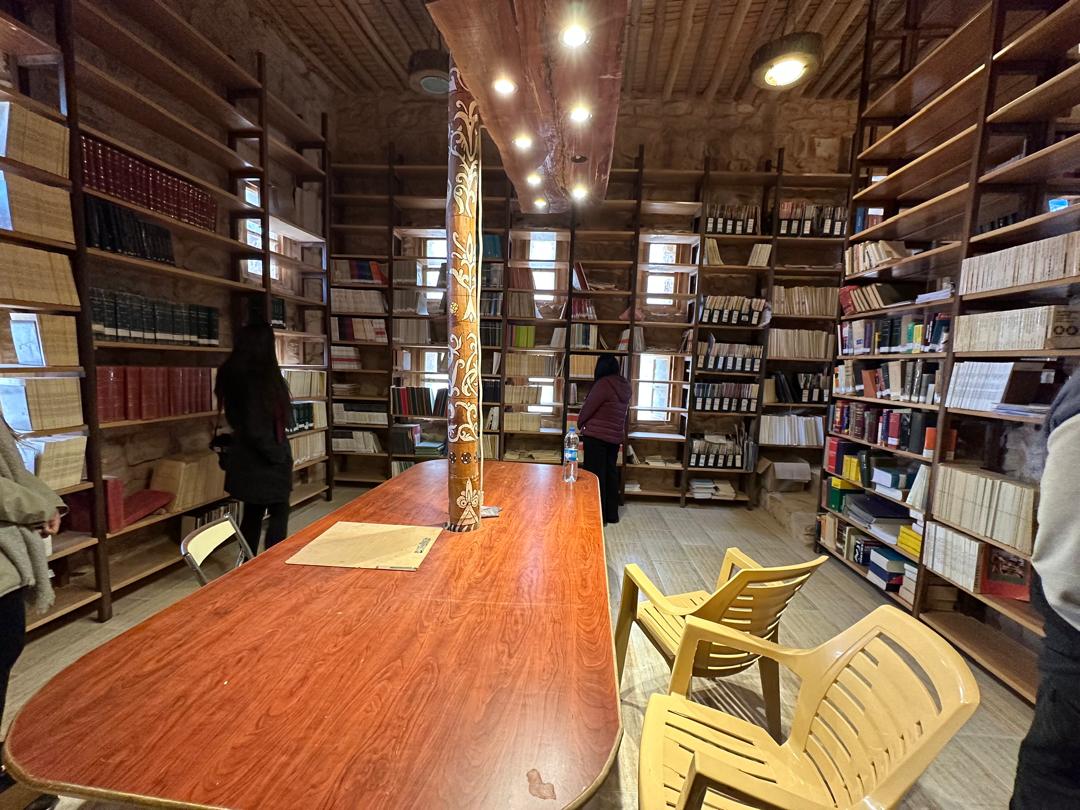
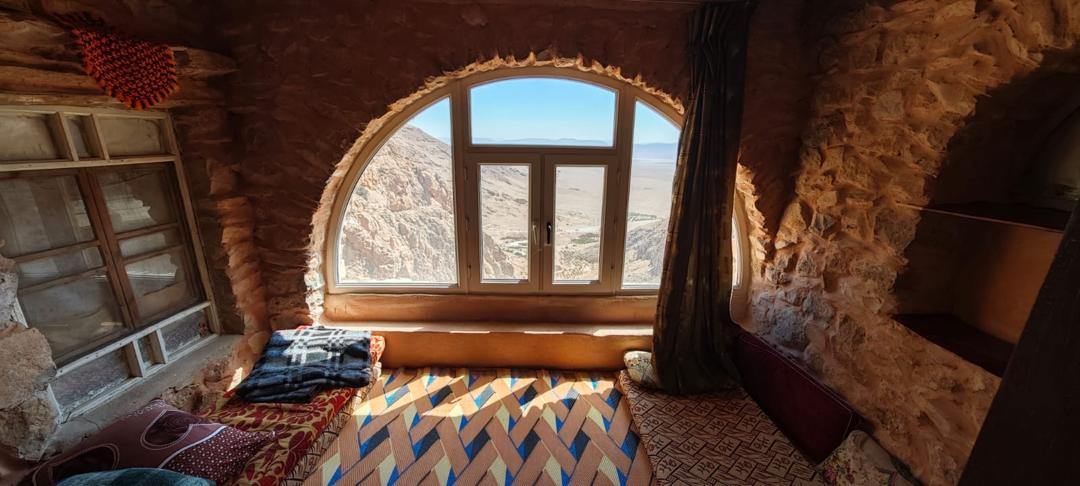
Alongside the famous frescoes, Mar Musa is a place of stone passages, books, mountain views and human encounters. These are photographs from visits to the monastery.
Planning your visit
Everything you should know before you go.
Proposed private-tour services
- Private vehicle and driver from Damascus and return
- English-speaking Syrian guide
- Comfortable time for the ascent and descent
- Introduction to the site’s history, church and frescoes
- Time to enjoy the mountain views and peaceful atmosphere
- Flexible departure and pacing for your group
Your personalised quote will specify the price and any optional meals. Monastery donations are voluntary and made directly to the community, separately from guide and transport costs.
What to wear and bring
- Walking shoes with reliable grip — not sandals
- Modest, comfortable clothing covering shoulders and knees
- Water, sunscreen and a sun hat for the exposed stairs
- A light warm layer for cooler weather
- Personal medication and a small day bag
- Respect for silence, prayer times and photo restrictions
- Patience on uneven steps and at the low stone entrance
The route is remote. Phone reception may be weak, and the monastery follows its own schedule. We check visiting conditions ahead of your date.
For an in-depth look at the climb, etiquette and the monastery’s daily life, read our complete Mar Musa visitor guide.
Frequently asked questions
What to know about the Mar Musa experience.
How difficult is the climb to Mar Musa?
Expect several hundred uneven stone steps, usually described as roughly 400 or more. Many fit walkers take 20–30 minutes, while others need longer. The steps are exposed and can be dusty, and the descent may also be difficult for the knees. This visit is not suitable for everyone with mobility or balance limitations.
Can non-Christians visit the monastery?
Yes. The community is known for welcoming respectful visitors from different faiths and backgrounds. You do not need to participate in a prayer service; simply follow the monastery’s etiquette and respect those who have come to worship.
Will we be able to see the famous frescoes?
The painted church is a highlight of the proposed visit. We confirm the monastery’s visitor arrangements before the tour. Photography may be restricted, and worship takes priority when a service is underway.
Can we meet monks or nuns?
There may be an opportunity to talk to a member of the community if they have time and are happy to meet visitors. We cannot guarantee meetings or particular people.
Is a meal at the monastery included?
No meal is automatically included. The community sometimes offers simple hospitality, but it is not a restaurant and such arrangements depend on its daily schedule. We can plan another lunch option or advise what snacks to bring.
Does the monastery charge an entrance fee?
The monastery ordinarily welcomes visitors without a fixed fee. Donations, given voluntarily and directly to the community, are appreciated. The charge for our private transport and guiding is separate and clear in your quotation.
Could we stay overnight for a spiritual retreat?
Overnight stays are sometimes possible in basic monastery accommodation, subject to the community’s permission and arrangements. We can ask about possibilities if you want a longer spiritual experience. This particular tour is a day trip, not an overnight programme.
Can this trip be combined with Maaloula?
It may be possible as a longer day, but the travel and staircase make for a demanding schedule. We normally prefer a slower Mar Musa visit and can discuss an extended itinerary if you have enough time.
Syria tours beyond the beaten path
Climb the mountain. Discover the story.
Tell us your preferred date, number of guests and interests — medieval art, monastic life, photography, faith, interreligious dialogue or a quiet escape into the mountains. We will tailor the experience and send your private quotation.
Request a private quoteContact Syrian Guides