
Private cultural experience · Old Damascus
Damascus Artisan Encounters
Meet the hands behind the city: a full day of traditional workshops, craft demonstrations and conversations with the people keeping Damascus’s creative heritage alive.
Plan my artisan tourExplore the workshopsA city made by hand
Beyond the souqs, into the workshops.
In Damascus, some of the most memorable encounters happen behind a workshop door: the glow of hot glass, the soft rhythm of a loom, the tap of metal, or an artisan patiently fitting tiny pieces of mosaic together. Spend a day meeting the people behind these traditions, listening to their stories and watching their craftsmanship up close.
This private experience is designed for travellers who want to connect with living culture rather than simply shop for souvenirs. Your guide introduces you to makers and explains the techniques, materials, histories and challenges behind each craft.
Meet real craftspeople
Spend time in working ateliers and family workshops, with opportunities to ask questions and exchange stories.
See how things are made
From silk threads and mosaic details to metalwork and Ajami painting, the process is as fascinating as the finished object.
Make it personal
Focus on the crafts you love most. Demonstrations and hands-on experiences are arranged where possible.
Craftsmanship in close-up
Discover the makers of Damascus.

Suggested full-day route
A day among workshops and artisans
The route below is a proposed sequence. Visits depend on the availability of each workshop and artist. Some demonstrations may be substituted or adapted to the day, and no hands-on activity is guaranteed without confirmation.
01 · 09:00–09:45
Glassblowing — fire, breath & colour
Imagine a glowing bubble of molten glass slowly taking shape at the end of a blowpipe. In this workshop, you can discover how heat, breath and steady hands transform a fragile material into lamps, vessels and decorative pieces. The most fascinating moments are often the smallest: the careful turning of the pipe, the instant a shape changes, and the artisan’s instinct for when the glass is ready.
Your guide will help you ask about the tools, the workshop’s history and the skills needed to master this demanding profession. A live demonstration depends on the artisan’s schedule and working conditions.

02 · 09:55–10:40
Abu Toni — the art of mosaic
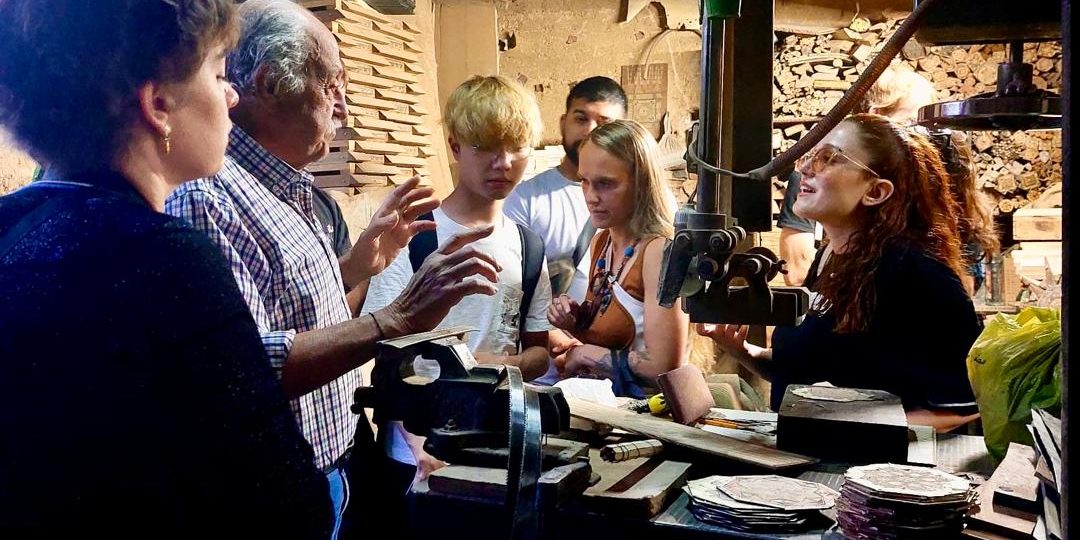
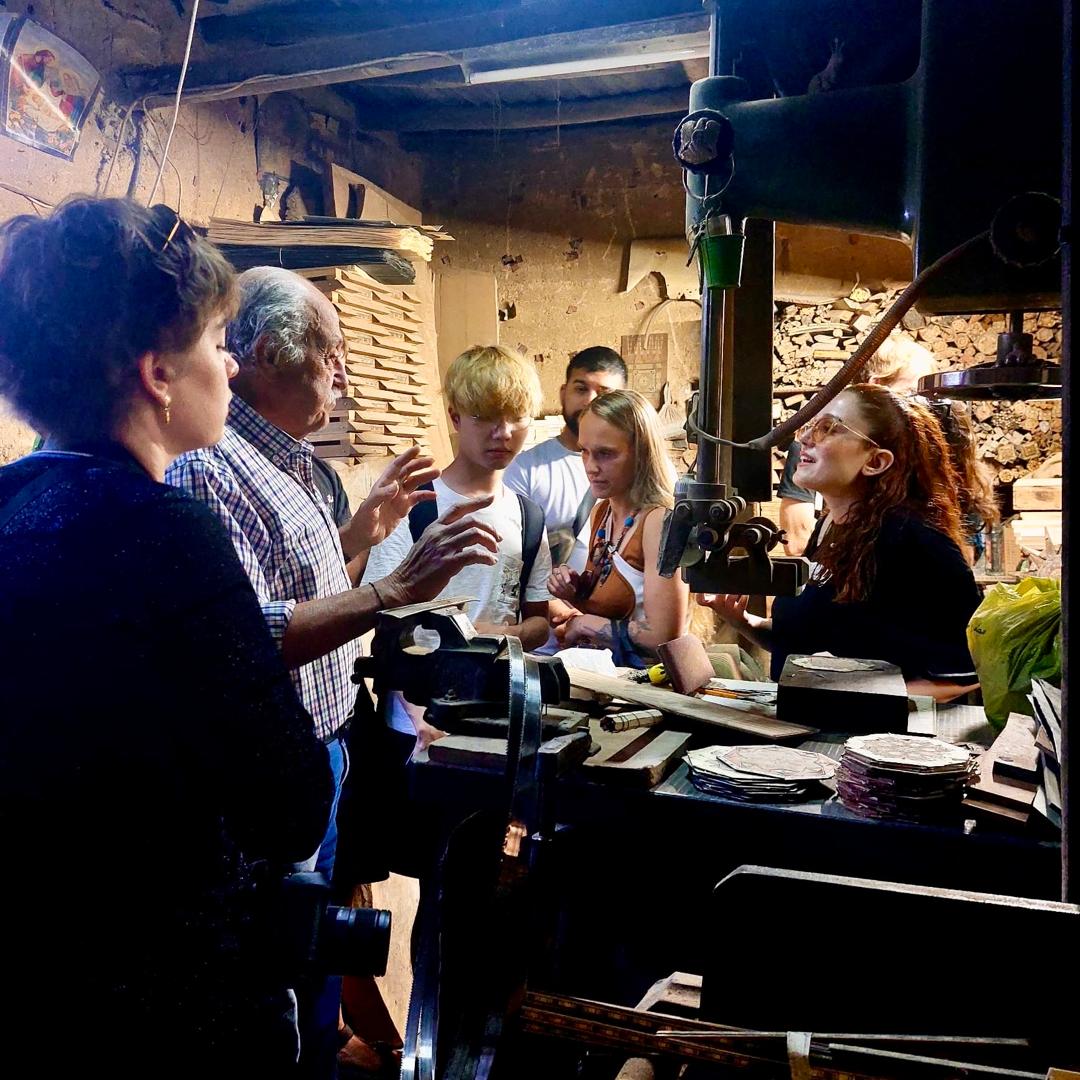
Inside Abu Toni’s workshop, a beautiful pattern begins with tiny individual pieces. Watch how a mosaic maker selects materials, cuts each element to fit, and builds intricate geometric designs with remarkable patience. The finished boxes, furniture and decorative panels reveal only a fraction of the time and concentration hidden in the work.
This is also a chance to meet the maker rather than simply admire the objects. Ask Abu Toni about the craft’s history, the tools on his bench, the designs customers love, and the challenge of passing specialised skills to another generation.
Take time to look closely at the work in progress, compare unfinished sections with completed pieces and photograph the fine detail when the artisan is happy for you to do so.

03 · 10:50–11:30
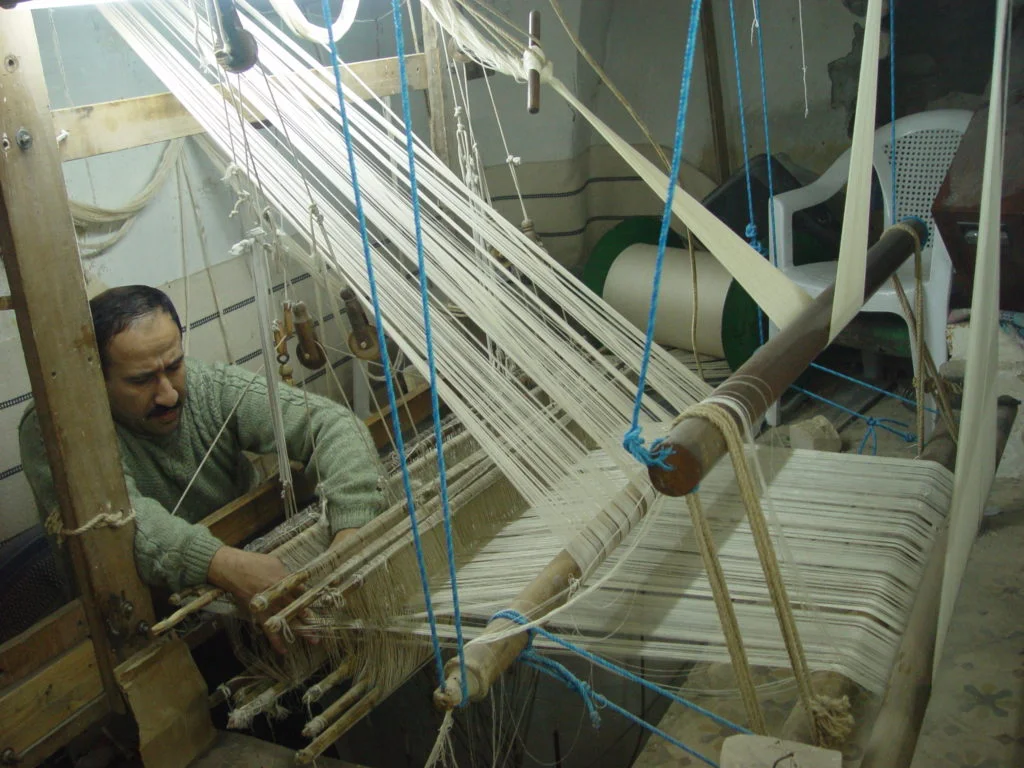
Wardeh — the kilim loom
Follow the movement of threads across a traditional loom and see how repeated gestures gradually become a woven pattern. At a weaving workshop such as Wardeh’s, the colours, textures and motifs of Syrian textiles become much easier to appreciate when you can watch the process instead of seeing only the finished cloth.
Your guide can explain the basic structure of the loom and help you speak with the weavers about the time a piece takes, how patterns are chosen, and what it means to keep textile-making skills alive today. If the artisan agrees, there may be an opportunity for a closer look at the tools or to try a simple supervised step.
04 · 11:40–12:30
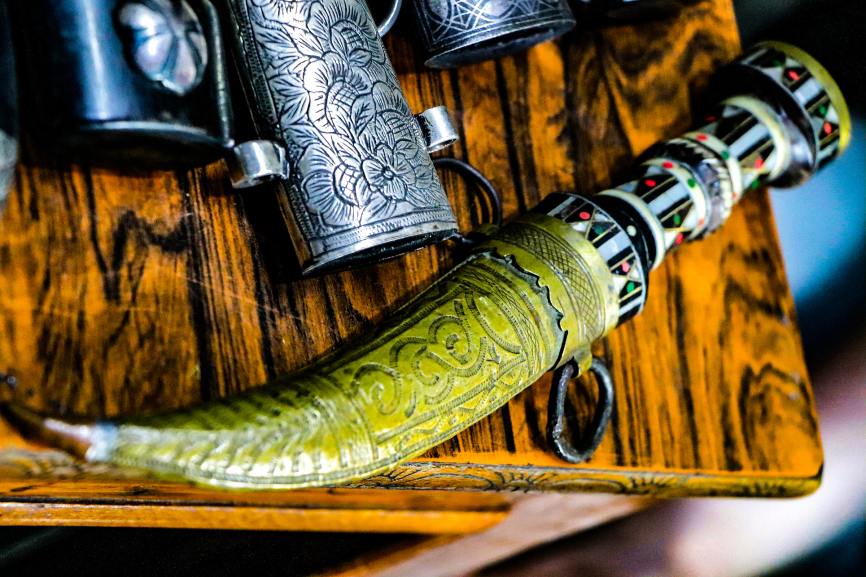
Rimon — the swordmaker
Meet a maker working in one of Damascus’s most evocative craft traditions: blades and decorated metalwork. Discover the sequence behind a handcrafted sword, from choosing the material and shaping a blade to refining its surface, fitting a handle and adding decorative details. The workshop brings an often-romanticised object back to the reality of skilled manual work.
Rather than treating a sword as just a souvenir, explore the differences between practical construction and ornamental craftsmanship. Ask Rimon how long a commission takes, what tools are essential and how the trade has changed over the years.
Forging and other potentially hazardous work are viewed only when the workshop can safely accommodate visitors. You will have time to observe the detailing up close without interrupting the artisan.

05 · 12:40–13:15
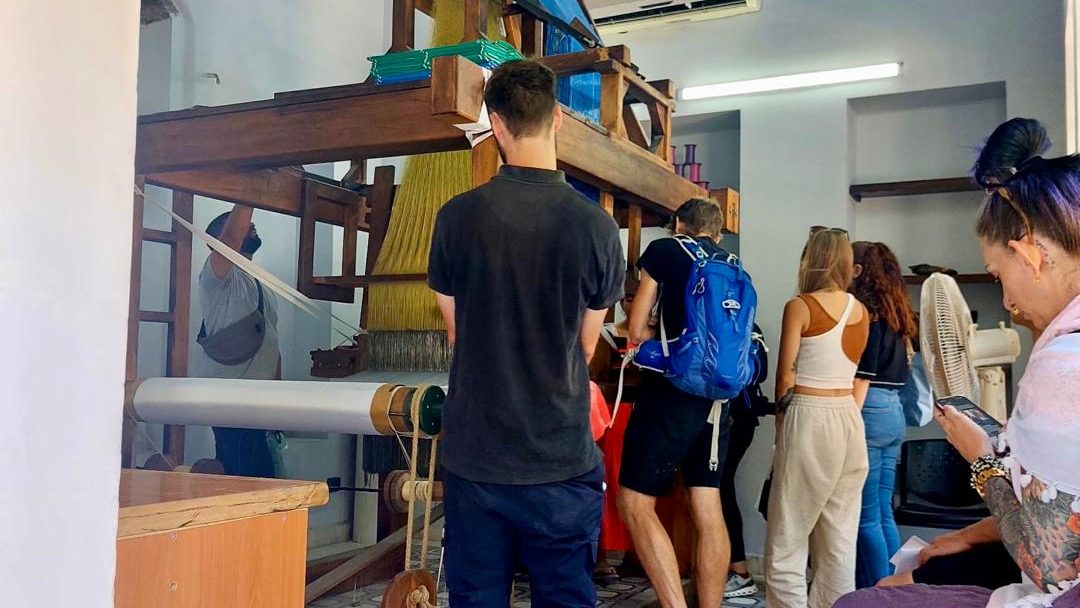
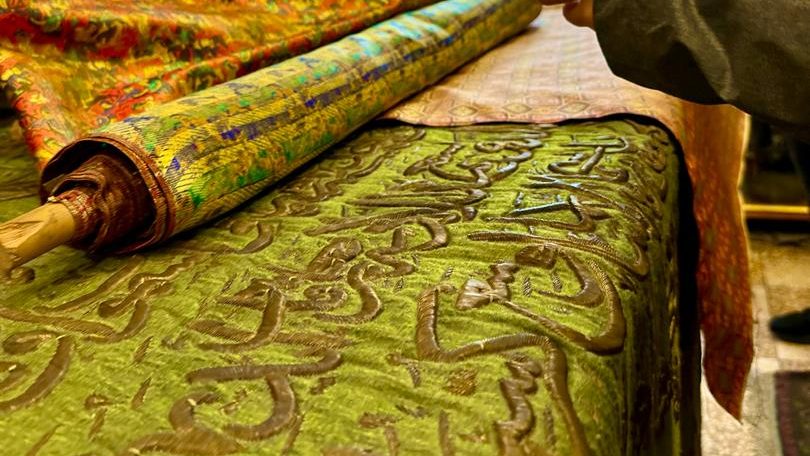
Sakhra — Damascene brocade
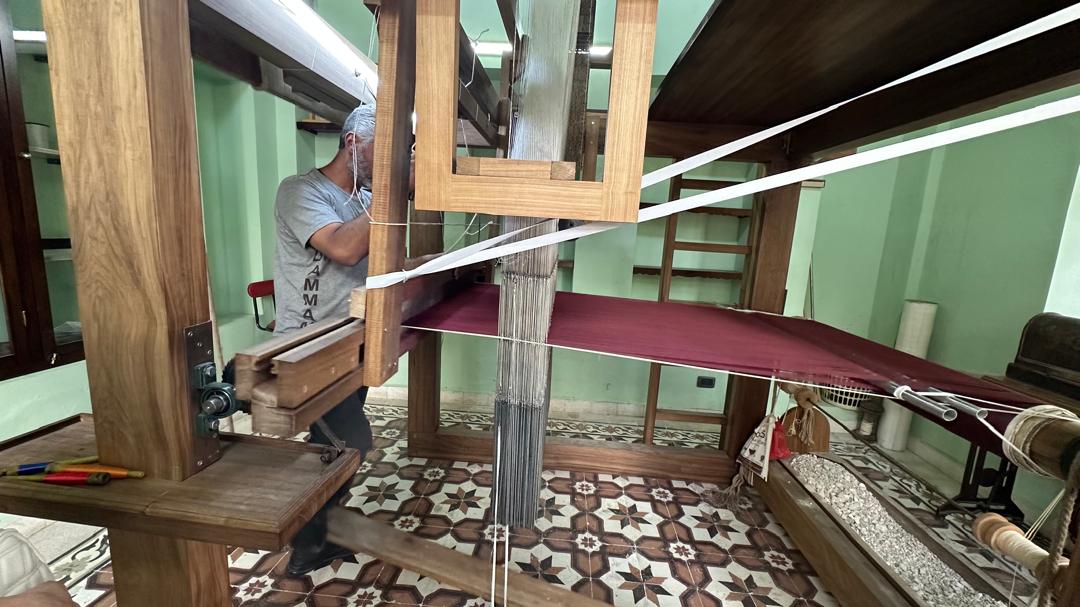
Damascus brocade is a story told through silk, colour and pattern. In the workshop, see how the loom interlaces threads to create raised, richly detailed designs and why even a small piece of this fabric can involve so much care. Look at the contrast between the apparently simple rhythm of weaving and the complexity of the finished textile.
Meet the artisans who continue this tradition, hear about favourite motifs and learn how fabrics once associated with ceremonial dress and distinguished interiors are produced today. Brocade makes an especially rewarding stop for photographers: hands at the loom, spools of thread and changing colours offer different perspectives on the same craft.
The visit is about understanding the people and process, not a compulsory shopping stop. Questions and close-up photographs are welcome when approved by the workshop.
06 · 13:20–14:20
Lunch in Old Damascus
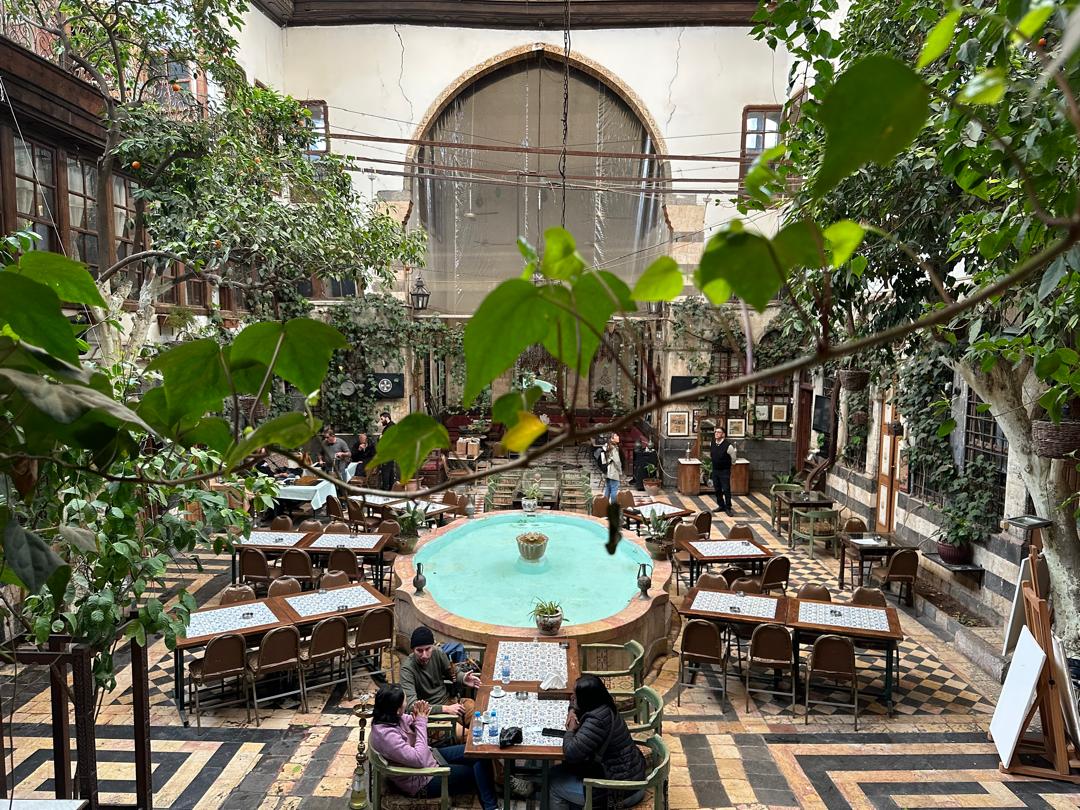
By lunchtime, you will have met several craftspeople and seen the patience that goes into their work. Settle into Beit Jabri, a traditional courtyard restaurant in the heart of the Old City, for a pause that feels like part of the cultural journey rather than a break from it.
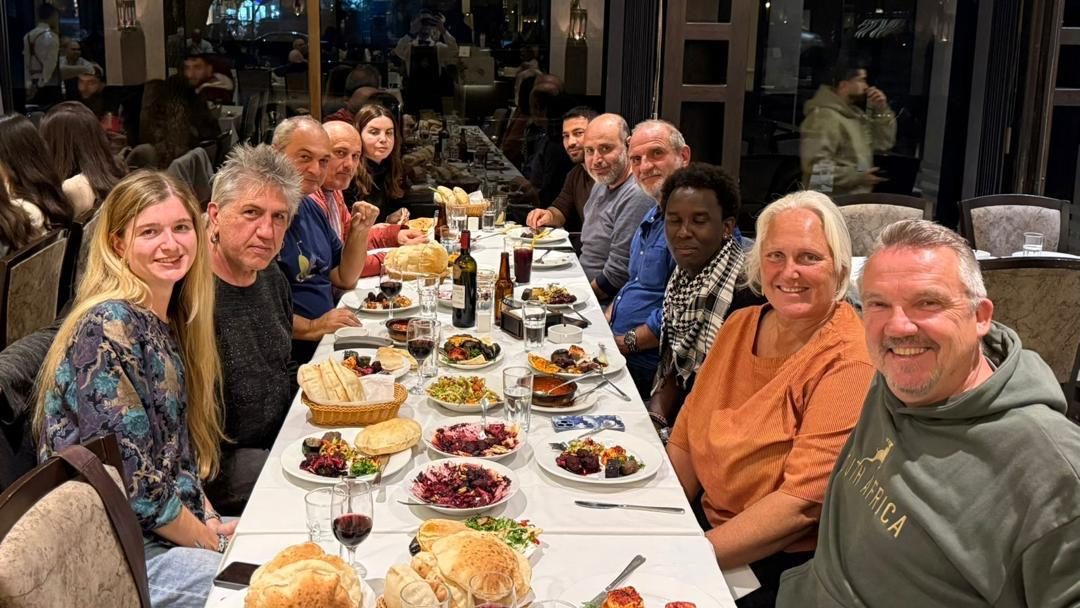
Enjoy a selection of Syrian mezze and local dishes while sitting beneath the greenery and surrounded by historic Damascene architecture. Your guide can introduce the food and share more stories about the people you met during the morning. There is time to relax, enjoy the atmosphere and take photographs of the courtyard before the afternoon workshops begin.
07 · 14:30–15:15
Copper & brass workshop
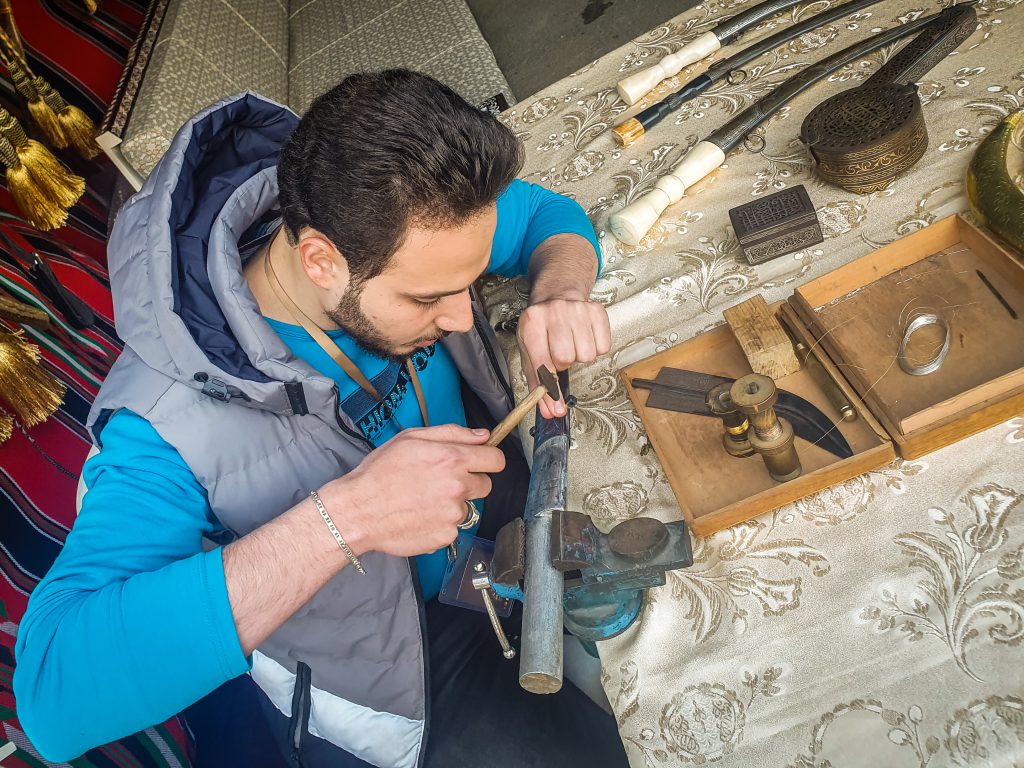
Before you see a finished copper tray or brass ornament, you may hear it: the distinctive tapping of metal being shaped and decorated by hand. Explore the tools and techniques behind traditional household pieces, from functional vessels to more elaborate engraved objects. The marks left by each tool give the finished work its character.
Speak with a craftsperson about how the metal is prepared, how patterns are transferred and why certain designs have been repeated for generations. Depending on the day’s work, you may watch engraving or decorative inlay and see unfinished pieces beside completed ones.
Any hands-on introduction is arranged directly with the artisan. The photograph illustrates Damascene copper craftsmanship; the specific workshop visited is confirmed for your date.
08 · 15:25–16:10
Ajami — the painted wood tradition
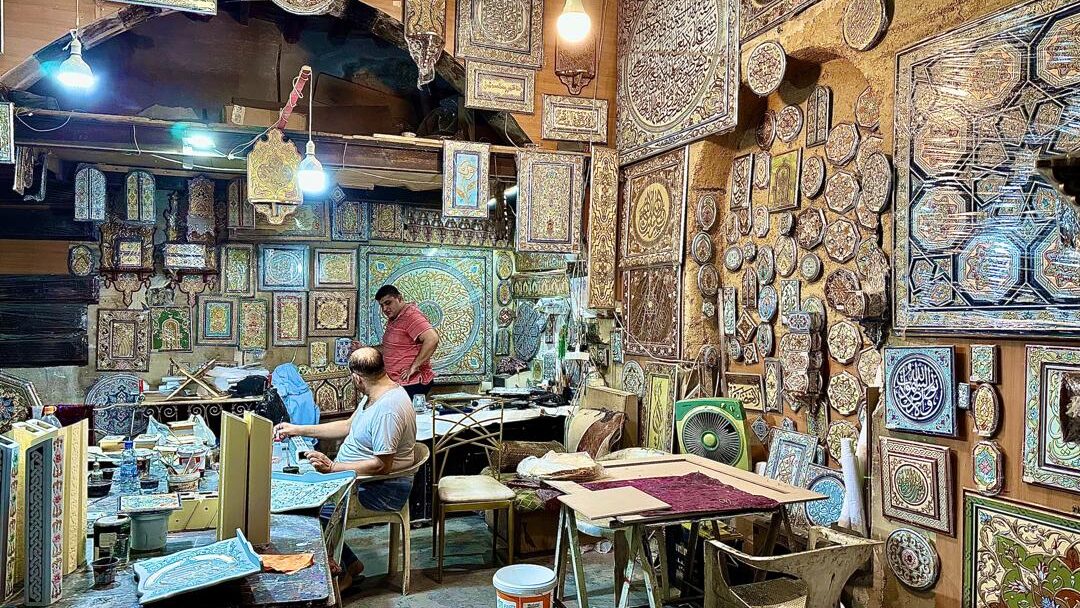
Ajami painting turns wood into something extraordinary. Raised ornament, carefully layered colours and intricate floral or geometric designs transform doors, ceilings and wall panels into richly decorated surfaces. In a working atelier, observe how a design is prepared, built up and painted by hand, and how a single motif becomes part of a much larger composition.
Your guide can connect the craft to the reception rooms of historic Damascene homes, where such decoration was both a form of beauty and a sign of skilled workmanship. Ask the painter about pigments, patterns, restoration and the difference between making a new panel and conserving an old one.
Close-up photographs reveal the texture and detail that are easy to miss when you look at an entire decorated room.
09 · 16:20–17:00
Al Nofara Café — coffee & storytelling
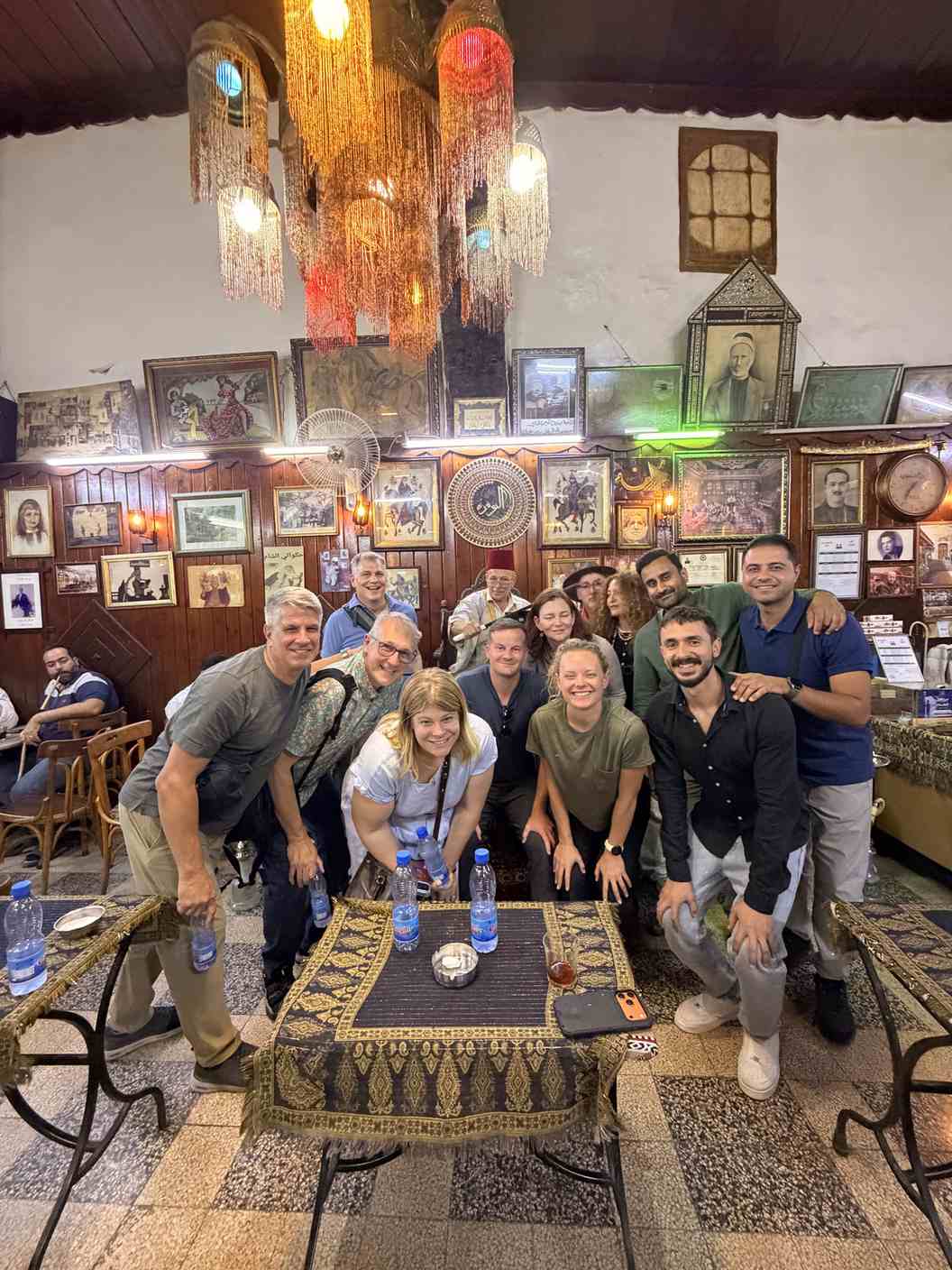
Finish the day at Al Nofara Café, tucked beside the Umayyad Mosque in the Old City. After the busy workshops, settle down with Arabic coffee or another local drink and enjoy a place associated with the long Damascene tradition of gathering, conversation and storytelling.
The café is especially known for the hakawati, the storyteller who brings tales to life through voice, gesture and dramatic pauses. Your guide can explain this tradition and the place of coffeehouses in the city’s cultural memory. A live performance depends on the café’s programme and may take place outside your visit.
It is a fitting ending: after meeting the makers who keep material crafts alive, you encounter another kind of living heritage — stories shared from one generation to the next.

Faces, hands & centuries of skill
Craftsmanship worth seeing up close.
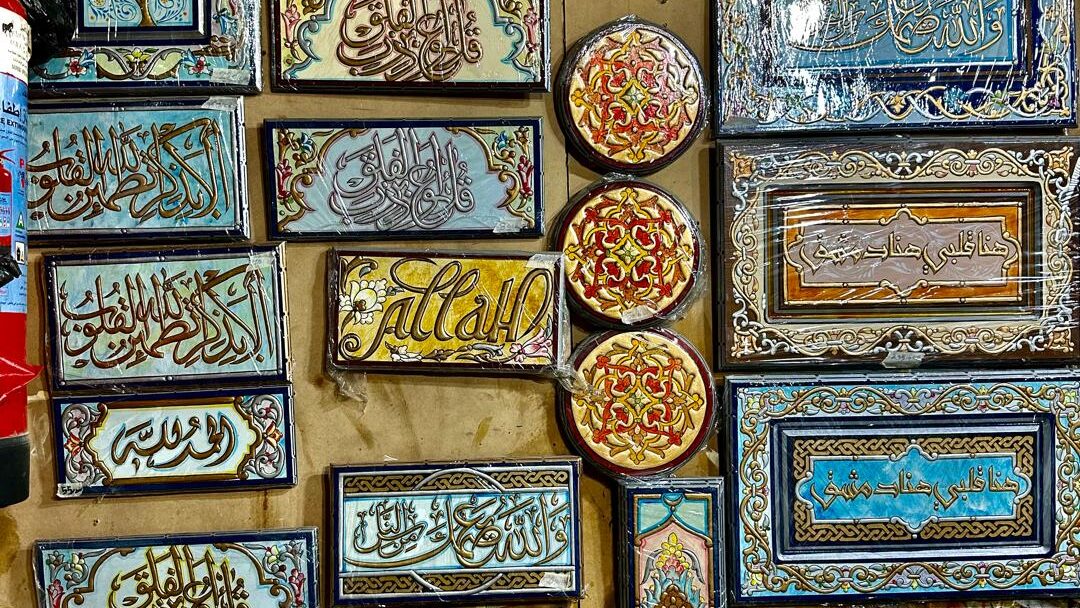
Every piece begins with someone’s hands. Watch the texture of wood, the details of a blade, the rhythm of a loom and the patience that goes into every intricate pattern.


The copperwork photograph depicts a Damascene copper artisan and is representative of the craft; the exact workshop visited is confirmed when booking.
Good to know
How the experience works
Proposed inclusions
- Private English-speaking local guide
- Personalised workshop itinerary and introductions
- Entry or demonstration fees where applicable and prearranged
- Lunch at Beit Jabri (subject to availability)
- Drinking water and an Al Nofara café stop
Final inclusions are confirmed in your personalised quotation.
Practical notes
- Suggested meeting point: Bab Sharqi (East Gate)
- Comfortable closed-toe shoes recommended for workshops
- Exact artisans and opening times confirmed in advance
- Souvenir purchases and tips are at your discretion
- Hotel transfers and travel insurance are quoted separately unless agreed
Frequently asked questions
Before you visit
Will we meet the artisans themselves?
That is the aim of the tour. We confirm the workshops and craftspeople who can welcome your party for your preferred date.
Can we try making something?
Some makers welcome supervised participation, but it depends on the craft, available time, safety conditions and advance arrangements.
Can we buy directly from the workshops?
Often, yes. Buying is optional and gives you an opportunity to support the maker directly.
Can we focus on fewer workshops in greater depth?
Absolutely. If you are especially interested in weaving, metalwork, mosaic or Ajami painting, we can adjust the programme to spend more time with those artisans.
Is photography permitted?
We ask each craftsperson before photographing their workshop or filming them at work. Your guide will help coordinate permission.
Syria tours beyond the beaten path
Come meet the makers.
Tell us your travel date, number of guests and the crafts that interest you most. We’ll organise a meaningful day around available workshops and provide a private quotation.
Request a private quoteContact Syrian Guides