
Private day trip from Damascus · Southern Syria
Bosra: The City of Black Stone
UNESCO World Heritage Site · Inscribed in 1980
Step into a Roman theatre hidden inside a fortress, walk ancient basalt streets and discover centuries of history in one extraordinary day.
Plan my Bosra tripExplore the experienceBeyond the theatre
Some cities are built in stone. Bosra is carved into a story.
A UNESCO World Heritage Site since 1980, Bosra is a city of dark fortress walls, an astonishing Roman theatre and entire streets built of black volcanic rock. It looks and feels unlike anywhere else in Syria. It is the kind of place where two thousand years of history appear not only in monuments, but in the very stones beneath your feet.
Set out from Damascus into the Hauran region for a private journey to this UNESCO World Heritage city. Once a major Nabataean centre and later the capital of the Roman province of Arabia, Bosra also preserves early Christian and Islamic heritage. With a local guide, explore its remarkable theatre, fortified walls, ancient streets and historic religious buildings at a pace that leaves room for photographs, stories and local encounters.
The tour can be adapted for archaeology enthusiasts, photographers, families or anyone who simply wants to discover a different side of southern Syria.
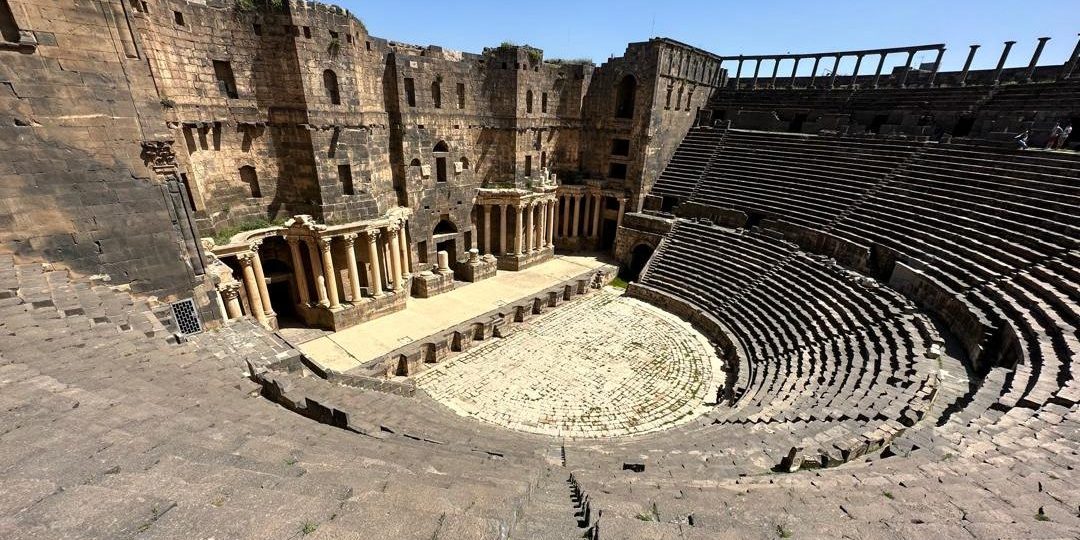
Discover the soaring tiers, monumental stage and the medieval fortress built around them.
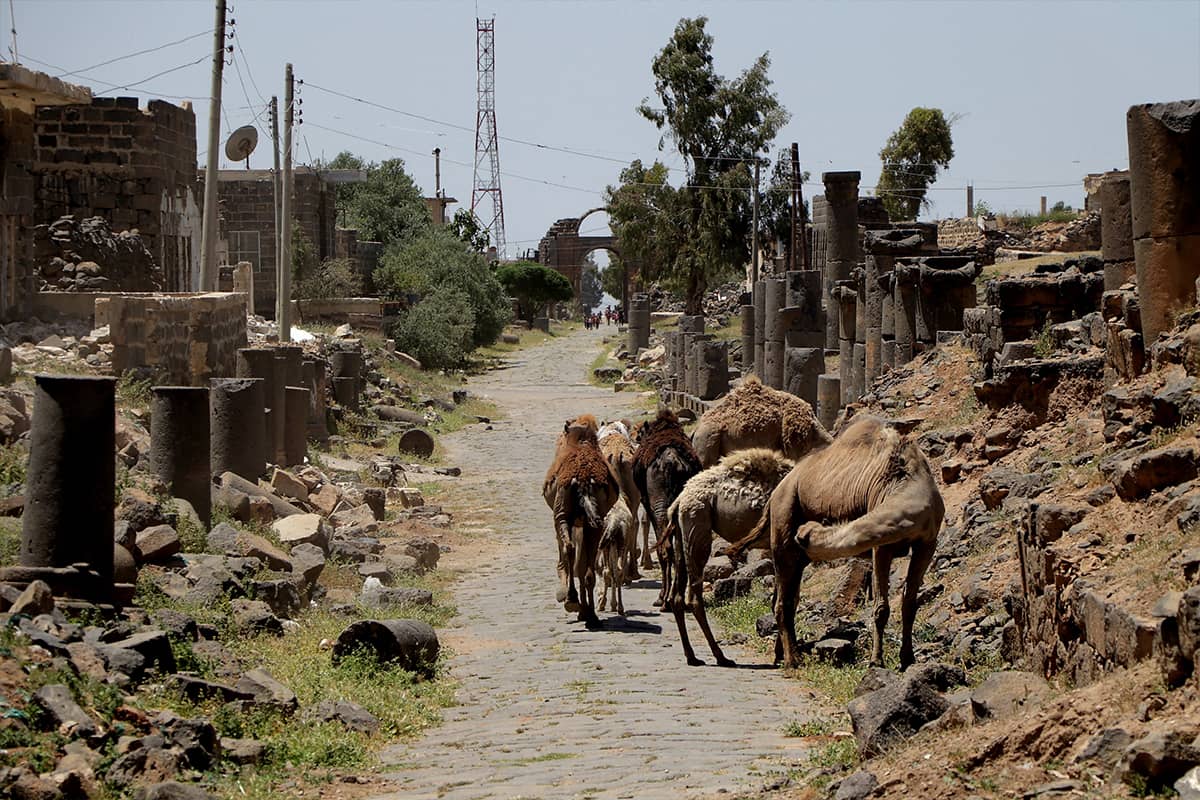
Walk between basalt houses, old streets, arches and layered ruins.
Connect the history of the place with contemporary life, local stories and the Hauran landscape.
The places, the textures, the people
Discover what makes Bosra unforgettable
Your suggested full-day journey
From Damascus to Bosra — a day among ancient civilizations
This is a suggested programme, not a fixed timetable. We confirm the road route, local access and available sites before the tour. Timing, pacing, stops and meal arrangements can be adjusted to your group.
01 · Morning departure · Damascus to Bosra
South into the Hauran — where the landscape turns to black stone
Leave Damascus in a private vehicle and travel south through the broad plains of the Hauran. As the city gives way to fields, villages and open horizons, your guide introduces southern Syria: the region’s farming traditions, caravan routes and the volcanic stone that shaped its architecture.
Bosra announces itself differently from most ancient cities. Here, walls, doorways and entire houses are constructed from deep grey basalt. The unusual material gives the town its distinctive silhouette and reveals how generations of builders adapted to the natural resources around them. The route and departure time are arranged for your date, with a comfortable pause if needed.
02 · Late morning · The Roman Theatre
Step into one of the Roman world’s great surviving theatres
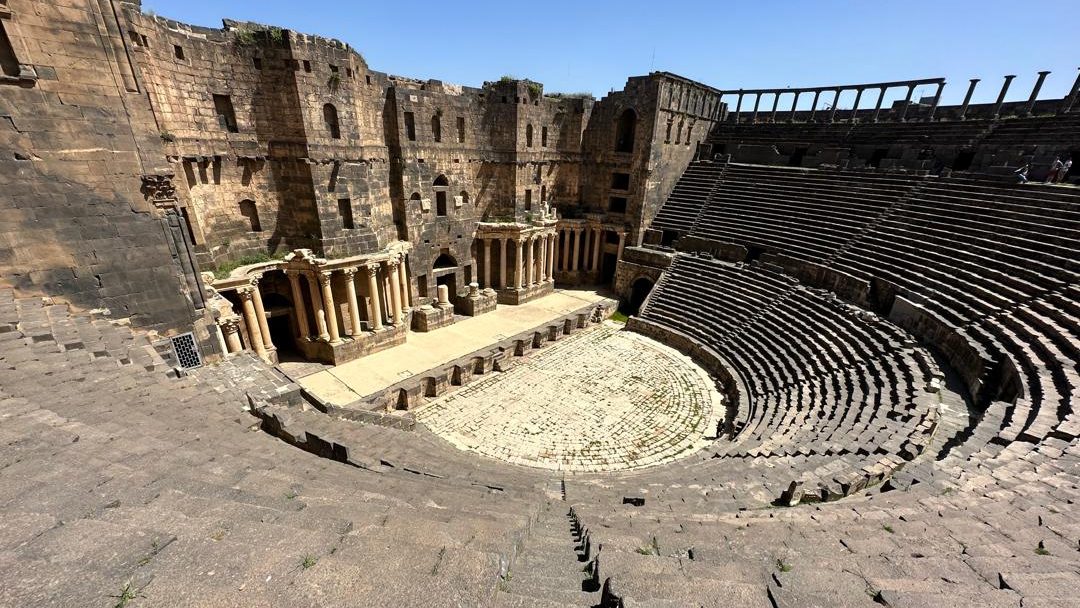
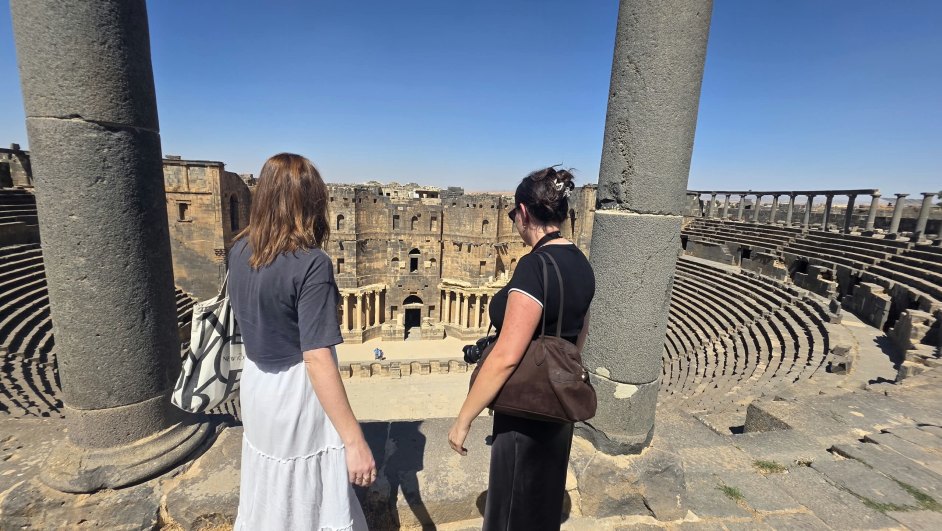
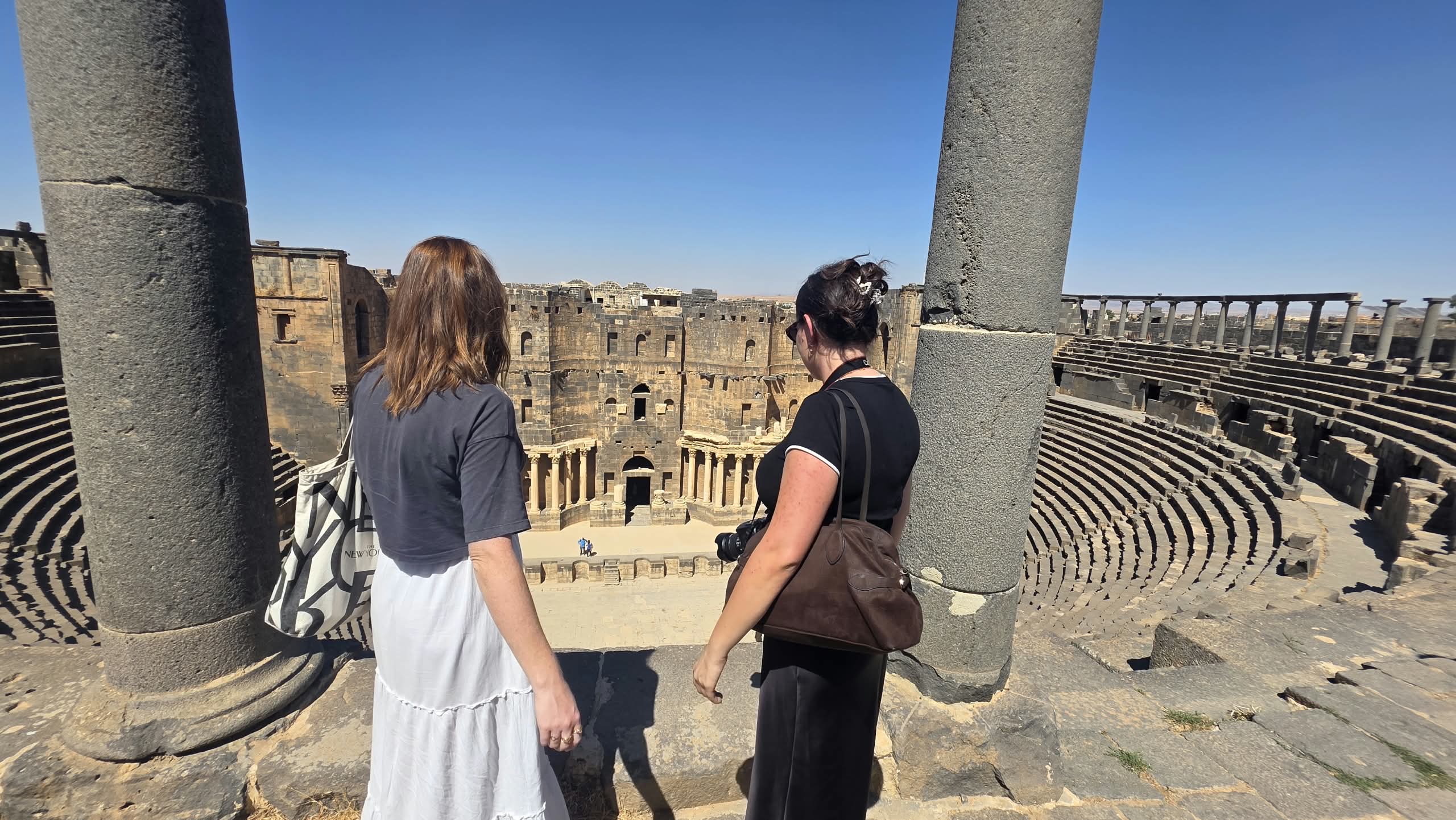
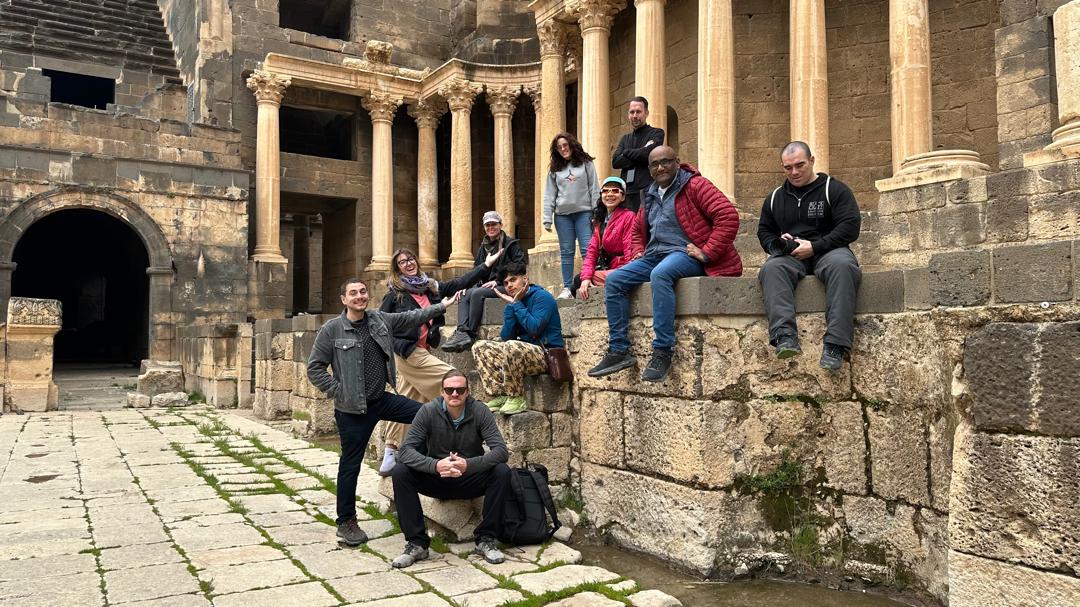
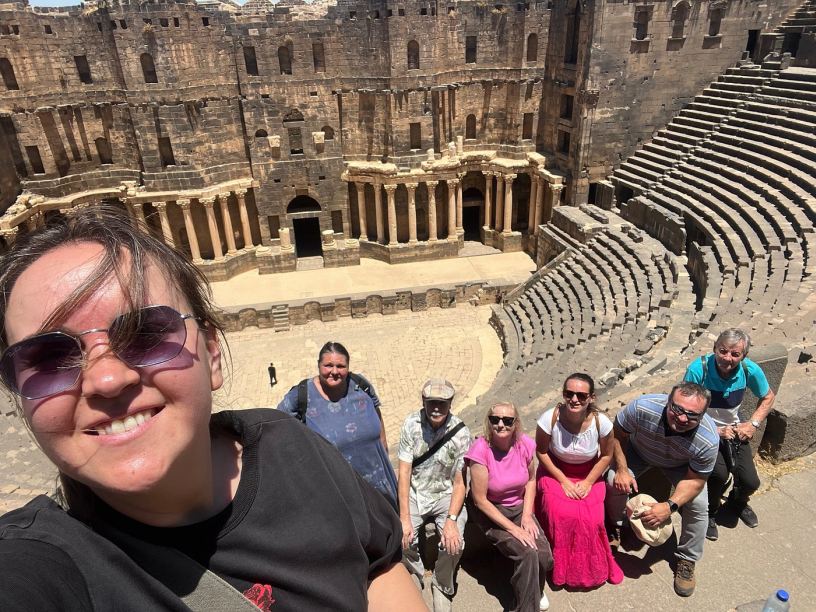
Nothing quite prepares you for the moment the fortress passage opens onto the Roman Theatre. Row after row of dark stone seats curves around a monumental stage, its columns and architectural details rising above the performance space. Built in the second century CE, the theatre is one of the great surviving monuments of Roman Syria.
Your guide shows how the seating, entrances and stage worked together, how spectators once experienced public performances, and why the building remained so remarkably intact. Take your time at the upper viewpoints and lower seating levels where access allows. From different angles, the same monument can feel like a theatre, an arena and a vast sculptural landscape.
This is a visit to enjoy without rushing — with space for photographs, questions and a closer look at the engineering behind the spectacle.
03 · Midday · Theatre citadel
From performances to fortifications — the castle around the theatre
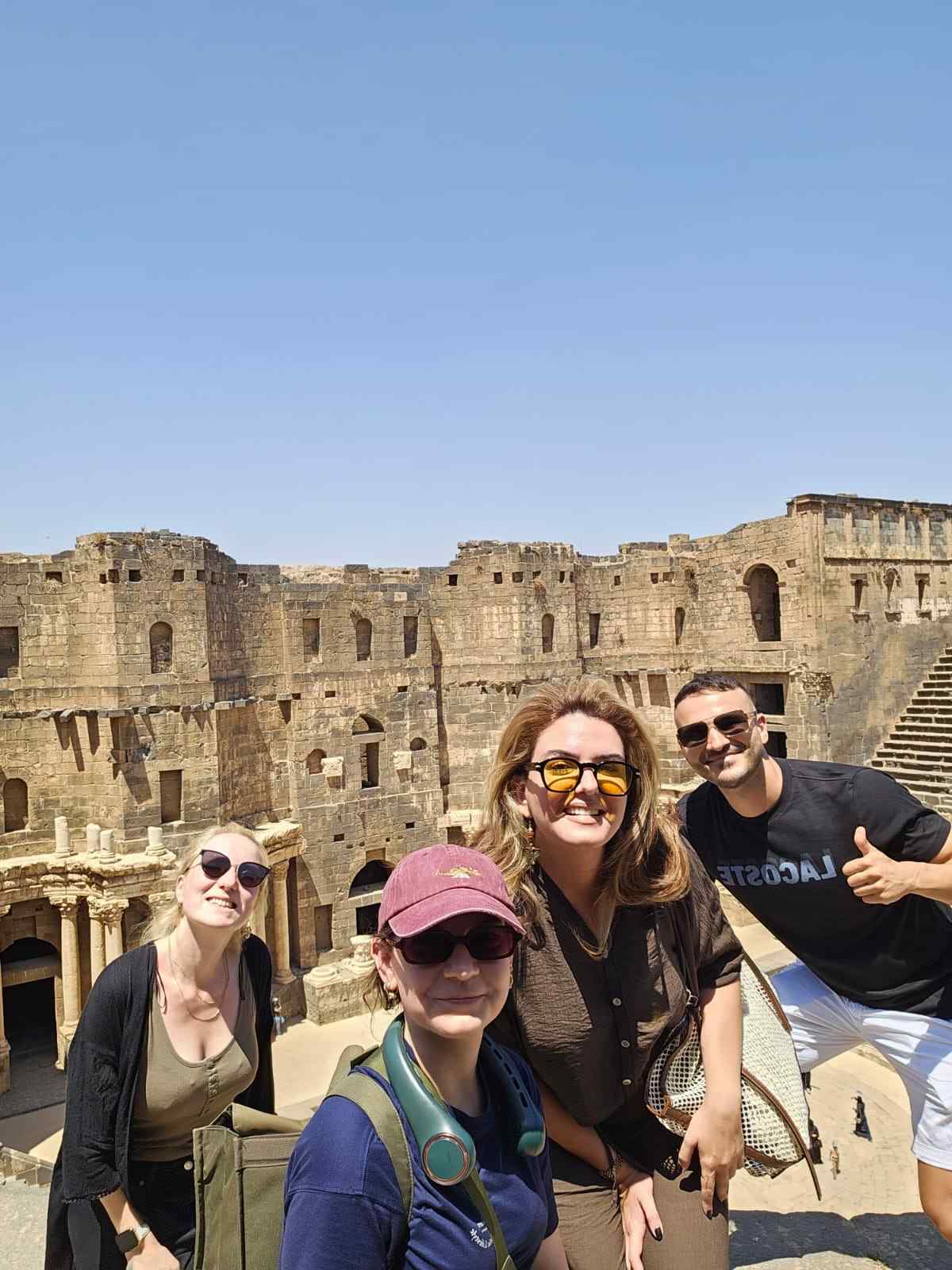
From outside, the theatre looks almost like a medieval fortress. Walls, defensive towers and later fortifications wrapped around the Roman building, transforming it into a citadel over the centuries. The change of purpose is part of what makes Bosra extraordinary: a place built for entertainment became a stronghold, while the original stone structure survived inside.
Walk the accessible approaches and notice how later builders worked with the older Roman monument rather than simply clearing it away. Your guide connects the citadel’s medieval history with the city’s earlier role as a Nabataean centre and the capital of the Roman province of Arabia.
Whether you’re interested in military architecture, Roman history or photography, the contrast between the fortress exterior and the theatre within is unforgettable.

04 · Early afternoon · Ancient city walk
Walk the basalt streets of a city with many lives
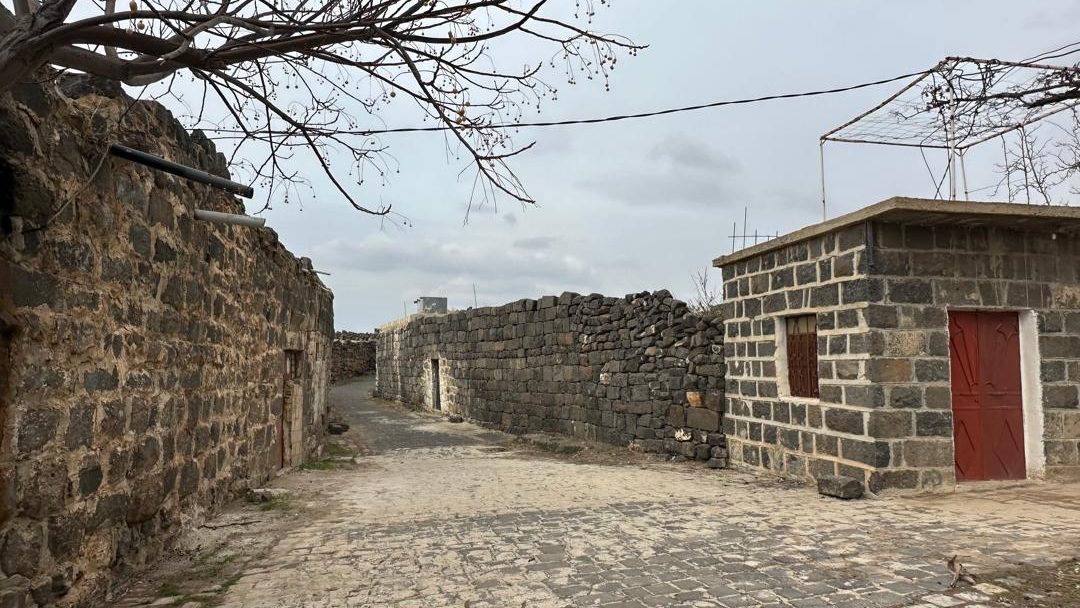
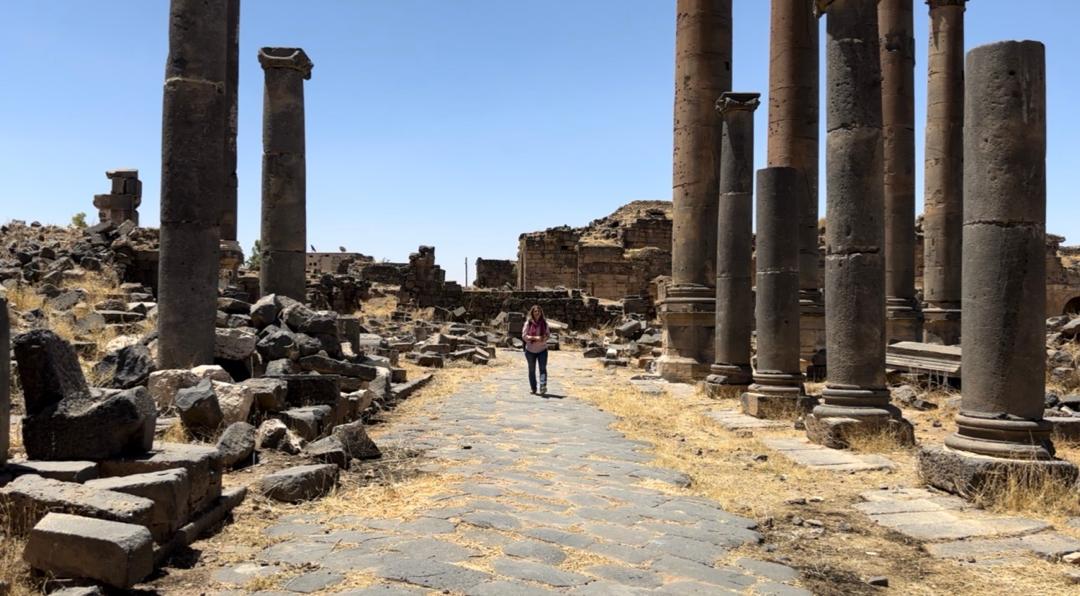
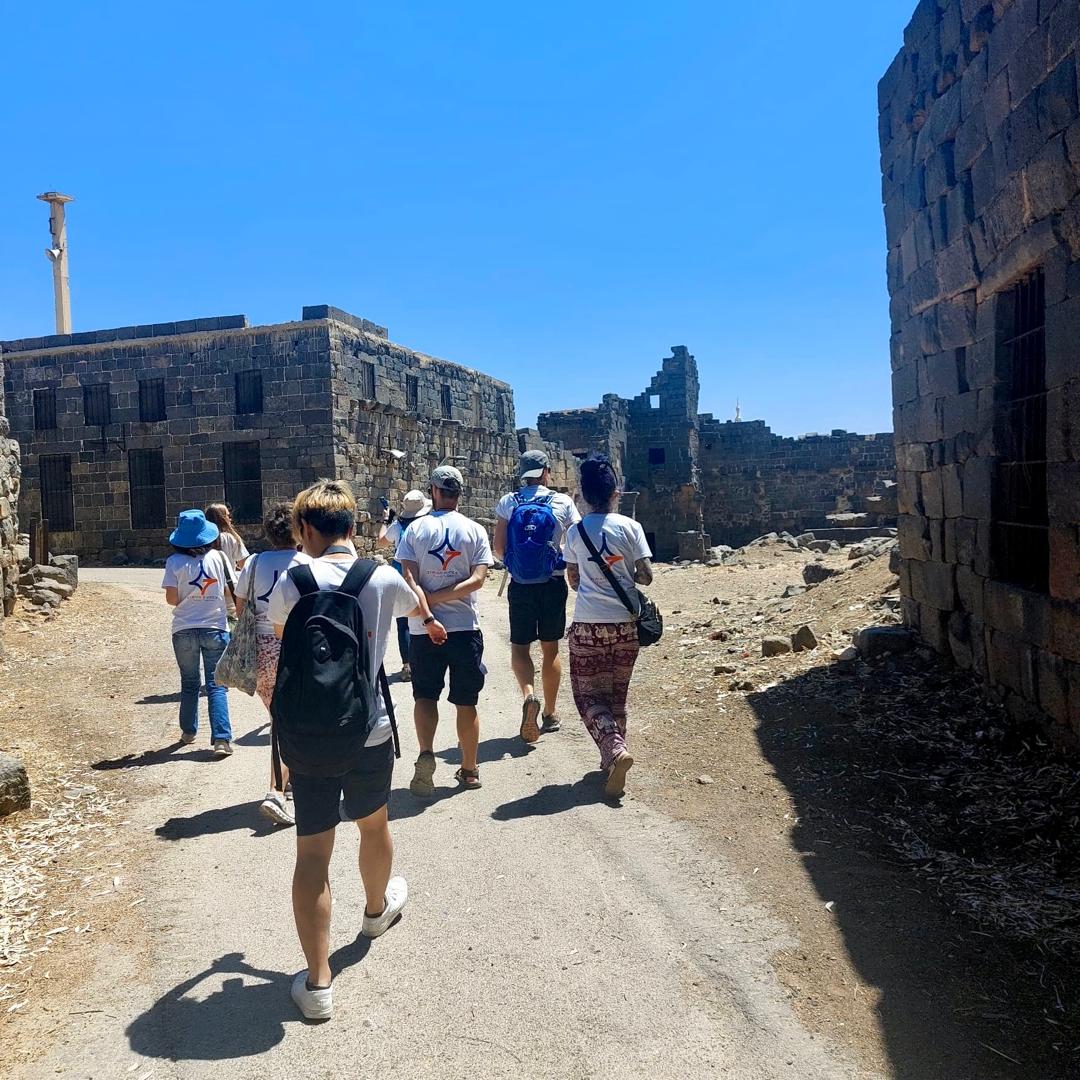
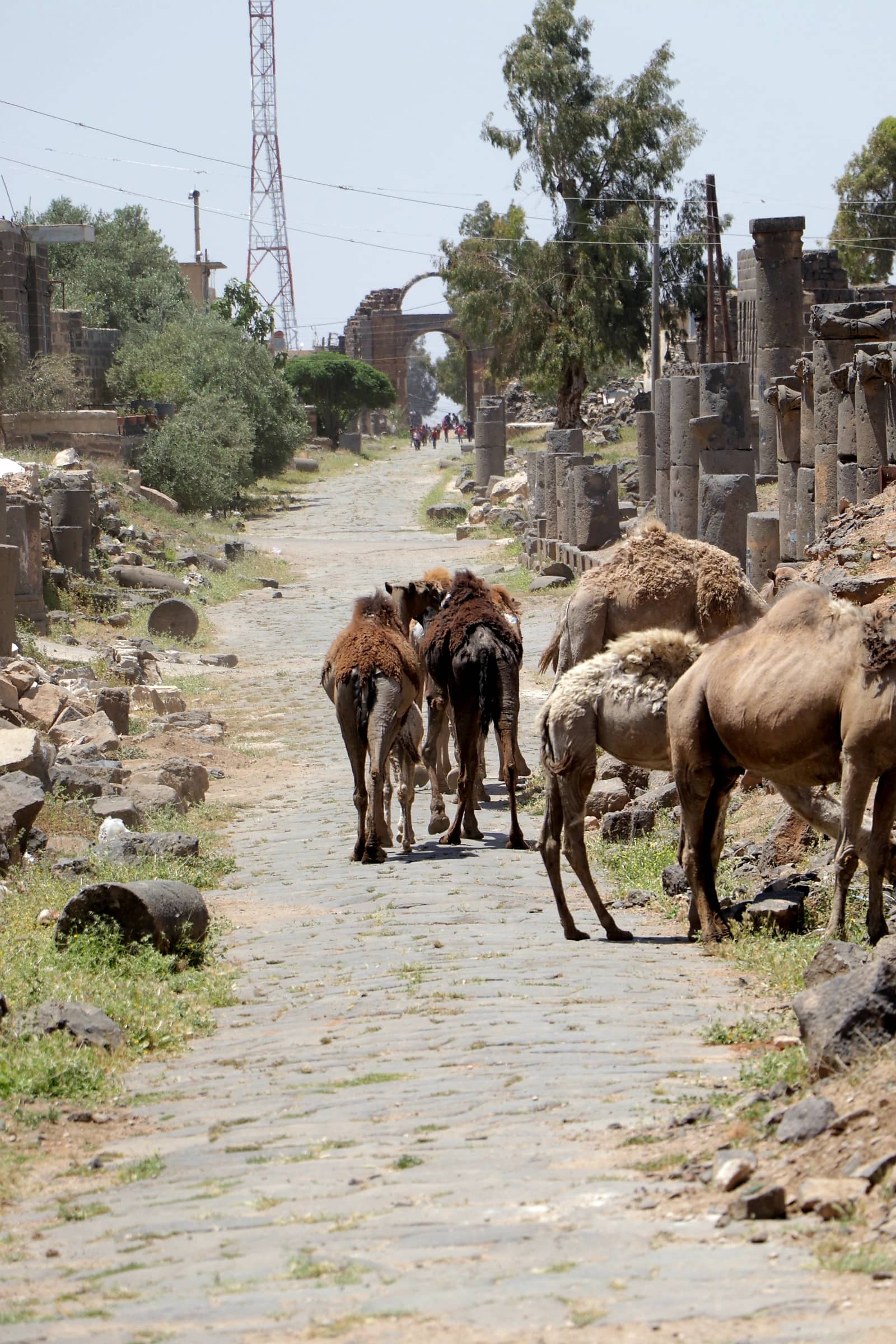
Beyond the citadel lies an entire archaeological landscape. Follow sections of old streets between black-stone buildings, columns, arches and the remains of public spaces. This was once a city of merchants, soldiers, pilgrims and families, connected to routes leading from Arabia to Damascus and beyond.
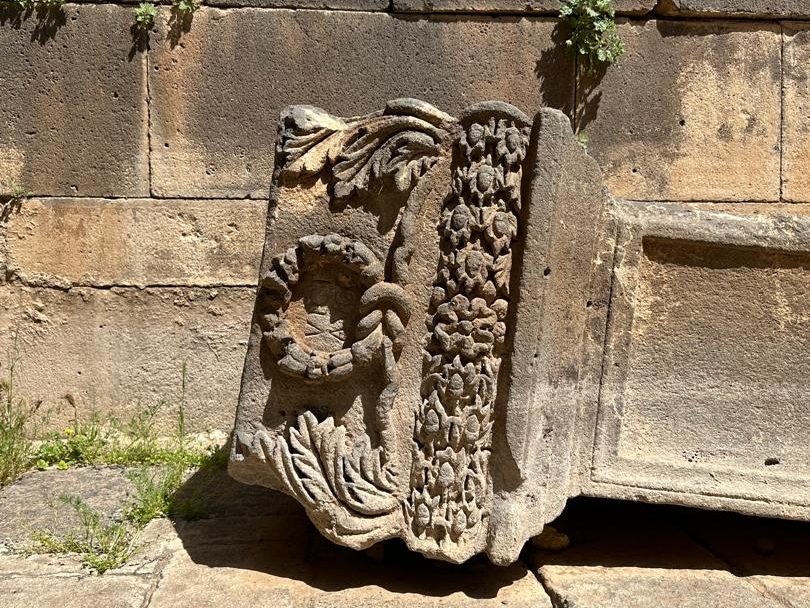
Bosra’s ruins tell more than a Roman story. Earlier Nabataean traditions, Byzantine buildings and later Islamic architecture stand within the same urban fabric. Your guide helps you imagine the original street life while pointing out surviving details that are easy to miss: a carefully cut lintel, an older wall reused in a newer building, or the rhythm of stone columns along a route.
We follow an itinerary that respects the parts of the archaeological city open to visitors, with stops for photographs and time to appreciate its remarkable atmosphere.

05 · Early afternoon · Religious heritage
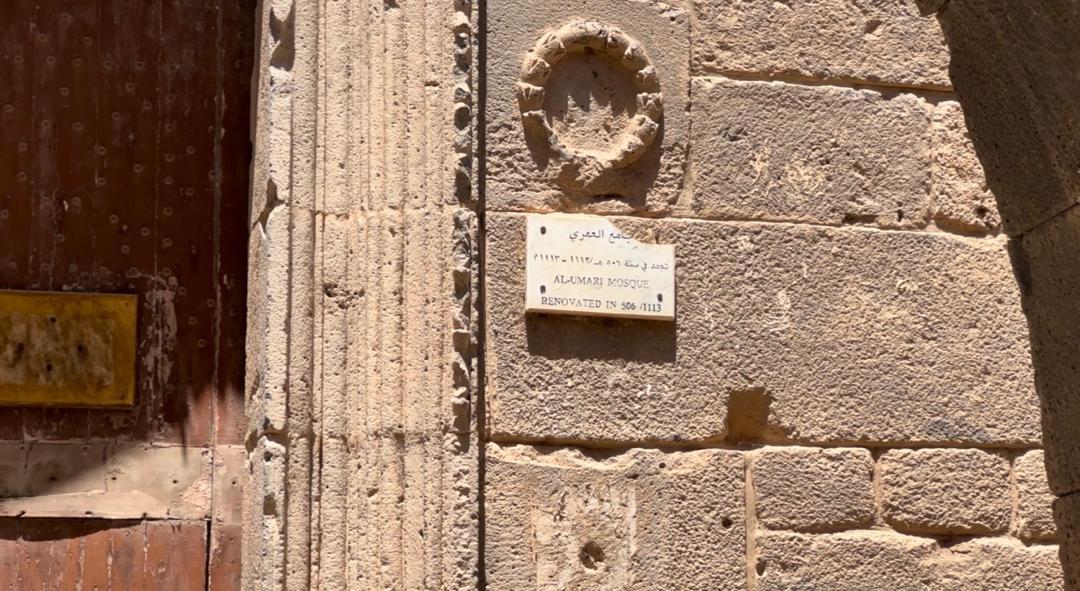
From an early Christian cathedral to the Al-Omari Mosque
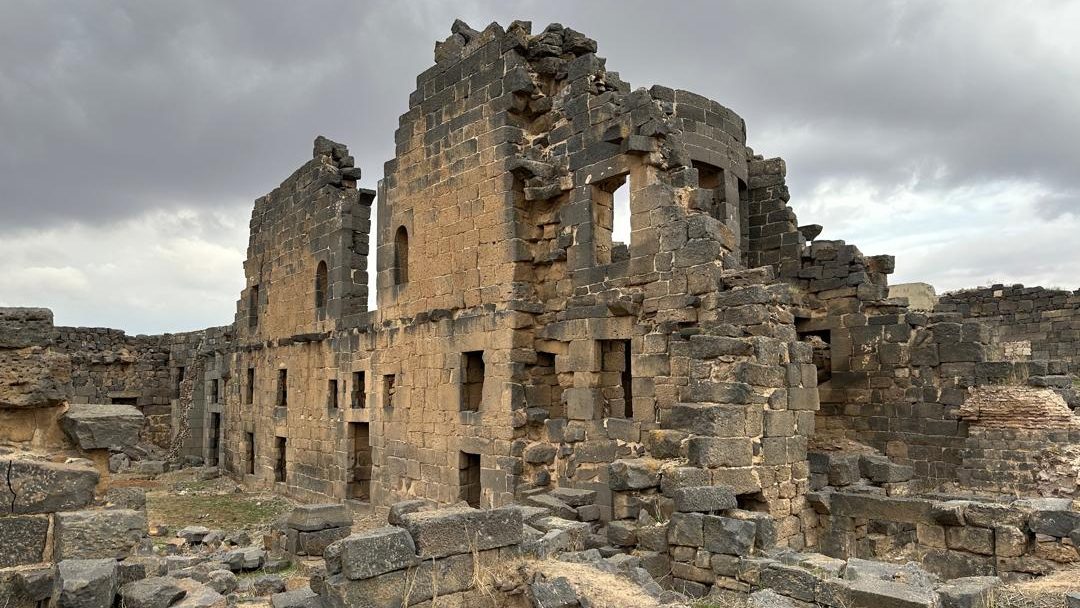
Bosra is also a place where the region’s religious history becomes visible in architecture. The surviving remains of its Byzantine cathedral recall the city’s importance as an early Christian centre. Nearby, the Al-Omari Mosque reflects another chapter in Bosra’s story, with early Islamic heritage embedded in the same black-stone landscape.
Rather than approaching these places as isolated monuments, your guide explains how beliefs, communities and buildings evolved across different centuries. Look closely at the relationship between old construction techniques and later artistic traditions: the same basalt appears in buildings created for very different purposes.
Visits to religious sites are respectful of worship, prayer times and any current access restrictions. When entry is limited, the exterior and surrounding archaeology still make a meaningful stop.
06 · Afternoon · Local life & return to Damascus
A slower farewell — local encounters, lunch & the journey back
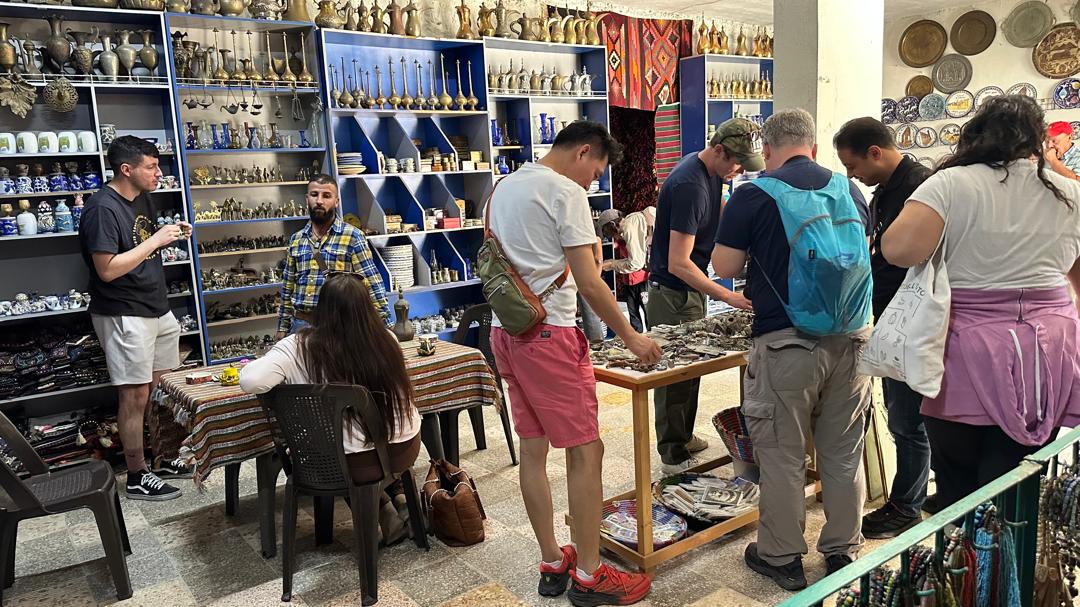
After the major monuments, leave a little room for the living town. Depending on the day, we can stop for a local meal or refreshments, visit an open shop, or simply enjoy a conversation about life in Bosra. The exact lunch arrangements depend on availability and your preferences, and your guide will help choose a comfortable option.
If you love photography, there is also time for one last view of the basalt houses and ancient stonework. We then return by private vehicle to Damascus, with drop-off at your hotel or another agreed point.
Travelling privately means the day can be shaped around you: an earlier return, a longer archaeological walk or more time taking photographs can all be discussed in advance.
The beauty is in the details
More perspectives on the black-stone city
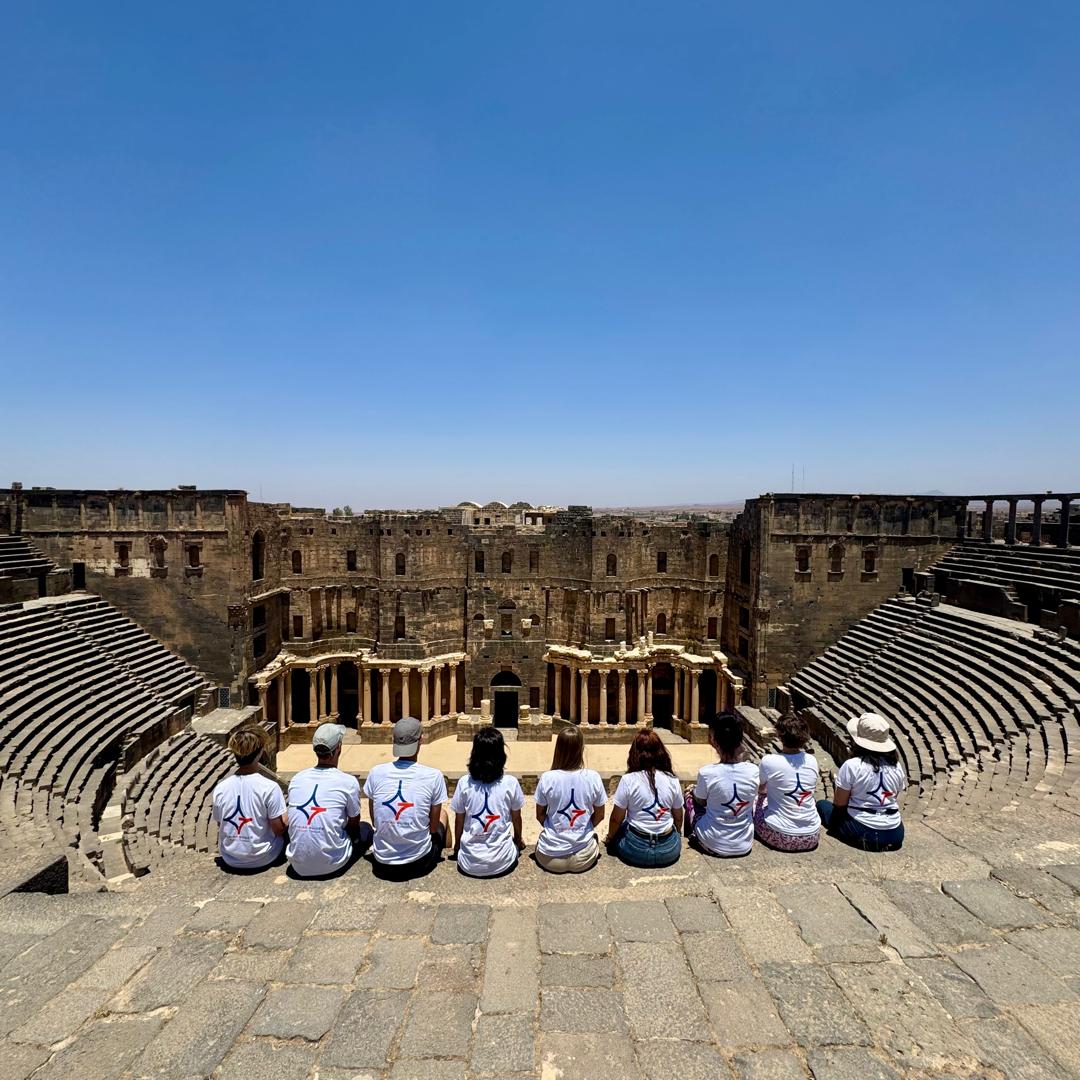
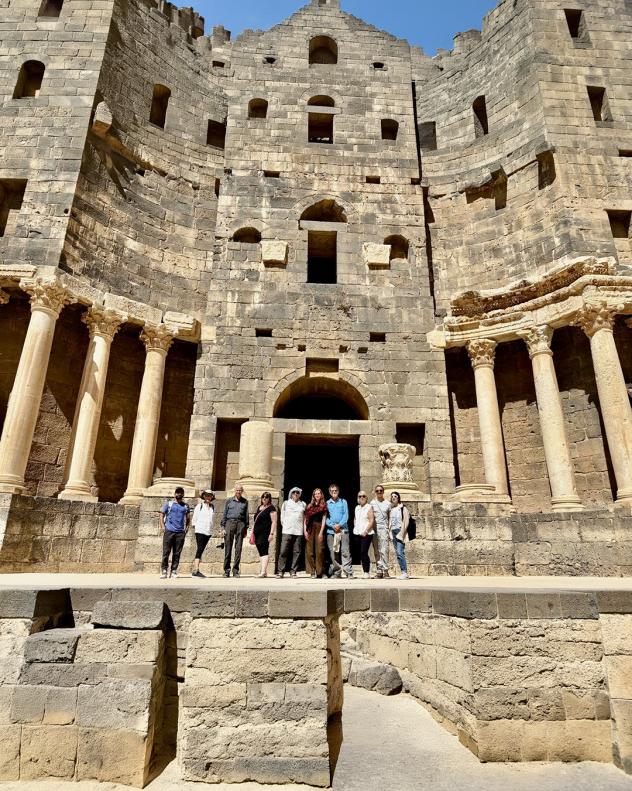
The theatre is the headline attraction, but smaller details are just as memorable: worn steps, intimate corners, centuries-old stonework and moments shared with fellow travellers.

Planning your day trip
Everything you need to know
Proposed arrangements
- Private transport from Damascus and return
- English-speaking Syrian guide
- Guided exploration of Bosra’s principal accessible landmarks
- Stops for photographs and local encounters
- Customised timing based on your group and interests
Entrance fees, meals, drinks and any additional services will be specified in your personalised quotation. Nothing is automatically charged.
Good to know
- Pick-up and drop-off in Damascus can be arranged
- Wear sturdy, comfortable shoes for uneven archaeological paths
- Bring sun protection and drinking water
- Modest clothing is recommended for any mosque visit
- Some ancient steps and uneven surfaces may not suit all mobility needs
- Visits depend on opening arrangements and local access conditions
We confirm the programme shortly before travel and can adjust it where necessary.
Interested in the story behind Bosra’s unusual architecture? Read our guide to Bosra’s black basalt city.
Frequently asked questions
Before you go to Bosra
Can I visit Bosra as a day trip from Damascus?
Yes, Bosra is a natural full-day excursion from Damascus. The drive, guided archaeological walk and return journey are planned around conditions and your preferred pace.
Will we enter the Roman theatre?
The Roman theatre is the centrepiece of the suggested experience. We confirm the accessible sections and opening arrangements in advance and adjust the itinerary if anything changes.
Is Bosra suitable for families?
Yes, for many families it is a memorable place to explore. We can adapt the historical explanations and pace to different ages. Ancient stone steps and uneven paths require supervision for younger children.
Can we add more archaeological sites?
We can discuss extra stops in southern Syria if there is enough time and access allows. For a relaxed visit, Bosra itself offers plenty to discover.
What should we wear or bring?
Comfortable shoes are essential. Bring sun protection, water, and suitable clothing for the season. If the day includes a religious site, modest clothing is recommended.
Is lunch included?
Lunch or refreshments can be arranged, depending on your preference and suitable local options. The inclusions and exact cost will be clear in your personal quotation.
Syria tours beyond the beaten path
See Bosra beyond the postcard.
Tell us your preferred date, the number of guests and what interests you most — the Roman theatre, archaeology, photography or local life. We will build your private Bosra day trip from Damascus and send a personalised quotation.
Request a private quoteContact Syrian Guides