
Today, Damascus said goodbye to Colette Khoury, one of the most important women in modern Syrian literature. For many readers outside the Arab world, her name may still be unfamiliar. But it should not stay that way. Colette Khoury was one of the writers who changed what Arabic literature could do when a woman spoke in her own voice. She wrote about love, pride, loneliness, disappointment, freedom, and the private storms inside a woman’s heart at a time when many people still expected women to stay quiet about such things. Her death today closes a long and remarkable chapter in Syrian cultural life.
To understand why she matters, it helps to begin with a simple truth: Colette Khoury does not only tell us about one writer. She tells us about a whole Syria that many foreign audiences rarely get to see. Not the Syria of headlines and war maps, but the Syria of old Damascus houses, French schools, newspapers, political debate, Christian and Muslim families living in the same city, women reading novels, poets falling in love, and a society trying to decide how modern it was ready to become. Her books open a window onto that Syria with unusual intimacy. They show a country that was conservative in many ways, but also educated, urban, multilingual, and full of argument about women, class, marriage, and freedom.
Colette Khoury was born in Damascus into a family that stood very close to the center of Syrian public life. She came from a Christian household, and that detail matters, not because it makes her unusual in a narrow way, but because it reveals something essential about Syria in her time. Her life belonged to a Damascus where Christian families were not outside the national story. They were deeply inside it. They taught, wrote, argued, governed, and helped shape the country’s public identity. In Colette Khoury’s life, Syrian patriotism, Arab culture, Christian heritage, and French education did not cancel one another out. They lived together.
There is a lovely story from her childhood that says more about her than any official biography ever could. As a little girl, she would write messages about her worries and feelings and slip them under her father’s pillow. By morning, she would find his answer waiting for her under her own. It is a beautiful image, and it feels like the perfect beginning for a writer. Before literature was a profession, it was already a secret conversation. Before she published anything, she had discovered that words could carry sadness, curiosity, protest, and affection from one heart to another. In a way, that is exactly what she kept doing for the rest of her life.
The granddaughter of Fares Khoury
Her grandfather was Fares al-Khoury, one of the great statesmen of modern Syria. He served as prime minister, speaker of parliament, diplomat, and one of the leading Syrian figures at the birth of the United Nations. He was also one of the founders of modern Syrian public life in a deeper sense: a lawyer, teacher, nationalist, and a symbol of civic Syria, where belonging to the country was supposed to be bigger than sect. He helped build institutions, defend Syrian independence, and represent the country on the world stage. For Syrians, his name still carries dignity.
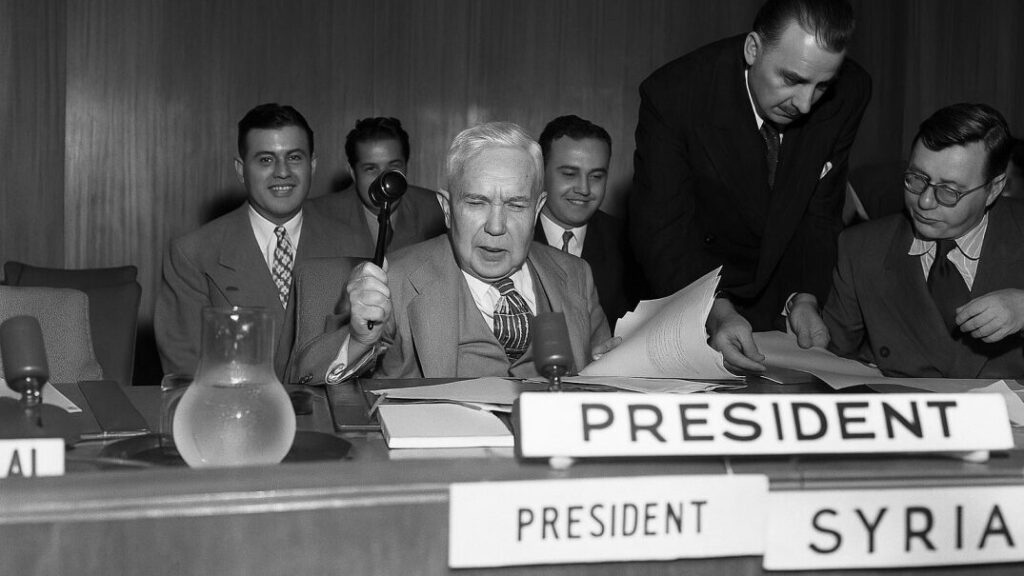
That family background was not just an impressive fact in Colette Khoury’s biography. It shaped the air she breathed. She grew up around politics, memory, language, and public responsibility. Yet what is striking is that she did not simply live in her grandfather’s shadow. He helped shape Syria in parliament halls and diplomatic rooms. She helped shape Syria on the page. He defended the country in the language of law and sovereignty. She defended its inner life, especially the inner life of women, in the language of fiction. That is one reason her story feels so rich. In one family, you can see politics and literature meeting each other.
Her grandfather’s importance also tells foreign readers something valuable about Syrian society. Fares al-Khoury, a Christian, rose to the highest levels of public office in a Muslim-majority country and became one of the faces of Syrian nationalism. That does not mean Syria was perfect or free of tension. No country is. But it does mean that the Syria which formed Colette Khoury was more layered, more plural, and more socially mixed than outsiders often assume. Her very family story pushes back against flat stereotypes.
A writer shaped by Damascus, French culture, and Arabic feeling
Colette Khoury studied French literature and moved between Damascus and Beirut, carrying both Arabic and French into her mind and style. She wrote in Arabic, French, and English, and that multilingual background is important. It helps explain why her writing could feel both very Damascene and very open to the wider world. She belonged to a generation of Syrian intellectuals who could read European literature, live in Arab emotional worlds, and then create something that was neither a copy of Europe nor a closed local tradition. Her voice grew from that meeting point.
Her first book was not a novel but a French poetry collection, Vingt Ans or Twenty Years, published when she was still very young. It gathered the feelings of a young woman already restless with social limits and already trying to understand love, frustration, and selfhood. There is another revealing moment from that period. When she showed the book to her father, he is said to have looked at it warmly and then told her to imagine how much more meaningful it would be if it were written in Arabic. The comment stayed with her. She decided her next book would be in Arabic. That decision changed literary history.
The novel that shocked the Arab world
That next book was Ayyam Ma‘ahu, usually translated as Days with Him. It appeared in 1959 and made Colette Khoury famous across the Arab world. The reason was not simply that it was a love story. Arabic literature had always known love. The shock came from something more specific: here was a woman writing openly, directly, and emotionally from inside a woman’s own experience of love. She was not speaking as a moral lesson, not speaking as a symbol, not speaking through a male voice. She was speaking as herself, or very close to herself, and readers felt the difference immediately.
The novel is often linked to her love story with the Syrian poet Nizar Qabbani, and that connection gave it even more electricity in the public imagination. But even if readers put gossip aside, the book remains important for its literary courage. Its heroine does not want a life reduced to a kitchen, a marriage contract, children, and silence. She wants to feel, choose, think, and live as a full person. That is the real power of the novel. It says that a woman’s emotional life is not trivial. It is not shameful. It is not secondary. It is literature.
This is also where foreign readers can learn a great deal about Syrian society in the middle of the twentieth century. Days with Him is not useful because it explains Syria like a textbook. It is useful because it lets us feel the pressure inside ordinary life. Through one woman’s thoughts and desires, we see the tension between education and obedience, between modernity and family control, between public respectability and private hunger. We see an urban Syrian society where women were becoming more educated, more aware, and more articulate, while many old expectations still held strong. It is exactly this tension that gives the book its life.
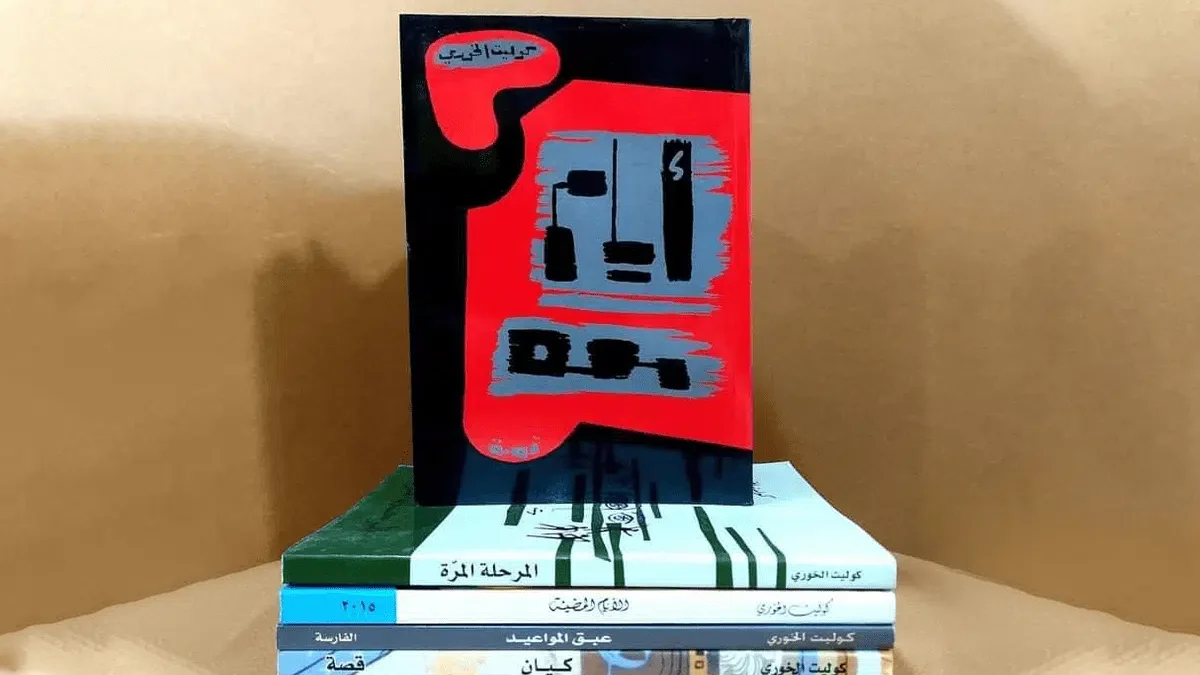
In other words, Colette Khoury was doing much more than writing romance. She was quietly mapping power. Who gets to choose in marriage? Who gets watched? Who gets forgiven? Who gets called selfish, shameless, or difficult? Her fiction shows how family, class, and gender work together in ways that can look soft on the outside and harsh on the inside. That is why her work still feels modern. Many readers from Europe, America, or Asia may recognize these struggles even when the setting is different. The clothing changes. The pressure often does not.
More than one scandal, more than one book
Two years later, she published One Night, and again she pushed into uncomfortable territory. This time she explored the emotional emptiness of marriage and the damage that comes when a woman’s life is treated like a social arrangement rather than a living human experience. In her hands, marriage could become not a safe ending but a place of loneliness, humiliation, and moral confusion. This was daring material, but what made it last was not daring alone. She wrote these situations with feeling. She understood how a woman might be trapped not only by rules, but by the deadness of a life that looked respectable from the outside.
That is one of the best ways to read Colette Khoury today. She did not shock for the sake of scandal. She wrote about emotional truth, and emotional truth can be scandalous when society prefers polite silence. Her women are not cardboard rebels. They ache, hesitate, desire, judge themselves, and try to build dignity inside worlds that often make dignity difficult. That is why her work sits at an important point in modern Arabic literature. She helped make the female self central.
And yet it would be a mistake to reduce her to “the woman who wrote boldly about love.” That is only one part of her. Her career expanded far beyond one famous controversy. She wrote about Damascus, about memory, about war, about national feeling, and about the people and places that shaped Syria’s modern identity. She moved between poetry, novels, short stories, essays, memoir-like writing, and historical work. Titles such as Damascus, My Big Home already show how central the city remained to her imagination. For Colette Khoury, Damascus was never just a backdrop. It was a living presence.
That side of her work is especially valuable for foreign readers. Through her, Damascus appears not as a headline but as a mood: old stone houses, private rooms, educated daughters, memory-heavy families, the closeness of religion and daily life, the pull of reputation, the warmth and suffocation of social belonging. You begin to understand how a city can be beautiful and restrictive at the same time, tender and controlling at the same time. Colette Khoury knew that contradiction very well. She wrote from inside it.
What her life tells us about Syria
Her Christian background matters here too, but not in a narrow or exotic way. It matters because it helps foreign readers see that Syrian identity has long been richer than the simple labels often used for it. Old Damascus has for centuries held different religious communities close together, and places like Bab Touma remain part of the city’s cultural memory. In Colette Khoury’s life, being Christian did not make her less Syrian and did not place her outside Arab culture. It sat naturally inside both. That is a very important thing for outsiders to understand. Syria has never been made of one color only.
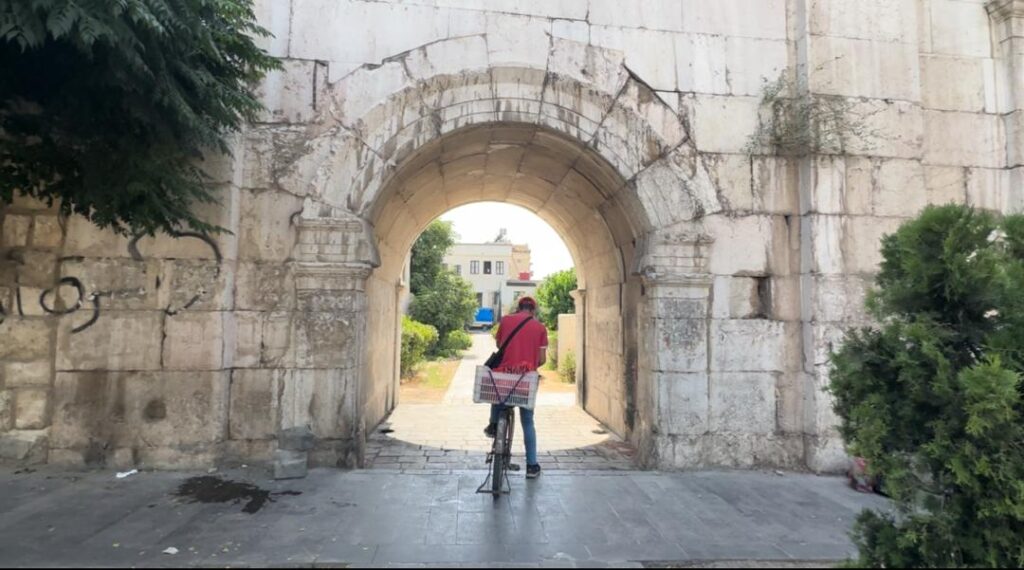
This is also why her work belongs to the story of a more open Syria, especially in the mid-twentieth-century urban world. She came from a society where girls could attend French schools, where literature crossed languages, where women were beginning to claim more space in public and artistic life, and where the argument over female freedom was already alive. She did not invent that argument by herself. But she gave it unforgettable language. She helped turn it into art.
Later, she also worked to preserve the memory of her grandfather through Papers of Fares al-Khoury. That project matters because it shows another side of her character. She was not only a novelist of feeling. She was also a keeper of memory. She understood that Syria is made not only of passion and rebellion, but of archives, institutions, speeches, and remembered lives. The emotional and the historical met naturally in her world.
Why foreign readers still need Colette Khoury
One sad truth is that Colette Khoury is still less translated than she deserves to be. Many major twentieth-century Syrian women writers remain easy to find in Arabic and hard to find in English or other world languages. That means foreign readers often meet Syria through politics first and literature later, if at all. In Colette Khoury’s case, that gap feels especially unfair. She is exactly the kind of writer who can help non-Arab readers understand Syria from the inside: not through slogans or news reports, but through rooms, conversations, longings, disappointments, and the daily negotiations of ordinary life.
And perhaps that is the best way to remember her now. Not only as a “pioneer,” though she was one. Not only as the granddaughter of a great statesman, though she was that too. Not only as a bold woman who wrote about love, though she certainly did. Remember her as a guide to a Syria that was cultured, layered, urban, plural, proud, and emotionally alive. Remember her as a woman who understood that a nation is not only built in parliaments and treaties. It is also built in language, in memory, in private rebellion, and in the courage to say what many others are still too afraid to say.
Colette Khoury leaves behind more than books. She leaves behind a voice that widened the space for Arab women to speak. She leaves behind a Damascus that still breathes through her pages. And she leaves behind a reminder that Syrian history is not only a history of conflict. It is also a history of writers, thinkers, and women of extraordinary force. For anyone who wants to understand Syria with more depth, more tenderness, and more truth, she is one of the names worth starting with.