
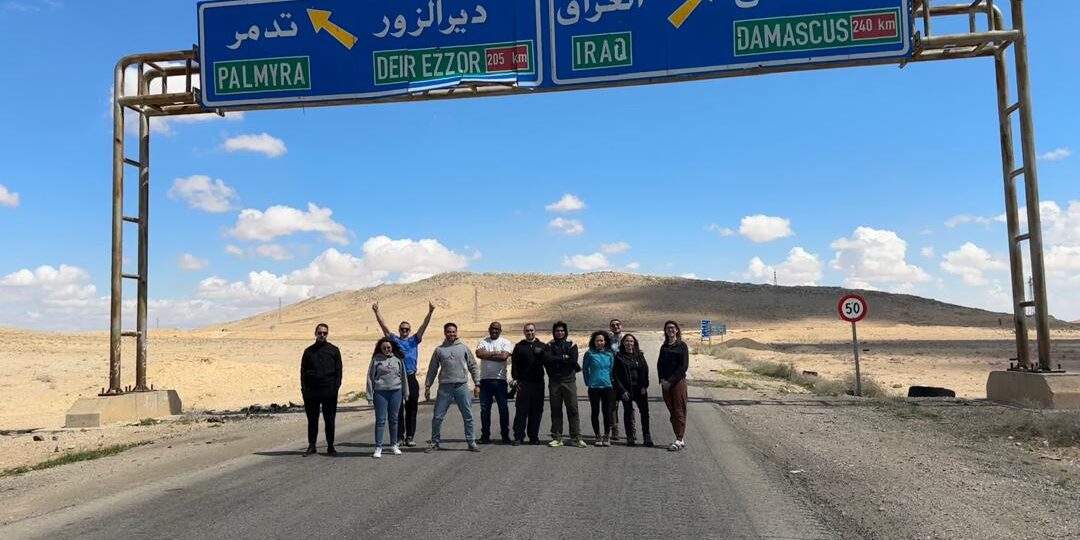
The United States Congress has moved an important step closer to repealing the Caesar Act, the sanctions law that has shaped Syria’s economic environment since 2020. The repeal has been included inside the new U.S. National Defense budget, which is expected to pass before the end of the year. If the process is completed, it will mark the end of one of the most restrictive sanction frameworks ever placed on Syria, opening a new chapter for the country’s economy and its relationship with the outside world.
Many people have heard the phrase “Caesar Act” over the years without ever understanding what it actually means. The law began in 2019, inspired by a Syrian military defector known as “Caesar,” whose leaked photographs documented human rights violations during the war. In response, the United States created sanctions that targeted major sectors connected to the Syrian state: reconstruction, energy, finance, infrastructure, and any large-scale foreign investment linked to the government. Although the law was political in its intention, the consequences extended far beyond politics. It affected the stability of the currency, made international financial transfers more complicated, increased the cost of imports, and slowed down national rebuilding efforts, from damaged heritage sites to essential infrastructure.
For travelers, the potential end of the Caesar Act does not change the experience of visiting Syria today. Instead, it influences the environment around travel and the direction the country may move toward in the coming years. When sanctions are lifted and international restrictions begin to ease, financial systems gradually open up. Banks abroad become more willing to work with local institutions, which means payments, transfers, and reservations may become easier and more predictable. This is especially important in a region where financial cooperation has long been affected by the sanctions.
The aviation sector is another area likely to see long-term improvement. Global airlines tend to avoid heavily sanctioned countries, not because the airports are inactive, but because international regulations create layers of caution. Once the Caesar Act is removed, the atmosphere shifts. Companies feel more comfortable considering new routes, or at least exploring partnerships that were previously blocked. Over time, this can lead to more flight options, better pricing, and a wider network of connections that simply makes travel planning smoother.
The end of the sanctions may also revive foreign investment in ways that touch the tourism experience more directly. Investors, hotel groups, cultural organizations, and development agencies who avoided the Syrian market in recent years may now begin to re-enter. Their involvement can support the restoration of historic buildings, encourage the development of new tourism projects, and help upgrade hospitality services across the country. Improved infrastructure—whether in transportation, accommodation, or cultural preservation—naturally enriches the experience of anyone visiting.
Economic stability is another long-term outcome that travelers will feel, even if slowly. Sanctions have contributed to currency swings, rising import costs, and limited access to modern technologies. As they are lifted, the economy gains breathing space. A more stable environment helps businesses plan better, encourages smoother operations, and brings a level of predictability that benefits both locals and visitors. When basic economic pressures ease, everything from transportation to cultural services gains new room to grow.
Perhaps the most important impact of all is psychological. Repealing a major sanctions law sends a message that political and economic attitudes toward Syria are shifting. It signals a slow rebuilding of trust and a growing willingness from the international community to re-engage. This does not change the daily reality overnight, but it shapes the atmosphere in which tourism continues to develop. Confidence matters—for investors, for regional partners, and for travelers who follow global headlines and try to understand the direction a country is heading.
In simple terms, the repeal of the Caesar Act supports a future where travel to Syria becomes smoother, better supported, and more connected to the world. It strengthens the foundations around tourism, giving the country more space to rebuild, modernise, and welcome visitors within a healthier economic environment.